Does Sugar Cause Diabetes? What Research Shows
Does sugar cause diabetes? An evidence based look at what research shows about sugar, weight, genetics, and how diabetes really develops.

In this article(30)
The question "does sugar cause diabetes" is one of the most searched and most misunderstood topics in metabolic health. The short answer is that the truth is more interesting than a yes or a no. Sugar plays a role in some types of diabetes risk, sits on the sidelines for others, and almost never acts alone. Headlines have been telling people the wrong story for decades, and that has real consequences for how families talk about food and risk.
This guide walks through what research actually says about sugar and diabetes, how the relationship differs between type 1 and type 2, and what the evidence points to as the more useful conversation. Our goal is to leave you with a clearer mental model than you walked in with.
Does Sugar Cause Diabetes? The Short Answer
Does sugar cause diabetes? Not in the direct, one to one way the phrase suggests. Eating a candy bar does not give a person diabetes the way a virus might give them a cold. The relationship runs through several biological steps, and the strength of the link depends heavily on the type of diabetes you are talking about.
The Harvard T.H. Chan School of Public Health summarizes the evidence well in its overview of diabetes risk factors, which traces sugar's role through weight, insulin resistance, and overall dietary pattern rather than as a standalone cause.
Sugar does not directly cause type 1 diabetes
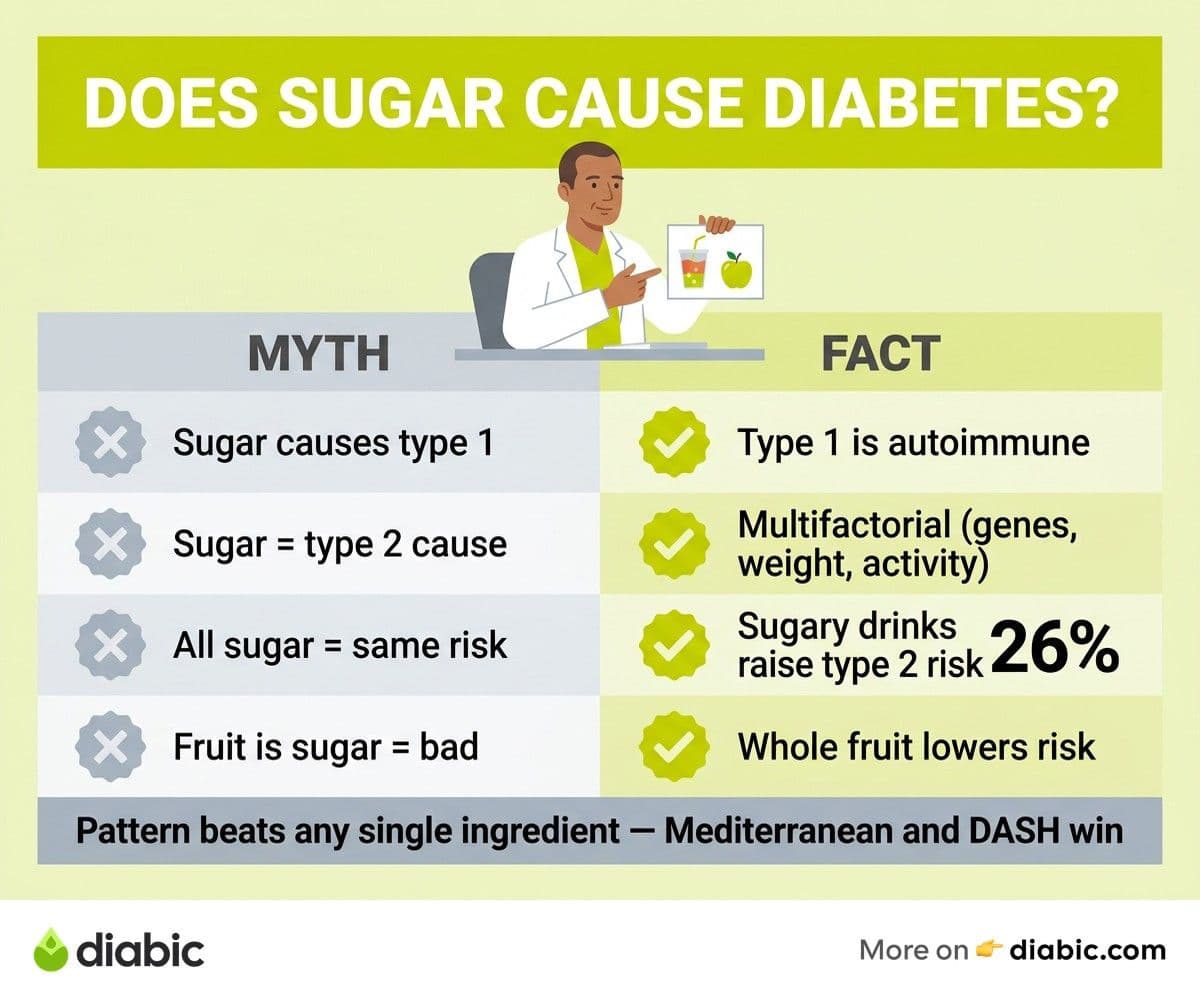
Type 1 diabetes is an autoimmune condition. As NIDDK's overview of type 1 diabetes explains, the immune system mistakenly attacks the insulin producing beta cells in the pancreas, and the trigger is genetic and environmental, not dietary. Eating sugar does not cause type 1 diabetes, in any quantity, at any age. Children with type 1 diabetes did not get it because of birthday cake, and parents have nothing to apologize for. This single point is the most common misunderstanding we hear, and it deserves to be said clearly.
The indirect link between excess sugar, weight gain, and type 2 risk
Type 2 diabetes is where the sugar conversation has substance. Excess sugar, especially in liquid form, contributes to weight gain over time. Excess body fat, particularly around the abdomen, contributes to insulin resistance. Insulin resistance is a major driver of type 2 diabetes. So sugar is in the chain, several links back from the outcome, alongside genetics, sleep, activity, and broader dietary patterns.
Why the conversation needs more nuance than headlines provide
Headlines saying "sugar causes diabetes" feel actionable. Cut sugar, avoid diabetes, simple. The trouble is that this framing leaves out everything else that matters and leaves people confused when they cut sugar and still develop type 2 diabetes (often because of genetics or other factors), or when they eat plenty of fruit and stay healthy. A more honest version is that sugar is one of several inputs, not the master switch.
If you want to see how sugar fits into the bigger picture of body weight and diabetes, obesity and diabetes myths covers that adjacent question in depth.
Does Eating Too Much Sugar Give You Diabetes
The longer version of the question is more useful: does eating too much sugar give you diabetes over time, and through what mechanism? Research gives us a clearer answer here than to the bumper sticker version.
The role of sugar-sweetened beverages in research findings
The strongest evidence for sugar's role in type 2 diabetes risk comes from studies of sugar sweetened beverages. A widely cited BMJ meta analysis on sugar sweetened drinks and type 2 diabetes found that people consuming one or two servings a day had about a 26 percent higher risk of developing type 2 diabetes than people drinking very little. The relationship held even after accounting for body weight, suggesting sugary drinks contribute to risk in ways that go beyond calories alone.
Sugary drinks are particularly potent because they deliver a large glucose load with very little fiber, fat, or protein to slow absorption. Solid foods with added sugar, by contrast, usually come packaged with other nutrients that blunt the blood sugar spike.
Total caloric intake vs sugar specifically
Most researchers agree that overall caloric intake and weight matter more than any single ingredient for type 2 risk. People who eat a generally balanced diet with occasional sweets do not develop type 2 diabetes at higher rates than people who avoid sugar entirely. People who drink soda daily, eat fast food regularly, and live sedentary lives have higher risk, and untangling sugar's specific contribution from the rest of the pattern is difficult in research terms.
How excess sugar contributes to insulin resistance over time
When the body handles a steady stream of refined sugar, the pancreas releases insulin to clear it. Over years, especially when paired with weight gain, cells become less responsive to insulin's signal. This is insulin resistance, and it is the pre clinical state that often becomes type 2 diabetes. Sugar does not cause insulin resistance overnight. It accumulates as one input among several.
What Really Causes Diabetes
This is the question that opens up real understanding. What really causes diabetes depends entirely on which type. Lumping them together is what produces most of the public confusion.
For a focused look at the differences, type 2 diabetes causes and risk factors walks through the type 2 picture in detail.
Type 1: autoimmune destruction of beta cells
Type 1 diabetes happens when the immune system attacks the beta cells in the pancreas that produce insulin. Researchers know it involves genetic susceptibility (specific HLA gene variants are common in people who develop type 1) and likely environmental triggers (certain viral infections are studied as possible triggers, though no single trigger is confirmed). It usually appears in childhood or young adulthood, but it can develop at any age. Diet plays no causal role in its onset.
Type 2: combination of genetic predisposition, insulin resistance, and lifestyle
Type 2 diabetes is multifactorial. Genetics set the stage: people with a parent or sibling with type 2 diabetes have substantially higher risk. Body weight and abdominal fat raise risk. Sedentary lifestyle, sleep loss, certain medications, and chronic stress all contribute. Some ethnic groups have higher baseline risk because of genetic and historical factors. Sugar fits in here, as part of dietary pattern, but it is one factor in a long list.
Why pinpointing a single cause oversimplifies the picture
Most chronic conditions have networks of causes rather than single triggers. Diabetes is a clean example. The same person with two type 2 risk factors might never develop the disease. Another person with five risk factors might. The biology is probabilistic, not deterministic, and that is why the public health framing has shifted toward risk reduction rather than blame.
From my experience: I have lived with diabetes for 14 years, and the question "what did you eat to get this" still comes up regularly. It used to sting. Now I treat it as an opportunity to share what the research actually shows. Diabetes is not a moral verdict on a person's plate. The faster a family understands that, the easier the diagnosis is on everyone, especially kids.
Type 1 vs Type 2 Diabetes: Different Causes Entirely
The type 1 vs type 2 diabetes distinction deserves its own section because the public conflates them constantly. They share a name and a symptom (high blood sugar), but the root causes are not similar.
Why sugar is irrelevant to type 1 development
Type 1 diabetes is an autoimmune disease. Insulin is missing because the immune system destroyed the cells that make it. Sugar consumption does not influence this process. A child with type 1 diabetes ate the same foods as their siblings who do not have it. The cause runs through genes and immune triggers, not the dinner plate. This is one of the most damaging myths to live with as a person with type 1, because it places blame where blame does not belong.
The multifactorial nature of type 2 risk
Type 2 risk is shaped by genetics, weight, activity, sleep, ethnicity, age, and broader dietary pattern. Sugar plays a part, mostly through its contribution to weight and insulin resistance, but a single sugary food does not move the dial. Long term patterns over years matter much more than any single meal.
Clearing up confusion between the two types
If you want a deeper dive into how the two types differ across symptoms, treatment, and daily life, key differences between type 1 and type 2 covers it in detail. The short version: same name, different diseases.
What Is Diabetes at the Cellular Level
Understanding what is diabetes at the cellular level is the cleanest way to dispel the sugar myth. Diabetes is fundamentally about insulin, not about how much sugar you ate. Once that idea lands, the rest of the picture clicks into place.
How insulin normally regulates blood sugar
When you eat any carbohydrate (sugar, bread, rice, fruit), it breaks down into glucose in the bloodstream. The pancreas senses the rise and releases insulin. Insulin acts as a key, opening doors on muscle, liver, and fat cells so glucose can enter and be used for energy or stored. Within an hour or two, blood sugar settles back into a normal range. This loop runs hundreds of times a day in a person without diabetes.
What goes wrong in type 1 vs type 2
In type 1 diabetes, the pancreas cannot make insulin. The key is missing. Glucose accumulates in the bloodstream, and external insulin is needed to keep the system working. In type 2 diabetes, the pancreas often makes insulin, but cells stop responding well to it. The keys are made, but the locks are stiff. Eventually the pancreas may also slow down. Glucose accumulates differently, but the result (high blood sugar) is the same.
Why understanding the mechanism dispels the sugar myth
Once you can see that diabetes is about insulin and how cells respond to it, the sugar question lands differently. Eating sugar is not "putting diabetes into the body." Diabetes is about the system that handles sugar, not the sugar itself. People with intact insulin systems handle sugar fine within reason. People with type 1 have lost the insulin source. People with type 2 have lost the cellular response. Neither was caused by eating dessert.
The Role of Diet Beyond Sugar
If sugar is not the master cause, what does the evidence actually point to? The honest answer is that overall dietary pattern and lifestyle outweigh any single ingredient for type 2 risk.
The American Diabetes Association reviews the evidence in its nutrition recommendations for diabetes prevention and management, which emphasize broad patterns rather than narrow ingredient bans.
Processed foods, refined carbohydrates, and overall dietary patterns
Diets heavy in processed foods, refined carbohydrates (white bread, white rice, processed snacks), and sugary drinks are consistently linked to higher type 2 diabetes risk. Diets built around vegetables, whole grains, legumes, lean proteins, and healthy fats are linked to lower risk. The pattern matters more than any single food, and the pattern is what behavior change can actually move.
Why the Mediterranean and DASH diets reduce risk
Both the Mediterranean diet and the DASH diet show consistent benefit in long term studies for diabetes prevention. They share a few features: lots of vegetables, whole grains, legumes, nuts, and olive oil. Modest amounts of fish, poultry, and dairy. Red meat and sweets in smaller, occasional portions. Importantly, neither diet bans sugar. They simply position it as a smaller part of a larger picture.
Focusing on total diet quality rather than demonizing one ingredient
Demonizing sugar is intuitive, but it tends to backfire. People feel guilty about a cookie, declare the day a wash, and overcompensate elsewhere. Research suggests that overall dietary quality, sustained over years, matters more than perfect adherence to any single rule. The change that helps most people most is replacing sugary drinks with water and adding more vegetables, in roughly that order. Everything else is fine tuning.
FAQ
Does eating too much sugar give you diabetes?
Not directly. Excess sugar, especially from sugar sweetened beverages, contributes to weight gain and insulin resistance over time, both of which raise type 2 diabetes risk. The relationship runs through several steps and is influenced by genetics, activity, weight, and overall dietary pattern. Sugar alone does not cause diabetes in someone without those other factors.
What really causes diabetes?
Type 1 diabetes is caused by an autoimmune attack on the pancreas, with strong genetic and likely environmental triggers. Type 2 diabetes is caused by a mix of genetics, insulin resistance, body weight, activity, sleep, and dietary pattern. Gestational diabetes results from pregnancy hormones blunting insulin response. Each type has different causes, which is why generic "what causes diabetes" answers fall short.
Can a person with diabetes ever eat sugar?
Yes. People with diabetes can include sweet foods in their eating pattern with planning. The amount, timing, and what is eaten alongside the sugar all matter for how blood sugar responds. The American Diabetes Association no longer recommends a sugar free diet for people with diabetes.
If sugar does not cause diabetes, why do doctors recommend cutting back?
Cutting back on added sugar, especially in beverages, is associated with lower type 2 diabetes risk and supports weight management for people who already have type 2 diabetes. The recommendation is about reducing risk and managing existing conditions, not about preventing a direct cause. The shorthand "sugar causes diabetes" is what gets oversimplified in public messaging.
Does fruit cause diabetes?
No. Whole fruit consumption is consistently linked to lower diabetes risk in long term studies, likely because of fiber, water content, and the wide range of nutrients it provides. Fruit juice is a different question, since it removes the fiber and concentrates the sugar. Whole fruit is part of every diabetes prevention pattern in the research literature, and the broader question of does sugar cause diabetes lands the same way: pattern over ingredient, every time.
Shahriar P. Shuvo is the founder of Diabic. He has lived with diabetes for over 14 years, and built Diabic to deliver the practical, evidence-based self-management tools he wished existed when he was first diagnosed. By trade, Shahriar is a senior design and frontend engineer with 6+ years shipping products at Agora, Timescale (now Tiger Data), and ShareTrip. He writes from the intersection of lived diabetes experience and product craft, focused on what works in daily management rather than what sounds good in a textbook.
Medically reviewed by
Dr. Rezwana Parvin Rumpa is an obstetrics and gynaecology specialist with clinical focus on gestational diabetes, PCOS, and fertility. She holds the MRCOG (Final Part) from the Royal College of Obstetricians and Gynaecologists in London, the MRCPI (Final Part) from the Royal College of Physicians of Ireland, and an MBBS from Shaheed Monsur Ali Medical College under Dhaka University. Dr. Rumpa serves as a Senior Medical Officer in the Obs and Gynae department at BRB Hospitals Ltd, where she has spent three years managing prenatal care, emergency obstetric cases, and women's-health surgery. On Diabic, she medically reviews content for women living with diabetes, with particular attention to pregnancy, PCOS, and reproductive-health intersections.
More from Diabetes Knowledge
View all
6 Safe Dessert for Gestational Diabetes Recipes You Can
Six dessert for gestational diabetes recipes that satisfy your sweet tooth without spiking blood sugar, with carb counts and pairing tips you can use.

8 High Fiber Foods That Help with Prediabetes
Add these 8 high fiber foods for prediabetes to slow glucose absorption, support steady blood sugar, and meet the daily fiber target most people miss.

Mediterranean Diet for Prediabetes: A Practical Guide
The mediterranean diet for prediabetes is one of the best-studied eating patterns for prevention. Here is what to eat, what to avoid, and how to start.
Clinician-reviewed habits, plain-language guides, and honest answers - the small shifts that make living with diabetes feel lighter, every day.