Can Diabetes Be Cured or Only Managed
Can diabetes be cured? An honest look at type 1 cure research, type 2 remission, and what effective long term management really involves.

In this article(34)
If you were recently diagnosed, you probably want to know one thing first: can diabetes be cured, or is lifelong management your only option? The honest answer is shaped by the type you have, and the science is more nuanced than headlines tend to suggest. Some forms can go into remission. None has a confirmed cure. And the difference between cure, remission, and management matters a lot when you are trying to decide what to spend your energy on.
This guide walks you through what research actually says about cures and reversal across the main types of diabetes, including the recent trials that changed how doctors talk about type 2 remission. We also want to push back on the framing that management is somehow second class. If you live with diabetes, management is what a long, full life is built on.
What Is Diabetes and Why Does It Develop
Before the cure question makes sense, the basics need to be in place. What is diabetes, mechanically? Diabetes is a group of conditions that share one feature: trouble keeping blood sugar in a normal range. The "why" varies dramatically across types, which is why a single cure for diabetes does not exist.
Brief explanation of how diabetes disrupts blood sugar regulation
In a body without diabetes, eating carbohydrates raises blood glucose, the pancreas releases insulin, insulin signals cells to take in glucose, and blood sugar settles back to normal. In diabetes, that loop breaks somewhere. Either insulin is missing, or cells stop responding to it well, or both. Glucose accumulates in the bloodstream, which over time damages blood vessels and nerves. Treatment aims to keep blood sugar near the normal range so that damage is minimized.
The role of insulin production (type 1) vs insulin resistance (type 2)
In type 1 diabetes, insulin production is gone. The pancreas has lost the cells that make it. In type 2 diabetes, insulin is usually still being made, but cells respond to it sluggishly, and over time the pancreas may slow down too. These are mechanically different conditions. Asking whether they can be cured leads to different answers because they break in different places.
Why understanding the root cause matters for the cure question
A cure for type 1 diabetes would mean restoring the pancreas's ability to produce insulin in a working immune environment. A cure for type 2 diabetes would mean permanently reversing insulin resistance and any beta cell decline that has already occurred. Both are real research targets, and neither has a finished answer yet.
Type 1 vs Type 2 Diabetes: Different Conditions, Different Outlooks
Type 1 vs type 2 diabetes is the single most important distinction in any conversation about cures. They share a name and the symptom of high blood sugar, but they are otherwise different conditions with different mechanisms, different treatments, and different long term prospects.
For a fuller side by side, key differences between type 1 and type 2 walks through them in detail.
Type 1 as an autoimmune condition with no current cure
Type 1 diabetes is an autoimmune disease. Your immune system has destroyed the insulin producing beta cells in the pancreas, and your body cannot make insulin on its own. There is no current cure. Treatment requires lifelong insulin replacement, either through injections, pens, pumps, or evolving closed loop systems. Promising research is underway, which we cover further down, but the honest framing is that today, type 1 is managed, not cured.
Type 2 as a metabolic condition with potential for remission
Type 2 diabetes is a metabolic condition. Insulin resistance is the main driver, often combined with some loss of beta cell function over time. Because the body still makes insulin, there is more flexibility in how the disease can be approached. In some people, sustained lifestyle changes or surgery can lower blood sugar to non diabetic levels without medication. That state is called remission, not cure, and the distinction matters.
Why grouping them together leads to confusion about cures
When media reports a "diabetes cure," they almost always mean a type 2 remission story or a type 1 research milestone in mice. Treating these as the same thing creates false hope if you parent a child with type 1, and false guilt if you have type 2 and tried lifestyle changes without entering remission. Splitting the question by type is the cleaner starting point for you.
Can Type 1 Diabetes Be Cured
Not yet. The research direction is real, and there have been meaningful advances, but no approved therapy currently cures type 1 diabetes. We want to walk through what is being studied and how to read research news without getting whiplash.
The JDRF maintains a regularly updated research pipeline for type 1 diabetes that tracks the major directions in plain language. It is a useful resource for people who want to follow the field without parsing journals.
Current state of research (islet cell transplants, immunotherapy)
Several lines of research are progressing:
- Islet cell transplants: Healthy beta cells are placed into the body, often in the liver. The procedure can restore insulin production but requires immunosuppression to keep the immune system from attacking the new cells, which limits its use to specific cases.
- Stem cell derived beta cells: Lab grown beta cells are being tested in early human trials. Some recipients have produced their own insulin again, which is a major milestone.
- Immunotherapy: Drugs that slow or pause the autoimmune attack are being studied. One drug, teplizumab, is now approved to delay the onset of type 1 diabetes in high risk people.
- Beta cell encapsulation: Devices that protect transplanted beta cells from the immune system without lifelong immunosuppression are in development.
Why insulin remains the primary treatment
For now, exogenous insulin is the foundation of type 1 care. Modern insulin delivery (smart pens, pumps, and hybrid closed loop systems with continuous glucose monitors) is far better than what existed even a decade ago. If you have type 1 diabetes, you can live a long, full life with current technology, and the toolset keeps improving year over year.
Promising directions without overpromising results
When you see headlines about "the cure," check whether the study was in mice or in humans, whether participants needed immunosuppression, and how many people have been followed for how long. The path from a promising trial to an approved therapy is typically a decade or more. The progress is real, and it is worth following without rearranging today around an outcome that is not yet certain.
Can Type 2 Diabetes Be Reversed or Cured
This is where the conversation gets interesting. Type 2 diabetes can enter remission for some people, especially in the first few years after diagnosis. Whether that counts as a cure is partly semantics and partly biology, and the answer matters for how to frame the work.
For a deeper look, whether type 2 diabetes can be reversed walks through the current evidence in detail.
The difference between remission and cure
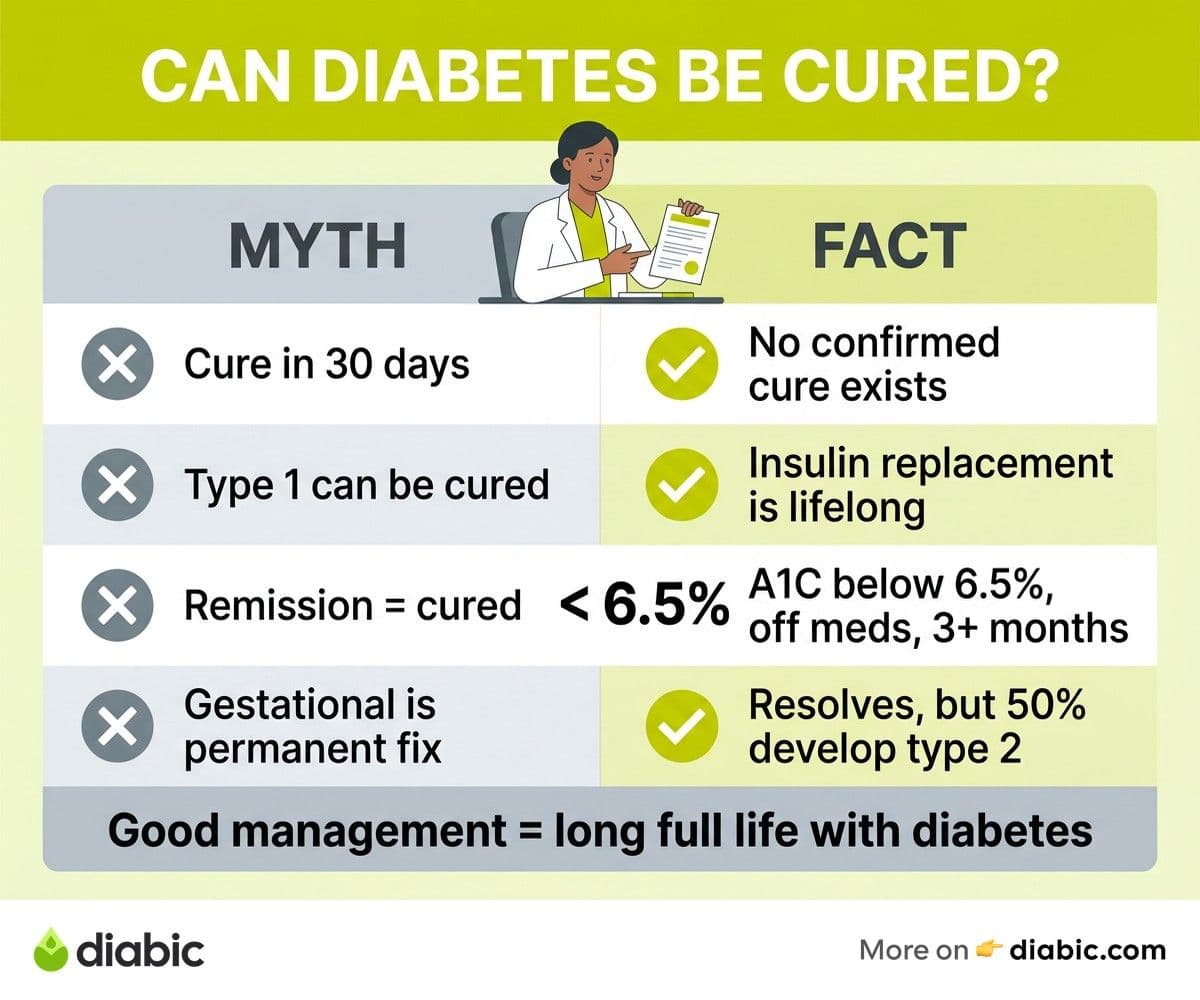
A cure means the disease is gone permanently and the underlying biology has reset. Remission means the symptoms and lab markers have returned to non diabetic levels, but the underlying tendency is still there and the condition can come back. The American Diabetes Association now uses "remission" in its consensus framework, with criteria typically including an A1C below 6.5 percent for at least three months without diabetes medication.
Evidence from bariatric surgery, sustained weight loss, and dietary changes
Three lines of evidence point to type 2 remission:
- Bariatric surgery: Procedures like gastric bypass and sleeve gastrectomy lead to remission in roughly 30 to 60 percent of people with type 2 diabetes within the first few years after surgery. Some maintain remission long term, others see it return.
- Sustained weight loss through low calorie diets: The DiRECT trial, published in The Lancet, showed that nearly half of participants on a structured low calorie program achieved remission at one year, and about a third sustained it at two years. The strongest predictor was weight loss above 15 kilograms.
- Lifestyle changes: Diet quality changes, regular physical activity, and modest weight loss can substantially improve A1C and reduce or eliminate medication needs in some people, especially when started soon after diagnosis.
What remission actually looks like in practice (normal A1C without medication)
In practice, remission usually means an A1C in the non diabetes range (below 6.5 percent), no diabetes medications, and continued attention to weight, diet, and activity. Annual screening continues because the underlying tendency has not fully gone away. Many people in remission stay in remission for years. You may also see numbers drift back up, especially with weight regain or aging. Neither outcome is a moral verdict on you.
What About Gestational Diabetes
Gestational diabetes is the type that comes closest to looking like a cure, because it usually resolves on its own after delivery. The story is not entirely closed at that point, though, which matters for the cure question.
How gestational diabetes typically resolves after delivery
Gestational diabetes is driven by placental hormones that blunt the parent's insulin response. Once the placenta is delivered, those hormones disappear, and blood sugar typically returns to normal within days to weeks. By 6 to 12 weeks postpartum, most parents have a glucose profile that looks like it did before pregnancy.
Why it raises long-term risk for type 2 diabetes
Even though gestational diabetes resolves, the underlying tendency toward insulin resistance often does not. Roughly half of parents with gestational diabetes develop type 2 diabetes within 5 to 10 years, depending on the cohort. So gestational diabetes is not a cured condition in the strict sense. It is more like a window into a body's predisposition that needs attention going forward.
The importance of postpartum screening
The standard recommendation is a glucose test at 6 to 12 weeks postpartum, then ongoing screening every 1 to 3 years. The screening visit is one of the most underused interventions in modern care. Catching prediabetes early, when small changes have outsized effect, is exactly the moment most people miss.
Can Diabetes Be Cured? Why the Word Is Complicated
The word "cure" feels simple, but in diabetes it can quietly mislead. Distinguishing cure from remission from management is not pedantry. It is what helps people make good long term decisions.
For a related conversation about how the language around treatment can mislead people, common insulin myths covers a parallel set of misunderstandings.
Medical community definitions of cure vs remission vs management
Researchers and clinicians use these terms in specific ways:
- Cure is reserved for conditions where the underlying biology has fully resolved and the disease will not return.
- Remission is used when the disease is currently inactive but could come back.
- Management describes ongoing care for a condition that is present but not actively progressing.
Type 2 diabetes can move into remission. It can be managed effectively for decades. It is not currently considered curable in the strict sense.
The risk of relapse even after achieving remission
If you achieve remission, you can still relapse, especially with weight regain, hormonal changes, aging, or major life stressors. Relapse does not mean your original effort was wasted. The years you spent in remission likely reduced complications and helped your overall health, even if numbers eventually rise again. We mention this because the way "cure" is sold online sometimes suggests a finished outcome, and that can be hard to live with if your numbers drift later.
How "cure" messaging can set unrealistic expectations
Programs that promise to cure diabetes in 30 days are doing damage. They set you up for guilt when results come slowly, push fad approaches that are hard to sustain, and ignore the genetic and biological realities that make your diabetes individual. We are not against ambition. We are against framing that makes you feel you failed at something that was never on offer.
What Effective Diabetes Management Looks Like
Management has been treated like a consolation prize in some corners of the internet. We want to push back on that. Effective management is the foundation of a long, healthy life with diabetes, and it has gotten dramatically better in the last 20 years.
The American Diabetes Association lays out the current standard of care in its Standards of Medical Care in Diabetes, which is updated annually.
Medication, lifestyle changes, and monitoring as pillars of management
Three pillars carry most of the load:
- Medication: Insulin for type 1, and a wide range of medications for type 2 including metformin, GLP-1 receptor agonists, SGLT2 inhibitors, and others. Choices are personalized to the person.
- Lifestyle: Eating patterns, physical activity, sleep, and stress management. None of these is glamorous, and all of them matter.
- Monitoring: Continuous glucose monitors, A1C tests, and self monitoring give people and their care teams the data to make good calls.
Why management is not a consolation prize but a proven strategy
Decades of data show that people with diabetes who manage their condition well have outcomes close to those of people without diabetes for many measures. Heart disease, kidney disease, and vision loss have all become less common as care has improved. Living a long, full life with diabetes is not just possible, it is the most common outcome in well resourced healthcare settings.
How people thrive while managing diabetes long-term
Plenty of people with diabetes run businesses, raise families, run marathons, and grow old. The diagnosis changes your routine, not the plot. The people who do best tend to share a few habits you can borrow: a care team they trust, a daily structure that protects sleep and meals, a community of others who get it, and a willingness to adjust as life changes.
From my experience: I have lived with diabetes for 14 years, and the framing question I keep coming back to is not "can this be cured?" It is "can this be lived with well?" The answer to the second question is yes, and the path is much more practical than the cure conversation suggests. I would not trade the steadiness of good management for the rollercoaster of chasing miracle protocols.
FAQ
Is there a cure for diabetes?
There is no confirmed cure for type 1 diabetes. Type 2 diabetes can enter remission through significant lifestyle changes or bariatric surgery, but remission is not the same as a permanent cure, and relapse is possible. Gestational diabetes typically resolves after delivery, though long term type 2 risk remains higher.
Will diabetes ever be cured?
Research into stem cell therapy, immunotherapy, and beta cell encapsulation for type 1 is progressing, and more durable remission strategies for type 2 are being studied. No specific timeline exists for a definitive cure for either type. Following major research foundations like JDRF and the ADA is the most reliable way to track progress without being misled by hype.
Can type 2 diabetes go away on its own?
Type 2 diabetes does not typically resolve on its own without lifestyle changes or surgery. Some people see significant improvement after starting medication, losing weight, or changing their dietary pattern, and a subset reach remission. Without active intervention, the condition usually persists and can progress.
What does diabetes remission mean?
Remission means an A1C below 6.5 percent for at least three months without diabetes medication. The underlying tendency toward insulin resistance is still there, so annual screening continues. Many people maintain remission for years, while some see numbers rise again over time.
Is managing diabetes the same as living with a chronic disease forever?
Managing diabetes is closer to ongoing self care than to constant crisis. Modern tools, especially continuous glucose monitors and effective medications, have made daily life much steadier than it was a generation ago. Most people with diabetes describe management as a routine that fades into the background, not a permanent emergency.
So when someone asks can diabetes be cured, the most useful answer is rarely a clean yes or no. Type 1 currently cannot. Type 2 sometimes enters remission. Gestational diabetes usually resolves but leaves a longer term risk worth tracking. Inside those facts, the question that actually shapes the next decade is what good care looks like for you. Pick a steady care team, lean on the modern tools that did not exist a generation ago, and treat your daily routine as the long lever that it is. The cure conversation is worth following without rearranging today around it.
Shahriar P. Shuvo is the founder of Diabic. He has lived with diabetes for over 14 years, and built Diabic to deliver the practical, evidence-based self-management tools he wished existed when he was first diagnosed. By trade, Shahriar is a senior design and frontend engineer with 6+ years shipping products at Agora, Timescale (now Tiger Data), and ShareTrip. He writes from the intersection of lived diabetes experience and product craft, focused on what works in daily management rather than what sounds good in a textbook.
Medically reviewed by
Dr. Rezwana Parvin Rumpa is an obstetrics and gynaecology specialist with clinical focus on gestational diabetes, PCOS, and fertility. She holds the MRCOG (Final Part) from the Royal College of Obstetricians and Gynaecologists in London, the MRCPI (Final Part) from the Royal College of Physicians of Ireland, and an MBBS from Shaheed Monsur Ali Medical College under Dhaka University. Dr. Rumpa serves as a Senior Medical Officer in the Obs and Gynae department at BRB Hospitals Ltd, where she has spent three years managing prenatal care, emergency obstetric cases, and women's-health surgery. On Diabic, she medically reviews content for women living with diabetes, with particular attention to pregnancy, PCOS, and reproductive-health intersections.
More from Diabetes Knowledge
View all
6 Safe Dessert for Gestational Diabetes Recipes You Can
Six dessert for gestational diabetes recipes that satisfy your sweet tooth without spiking blood sugar, with carb counts and pairing tips you can use.

8 High Fiber Foods That Help with Prediabetes
Add these 8 high fiber foods for prediabetes to slow glucose absorption, support steady blood sugar, and meet the daily fiber target most people miss.

Mediterranean Diet for Prediabetes: A Practical Guide
The mediterranean diet for prediabetes is one of the best-studied eating patterns for prevention. Here is what to eat, what to avoid, and how to start.
Clinician-reviewed habits, plain-language guides, and honest answers - the small shifts that make living with diabetes feel lighter, every day.