What Is Type 1 Diabetes? A Clear Explanation
What is type 1 diabetes, really? A plain-language guide to the autoimmune cause, diagnosis tests, daily life, and what current research is making possible.

In this article(35)
A diagnosis can land like a thunderclap. One day you are explaining unusual thirst and weight loss to a doctor, and the next day someone is handing you a glucometer and a vial of insulin. If you or someone you love is in that moment right now, take a breath. The information ahead is a lot, but it becomes manageable when you understand what is actually happening in the body and what comes next.
So, what is type 1 diabetes? It is an autoimmune condition in which the body's own immune system mistakenly destroys the cells in the pancreas that make insulin. It is not caused by sugar, lifestyle, or anything anyone did wrong. It is a lifelong condition, but it is also one that millions of people manage successfully every day. This guide walks through the cause, the diagnosis, the daily realities, and the research that is reshaping the future of T1D.
What Is Type 1 Diabetes
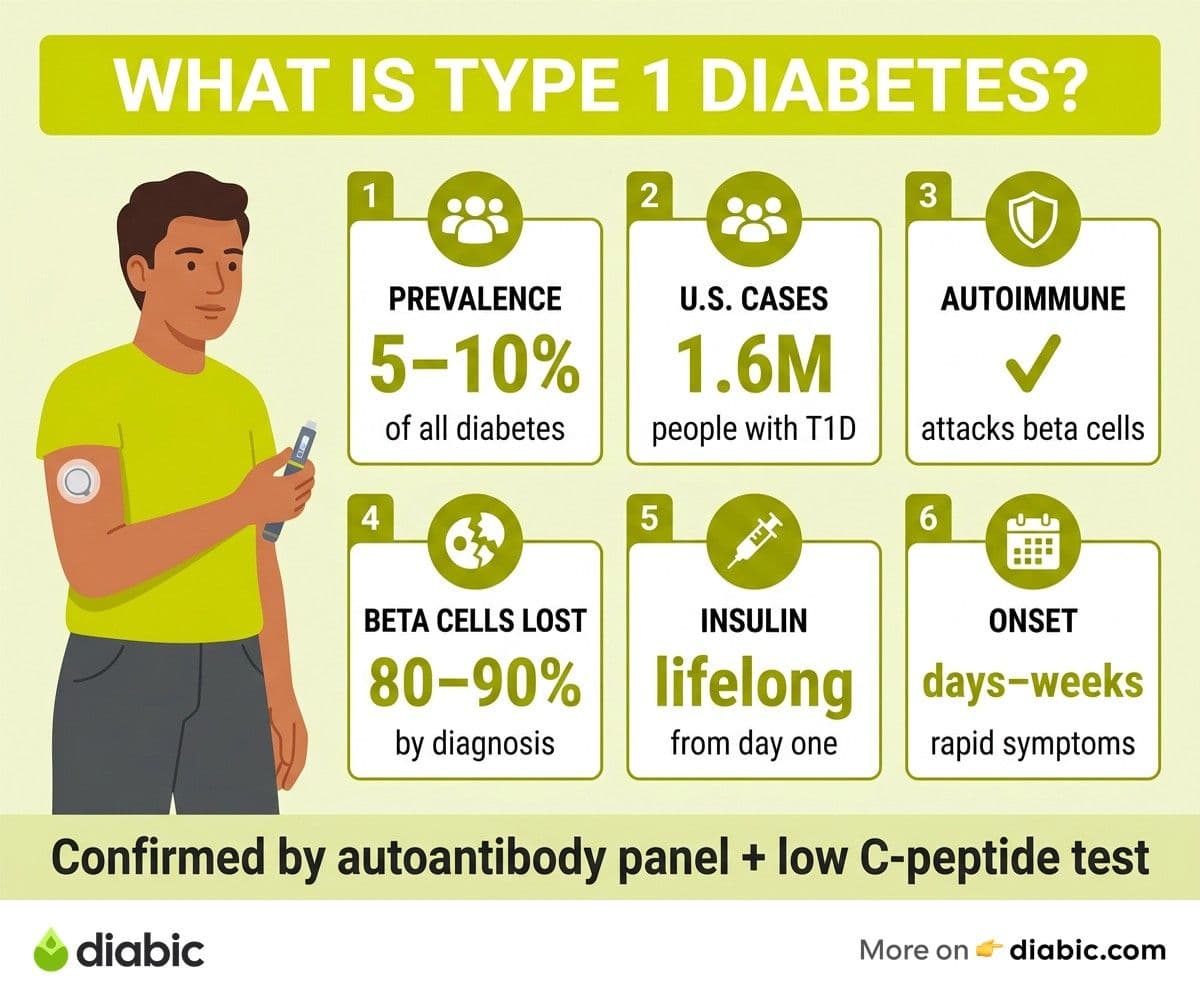
Type 1 diabetes is an autoimmune disease in which the immune system attacks and destroys the insulin-producing beta cells in the pancreas. As the American Diabetes Association explains in its type 1 overview, the result is that the pancreas produces little to no insulin, and insulin is the hormone that allows glucose from food to enter cells and become energy. Without insulin, glucose builds up in the bloodstream while cells go hungry.
Type 1 accounts for roughly 5 to 10 percent of all diabetes cases worldwide. It can develop at any age, although it most often appears in childhood, adolescence, or young adulthood. The CDC's type 1 diabetes fact sheet estimates that about 1.6 million people in the United States are living with T1D, with thousands more diagnosed every year.
A common point of confusion is that type 1 and type 2 are very different conditions despite sharing the word "diabetes." Type 2 is driven by insulin resistance and a relative deficiency of insulin, and it has strong lifestyle and metabolic components. Type 1 is autoimmune. The distinction matters because the treatments and the daily management look different. We break down the contrast in our piece on type 1 vs. type 2 diabetes key differences.
The Hallmark Type 1 Diabetes Symptoms
Type 1 symptoms tend to come on quickly, often over weeks rather than months. The classic cluster includes intense thirst, frequent urination, unexplained weight loss, fatigue, and increased hunger despite eating. Some people also notice blurred vision, slow-healing cuts, or a fruity smell on the breath, which can signal diabetic ketoacidosis (DKA), a medical emergency.
Children sometimes start wetting the bed again after being trained, or seem unusually irritable and tired. In adults, the picture can be subtler, which is one reason adult-onset T1D is occasionally mistaken for LADA, a slower autoimmune type often misdiagnosed. For more on the speed and pattern of onset, our deep dive on type 1 diabetes symptoms that come on fast walks through what to watch for.
What Insulin Actually Does
Insulin is a hormone produced by beta cells in the pancreas. After you eat, carbohydrates are broken down into glucose, which enters the bloodstream. Insulin is the key that lets glucose unlock cells across the body, especially in muscle, fat, and liver tissue. Without enough insulin, glucose stays in the blood and starves the cells.
Over time, high blood glucose damages blood vessels, nerves, kidneys, and eyes. The good news is that replacing the insulin the body can no longer make, through injections or a pump, restores most of that biological function. Modern insulin therapy is not a cure, but it works well enough that people with T1D live full, long, active lives.
What Causes Type 1 Diabetes
The honest answer is that researchers do not yet know every cause. What is clear is that type 1 develops from a combination of genetic susceptibility and environmental triggers, with the autoimmune process unfolding silently in the background long before symptoms appear. The NIDDK's comprehensive type 1 guide lays out the current scientific consensus.
Genetic Susceptibility
Specific genes, especially in the HLA (human leukocyte antigen) complex, increase the risk of developing type 1. These genes shape how the immune system distinguishes self from non-self. Certain HLA variants are more likely to allow the misfire that leads to attacking beta cells.
Genetics alone are not enough, however. Most people who carry T1D-risk genes never develop the disease. Family history matters too: if a parent has type 1, a child's lifetime risk is roughly 5 to 6 percent if it is the father and 2 to 3 percent if it is the mother, compared to about 0.4 percent in the general population. Identical twins of someone with T1D have around a 30 to 50 percent risk, which tells us genetics matter but cannot be the whole story. Our deeper explanation of the genetic and environmental picture lives in type 1 diabetes causes and risk factors.
Environmental Triggers
Researchers believe that an environmental factor, layered onto genetic susceptibility, sets off the autoimmune process. The leading suspects include certain viral infections (particularly enteroviruses and Coxsackie B), early-life nutritional factors, and aspects of immune system development that may be shaped by early exposures. None of these are settled science, but the patterns are consistent across multiple studies.
Geographic patterns are also striking. Type 1 incidence is much higher in northern countries, especially Finland, Sweden, and parts of the British Isles, than in equatorial regions. Whether that reflects vitamin D, viral exposure patterns, or other factors is an active area of research.
The Autoimmune Process in Plain Terms
Imagine your immune system as a security team that learns the difference between intruders and residents. In type 1 diabetes, the security team mistakenly tags beta cells as intruders. Specialized immune cells then attack and destroy beta cells, one by one, over months or years.
The process is silent at first. Autoantibodies (markers of the autoimmune attack) appear in the blood years before symptoms. By the time blood sugar climbs high enough to cause symptoms, roughly 80 to 90 percent of beta cells are usually gone. This explains why symptoms feel sudden even though the underlying process started long before.
Why Some Genetically Susceptible People Never Develop It
Not everyone with risk genes ends up with T1D, and we do not yet know precisely why. It may come down to whether they encounter the right combination of triggers, the timing of those triggers in immune development, or other unknown protective factors. The fact that most people with risk genes do not develop the disease is actually hopeful, since it suggests prevention may eventually be possible.
How Type 1 Diabetes Is Diagnosed
When people ask what is type 1 diabetes diagnosed by, the answer usually starts at the lab bench. Diagnosis typically begins when classic symptoms prompt a blood glucose test. From there, additional tests confirm the type and rule out other forms of diabetes. The Mayo Clinic's diagnosis and treatment overview describes the standard sequence.
Initial Blood Glucose Tests
A random blood glucose test of 200 mg/dL (11.1 mmol/L) or higher, paired with classic symptoms, is enough to diagnose diabetes. A fasting blood glucose of 126 mg/dL (7.0 mmol/L) or higher on two separate occasions is another path to diagnosis. Both tests are quick, cheap, and widely available.
If the initial number is dramatically elevated, especially in a younger person with classic symptoms, providers often start insulin immediately while running confirmatory tests. The reason is that diabetic ketoacidosis can develop quickly, and insulin replacement is more urgent than nailing down the precise type.
A1C Testing
The A1C test reflects average blood glucose over the previous 2 to 3 months. An A1C of 6.5 percent or higher meets diagnostic criteria. A1C is helpful for confirming long-standing elevation, although in rapidly developing T1D the A1C may not have had time to climb dramatically before symptoms send someone to a doctor.
A1C also becomes the long-term measurement tool after diagnosis. Most providers aim for an A1C target individualized to the person, often in the 6.5 to 7.5 percent range, balanced against hypoglycemia risk and quality of life.
Autoantibody Panels
Autoantibody tests are what confirm a type 1 diagnosis specifically, distinguishing it from type 2 and other forms. The standard panel checks for:
- GAD65 antibodies (glutamic acid decarboxylase), the most common positive marker
- IA-2 antibodies (insulinoma-associated antigen 2)
- ZnT8 antibodies (zinc transporter 8)
- ICA (islet cell antibodies), an older but still used marker
A positive result on any of these supports an autoimmune diagnosis. Most newly diagnosed type 1 cases have at least one positive autoantibody, often more.
C-Peptide Test
C-peptide is released alongside insulin in equal amounts, so it acts as a clean measure of how much insulin your pancreas is still producing. In established type 1, C-peptide is low or undetectable. In type 2, it is normal or elevated due to insulin resistance. The C-peptide test is especially helpful when the picture is ambiguous, such as adult-onset cases that could be type 2 or LADA.
Why the Right Diagnosis Matters
Distinguishing type 1 from type 2 and LADA changes everything that follows. Type 1 requires insulin from day one. Type 2 may respond to oral medications and lifestyle changes for years. LADA sits in between, with autoimmune biology but slower progression. Getting the diagnosis right means getting on the right treatment from the start, which protects beta-cell function where it can be protected and avoids medications that will not address the underlying issue.
Living With Type 1 Diabetes Day to Day
T1D management is constant, but it is also learnable. The first few months feel like a steep climb. After that, the routines become second nature, even as the work itself never fully ends. Here is what daily life involves.
Insulin Therapy Is Lifelong
Because the pancreas no longer produces enough insulin, it must be replaced. Modern insulin therapy for type 1 typically combines a long-acting basal insulin (which provides background coverage) with a rapid-acting bolus insulin at meals (which covers the carbs you eat). Some people use multiple daily injections, while others use insulin pumps that deliver insulin continuously through a small catheter.
The delivery method is a personal choice shaped by lifestyle, finances, and what your endocrinologist recommends. There is no single "best" approach. The same level of glucose management is achievable with both pumps and injections when paired with consistent attention.
Blood Sugar Monitoring
Continuous glucose monitors (CGMs) have transformed daily T1D management. A small sensor worn on the arm or abdomen reads glucose every few minutes and sends data to a phone or receiver, including alerts for highs and lows. CGMs are now standard for most people with T1D, and they pair with hybrid closed-loop systems (also called automated insulin delivery, or AID) that adjust insulin delivery based on real-time glucose readings.
Fingerstick meters still play a role, especially as a backup or for people who choose not to wear a CGM. The point of monitoring is not perfectionism. It is information that lets you respond to what your body is doing in the moment.
Carb Counting and Meal Planning
Insulin doses for meals are usually based on the carbohydrate content of the food. Carb counting is the skill of estimating how many grams of carbs are in a meal and dosing insulin accordingly. It sounds tedious, and the first few weeks it is, but most people develop intuition over time and only need to count carefully for unfamiliar foods.
There is no single "T1D diet." People with type 1 eat across the full range, from low-carb to balanced to higher-carb, and what works varies by person. Working with a registered dietitian who specializes in diabetes can shorten the learning curve.
Exercise Considerations
Exercise is good for almost everyone with T1D, but it does require a little extra planning. Aerobic exercise tends to lower blood sugar, sometimes dramatically. Anaerobic exercise (heavy lifting, sprints, high-intensity intervals) can temporarily raise blood sugar through stress hormones. Different activities call for different strategies, including snack timing, basal adjustments, or temporary pump settings.
The learning curve here is real but worth it. Active people with T1D run marathons, climb mountains, lift competitively, and do everything in between.
The Emotional Side
Diabetes burnout is real. The ceaseless math, the constant decisions, the alarms in the middle of the night, the public misconceptions about what T1D is and is not. Anxiety, grief, and exhaustion are common, and they do not mean you are failing. They mean you are human.
Connecting with peers who understand the texture of T1D life makes a measurable difference. Online communities, in-person meetups, and licensed mental health support are all part of a sustainable plan. Mental health is part of diabetes management, not separate from it.
From my experience: I was diagnosed with type 1 at 17 and have lived with it for 14 years. The first year I tried to be perfect at it, and I burned out hard. The second year I tried to ignore it, and my A1C climbed. What finally worked was accepting that this is a lifelong, imperfect partnership with my body. Some days are smooth and some are messy, and the goal is consistency over time, not flawless graphs. If you are newly diagnosed, please give yourself the grace of a long learning curve. Nobody is graded.
Type 1 Diabetes Complications and How to Reduce Risk
Talking about complications can feel scary, and we want to be clear: most people with T1D who manage their blood sugar reasonably well live long, healthy lives. The risks are real, but they are also reduced significantly by consistent care and modern technology.
Short-Term Risks
Hypoglycemia (low blood sugar, generally below 70 mg/dL) is the most common short-term complication. Symptoms include shakiness, sweating, confusion, hunger, and irritability. Severe hypoglycemia can cause unconsciousness or seizures. The fix is simple, fast-acting carbs (juice, glucose tablets), but the situation can be dangerous if it is not addressed. Carrying glucose tablets, wearing medical ID, and using a CGM with low alerts all reduce risk.
Diabetic ketoacidosis (DKA) is the other acute risk. DKA happens when insulin levels are too low and the body starts breaking down fat for fuel, producing acidic ketones. Symptoms include nausea, vomiting, abdominal pain, fruity breath, rapid breathing, and confusion. DKA is a medical emergency. Sick days and missed insulin doses are the most common triggers, which is why every person with T1D should have a sick-day plan from their care team.
Long-Term Risks
Long-term high blood glucose damages small and large blood vessels, leading to potential complications:
- Retinopathy (damage to the small vessels in the eye), which is why annual dilated eye exams matter
- Nephropathy (kidney damage), monitored through annual urine albumin tests
- Neuropathy (nerve damage), often felt first in the feet, monitored through foot exams
- Cardiovascular disease, which is the leading cause of death in long-standing diabetes
The encouraging news is that these complications are largely preventable or delayable. Landmark research, including the DCCT and EDIC studies, showed that intensive blood sugar management dramatically reduces complication risk over decades.
What Reduces Risk
A few habits do most of the heavy lifting. Keeping A1C in your individualized target range. Wearing a CGM (or checking blood sugar consistently if you do not). Annual screening for eye, kidney, and foot complications. Managing blood pressure and cholesterol, both of which interact with diabetes risk. Not smoking. Getting regular exercise. None of these are about perfection. They are about steady, sustainable care over years.
Current Research and the Future of Type 1
The pace of T1D research has accelerated dramatically in the last decade. While we are not at a cure yet, several frontiers are producing real results.
Beta Cell Replacement and Islet Transplants
Replacing destroyed beta cells, either through full pancreas transplants, islet cell transplants, or stem-cell-derived beta cells, is one of the most exciting research areas. Vertex Pharmaceuticals' VX-880 trial has shown that stem-cell-derived beta cells can be transplanted into people with T1D and produce insulin, with some early participants becoming insulin-independent. The challenge is that current approaches require immunosuppression, but encapsulation technologies that protect new beta cells from the immune system are also progressing.
Immunotherapy
Teplizumab (brand name Tzield) became the first FDA-approved therapy to delay the onset of clinical type 1 diabetes in at-risk individuals. In stage 2 T1D (where multiple autoantibodies are present but blood sugar is not yet abnormal), a 14-day infusion of teplizumab delays clinical onset by an average of about two years. It does not prevent T1D entirely, but it represents a meaningful shift: T1D is no longer a fully un-modifiable disease.
Breakthrough T1D's research overview tracks ongoing trials in immunotherapy, beta cell replacement, and other prevention strategies. Several other immunomodulating drugs are in trials.
Closed-Loop Insulin Delivery
Hybrid closed-loop systems (CGM plus pump plus algorithm) automatically adjust insulin delivery in response to glucose readings. Several commercial systems are now FDA-approved, and they have improved time-in-range outcomes meaningfully across age groups. The next generation aims for fully closed-loop systems that require no meal announcements, with several promising trials underway.
What This Means for People With T1D Today
Two things matter here. First, the standard of care for T1D in 2026 is dramatically better than it was even ten years ago, and the trajectory is positive. Second, today's tools, when used well, already make excellent outcomes possible. You do not have to wait for the cure to live well. We cover the broader picture across all diabetes types in our pillar piece what is diabetes, the only guide you need.
FAQ
What causes type 1 diabetes?
Type 1 diabetes is caused by an autoimmune response in which the body's immune system attacks the insulin-producing beta cells in the pancreas. Genetic susceptibility plays a role, and environmental triggers such as certain viral infections may set the process in motion. It is not caused by diet, lifestyle, or eating sugar.
Is type 1 diabetes an autoimmune disease?
Yes. Type 1 diabetes is classified as an autoimmune disease because the immune system targets and destroys beta cells in the pancreas. The process can take months to years before symptoms appear. Once enough beta cells are destroyed, the body can no longer regulate blood sugar without external insulin.
Can type 1 diabetes be cured?
Type 1 diabetes does not currently have a cure, but management has improved dramatically and research into beta cell replacement and immunotherapy is advancing. Teplizumab has been FDA-approved to delay the onset of T1D in at-risk individuals, and stem-cell-derived beta cell trials have produced promising early results. Most people with T1D today live full, long lives with modern insulin therapy and technology.
How long can a person with type 1 diabetes live?
Life expectancy for people with type 1 diabetes has improved substantially over the past few decades. With consistent blood sugar management and access to modern care, life expectancy is approaching that of people without diabetes. The biggest factors that close the gap are time-in-range glucose control, blood pressure management, not smoking, and regular screening for complications.
What is the difference between type 1 and type 2 diabetes?
Type 1 is an autoimmune condition in which the pancreas produces little to no insulin, requiring lifelong insulin therapy. Type 2 is driven by insulin resistance and a relative deficiency of insulin, often related to genetics and metabolic factors, and it can sometimes be managed with lifestyle changes and oral medications, although many people with type 2 also use insulin over time. The two conditions share the name but have different causes and treatments.
If you came here asking what is type 1 diabetes for yourself or someone you love, the most useful next step is a conversation with an endocrinologist who can walk you through your specific labs, daily plan, and the support resources available where you live. Lean on that team, take it one stretch at a time, and let the fundamentals do their quiet work.
Shahriar P. Shuvo is the founder of Diabic. He has lived with diabetes for over 14 years, and built Diabic to deliver the practical, evidence-based self-management tools he wished existed when he was first diagnosed. By trade, Shahriar is a senior design and frontend engineer with 6+ years shipping products at Agora, Timescale (now Tiger Data), and ShareTrip. He writes from the intersection of lived diabetes experience and product craft, focused on what works in daily management rather than what sounds good in a textbook.
Medically reviewed by
Dr. Shanto Arian is an internal medicine physician now specializing in clinical and aesthetic dermatology, with a parallel academic focus on epidemiology and public health. He holds an MBBS, MPH, MSc (UK), MRCP (UK), MRCPI (Ireland), Diploma in Dermatology (UK), and Diploma in Aesthetic Medicine (USA). Dr. Arian trained in internal medicine, including hospital work on hematology cases such as graft-versus-host disease, before moving toward dermatology. Skin is one of the earliest places diabetes shows itself, from acanthosis nigricans and diabetic dermopathy to slow foot wound healing, and that intersection is where his clinical and Diabic-review work meet. On Diabic, Dr. Arian medically reviews content on diabetes diagnosis, complications, dermatologic manifestations, and pharmacotherapy, ensuring every claim aligns with current ADA, NICE, and peer-reviewed literature.
More from Diabetes Knowledge
View all
6 Safe Dessert for Gestational Diabetes Recipes You Can
Six dessert for gestational diabetes recipes that satisfy your sweet tooth without spiking blood sugar, with carb counts and pairing tips you can use.

8 High Fiber Foods That Help with Prediabetes
Add these 8 high fiber foods for prediabetes to slow glucose absorption, support steady blood sugar, and meet the daily fiber target most people miss.

Mediterranean Diet for Prediabetes: A Practical Guide
The mediterranean diet for prediabetes is one of the best-studied eating patterns for prevention. Here is what to eat, what to avoid, and how to start.
Clinician-reviewed habits, plain-language guides, and honest answers - the small shifts that make living with diabetes feel lighter, every day.