Type One Diabetes Exercise Tips That Work
Practical type one diabetes exercise tips for safer workouts, steadier blood sugar, and a routine that fits your life and your insulin plan.

In this article(12)
Anyone who has tried to go for a run with a CGM strapped to their arm knows the feeling. You start out fine, then ten minutes in your blood sugar starts dropping faster than you expected, and you spend the rest of the workout chasing a number instead of enjoying the movement. Type one diabetes exercise can feel like a tightrope walk between lows and stress-induced highs.
The good news is that the tightrope gets steadier with practice. Exercise is one of the most powerful long-term tools you have for cardiovascular health, A1C, and mental well-being. The trick is to plan around how type 1 actually works, not around generic fitness advice written for people with a working pancreas.
These tips are built on what consistently helps people with T1D move more without spending the rest of the day fighting their numbers.
Why Type One Diabetes Exercise Matters
The benefits of regular movement are well-established for everyone, and they are arguably even more important when you live with T1D. Cardiovascular disease risk runs higher in people with type 1, and exercise is one of the strongest mitigators we have. The American Diabetes Association's fitness guidance lays out the case in detail.
Regular activity improves insulin sensitivity, which often means lower total daily insulin doses, smaller post-meal spikes, and steadier numbers between meals. People with T1D who exercise consistently tend to see better A1C outcomes over time, even when individual workouts produce wild blood sugar swings.
Mental health benefits are easy to overlook but real. Exercise reduces stress hormones, improves sleep, and gives you a sense of agency that can be hard to come by when you live with a chronic condition. Many people in the T1D community describe regular movement as the single biggest contributor to feeling normal in their own body.
If you are still building your foundational understanding of the condition, our piece on what is type 1 diabetes is a useful starting point. Exercise then sits inside the broader management plan, alongside insulin, food, and sleep.
How to Exercise Safely With Type 1 Diabetes
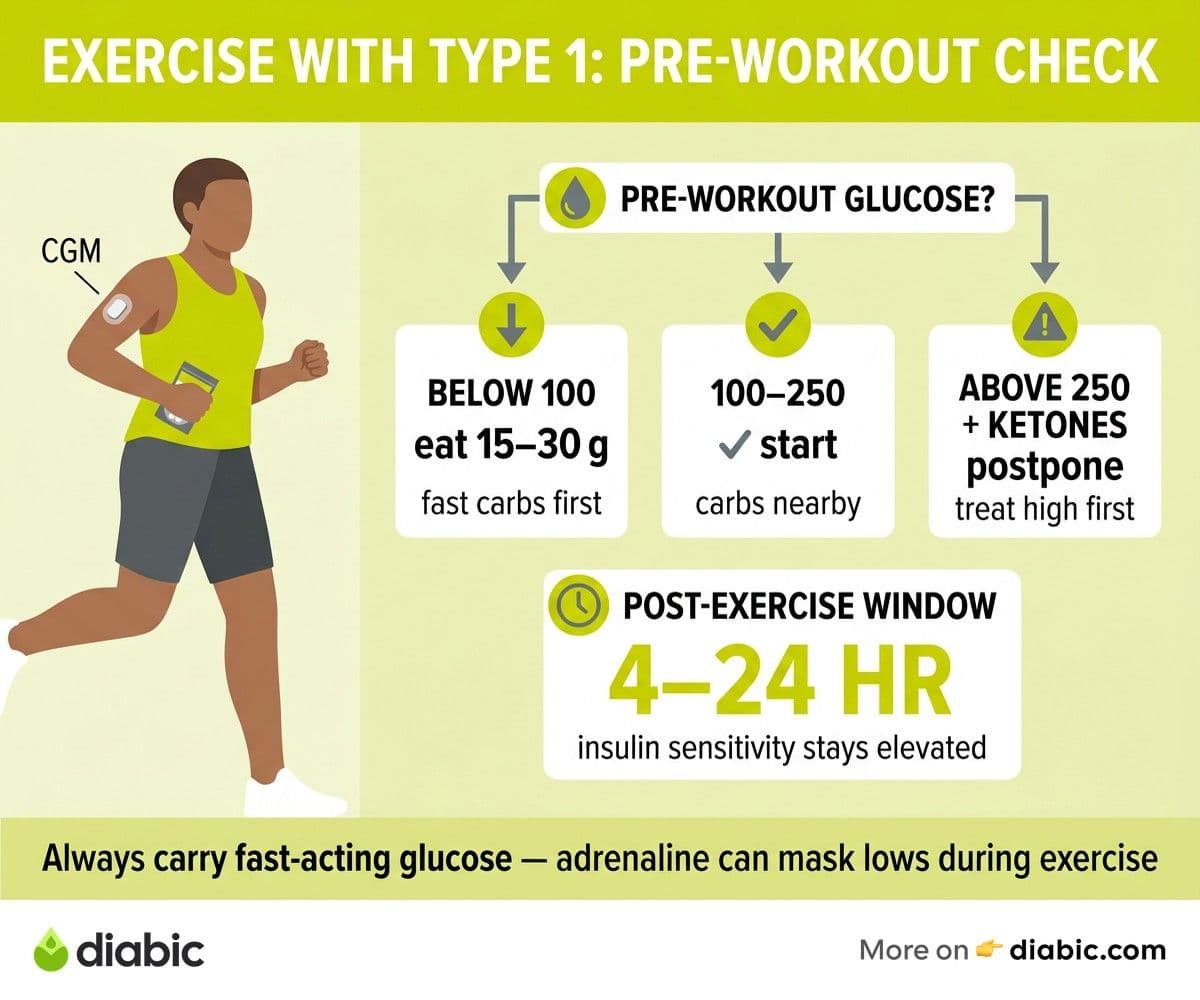
Safety with T1D exercise comes down to one habit: check before, during, and after. Your pre-workout number tells you whether to fuel up, hold off, or proceed normally.
A reasonable framework many clinicians use:
- Below 100 mg/dL: eat 15 to 30 grams of fast-acting carbs before starting
- 100 to 250 mg/dL: usually safe to start; have carbs nearby
- Above 250 mg/dL with ketones present: postpone the session and address the high first
These ranges are general; your care team may suggest different targets based on your insulin regimen, the type of activity, and how your body responds. The Breakthrough T1D exercise resources offer a deeper look at safe pre-exercise targets and adjustments.
Adjusting insulin for planned activity is where most of the personalization happens. People on multiple daily injections might reduce the bolus before an exercise meal. People on pumps often set a lower temporary basal rate 30 to 90 minutes before a workout. Both strategies need a conversation with your care team, which is why our insulin therapy for type 1 explainer is worth a read alongside this post.
Carry fast-acting glucose every time you exercise. Glucose tabs, gels, juice boxes, or even hard candy work. A CGM is a major upgrade for exercise safety, but even with one, having sugar physically on you is non-negotiable. Recognizing low blood sugar symptoms early matters even more during activity, when adrenaline can mask the usual warning signs.
From my experience: in 14 years of living with type 1, the lesson I have relearned the most is that hypos during exercise rarely look the way they do at rest. Instead of shaky hands, I get tunnel vision or a sudden urge to sit down. Once I learned my own personal warning signs, I stopped getting caught off guard.
Best Types of Exercise for Type 1 Diabetes
Different forms of exercise affect blood sugar differently, and knowing the patterns helps you plan. There is no single "best" workout for T1D; the best one is the one you will actually do.
Aerobic Exercise
Walking, jogging, cycling, swimming, and dance classes are all aerobic. They tend to lower blood sugar gradually because muscles take in glucose during sustained activity. Sessions over 30 minutes at a moderate pace are where most people see the steepest drops.
This category is also the most beginner-friendly. A daily 30-minute walk after dinner can lower post-meal blood sugar, improve insulin sensitivity, and add up to meaningful A1C changes over months.
Resistance Training
Strength training behaves differently from aerobic work. Lifting weights, bodyweight circuits, and resistance bands often produce a smaller blood sugar drop and sometimes a temporary rise during the workout because of cortisol and adrenaline.
Long term, resistance training is one of the highest-uses things you can do with T1D. More muscle means more insulin-sensitive tissue, which means lower insulin needs over time. Two to three sessions a week is a strong starting target. The Mayo Clinic's overview of T1D treatment reinforces exercise as a core part of the long-term plan.
HIIT and Mixed-Modal Workouts
High-intensity interval training tends to push blood sugar up during the session and then down afterward, sometimes hours later. The metabolic afterburn is real, but the blood sugar pattern can be unpredictable, especially when you are new to it. Start short, log carefully, and build from there.
Yoga, Stretching, and Low-Impact Movement
Yoga, stretching, tai chi, and walking-based mobility work do not move blood sugar dramatically, but they reduce stress hormones and improve sleep, both of which support better glucose stability. They are excellent on rest days or as add-ons to busier weeks.
Managing Blood Sugar During Workouts
The blood sugar response to exercise depends on the type of activity, the time since your last meal or insulin dose, and dozens of personal variables. A few patterns hold up across most people.
Aerobic exercise tends to lower blood sugar because working muscles pull glucose out of the bloodstream and the cells become temporarily more insulin-sensitive. The longer and steadier the session, the more pronounced the drop.
Anaerobic exercise (sprints, heavy lifting, competitive sports) can temporarily raise blood sugar because the body releases stress hormones that signal the liver to pump out glucose. This is normal and usually reverses within an hour or two.
Carb fueling strategies vary by intensity and duration. A short walk usually needs no extra carbs. A 60-minute moderate run might need 15 to 30 grams beforehand and a small top-up halfway through. An endurance ride often needs 30 to 60 grams per hour. Your care team can help you dial this in.
Post-exercise lows are the part most people underestimate. Your insulin sensitivity stays elevated for 4 to 24 hours after a workout, especially after a hard session. That dinner you bolused normally for can suddenly hit harder than expected. Watch your CGM trend lines into the night, and be especially careful with overnight basal after late-evening workouts. Our living with type 1 diabetes daily guide goes deeper into building these rhythms into your week.
Building a Sustainable Exercise Routine
The most common mistake people with T1D make is going too hard too fast and then giving up because the blood sugar chaos feels not worth it. Sustainable beats intense almost every time.
Start small. Three short walks a week is a real workout. Two 20-minute strength sessions is a real program. The goal in the first month is not transformation; it is building a pattern that survives a busy week.
Track patterns instead of single workouts. One bad blood sugar day after exercise tells you nothing. Three weeks of CGM data after the same workout tells you exactly how to adjust. Look for trends, not anomalies. The NIDDK guidance on physical activity and diabetes is a good companion read.
Work with your care team. Endocrinologists and CDEs (certified diabetes care and education specialists) are used to talking about exercise adjustments. Bring data, not vibes. CGM downloads, pump settings, and a few specific questions get you a much more useful conversation. If you are also navigating prediabetes in a partner or family member, our piece on small lifestyle changes for prediabetes, big results offers a parallel framework for steady, sustainable progress.
Find activities you actually enjoy. The most evidence-based exercise plan in the world fails if you hate doing it. Walking with a podcast, group fitness, swimming, cycling with friends, lifting at home, dance classes (the format barely matters), all that matters is that you keep showing up.
FAQ
How to exercise safely with type 1 diabetes?
Check your blood sugar before starting. If it is below 100 mg/dL, eat a small carb-rich snack first. If it is above 250 mg/dL with ketones, postpone the session and address the high first. Carry fast-acting glucose during workouts, monitor closely afterward (lows can hit hours later), and talk to your care team about adjusting insulin on active days. A CGM makes all of this easier but does not replace the habit of checking and planning.
Best exercises for type 1 diabetes?
Walking, cycling, and swimming are excellent aerobic choices that improve cardiovascular health and insulin sensitivity over time. Resistance training builds muscle, which makes the body more insulin-sensitive and tends to lower long-term insulin needs. Many people with T1D also enjoy yoga and stretching for stress reduction and better sleep. The best exercise is the one you will do consistently, paired with a blood sugar plan that fits your routine and your insulin regimen.
Type one diabetes exercise will probably never feel as predictable as it does for someone without diabetes, and that is okay. What matters is the long arc: showing up, learning your own patterns, and giving your body the gift of regular movement. The numbers eventually follow.
Shahriar P. Shuvo is the founder of Diabic. He has lived with diabetes for over 14 years, and built Diabic to deliver the practical, evidence-based self-management tools he wished existed when he was first diagnosed. By trade, Shahriar is a senior design and frontend engineer with 6+ years shipping products at Agora, Timescale (now Tiger Data), and ShareTrip. He writes from the intersection of lived diabetes experience and product craft, focused on what works in daily management rather than what sounds good in a textbook.
Medically reviewed by
Dr. Rezwana Parvin Rumpa is an obstetrics and gynaecology specialist with clinical focus on gestational diabetes, PCOS, and fertility. She holds the MRCOG (Final Part) from the Royal College of Obstetricians and Gynaecologists in London, the MRCPI (Final Part) from the Royal College of Physicians of Ireland, and an MBBS from Shaheed Monsur Ali Medical College under Dhaka University. Dr. Rumpa serves as a Senior Medical Officer in the Obs and Gynae department at BRB Hospitals Ltd, where she has spent three years managing prenatal care, emergency obstetric cases, and women's-health surgery. On Diabic, she medically reviews content for women living with diabetes, with particular attention to pregnancy, PCOS, and reproductive-health intersections.
More from Diabetes Knowledge
View all
6 Safe Dessert for Gestational Diabetes Recipes You Can
Six dessert for gestational diabetes recipes that satisfy your sweet tooth without spiking blood sugar, with carb counts and pairing tips you can use.

8 High Fiber Foods That Help with Prediabetes
Add these 8 high fiber foods for prediabetes to slow glucose absorption, support steady blood sugar, and meet the daily fiber target most people miss.

Mediterranean Diet for Prediabetes: A Practical Guide
The mediterranean diet for prediabetes is one of the best-studied eating patterns for prevention. Here is what to eat, what to avoid, and how to start.
Clinician-reviewed habits, plain-language guides, and honest answers - the small shifts that make living with diabetes feel lighter, every day.