Sports and Diabetes for Kids: a Safety Guide
A parent's guide to sports and diabetes for kids, with pre-game planning, in-game monitoring, and post-game recovery tips for safe play.

In this article(8)
The question is not whether kids with diabetes can play sports. The answer to that is absolutely yes. The real question is how to plan ahead so they can compete confidently, safely, and without blood sugar getting in the way of the fun. With proper planning, kids with diabetes can play any sport they choose, from soccer leagues to swim teams to gymnastics, and we want to walk you through exactly how to make that happen.
Sports and diabetes for kids is a topic that brings up real worries for parents, and we get it. You want your child to thrive on the field without the constant background hum of anxiety about lows or highs. The good news is that the playbook for safe athletic participation is well established, supported by major medical bodies, and refined by thousands of families who have already lived this. This guide pulls those pieces together so you can step into the next practice or game with a plan you trust.
How Sports Affect Blood Sugar in Children
Different types of activity move blood sugar in different directions, and understanding why helps you stay one step ahead. Aerobic activities like running, swimming, soccer, and cycling generally lower blood sugar because muscles pull glucose from the bloodstream to fuel sustained movement. Anaerobic activities like sprinting, weightlifting, and short bursts of intense play can actually raise blood sugar temporarily because the body releases stress hormones that push glucose into the blood. Most youth sports mix both, which is why a single activity can sometimes pull numbers down and other times nudge them up.
Adrenaline adds another layer of unpredictability, especially during competition. A child who normally trends low during practice may surprise you with a spike before the first whistle of a championship game because excitement triggers a hormonal response. The American Diabetes Association notes that exercise responses vary widely by sport, duration, intensity, and the individual child, which is why a personal pattern matters more than a generic rule. Tracking how your child responds to specific activities over time builds the most reliable map you will ever have.
For families who love the outdoors, the patterns also show up in activities beyond organized teams. If your weekends include trail time, our piece on hiking with diabetes walks through how aerobic effort and elevation can stack on top of each other. The same principles apply to a long soccer tournament or a back-to-back swim meet, where the cumulative effect can extend well past the final score.
Pre-Game Planning for Sports and Diabetes for Kids
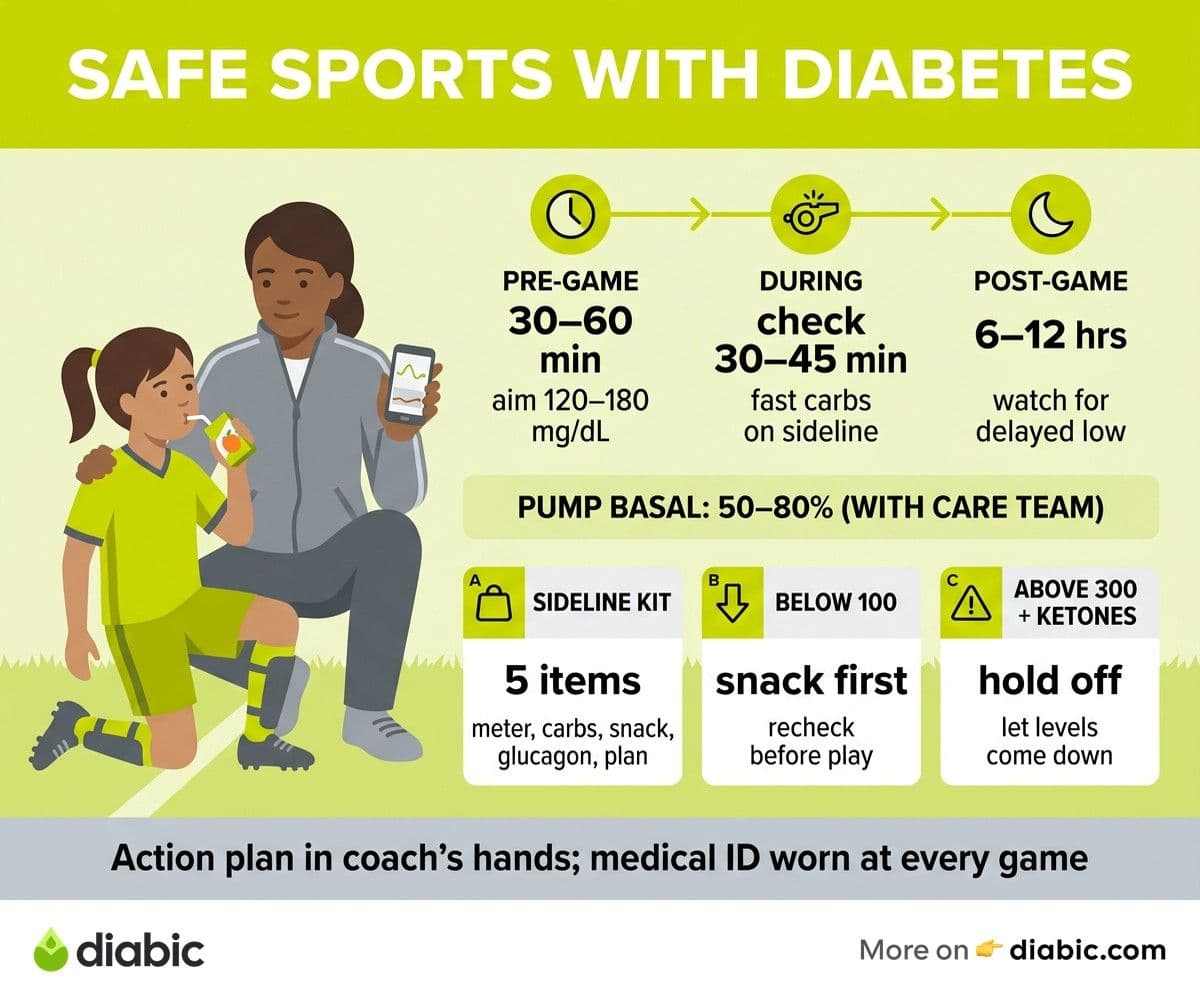
A solid pre-game routine starts about an hour before the activity. We recommend checking blood sugar 30 to 60 minutes before play begins so there is time to react if numbers are off target. Many pediatric endocrinology teams suggest a starting range of roughly 120 to 180 mg/dL for active kids, with a small carb snack added if levels sit lower than that window. Talk to your child's doctor about the exact targets that fit your child, since age, insulin regimen, and the sport itself all shape the right number.
There are two situations where you want to pause and reassess before play. If blood sugar is below 100 mg/dL, a snack and a recheck come first so your child does not start the game already heading toward a low. If blood sugar is above 300 mg/dL with ketones present, intense exercise can actually push numbers higher and add stress to the body, so that is a moment to hold off until levels come down. JDRF guidance for children with type 1 diabetes reinforces this two-sided approach because the goal is keeping kids in a safe zone, not chasing a perfect number.
Pump users often need a temporary basal reduction or a smaller mealtime bolus before exercise, sometimes in the range of a 50 to 80 percent reduction depending on the child and the activity. We will not pretend there is a one-size answer here, because every child reacts differently and the timing of the last meal matters too. Talk to your child's doctor about a personalized pre-exercise insulin adjustment plan, and revisit it as your child grows or changes sports. Once you have a starting plan, log a few sessions and adjust together with your care team based on what the data actually shows.
During the Game: Monitoring and Snacks
Once play starts, the priority shifts to keeping an eye on trends without making your child feel singled out. A continuous glucose monitor with custom alerts set for rapid drops is one of the most useful tools we have seen for active kids. The alert thresholds during sports often differ from the everyday settings, with many families raising the low alert temporarily so there is more cushion for action. Phones, watches, or pump receivers near the bench let a parent or athletic trainer keep watch while the child stays focused on the game.
Fast-acting carbs belong on the sideline at every practice and game, no exceptions. Glucose tabs, juice boxes, and sport gels work well because they absorb quickly and travel easily in a small bag. For longer activities, taking a quick break every 30 to 45 minutes to check a CGM reading or finger stick lets you catch a downward trend before it becomes a low. The American Academy of Pediatrics supports these kinds of structured breaks for kids managing chronic conditions, and most coaches accept them readily once they understand the why.
Here is what we suggest keeping in a sideline kit at every event:
- A meter and test strips as a backup to the CGM
- Fast-acting carbs in two forms, like glucose tabs plus juice
- A small protein-carb combo snack for after activity
- Glucagon for emergency severe lows, with a coach or trainer who knows where it is
- A copy of the action plan with emergency contacts
Coaches and teammates should know the basic signs of a low, including shakiness, sudden mood changes, pale skin, dizziness, or trouble focusing. A quick five-minute conversation at the start of the season usually covers what teammates need to know, and most kids find that their friends step up faster than expected. Normalizing the topic early takes the awkwardness out of every later interaction.
Post-Game Recovery and Delayed Lows
The work is not done when the final whistle blows, because exercise can continue lowering blood sugar for many hours after activity ends. This delayed effect, sometimes called late-onset hypoglycemia, can show up six to twelve hours later and is most concerning overnight. Research published in Diabetes Care has documented this pattern in pediatric type 1 diabetes, which is why post-game vigilance matters as much as pre-game prep. We have seen many families caught off guard the first time, and a few extra checks make all the difference.
A balanced post-game snack with both carbs and protein helps stabilize levels during recovery. Think along the lines of a turkey sandwich, yogurt with fruit, or peanut butter on whole grain bread, depending on what your child enjoys. The carb portion replenishes muscle glycogen, while the protein slows the absorption and supports tissue repair. Hydration matters too, because dehydration can mimic and mask blood sugar symptoms in confusing ways.
For overnight protection on heavy game days, many families set extra CGM alerts and check in once before bed and once a few hours after sleep starts. Pump users sometimes reduce overnight basal rates after intense activity, but this requires guidance from your care team rather than a guess. If you want to go deeper on nighttime patterns, our article on blood sugar drops at night breaks down the common causes and prevention strategies in more detail. The same care team conversations that shape your daytime plan should shape your overnight one.
Communicating with Coaches and Teams
A clear, written diabetes action plan turns a coach from a worried bystander into a confident teammate in your child's care. We recommend a one-page document that lists target ranges, signs of highs and lows, exact response steps, supply locations, and emergency contacts. Keep the language plain and the steps numbered so anyone can follow it under pressure. This document also pairs naturally with the broader school management plan you may already have on file, since many of the same coaches and staff are involved.
A medical ID worn during practice and games is a small habit that matters in real moments. Whether it is a bracelet, a tag on the cleats, or a sticker inside a helmet, first responders are trained to look for it. Designate a responsible adult, often the head coach or an assistant, to carry or know the location of supplies if your child cannot keep them on their person. For sports like swimming or wrestling where pockets and pumps complicate things, a sideline bag with everything labeled does the same job.
Most coaches respond well when they feel informed rather than alarmed. A short pre-season meeting, the action plan handed over in person, and an offer to answer questions usually opens the door to a strong working relationship. Teammates often follow the coach's lead, so a calm and matter-of-fact tone from the adults sets the team culture. If your family is also exploring summer programs, our guide to diabetes summer camp covers how the same communication principles travel to overnight settings where staff become a temporary care village.
FAQ
Can kids with diabetes play sports safely?
Yes, kids with diabetes can play sports safely at every level, from recreational leagues to competitive teams to elite athletics. The keys are a written action plan, pre-game blood sugar checks, sideline supplies, and informed coaches. Plenty of professional and Olympic athletes have type 1 diabetes, and the same fundamentals that support them apply to a seven-year-old at their first soccer practice. Talk to your child's doctor about a sport-specific plan that fits the activity, schedule, and your child's current management.
How do I manage blood sugar during sports for kids?
Managing blood sugar during sports for kids comes down to a simple rhythm of check, prepare, monitor, and recover. Check 30 to 60 minutes before activity and aim for a starting range your care team has set. Prepare with a snack or insulin adjustment if needed, keep fast-acting carbs and a CGM accessible during play, and monitor for delayed lows in the hours after. Logging each session helps you spot patterns over time so the plan keeps improving.
When sports and diabetes for kids feel like a balancing act, remember that small, consistent habits beat any single perfect game day. Pre-game checks, sideline carbs, an action plan in the coach's hands, and a calm post-game routine combine to give your child the same shot at fun, friendship, and growth that every other young athlete enjoys.
Shahriar P. Shuvo is the founder of Diabic. He has lived with diabetes for over 14 years, and built Diabic to deliver the practical, evidence-based self-management tools he wished existed when he was first diagnosed. By trade, Shahriar is a senior design and frontend engineer with 6+ years shipping products at Agora, Timescale (now Tiger Data), and ShareTrip. He writes from the intersection of lived diabetes experience and product craft, focused on what works in daily management rather than what sounds good in a textbook.
Medically reviewed by
Dr. Shanto Arian is an internal medicine physician now specializing in clinical and aesthetic dermatology, with a parallel academic focus on epidemiology and public health. He holds an MBBS, MPH, MSc (UK), MRCP (UK), MRCPI (Ireland), Diploma in Dermatology (UK), and Diploma in Aesthetic Medicine (USA). Dr. Arian trained in internal medicine, including hospital work on hematology cases such as graft-versus-host disease, before moving toward dermatology. Skin is one of the earliest places diabetes shows itself, from acanthosis nigricans and diabetic dermopathy to slow foot wound healing, and that intersection is where his clinical and Diabic-review work meet. On Diabic, Dr. Arian medically reviews content on diabetes diagnosis, complications, dermatologic manifestations, and pharmacotherapy, ensuring every claim aligns with current ADA, NICE, and peer-reviewed literature.
More from Living with Diabetes
View all
A Gentle Chair Yoga Routine for people with diabetes
A gentle chair yoga for people with diabetes routine with safe poses, modifications for neuropathy, retinopathy, and joint pain, plus tips for older.

Shift Work and Diabetes: Managing Irregular Hours
Shift work and diabetes is a tough combination. Learn how to manage meals, sleep, medication, and blood sugar when your hours rotate or flip overnight.

Dating with Diabetes: When to Tell a New Partner
Dating with diabetes brings unique disclosure questions. Here is when to tell a new partner, what to say, and how to handle the conversation with.
Clinician-reviewed habits, plain-language guides, and honest answers - the small shifts that make living with diabetes feel lighter, every day.