Diabetes Road Trip Tips for Meals and Blood Sugar
Diabetes road trip tips for steady blood sugar, smart meal planning, safe insulin storage, and stress-free driving on long stretches of highway.

In this article(8)
A diabetes road trip does not have to mean surviving on gas station beef jerky and diet soda. With a little planning around meals and blood sugar, you can enjoy the open road without your glucose levels going on their own wild ride. The right diabetes road trip tips turn a stressful logistics puzzle into something closer to the carefree highway trips you remember before diagnosis.
Long drives create three predictable problems for anyone managing diabetes: meals get unpredictable, sitting still slows insulin absorption, and heat inside a parked car can quietly damage your supplies. Each one is fixable. The work happens before you even turn the key, with a cooler in the back seat, a route mapped to real meals, and a few habits that travel as well as your playlist. If you are planning bigger adventures, our guide to hiking with diabetes covers the same kind of preparation for the trail.
Planning Meals Before You Hit the Road
Most road trip blood sugar trouble starts with food choices made when you are tired, hungry, and three hours past the last decent exit. The fix is to take those decisions off the table the night before. According to the CDC's nutrition guidance for diabetes, a balanced plate built around vegetables, lean protein, and slow carbs keeps blood sugar steadier than relying on whatever the next rest stop happens to sell.
Pack a cooler with pre-portioned meals and snacks the evening before you leave. Think wraps with grilled chicken and greens, hard-boiled eggs, cut vegetables, Greek yogurt cups, and pre-measured berries. Pre-portioning matters because it removes guesswork at 70 miles per hour. You already know the carb count, you already know the protein, and you can dose accordingly without doing math at a picnic table.
Bring a backup bag of foods that travel well without refrigeration in case the cooler ice melts or the trip stretches longer than planned. Almonds, walnuts, individually wrapped cheese rounds, whole-grain crackers, jerky, and shelf-stable nut butter packets all hold up well. Keep this bag within reach of the front seat so you are not climbing into the trunk during a low.
Map your route with meal-friendly stops every two to three hours. Apps like Google Maps and AllTrails (for scenic detours) let you scout sit-down restaurants instead of defaulting to drive-thrus. If a fast-food stop is unavoidable, download the chain's nutrition information ahead of time so you can pick a grilled option or a salad with confidence rather than scrolling menus while parked sideways.
Best Road Trip Snacks for Stable Blood Sugar
Smart snacking is what keeps blood sugar from dipping or spiking between meals. The goal is slow energy: foods with protein, fat, and fiber that release glucose gradually instead of dumping it into your bloodstream all at once. Our list of 8 foods that won't spike your blood sugar is a good reference for building your snack lineup, and most of those foods travel beautifully in a cooler.
Nuts and seeds top the list for a reason. A small handful of almonds, walnuts, or pumpkin seeds delivers protein, healthy fat, and magnesium without the carb load that triggers a peak. Portion them into snack bags ahead of time so you are not pouring an unmeasured pile into your palm at 60 miles per hour.
Cheese sticks, babybel rounds, and individual cottage cheese cups give you protein with almost no carbs, which is exactly what you want when blood sugar is already running on the higher side. Pair them with a few whole-grain crackers if you need more sustained fuel. Veggie sticks with single-serve hummus cups bring fiber and crunch and feel a lot less monotonous than a bag of pretzels four hours into a drive.
Skip the candy aisle, the chip bags, and the sugary drinks at gas station counters unless you are treating a low. Those foods are engineered for a fast hit and a faster crash, which is the worst pattern for someone trying to stay alert behind the wheel. Sparkling water, unsweetened iced tea, and plain coffee are better defaults for the cup holder.
Managing Blood Sugar While Traveling
Driving is a sustained cognitive task, and even mild hypoglycemia slows reaction time. The American Diabetes Association recommends that anyone using insulin or sulfonylureas check blood sugar before driving and treat any reading below 70 mg/dL before getting back on the road. Many endocrinologists go further and suggest pulling over if you drop below 90 mg/dL, since glucose can keep falling while you drive.
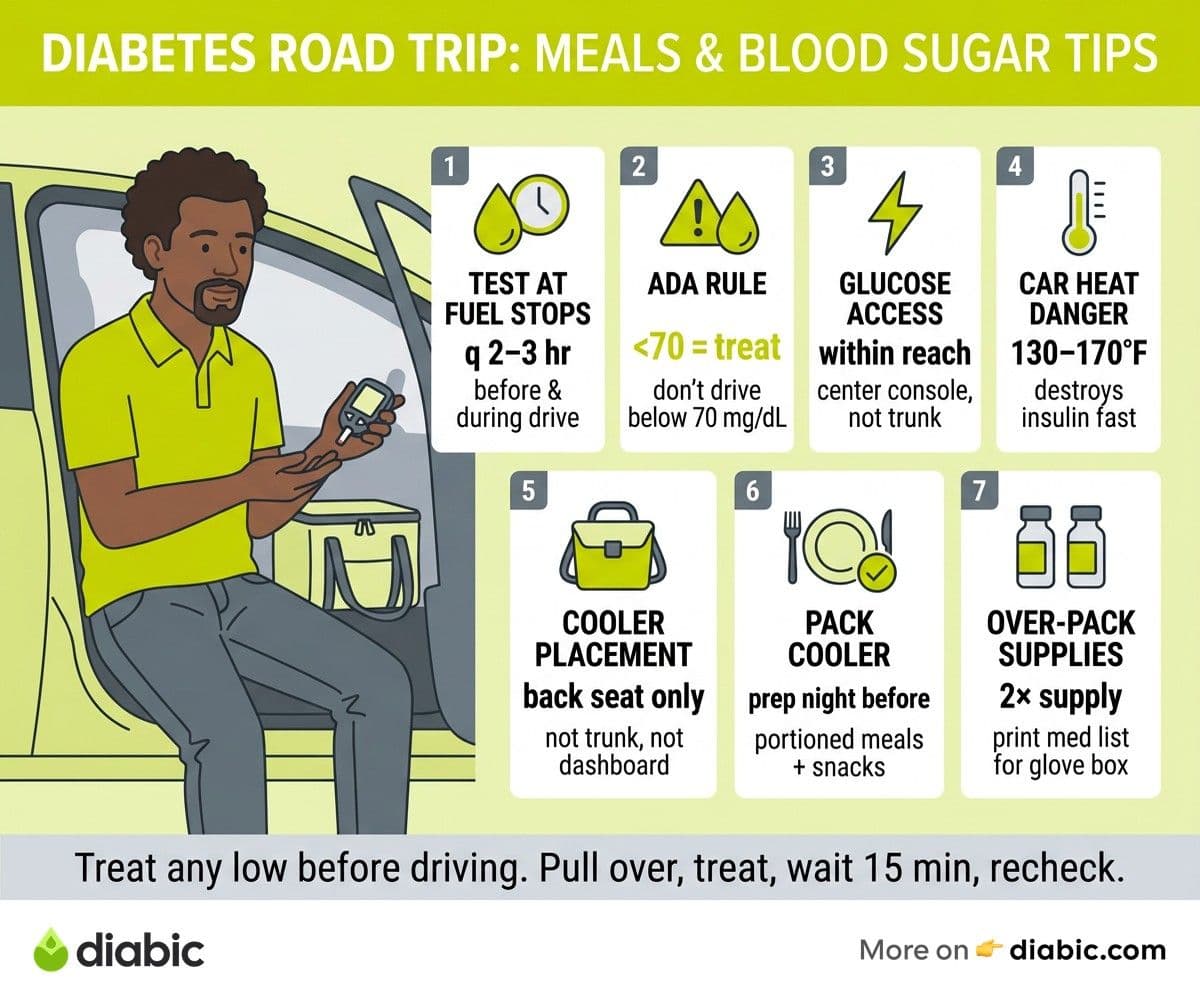
Check your blood sugar before you start the car and again every two to three hours, ideally at fuel stops so the rhythm is built into the trip. If you wear a CGM, set your low alert a little higher than usual on travel days. The buffer gives you time to pull over and treat before the number gets serious.
Keep fast-acting glucose where you can grab it without looking, which usually means the center console or a clip on the dashboard. Glucose tablets, juice boxes, or hard candy all work. Stashing them in the trunk does you no good when you are already shaky and trying to merge. The National Highway Traffic Safety Administration treats medical impairment seriously, and a blood sugar low absolutely qualifies. Pull over, treat, wait 15 minutes, and recheck before driving again. If you are traveling with another adult who can drive, swap seats at the first sign of a low rather than pushing through. The same advice applies to managing blood sugar during long meetings where you cannot easily step away.
Insulin Storage in the Car
A parked car in summer can hit 130 to 170 degrees Fahrenheit inside, which destroys insulin within hours. According to the ADA, insulin should stay between 36 and 86 degrees Fahrenheit, and direct heat ruins it permanently even if it looks fine. Treat your insulin like the temperature-sensitive medication it is, not like another item in your bag.
Use an insulated cooler bag with reusable gel packs in the back seat, where temperatures stay closer to ambient than the dashboard or trunk. The Frio wallet, vivi cap, and similar evaporative cooling sleeves work without refrigeration and are useful as a second layer of protection. Keep one pen or vial in your travel cooler and a backup in a second insulated case in case one fails.
When you stop, park in the shade if you can find it and bring insulin inside with you for any stop longer than 15 minutes. This sounds excessive until the first time you forget and watch your strips roll out of a 110-degree glove box. For multi-day trips, refreeze gel packs in the hotel freezer overnight and rotate them into your day bag in the morning. For deeper detail on cooler choice, ice pack rotation, and air travel rules, our full guide to insulin storage while traveling walks through the gear and the timing.
From my experience: I drove from Boston to North Carolina the summer I was 28, two years into pumping, and made the rookie mistake of leaving my pump supplies in the trunk during a four-hour lunch in Virginia. Every infusion set in that case was warped by the time I opened the bag. Now I keep a small soft cooler with insulin and supplies on the floor behind the passenger seat, and it never leaves the cabin when I do.
Diabetes Road Trip Tips Pre-Trip Checklist
Pack twice as much insulin and supplies as you think you need. Trips run long, vials drop and break, and pump sites fail at the worst moments. Doubling up costs nothing and saves more than one ruined vacation.
Bring a printed list of your medications, dosages, your doctor's contact information, and your insurance details. Keep it in the glove box separate from your phone, in case the phone dies or gets locked in a charging cable knot somewhere outside Albuquerque. If you cross state lines, pharmacies can usually fill an emergency supply with that information if you absolutely need to refill on the road.
Pack a small "low kit" within arm's reach: glucose tablets, juice, a granola bar with protein, and a backup meter or extra CGM sensor. Wear medical ID, even if you usually do not. First responders look for it, and a quick glance at a bracelet during a roadside stop can change how you are treated.
FAQ
What are the best road trip snacks for people with diabetes?
The best road trip snacks for people with diabetes pair protein or fat with fiber to slow glucose release. Almonds and other nuts, cheese sticks, hard-boiled eggs, Greek yogurt, vegetables with hummus, and jerky all keep blood sugar steadier than chips, candy, or sugary drinks. Pre-portion snacks into single servings the night before so you know exact carb counts on the road.
How do I plan meals on a road trip with diabetes?
Plan meals on a road trip by packing a cooler with pre-portioned breakfasts, lunches, and snacks the evening before you leave, then mapping rest stops every two to three hours along your route. Download nutrition information for any fast-food chains you might hit, choose grilled or salad options, and keep a backup bag of shelf-stable foods like nuts and crackers in case ice melts or stops run long. Test blood sugar at every fuel stop so you can adjust before a number gets out of range.
These diabetes road trip tips are not about being perfect on the highway. They are about removing the variables you can remove so the rest of the trip feels like the trip you came for. Pack the cooler, set the alarms, treat the lows, and enjoy the drive.
Shahriar P. Shuvo is the founder of Diabic. He has lived with diabetes for over 14 years, and built Diabic to deliver the practical, evidence-based self-management tools he wished existed when he was first diagnosed. By trade, Shahriar is a senior design and frontend engineer with 6+ years shipping products at Agora, Timescale (now Tiger Data), and ShareTrip. He writes from the intersection of lived diabetes experience and product craft, focused on what works in daily management rather than what sounds good in a textbook.
Medically reviewed by
Dr. Shanto Arian is an internal medicine physician now specializing in clinical and aesthetic dermatology, with a parallel academic focus on epidemiology and public health. He holds an MBBS, MPH, MSc (UK), MRCP (UK), MRCPI (Ireland), Diploma in Dermatology (UK), and Diploma in Aesthetic Medicine (USA). Dr. Arian trained in internal medicine, including hospital work on hematology cases such as graft-versus-host disease, before moving toward dermatology. Skin is one of the earliest places diabetes shows itself, from acanthosis nigricans and diabetic dermopathy to slow foot wound healing, and that intersection is where his clinical and Diabic-review work meet. On Diabic, Dr. Arian medically reviews content on diabetes diagnosis, complications, dermatologic manifestations, and pharmacotherapy, ensuring every claim aligns with current ADA, NICE, and peer-reviewed literature.
More from Living with Diabetes
View all
A Gentle Chair Yoga Routine for people with diabetes
A gentle chair yoga for people with diabetes routine with safe poses, modifications for neuropathy, retinopathy, and joint pain, plus tips for older.

Shift Work and Diabetes: Managing Irregular Hours
Shift work and diabetes is a tough combination. Learn how to manage meals, sleep, medication, and blood sugar when your hours rotate or flip overnight.

Dating with Diabetes: When to Tell a New Partner
Dating with diabetes brings unique disclosure questions. Here is when to tell a new partner, what to say, and how to handle the conversation with.
Clinician-reviewed habits, plain-language guides, and honest answers - the small shifts that make living with diabetes feel lighter, every day.