Dental Care for people with diabetes: Tips That Help
Practical dental care diabetics need, with real tips for protecting teeth and gums when diabetes raises your risk for oral health problems.

In this article(12)
The dental hygienist looks up from your chart and asks, almost casually, "How is your blood sugar been lately?" That question catches a lot of people off guard, but it is one of the most important things a hygienist can ask. Your mouth tells a story about your overall health, and when you live with diabetes, the story gets more complicated. The dental care people with diabetes rely on, often searched in those exact words online, has to account for shifts in saliva, healing, and infection risk that other patients do not face the same way.
Dental care people with diabetes need is not radically different from what everyone else needs, but the stakes are higher and a few details matter more. Diabetes changes how your body fights infection, heals tissue, and produces saliva, which means brushing twice and flossing once does not always cover you the way it covers someone without diabetes. The American Dental Association has been clear for years that people with diabetes face higher rates of gum disease, dry mouth, and tooth decay.
This guide pulls together the practical tips that genuinely help. We will walk through why dental care matters more, the daily habits that move the needle, how to think about checkups, and how to coordinate your dental and medical teams so neither one is working in the dark.
Why Does Dental Care Matter More for People With Diabetes
The link between blood sugar and gum health runs in both directions, which is why oral care belongs in your diabetes management plan. The American Diabetes Association explains that high blood sugar weakens the immune cells that fight bacteria in your gum tissue, and the resulting inflammation makes blood sugar harder to manage. Each side feeds the other.
Dry mouth piles on. When glucose runs high, dehydration reduces saliva production, and saliva is your mouth's main natural defense against decay. Less saliva means more cavity-causing bacteria stick around longer, and acid sits on enamel longer too. Our companion piece on dry mouth causes and home remedies digs into the mechanism.
Healing also takes longer. After a routine cleaning, an extraction, or any procedure that breaks the gum seal, recovery is slower with diabetes. That is partly because of reduced blood flow in chronically high-glucose tissue and partly because elevated glucose feeds the bacteria you are trying to clear out. The practical implication is that dental work needs more thoughtful planning, not more avoidance.
The Journal of Periodontology has published extensive research on the bidirectional gum disease and diabetes relationship, showing that treating periodontal disease can lower A1C in some patients by a small but meaningful amount. That is a useful reframe: cleaning your teeth is part of managing your diabetes, not a separate chore.
Daily Dental Care People With Diabetes Should Build Into Their Routine
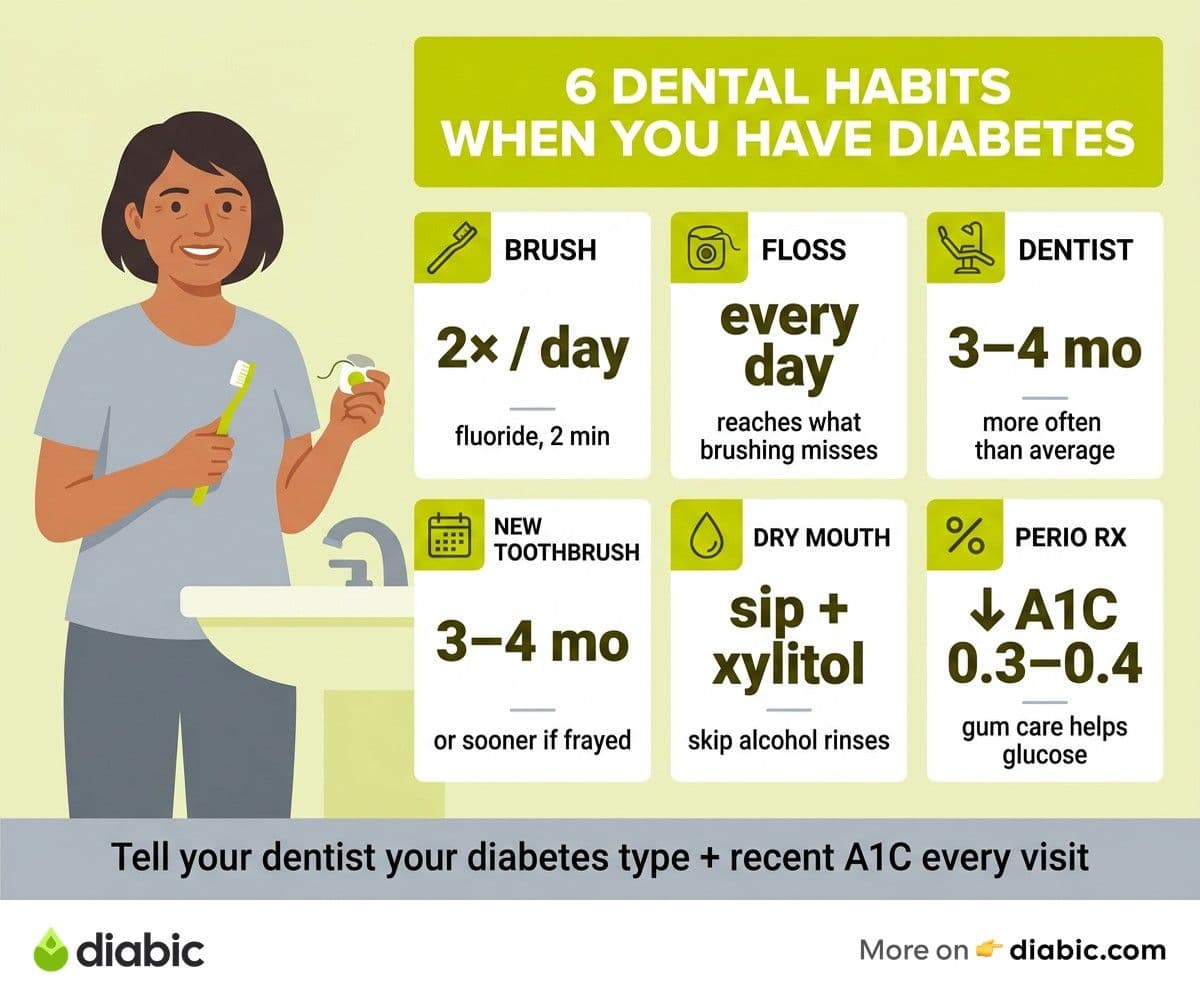
Brushing twice a day with fluoride toothpaste is non-negotiable, but the technique matters as much as the frequency. Use a soft-bristled brush, hold it at a 45-degree angle against the gumline, and move in short gentle strokes for a full two minutes. Electric toothbrushes with pressure sensors and timers can take the guesswork out, especially for people with neuropathy in the hands.
Flossing daily is the habit most people skip, and it is the one that matters most for gum health. Brushing reaches about 60 percent of tooth surfaces, leaving the spaces between teeth where gum disease tends to start. Whether you use traditional floss, a water flosser, or interdental brushes is less important than doing it once a day, every day.
Antibacterial or fluoride mouth rinses add a layer of defense, but choose carefully. Skip alcohol-based rinses if you deal with dry mouth, and rotate antibacterial rinses with your dentist's guidance to avoid disrupting the helpful oral microbiome long term. Look for rinses with cetylpyridinium chloride, stannous fluoride, or xylitol depending on your specific risk profile.
Manage dry mouth proactively rather than waiting for symptoms to worsen:
- Sip water through the day rather than gulping at meals
- Chew sugar-free gum with xylitol after meals to stimulate saliva
- Run a humidifier at night if morning mouth feels parched
- Skip alcohol-based mouthwashes that strip moisture
Quitting smoking is the single biggest thing a smoker can do for their gum health, full stop. Smoking dramatically increases gum disease risk and slows healing on top of the existing diabetes effect. The combination is rough on tissue, and tobacco cessation usually shows visible improvement in gum tissue within months.
Preventing Gum Disease With Diabetes
Early gum disease, called gingivitis, is the warning stage and it is fully reversible with good care. Watch for gums that bleed when you brush or floss, redness or puffiness along the gumline, persistent bad breath that does not respond to brushing, and a tender feeling when you eat anything firm. These are not normal, even though many people brush them off as such.
Once gingivitis advances to periodontitis, the damage to the bone supporting your teeth becomes harder to reverse. Pockets form between gums and teeth, plaque hardens into tartar below the gumline, and tooth loss eventually follows if the process continues unchecked. People with diabetes progress along this spectrum faster than people without, which is the main reason early detection matters so much.
Professional cleanings every three to four months catch what home care misses. Tartar can only be removed with dental instruments, and the spaces beneath the gumline where periodontal bacteria thrive are not reachable with floss or a brush. The cleaning itself disrupts bacterial colonies and gives your gum tissue a chance to recalibrate. Our deeper guide on diabetes and gum disease prevention covers warning signs and treatment options in detail.
Blood sugar management directly affects how fast gum disease progresses. The Centers for Disease Control and Prevention reports that people with poorly managed glucose have markedly higher rates of advanced gum disease than those with stable A1C. Steady glucose is one of the strongest tools you have for protecting your gums, even more so than choice of toothpaste or brush.
How Often Should You Visit the Dentist
The standard twice-a-year recall is built around average risk, and diabetes pushes you above average. Most dentists recommend that people with diabetes visit every three to four months, especially if there is any history of gum disease, dry mouth, or recent A1C changes. Our diabetic dental checkup frequency guide breaks down how to choose the right interval for your situation.
Tell your dentist everything relevant at the first visit and update them whenever something changes. They need to know your diabetes type, current medications including insulin, recent A1C if you have it, hypoglycemia history, and whether you have any complications like kidney disease or neuropathy. None of this is oversharing; it shapes how they plan your care.
For procedures more involved than a cleaning, think ahead about timing. Schedule appointments for mid-morning when stress hormones tend to be lower and you have eaten breakfast. Bring your meter or CGM, glucose tabs, and any prescribed glucagon. If you take insulin or medications that can cause lows, ask your dentist or doctor about adjustments before complex work.
Some procedures may require pre-treatment planning, including antibiotic premedication in select cases, blood sugar checks during long appointments, and post-procedure care plans that account for slower healing. None of these are reasons to avoid dental work; they are just smart additions to a normal protocol.
Protecting Against Tooth Decay
Cavity risk climbs with diabetes, and the diabetes and tooth decay connection involves more than just sugar in the diet. Reduced saliva, elevated glucose in saliva itself, and gum recession that exposes vulnerable root surfaces all combine to make decay more likely.
Diet choices that protect teeth and support stable blood sugar tend to overlap. Limit sticky carbohydrates that cling to teeth, including dried fruit and sweetened cereal, and pair carbs with protein or fat to slow the glucose spike and the time food sits on enamel. Drinking water after meals helps clear residue and rehydrate the mouth.
From my experience: After fourteen years with type 1, I learned that my dental visits track my A1C almost perfectly. The years my numbers drifted higher, my hygienist noticed before I did, more bleeding at cleanings, faster tartar buildup, and once a cavity in a tooth that had been untouched for a decade. Now I treat my dental appointments like a second A1C check.
Fluoride does heavy lifting. Brush with a fluoride toothpaste, ask your dentist about prescription-strength options if your cavity rate is climbing, and consider in-office fluoride varnish at every cleaning. Sealants on molars are not just for kids; adults at high decay risk benefit from them too.
Working With Your Dental and Medical Teams
Your dentist and your endocrinologist or primary care provider should be talking to each other, even if they never literally pick up a phone. You are the messenger, and the more both teams know, the better care they can deliver.
Bring an updated medication list to every dental appointment. Some diabetes medications interact with anesthetics, and some increase bleeding risk. Antibiotics prescribed for dental infections can also affect blood sugar in unexpected ways. Your dentist needs the full picture before they prescribe or treat.
Coordinate timing for any procedure that disrupts eating. If you take insulin, a procedure that prevents you from chewing for several hours requires planning. Talk through your typical insulin timing, ask whether the procedure should be moved to a window with stable glucose, and have a plan for soft foods and sugar checks afterward.
Dental problems sometimes signal diabetes management issues before lab work does. A sudden increase in bleeding gums, new cavities, persistent oral infections, or oral thrush often shows up around the same time as a quiet drift higher in A1C. Treat new dental problems as worth a glucose review, not just a brushing review.
Frequently Asked Questions
What dental care tips help people with diabetes the most?
Brushing twice daily with fluoride toothpaste, flossing once a day, managing dry mouth proactively, and going to the dentist every three to four months. Pair those with steady blood sugar management and you cover most of the elevated risk that comes with diabetes.
Why does dental care matter more for people with diabetes?
Diabetes increases the risk of gum disease, tooth decay, dry mouth, and oral infections. Poor oral health can also make blood sugar harder to manage, which creates a feedback loop. Good dental care is one of the levers that helps break that loop.
Can good dental care help my A1C?
Research suggests it may help. Studies of people with periodontitis show that effective gum disease treatment can produce a small reduction in A1C, often around 0.3 to 0.4 points. It is not a substitute for medication or lifestyle changes, but it is a piece of the puzzle.
Should I tell my dentist about my diabetes?
Always. Your dentist needs to know your diabetes type, current medications, recent A1C, hypoglycemia history, and any complications. That information shapes everything from appointment timing to medication choices to post-procedure care.
How often should I replace my toothbrush?
Every three to four months, or sooner if the bristles are visibly frayed. People recovering from oral infections should replace their brush after the infection clears to avoid reintroducing bacteria.
The dental care people with diabetes can actually stick with is the version that becomes routine, not the version that demands perfection. Daily brushing and flossing, smart product choices, regular professional cleanings, and an open line of communication with your dental and medical teams give you a strong foundation. Add steady blood sugar management on top, and your mouth gets a real shot at staying healthy through the decades you live with diabetes.
Shahriar P. Shuvo is the founder of Diabic. He has lived with diabetes for over 14 years, and built Diabic to deliver the practical, evidence-based self-management tools he wished existed when he was first diagnosed. By trade, Shahriar is a senior design and frontend engineer with 6+ years shipping products at Agora, Timescale (now Tiger Data), and ShareTrip. He writes from the intersection of lived diabetes experience and product craft, focused on what works in daily management rather than what sounds good in a textbook.
Medically reviewed by
Dr. Rezwana Parvin Rumpa is an obstetrics and gynaecology specialist with clinical focus on gestational diabetes, PCOS, and fertility. She holds the MRCOG (Final Part) from the Royal College of Obstetricians and Gynaecologists in London, the MRCPI (Final Part) from the Royal College of Physicians of Ireland, and an MBBS from Shaheed Monsur Ali Medical College under Dhaka University. Dr. Rumpa serves as a Senior Medical Officer in the Obs and Gynae department at BRB Hospitals Ltd, where she has spent three years managing prenatal care, emergency obstetric cases, and women's-health surgery. On Diabic, she medically reviews content for women living with diabetes, with particular attention to pregnancy, PCOS, and reproductive-health intersections.
More from Health & Complications
View all
Diabetes and Dental Implants: What to Know First
Diabetes dental implants guide covering safety, A1C targets, recovery expectations, gum health prep, and what to ask your oral surgeon before surgery.

Burning Mouth Syndrome and Diabetes Explained
Burning mouth syndrome diabetes link explained, including neuropathy, dry mouth, and thrush causes plus treatment options that may bring real relief.

Diabetes and Tooth Decay: The Real Connection
Diabetes tooth decay is more than a sugar issue. Learn the real biological connection and how to prevent cavities when blood sugar runs high.
Clinician-reviewed habits, plain-language guides, and honest answers - the small shifts that make living with diabetes feel lighter, every day.