Can You Have Neuropathy Without Diabetes? Causes
Wondering if you can have neuropathy without diabetes? Learn the other common causes, how diagnosis works, and what treatment options may help.

In this article(20)
If you have been dealing with tingling toes, burning hands, or strange numb patches, you have probably typed your symptoms into a search bar and felt your stomach drop. The first hit usually points to diabetes. So a fair question lands in your head: can you have neuropathy without diabetes, or does this always mean a glucose problem?
The short answer is yes, neuropathy can happen without diabetes. While diabetes is the most common single cause of nerve damage, it is far from the only one. Vitamin issues, autoimmune disease, infections, certain medications, alcohol use, and even old injuries can all damage the same nerves.
Understanding the wider picture helps you ask better questions at your next appointment. It also helps you avoid two common mistakes: assuming diabetes is the cause when it is not, and dismissing diabetes as a possibility when it actually deserves a closer look.
Can You Have Neuropathy Without Diabetes? Yes, It Happens
Peripheral neuropathy is damage to the nerves outside the brain and spinal cord. These nerves carry signals to your skin, muscles, and internal organs. When they get hurt, you feel it as numbness, tingling, burning, weakness, or sharp shooting pain.
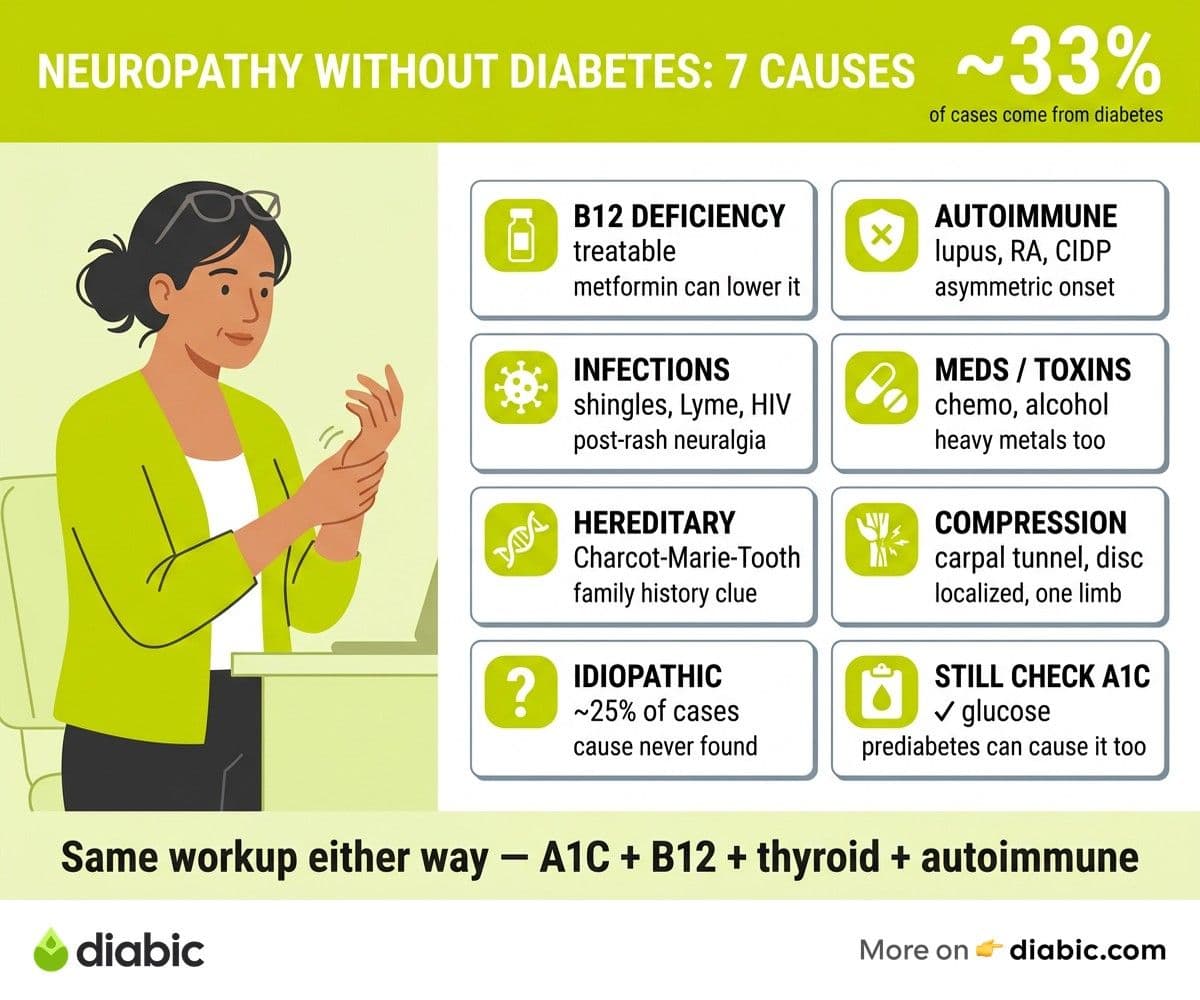
Diabetes accounts for roughly a third of peripheral neuropathy cases in the United States, according to the National Institute of Neurological Disorders and Stroke. The rest of the cases come from a long list of other causes, or have no identified cause at all and are labeled idiopathic.
That detail matters. If you have nerve symptoms but a normal A1C and a normal fasting glucose, your doctor still has plenty of work to do. Skipping past the search for a cause and starting symptom-only treatment can mean missing something treatable, like a B12 deficiency or a thyroid problem.
Why this question matters for people without a diabetes diagnosis
People often arrive at their primary care office worried about diabetes specifically because of nerve symptoms. That is a reasonable concern, since diabetic peripheral neuropathy is the most common long-term complication of diabetes. But the same symptoms can come from a dozen other places.
Getting a clear answer takes a structured workup. Until that happens, it is fair to feel uncertain. The goal of this article is to widen your view of what could be going on and help you partner with your provider on the next step.
Common Causes of Non-Diabetic Neuropathy
When a clinician evaluates nerve symptoms in someone without diabetes, they think through several big categories. Each one has its own pattern and its own treatment direction.
Vitamin deficiencies
Low vitamin B12 is a frequent and reversible cause of neuropathy, especially in older adults, vegetarians, and people on long-term metformin or acid-blocking medications. According to the Mayo Clinic, B vitamins, vitamin E, and copper all play roles in nerve health, and shortages of any of them can produce tingling and weakness.
Too much vitamin B6 from supplements can also damage nerves, which surprises many people. More is not always better. A simple blood test can sort this out before you spend years guessing.
Autoimmune disorders
Conditions like lupus, rheumatoid arthritis, Sjogren syndrome, and Guillain-Barre syndrome can cause the immune system to attack nerve tissue. The pattern often differs from diabetic neuropathy. Symptoms may come on more rapidly, affect one side of the body, or include muscle weakness alongside the sensory changes.
Chronic inflammatory demyelinating polyneuropathy, often shortened to CIDP, is another autoimmune cause that responds to specific treatments your neurologist can offer.
Infections
Some infections damage nerves directly or trigger an immune response that does. Shingles can leave behind a painful condition called postherpetic neuralgia. Lyme disease, HIV, hepatitis C, and certain other viral and bacterial infections can also cause peripheral neuropathy.
If your symptoms began after a tick bite, a shingles rash, or a serious illness, that timeline is worth flagging clearly to your doctor.
Medications and toxins
Several common medications carry a risk of nerve damage as a side effect. Chemotherapy drugs are the best-known example, but the list also includes some antibiotics, certain HIV medications, and a few drugs used for heart conditions. The NIDDK and other sources note that toxins like heavy metals can also produce neuropathy.
Heavy alcohol use is another major contributor, both through direct nerve toxicity and through the nutritional deficiencies that often come with it.
Hereditary conditions
Some people inherit a tendency toward nerve damage. Charcot-Marie-Tooth disease is the most common inherited neuropathy, and it usually shows up as gradually progressing foot weakness and high arches over years or decades. A family history of similar symptoms is a strong clue.
Physical injury or compression
Not all nerve trouble is systemic. Carpal tunnel syndrome, herniated discs, and old sports injuries can pinch or stretch a single nerve. The pattern is usually limited to one limb or one nerve distribution rather than a balanced, both-sides picture.
How Non-Diabetic Neuropathy Compares to Diabetic Neuropathy
The symptoms of nerve damage overlap a lot from one cause to another. Tingling, numbness, burning, electric-shock pain, and balance trouble all show up in many forms of neuropathy. That is why doctors look at the pattern and the timing rather than the symptoms alone.
Diabetic peripheral neuropathy classically starts in the toes and works its way up over time, eventually involving the fingers in what clinicians call a stocking-glove pattern. It is usually symmetric, meaning both feet are affected fairly equally. People with diabetes also often experience foot numbness and changes in sensation before they notice pain.
Non-diabetic causes can break that pattern. Autoimmune neuropathies sometimes hit one limb first or jump around. Vitamin B12 deficiency can affect the spinal cord as well as the peripheral nerves, producing balance problems out of proportion to the foot tingling. A pinched nerve produces a sharply localized symptom map rather than a glove-and-stocking distribution.
From my experience: when I was first diagnosed with type 1 diabetes 14 years ago, I assumed any future tingling I felt would obviously be from diabetes. Years later I had a stretch of hand numbness that turned out to be carpal tunnel from a bad keyboard setup, not diabetic neuropathy at all. The lesson stuck with me. Symptoms tell you something is wrong, but they do not tell you what.
Getting the Right Diagnosis
If you have ongoing nerve symptoms, an organized workup is the fastest way to an answer. Most evaluations follow a similar shape, even if the order varies by clinic.
A thorough history comes first. Your provider will ask when symptoms started, how they have changed, what makes them better or worse, and whether anyone in your family has had similar trouble. They will also review every medication and supplement you take, since this list itself can solve some cases.
Blood work usually follows. According to the American Diabetes Association Standards of Care, glucose and A1C testing should be part of any neuropathy workup, even when diabetes is not suspected, because prediabetes alone is now recognized as a possible cause of nerve damage. Tests typically also include vitamin B12, folate, thyroid function, kidney function, and screens for autoimmune disease, depending on your story.
Nerve conduction studies and electromyography (EMG) measure how well your nerves and muscles are signaling. They help confirm neuropathy, sort out whether it affects mostly sensory or motor nerves, and identify a single pinched nerve versus a body-wide process.
Why ruling out diabetes and prediabetes still matters
Even if you do not have a diabetes diagnosis on paper, glucose testing is worth doing. The CDC estimates that more than 1 in 3 American adults have prediabetes, and most do not know it. Catching elevated glucose early gives you time to act through lifestyle changes, sometimes before nerve damage progresses.
If your testing is normal, you and your doctor can move on to other causes with confidence rather than circling back to diabetes later.
Treatment Approaches for Non-Diabetic Neuropathy
The single most important step is treating the underlying cause when one is found. That principle drives most of the early decisions.
If a vitamin deficiency turns up, replacement may slowly reverse symptoms over months. If a medication is the culprit, your prescriber may switch you to an alternative. If an autoimmune condition is in the mix, treatment of that disease may quiet the nerve symptoms as well. Symptoms that took years to appear rarely vanish overnight, but many people see steady improvement once the root cause is addressed.
Pain management often runs alongside cause-directed treatment. Many of the same medications used for diabetic nerve pain also help non-diabetic neuropathy, including duloxetine, gabapentin, pregabalin, and certain topical agents. The choice depends on your other health conditions and what your insurance covers. Talk to your doctor about which option might fit your situation, and review the broader picture of diabetic neuropathy treatment options since the playbook overlaps significantly.
Physical therapy can help with balance, strength, and protecting yourself from falls. Some people benefit from acupuncture, transcutaneous electrical nerve stimulation, or supervised exercise programs. Research suggests regular aerobic activity may help nerve function over time, though more studies are needed for non-diabetic groups specifically.
For people whose neuropathy turns out to be related to diabetes or prediabetes after all, a related question naturally follows: can diabetic neuropathy be reversed? The honest answer is mixed, but earlier action gives you better odds.
Living With the Uncertainty
Non-diabetic neuropathy can stay idiopathic even after a complete workup. That is frustrating, and it is also common. Roughly a quarter of cases never receive a clear cause despite thorough testing.
If that is where you land, focus on what you can manage. Track which activities ease or worsen your symptoms. Protect your feet, since reduced sensation makes injuries easier to miss. Stay in regular contact with your provider so any new clue, whether a lab change or a new symptom, can be folded into the picture.
Many people find that a slow and steady approach beats chasing every new supplement or alternative remedy online. Pick a few changes, give them a fair trial, and keep notes you can share at your next visit.
FAQ
What causes neuropathy if you do not have diabetes?
Common non-diabetic causes include vitamin B12 deficiency, autoimmune disorders, infections like shingles and Lyme disease, certain medications such as chemotherapy agents, alcohol use, hereditary conditions, and physical nerve compression. Some cases remain idiopathic even after testing.
Is neuropathy always a sign of diabetes?
No. Diabetes is the most common single cause of peripheral neuropathy, but the majority of cases come from other causes or are idiopathic. A complete workup is needed to identify the source.
Should you get tested for diabetes if you have neuropathy?
Yes. Even if you have no other diabetes symptoms, glucose and A1C testing are part of a standard neuropathy workup. Prediabetes alone can cause nerve damage, and catching it early opens the door to lifestyle changes that may help.
Can non-diabetic neuropathy be reversed?
Sometimes. When a treatable cause is identified, like a vitamin deficiency or a medication side effect, addressing the cause may improve symptoms over time. Hereditary or idiopathic cases tend to be more stable, with treatment focused on managing symptoms.
How long does diagnosis usually take?
It varies. Some cases resolve quickly with one blood panel, while others require a neurologist, nerve conduction studies, and several months of follow-up. Patience and good notes between visits help the process move along.
If you suspect your symptoms could be related to blood sugar even without a formal diagnosis, our community shares practical experience around early signs and screening conversations every day. The honest answer to the question can you have neuropathy without diabetes is yes, often, and sometimes the cause is something more treatable than you expect. The work is in pushing past the easy assumption and partnering with a provider who is willing to look at the whole picture.
Shahriar P. Shuvo is the founder of Diabic. He has lived with diabetes for over 14 years, and built Diabic to deliver the practical, evidence-based self-management tools he wished existed when he was first diagnosed. By trade, Shahriar is a senior design and frontend engineer with 6+ years shipping products at Agora, Timescale (now Tiger Data), and ShareTrip. He writes from the intersection of lived diabetes experience and product craft, focused on what works in daily management rather than what sounds good in a textbook.
Medically reviewed by
Dr. Shanto Arian is an internal medicine physician now specializing in clinical and aesthetic dermatology, with a parallel academic focus on epidemiology and public health. He holds an MBBS, MPH, MSc (UK), MRCP (UK), MRCPI (Ireland), Diploma in Dermatology (UK), and Diploma in Aesthetic Medicine (USA). Dr. Arian trained in internal medicine, including hospital work on hematology cases such as graft-versus-host disease, before moving toward dermatology. Skin is one of the earliest places diabetes shows itself, from acanthosis nigricans and diabetic dermopathy to slow foot wound healing, and that intersection is where his clinical and Diabic-review work meet. On Diabic, Dr. Arian medically reviews content on diabetes diagnosis, complications, dermatologic manifestations, and pharmacotherapy, ensuring every claim aligns with current ADA, NICE, and peer-reviewed literature.
More from Health & Complications
View all
Diabetes and Dental Implants: What to Know First
Diabetes dental implants guide covering safety, A1C targets, recovery expectations, gum health prep, and what to ask your oral surgeon before surgery.

Burning Mouth Syndrome and Diabetes Explained
Burning mouth syndrome diabetes link explained, including neuropathy, dry mouth, and thrush causes plus treatment options that may bring real relief.

Dental Care for people with diabetes: Tips That Help
Practical dental care diabetics need, with real tips for protecting teeth and gums when diabetes raises your risk for oral health problems.
Clinician-reviewed habits, plain-language guides, and honest answers - the small shifts that make living with diabetes feel lighter, every day.