Diabetes Foot Numbness: Causes and What Helps
Why diabetes foot numbness happens, how to spot early signs of nerve damage, and the strategies that may help slow progression and protect your feet.

In this article(20)
Diabetes foot numbness is one of the earliest signals that nerves may be under stress, and it affects millions of people living with diabetes. That fading sensation in the feet is more than a quirk; it removes part of your body's alarm system for injury. The good news is that understanding the causes and what may help can slow the progression and protect you from complications down the line.
We hear from a lot of readers who notice a "weird" feeling in their feet long before they bring it up at a clinic visit. That hesitation is understandable, and we want to make the next conversation easier.
This guide explains why diabetes can cause foot numbness, what diabetic peripheral neuropathy actually is, the symptoms to watch for, treatment options that exist today, and the daily habits that may help you protect feet that cannot always speak for themselves.
Why Does Diabetes Cause Numbness in Feet
Diabetes foot numbness usually traces back to nerve damage caused by chronic high blood sugar. Over time, elevated glucose levels alter the small blood vessels that supply nerves with oxygen and nutrients. The nerves, starved of their normal support, gradually lose the ability to send signals reliably.
The feet are typically affected first because the nerves that reach them are the longest in the body. Long nerves have more surface area exposed to the metabolic stress of diabetes, and they tend to fail from the toes upward. This pattern is sometimes described as a "stocking" distribution because of how it spreads.
Several factors influence how quickly and severely this happens, according to the NIDDK. The longer diabetes has been present, the higher the risk. Average blood sugar levels (often estimated by A1C), blood pressure, cholesterol, smoking, and alcohol use all play a role too.
What is happening at the cell level
At a microscopic level, sustained high glucose triggers several damaging pathways. Excess sugar binds to proteins to form advanced glycation end products that stiffen tissues. Small blood vessels develop a thicker basement membrane, narrowing their channels. Inflammatory signals rise, and oxidative stress damages the protective sheath around nerves.
The result is nerves that fire less efficiently or stop firing in some pathways altogether. Sensory nerves, which carry information about touch, temperature, and pain, are usually affected before motor nerves. That is why numbness, tingling, or burning often appears before any noticeable weakness.
Diabetic Peripheral Neuropathy Explained
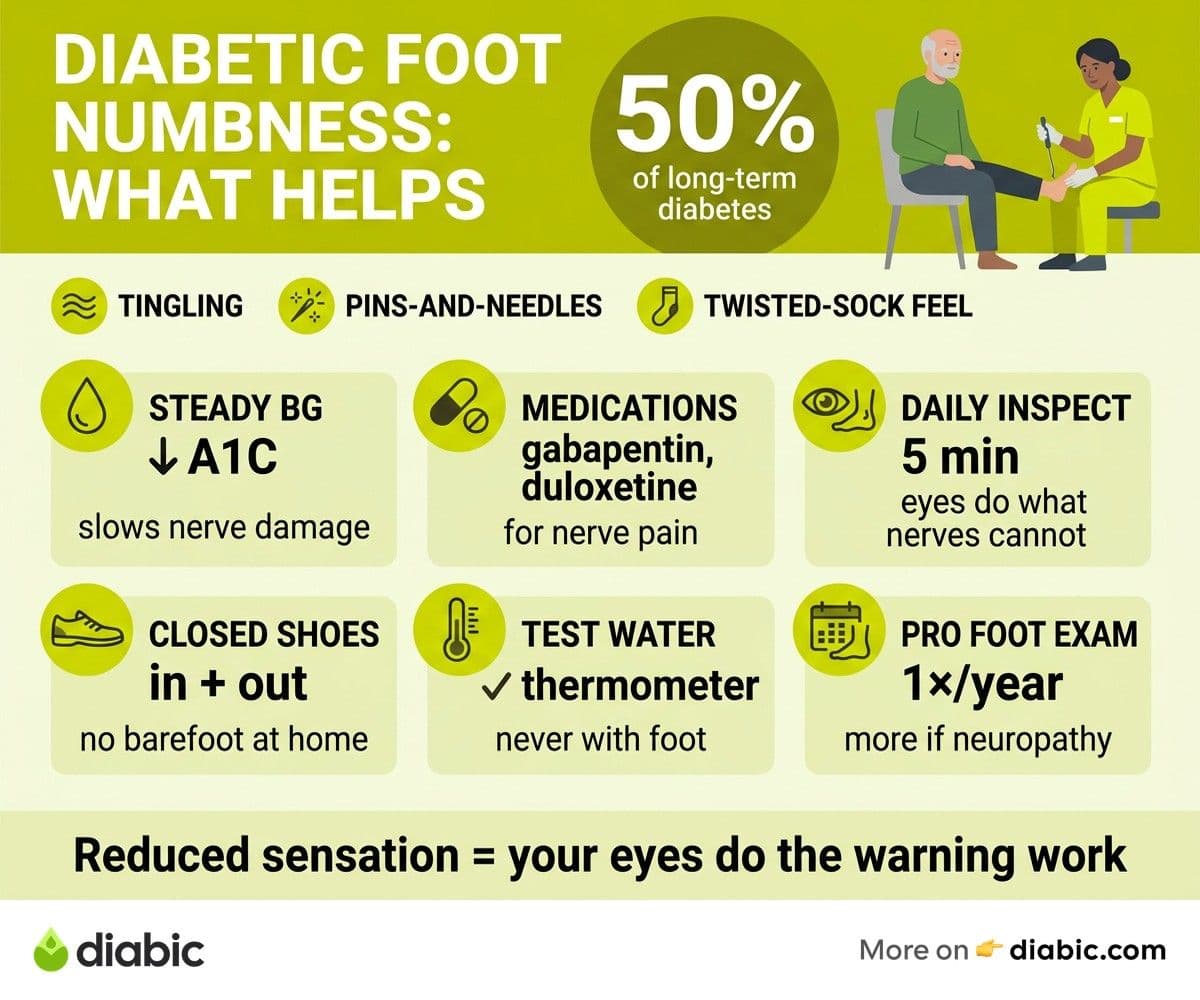
Diabetic peripheral neuropathy is the medical term for the most common form of nerve damage in diabetes. It affects roughly half of people with long-standing diabetes, although exact rates vary by population and how it is measured. The American Diabetes Association considers it one of the most prevalent diabetes complications.
The condition exists on a spectrum. Some people notice mild tingling that comes and goes. Others develop persistent burning pain. Many move toward gradually reduced sensation, and some lose feeling almost entirely in parts of the foot. The progression is usually slow, often unfolding over years.
Sensory loss in the feet is particularly concerning because it removes the warning that normally prompts you to stop walking on a blister, shake out a pebble, or notice that bath water is too hot. Without those cues, small injuries can become wounds, and wounds can become ulcers. That cascade is why we link neuropathy and foot care so tightly in everything we write.
If you want a deeper read on related symptoms, our article on diabetic neuropathy foot pain symptoms walks through the painful side of the same nerve damage.
Symptoms of Diabetic Neuropathy Foot Pain and Numbness
Symptoms of diabetic neuropathy foot pain often arrive in waves rather than all at once. Recognizing the pattern early can prompt the conversations that change your trajectory.
Common early symptoms include:
- Tingling or pins-and-needles sensations, especially at night
- Burning that flares when you lie down
- A feeling that socks are bunched up when they are not
- Sharp, electric-shock pains that come and go
- Reduced ability to feel light touch on the soles
- Difficulty sensing heat or cold accurately
As neuropathy progresses, these can shift into:
- Steady numbness in toes, then the forefoot, then higher
- A "walking on cotton" feeling
- Loss of position sense, making balance harder in the dark
- Occasional cramping or muscle fatigue from compensation
- Subtle changes in foot shape over years from altered muscle pulls
If any of these sound familiar, mention them at your next visit. Many clinicians will run a quick monofilament test, where a thin nylon thread is pressed against several spots on your foot. If you cannot feel it consistently, your protective sensation is reduced and warrants additional follow-up.
From my experience: I have lived with type 1 diabetes for fourteen years, and the first sign of nerve change I noticed was not numbness; it was the feeling that my socks were always slightly twisted, even when I had just put them on fresh. I ignored it for a year before mentioning it to my endocrinologist. We caught early sensory changes on a monofilament test, and the conversation pushed me to tighten up overnight glucose patterns and get serious about daily foot inspection. The lesson I share now is that the weird, subtle stuff is worth voicing.
Diabetic Neuropathy Treatment Options
Diabetic neuropathy treatment usually combines two goals: addressing the underlying nerve damage and managing any pain or discomfort that comes with it. No single approach works for everyone, and many people use a combination of strategies. The conversation with your provider is where the personalized plan comes together.
Blood sugar management as the foundation
Improving average blood sugar is the most evidence-supported way to slow neuropathy. Studies show that better glycemic control reduces the risk of new neuropathy and can slow progression in people who already have it. The effect is most pronounced in type 1 diabetes, but type 2 patients benefit as well, especially when blood pressure and cholesterol are also addressed.
This does not mean you need perfect numbers. Steady, sustainable improvements in time-in-range and A1C, paired with attention to other cardiovascular risk factors, give your nerves their best chance.
Medications for nerve pain
When neuropathy comes with significant pain, several medications may help. Common options your provider might discuss include:
- Gabapentin and pregabalin, which calm overactive pain signaling
- Duloxetine, an antidepressant that also works on nerve pain pathways
- Tricyclic antidepressants in low doses for nighttime pain
- Topical capsaicin or lidocaine patches for localized burning
Each has trade-offs. Some cause drowsiness, weight changes, or dry mouth. Talk to your doctor about what fits your situation, your other medications, and your daily life.
Physical therapy and complementary approaches
Physical therapy can help with balance, gait, and strength, especially when neuropathy has affected position sense. Some research suggests alpha-lipoic acid supplementation may help reduce symptoms in some people, although evidence is mixed. Acupuncture, transcutaneous electrical nerve stimulation (TENS), and mindfulness-based pain programs have helped some patients.
If pain or numbness is severe, persistent, or rapidly progressing, your primary clinician may refer you to a neurologist or pain specialist. There is no shame in escalating care; complex symptoms deserve focused expertise.
How to Manage Diabetes Foot Numbness Day to Day
Knowing how to manage foot numbness from diabetes is mostly about closing the gap your nerves have left open. Your eyes, your hands, your shoes, and your routines all become part of the protection plan.
Daily foot inspection becomes non-negotiable
When you cannot fully feel your feet, daily visual checks find injuries before they become wounds. Look at all surfaces of each foot in good light, including the spaces between toes. Photograph anything new, and recheck a few hours later or the next morning.
Our daily diabetic foot care routine walks through the full inspection step by step. The goal is for the routine to take five minutes and feel automatic.
Protect feet from trauma
Wear closed-toe, well-fitted shoes at all times, including indoors. Pebbles, splinters, and dropped objects all become risks when sensation is reduced. Diabetic socks with seamless construction prevent the friction that starts blisters.
Test bath water with your hand or a thermometer, not your foot. Avoid heating pads, hot water bottles, and electric blankets near your feet, since burns can occur without you feeling them. The American Podiatric Medical Association emphasizes these protective steps in their patient guidance.
Build foot care routines that compensate
Daily moisturizing prevents heel cracks that can become entry points. Trim nails straight across, or have a podiatrist do it. Replace worn shoes regularly, ideally every six to twelve months for primary walking pairs.
Pay attention to spots that get hot or feel unusual, even if they do not hurt. Heat without pain can be a warning sign worth a closer look.
Mind your blood sugar daily
Glucose management is the single most influential lever for slowing further nerve damage. Continuous glucose monitor data, food logs, and conversations with your care team can help you find the patterns that work best for your body.
Can Diabetic Neuropathy Be Slowed or Reversed
People often want to know if neuropathy can be reversed. The honest answer is nuanced. Severely damaged nerves rarely return to baseline, but some people see improvement in symptoms, sensation, and pain when they significantly improve glycemic control and address related risk factors.
Research published in journals like Diabetes Care suggests that nerves do retain some capacity for repair, especially when intervention happens early in the disease process. The Diabetes Control and Complications Trial showed that intensive glucose management reduced new neuropathy cases significantly over time, although established damage was harder to reverse.
The takeaway we share with readers is this: aim for early action, set realistic expectations, and focus on slowing progression. Improvements in symptoms can take months to years to appear, and they often coincide with sustained changes rather than short bursts. Our deeper read on whether diabetic neuropathy can be reversed covers what current research suggests.
What to Do This Week
Diabetes foot numbness is a quiet signal that deserves a loud response. Start with three small actions: book an appointment to flag the sensation if you have not, begin a daily foot inspection, and look at your shoe and sock setup with fresh eyes. None of these requires perfection. They simply tilt the odds back in your favor.
If you have already been managing neuropathy for years, share what has helped you most. The community learns from real experience, and your insight may guide someone newer to the diagnosis.
FAQ
Why does diabetes cause numbness in feet?
Prolonged high blood sugar damages the small blood vessels that supply peripheral nerves, leading to nerve dysfunction. The longest nerves in the body, which reach the feet, are usually affected first, which is why numbness often starts in the toes. Better blood sugar management and attention to other risk factors like blood pressure and cholesterol may slow this damage.
How to manage foot numbness from diabetes?
Daily foot inspections, closed protective footwear at all times, and seamless diabetic socks are the practical foundations. Improving average blood sugar, blood pressure, and cholesterol may slow further nerve damage. Your healthcare provider can also recommend medications if nerve pain accompanies the numbness.
Can diabetic foot numbness go away?
In some cases, mild and recent numbness improves when blood sugar is brought into a healthier range, especially in earlier neuropathy. Established nerve damage is harder to reverse, but progression may slow significantly with consistent management. Talk to your doctor about realistic expectations based on your specific situation.
What does diabetes foot numbness feel like?
Many people describe diabetes foot numbness as a gradual reduction in sensation, sometimes with tingling, burning, or pins-and-needles feelings, especially at night. Some feel like they are walking on cotton or that their socks are bunched. Others notice they cannot feel light touch or temperature changes the way they used to. If any of those descriptions sound like your feet right now, that is worth a flag at your next appointment.
Shahriar P. Shuvo is the founder of Diabic. He has lived with diabetes for over 14 years, and built Diabic to deliver the practical, evidence-based self-management tools he wished existed when he was first diagnosed. By trade, Shahriar is a senior design and frontend engineer with 6+ years shipping products at Agora, Timescale (now Tiger Data), and ShareTrip. He writes from the intersection of lived diabetes experience and product craft, focused on what works in daily management rather than what sounds good in a textbook.
Medically reviewed by
Dr. Shanto Arian is an internal medicine physician now specializing in clinical and aesthetic dermatology, with a parallel academic focus on epidemiology and public health. He holds an MBBS, MPH, MSc (UK), MRCP (UK), MRCPI (Ireland), Diploma in Dermatology (UK), and Diploma in Aesthetic Medicine (USA). Dr. Arian trained in internal medicine, including hospital work on hematology cases such as graft-versus-host disease, before moving toward dermatology. Skin is one of the earliest places diabetes shows itself, from acanthosis nigricans and diabetic dermopathy to slow foot wound healing, and that intersection is where his clinical and Diabic-review work meet. On Diabic, Dr. Arian medically reviews content on diabetes diagnosis, complications, dermatologic manifestations, and pharmacotherapy, ensuring every claim aligns with current ADA, NICE, and peer-reviewed literature.
More from Health & Complications
View all
Diabetes and Dental Implants: What to Know First
Diabetes dental implants guide covering safety, A1C targets, recovery expectations, gum health prep, and what to ask your oral surgeon before surgery.

Burning Mouth Syndrome and Diabetes Explained
Burning mouth syndrome diabetes link explained, including neuropathy, dry mouth, and thrush causes plus treatment options that may bring real relief.

Dental Care for people with diabetes: Tips That Help
Practical dental care diabetics need, with real tips for protecting teeth and gums when diabetes raises your risk for oral health problems.
Clinician-reviewed habits, plain-language guides, and honest answers - the small shifts that make living with diabetes feel lighter, every day.