Can Diabetic Neuropathy Be Reversed? What the Science
Can diabetic neuropathy be reversed? Learn what research shows about nerve regeneration, when symptoms improve, and the steps that give you the best.

In this article(14)
"Can diabetic neuropathy be reversed?" is one of the first questions most people ask after the burning, tingling, or numbness in their feet finally gets a name. The answer deserves more than a yes or no. Existing nerve damage rarely disappears completely, yet there is real evidence that you can slow progression, ease symptoms, and in early cases regain meaningful nerve function.
That nuance matters because the difference between full reversal and significant improvement is the difference between a frustrating search and a hopeful plan. Most of the research suggests that nerves are slower to heal than other tissue, but they are not entirely fixed. Catching the problem early, steadying your blood sugar, and addressing the lifestyle drivers behind nerve injury all change the trajectory.
This article walks through what the science says about nerve regeneration, the steps with the strongest evidence behind them, and how to think about progress when full reversal is not on the table. We will also look at what to expect on the timeline, since nerve healing is measured in months and years, not days.
Can Diabetic Neuropathy Be Reversed? The Short Answer
Whether diabetic neuropathy can be reversed depends heavily on how long the nerves have been under stress and how much structural damage has accumulated. Early peripheral neuropathy, especially the small fiber kind that causes burning and tingling, often improves when the underlying drivers of nerve injury are addressed. Once damage extends to large nerve fibers and motor function, the picture is harder to undo.
The National Institute of Diabetes and Digestive and Kidney Diseases describes diabetic neuropathy as a complication that develops gradually as elevated glucose damages the small blood vessels feeding the nerves. The earlier you intervene in that process, the more nerve fiber you preserve. That is why recognizing diabetic peripheral neuropathy early is one of the most important moves you can make once symptoms start to appear.
Blood sugar management is the single biggest factor in outcomes. Studies tracking people with type 1 and type 2 diabetes consistently show that those who lower and sustain their A1C see slower neuropathy progression and, in some cases, modest improvement in nerve function. Reversal in the strict sense is rare, but stabilization plus partial recovery is realistic for many people who act early.
It also helps to redefine what "improvement" means. A reduction in burning pain, fewer night-time symptoms, more sensation returning to the soles of your feet, or simply not getting worse over five years are all wins worth chasing. Research suggests that meaningful quality-of-life gains are reachable even when the underlying nerves are not fully restored.
What the Research Shows About Nerve Regeneration
Peripheral nerves can regenerate. The catch is that the process is slow and depends heavily on whether the conditions that injured the nerves in the first place have been corrected. Without that foundation, the body cannot keep up with the damage.
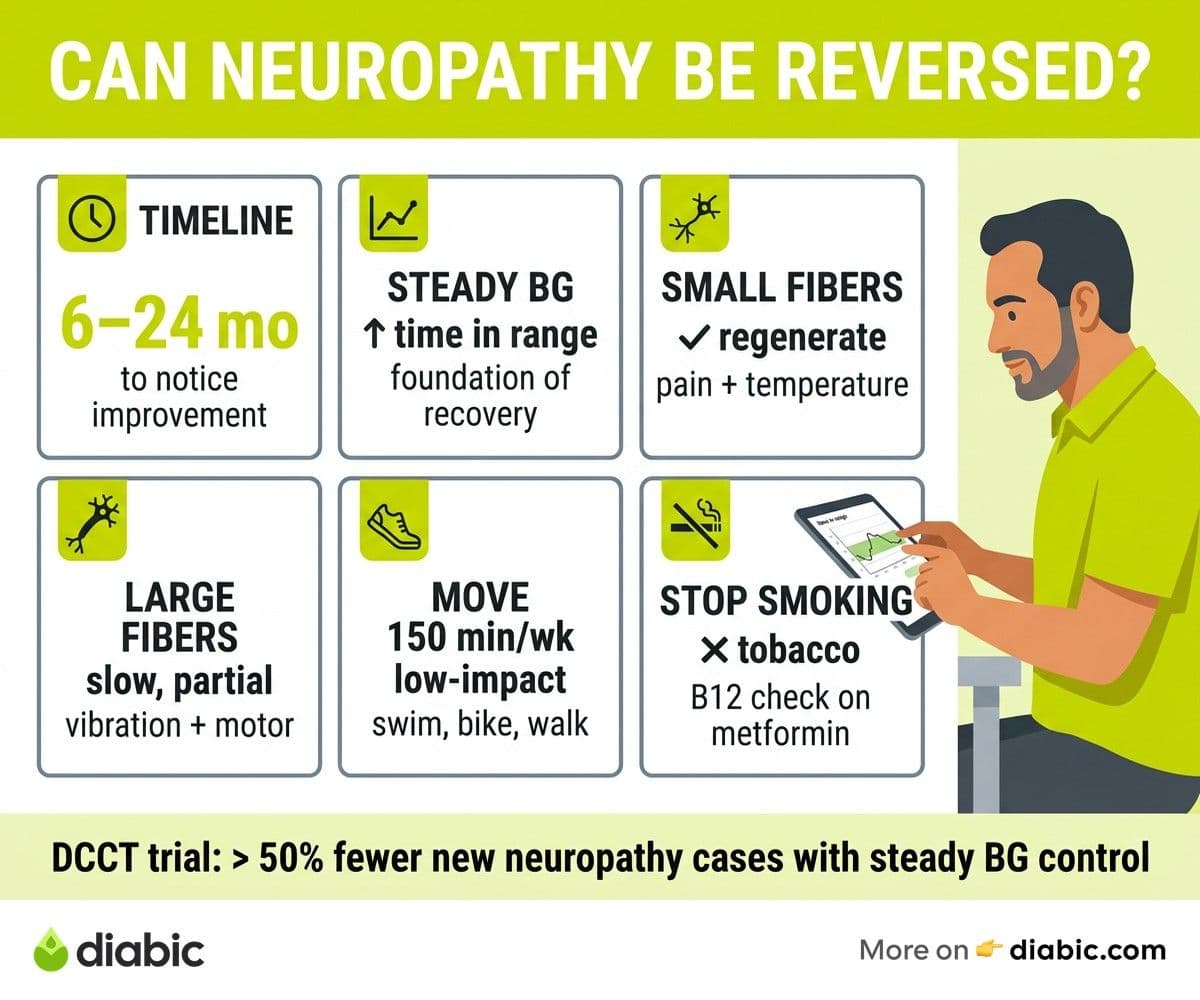
The landmark Diabetes Control and Complications Trial and its long-term follow-up, DCCT-EDIC, showed that intensive glucose management in people with type 1 diabetes reduced the risk of developing neuropathy by more than half and slowed progression in those who already had it. The benefits persisted for decades after the trial ended, a phenomenon researchers call metabolic memory. Sustained glucose stability, in other words, pays a long compound interest.
Type 2 diabetes outcomes are a bit more complicated. The ACCORD trial, published in the New England Journal of Medicine, found that very aggressive A1C targeting in people with long-standing type 2 diabetes did not reduce neuropathy as cleanly and carried other risks. The takeaway is not that glucose management does not matter for type 2. It is that the right target, the pace of change, and the broader picture of cardiovascular and weight management matter just as much.
Small Fiber vs Large Fiber Recovery
Diabetic neuropathy affects small fibers and large fibers differently. Small fibers carry pain and temperature signals and tend to be damaged first. They are also more capable of regrowth. Research published in The Lancet Diabetes & Endocrinology and similar peer-reviewed sources describes measurable small fiber regeneration in patients who achieve sustained metabolic improvement, including some who reverse prediabetes through weight loss.
Large fibers carry vibration sense, proprioception, and motor signals. They regenerate more slowly and sometimes incompletely. This is why advanced neuropathy with balance issues, foot drop, or significant numbness tends to plateau even with excellent care. The Mayo Clinic overview of peripheral neuropathy makes a similar distinction when discussing prognosis.
How Long Recovery Takes
Nerve regeneration is measured in millimeters per month. That is not a typo. Even under ideal conditions, peripheral nerves regrow at roughly one to three millimeters per day in larger animals and more slowly in humans, which translates to many months for any meaningful change. Most people who see improvement notice it across six to twenty four months of consistent management, not weeks.
Setting that expectation upfront helps you stay the course. If you start a treatment plan and feel impatient at week six, that is normal. The biology simply does not move faster than it moves.
Steps That Give You the Best Chance of Improvement
Several actions stack the odds in your favor. None of them are quick fixes, and none work in isolation. Together they form the foundation of every evidence-based approach to diabetic neuropathy treatment.
The first is getting your blood sugar into a steady, reasonable range and keeping it there. The American Diabetes Association Standards of Care recommend individualized A1C targets, often around 7 percent for many adults, paired with attention to time in range and glucose variability. Stability matters as much as the average. Wide swings damage nerves even when the A1C looks acceptable.
From my experience: living with type 1 diabetes for fourteen years has taught me that the months when my time in range was steady, even at a slightly higher average, felt better in my feet than the months when I drove my A1C down through chaotic highs and lows. Steadiness is its own medicine.
The second is working with a care team on a real plan rather than chasing pieces of advice. A primary care doctor, an endocrinologist, sometimes a neurologist, and a podiatrist each see something the others miss. Our overview of diabetic neuropathy treatment options walks through how these pieces fit together.
Movement and Circulation
Regular physical activity boosts nerve health by improving blood flow to peripheral tissues and reducing systemic inflammation. The Centers for Disease Control and Prevention recommends at least 150 minutes per week of moderate aerobic activity for most adults with diabetes, alongside resistance training. For people with existing neuropathy, low-impact options like cycling, swimming, and supervised walking are easier on the feet.
Targeted physical therapy for diabetic neuropathy adds balance training and gait work that protect against falls. Physical therapists also catch subtle changes in foot mechanics that you might not notice until they cause an ulcer.
Nutrition and Supplementation
A diet built around whole foods, lean protein, healthy fats, and high-fiber carbohydrates supports both glucose stability and nerve health. Some research suggests that alpha-lipoic acid and certain B vitamins, particularly B12, may help reduce neuropathic symptoms in some people. Metformin can lower B12 levels over time, so a periodic check is worth a conversation with your doctor.
These supplements are not a substitute for glucose management. They sit on top of the foundation, not in place of it.
Things That Set You Back
Smoking constricts blood vessels and accelerates nerve damage. Heavy alcohol use is independently neurotoxic and tends to magnify the effects of diabetes on peripheral nerves. Quitting smoking and reducing alcohol are two of the highest-impact choices anyone with neuropathy can make. Ask your provider about cessation support, since the available options have improved significantly in the past few years.
When Neuropathy Cannot Be Fully Reversed
For some people, particularly those diagnosed after years of unrecognized hyperglycemia, the underlying nerve loss is too extensive for full recovery. That is hard to hear, and we want to be honest about it rather than promise outcomes that the evidence does not support.
What still matters in this situation is preventing further damage and protecting what you have. Numb feet do not feel small cuts, blisters, or pebbles in a shoe. A daily diabetic foot care routine is the single most effective way to avoid the wounds and infections that turn neuropathy from a quality-of-life problem into a serious medical one. Our guide to diabetes foot numbness management covers practical daily tactics.
Pain management is the other major piece. Several medications, including duloxetine, pregabalin, and gabapentin, can dampen neuropathic pain enough to restore sleep, improve mood, and rebuild the energy needed for everything else. Topical treatments like capsaicin or lidocaine patches help some people. The Food and Drug Administration approval list for painful diabetic peripheral neuropathy is short, and an honest conversation with your doctor about what to try first is the right starting point.
It is worth remembering that managing symptoms is not a consolation prize. People who sleep through the night, walk without sharp pain, and stay engaged with their families are healthier in every measurable way. That is a real outcome.
Staying Hopeful and Proactive
The research pipeline for neuropathy is more active than it has been in years. Scientists are studying nerve growth factors, gene therapies, and novel pain modulators that target neuropathic pathways more selectively than current medications. Continuous glucose monitoring is making early intervention easier by surfacing patterns before damage accumulates. None of these are guaranteed wins, but the field is moving.
Small improvements add up. A half-point drop in A1C, a daily walk, sleeping more soundly because pain medication is working, fewer ulcer scares, more sensation returning to the toes over a year. Each of these compounds the next. People who stay engaged with their care team and treat neuropathy as something to manage rather than something to wait out tend to do better five and ten years out than people who give up.
A support system makes that engagement easier. Whether it is a partner who joins your walks, a peer community where others compare notes, or a care team that knows your story, you do not have to figure this out alone. Focusing on what you can change, and accepting what you cannot, is not resignation. It is strategy.
Frequently Asked Questions
Is diabetic neuropathy reversible?
When people ask whether and how can diabetic neuropathy be reversed, the most accurate answer points to early-stage cases. Particularly with early small fiber neuropathy caught soon after symptoms appear, partial reversal is possible when blood sugar and lifestyle drivers are addressed. Established neuropathy with significant nerve loss is more often slowed and stabilized than reversed outright. Talk to your doctor about your specific diagnosis and what realistic improvement looks like for you.
Can reversing diabetes cure neuropathy?
Reversing type 2 diabetes through weight loss, diet, and sometimes medication can stop neuropathy from progressing and may improve symptoms, especially when the diagnosis is recent. Type 1 diabetes is not reversible, but excellent glucose management slows nerve damage substantially. In neither case is "cure" the right word, but meaningful improvement is realistic for many people.
How long does it take to see improvement in neuropathy?
Most people who see improvement notice changes over six to twenty four months of consistent management, not weeks. Pain symptoms sometimes ease faster once medication is dialed in, but actual nerve regeneration is a slow biological process. Stay the course and track changes over months rather than days.
Shahriar P. Shuvo is the founder of Diabic. He has lived with diabetes for over 14 years, and built Diabic to deliver the practical, evidence-based self-management tools he wished existed when he was first diagnosed. By trade, Shahriar is a senior design and frontend engineer with 6+ years shipping products at Agora, Timescale (now Tiger Data), and ShareTrip. He writes from the intersection of lived diabetes experience and product craft, focused on what works in daily management rather than what sounds good in a textbook.
Medically reviewed by
Dr. Rezwana Parvin Rumpa is an obstetrics and gynaecology specialist with clinical focus on gestational diabetes, PCOS, and fertility. She holds the MRCOG (Final Part) from the Royal College of Obstetricians and Gynaecologists in London, the MRCPI (Final Part) from the Royal College of Physicians of Ireland, and an MBBS from Shaheed Monsur Ali Medical College under Dhaka University. Dr. Rumpa serves as a Senior Medical Officer in the Obs and Gynae department at BRB Hospitals Ltd, where she has spent three years managing prenatal care, emergency obstetric cases, and women's-health surgery. On Diabic, she medically reviews content for women living with diabetes, with particular attention to pregnancy, PCOS, and reproductive-health intersections.
More from Health & Complications
View all
Diabetes and Dental Implants: What to Know First
Diabetes dental implants guide covering safety, A1C targets, recovery expectations, gum health prep, and what to ask your oral surgeon before surgery.

Burning Mouth Syndrome and Diabetes Explained
Burning mouth syndrome diabetes link explained, including neuropathy, dry mouth, and thrush causes plus treatment options that may bring real relief.

Dental Care for people with diabetes: Tips That Help
Practical dental care diabetics need, with real tips for protecting teeth and gums when diabetes raises your risk for oral health problems.
Clinician-reviewed habits, plain-language guides, and honest answers - the small shifts that make living with diabetes feel lighter, every day.