Is Gabapentin Right for Diabetic Peripheral Neuropathy?
Considering gabapentin for diabetic peripheral neuropathy? Learn how it works, side effects, how it compares to duloxetine and pregabalin, and what to ask.

In this article(10)
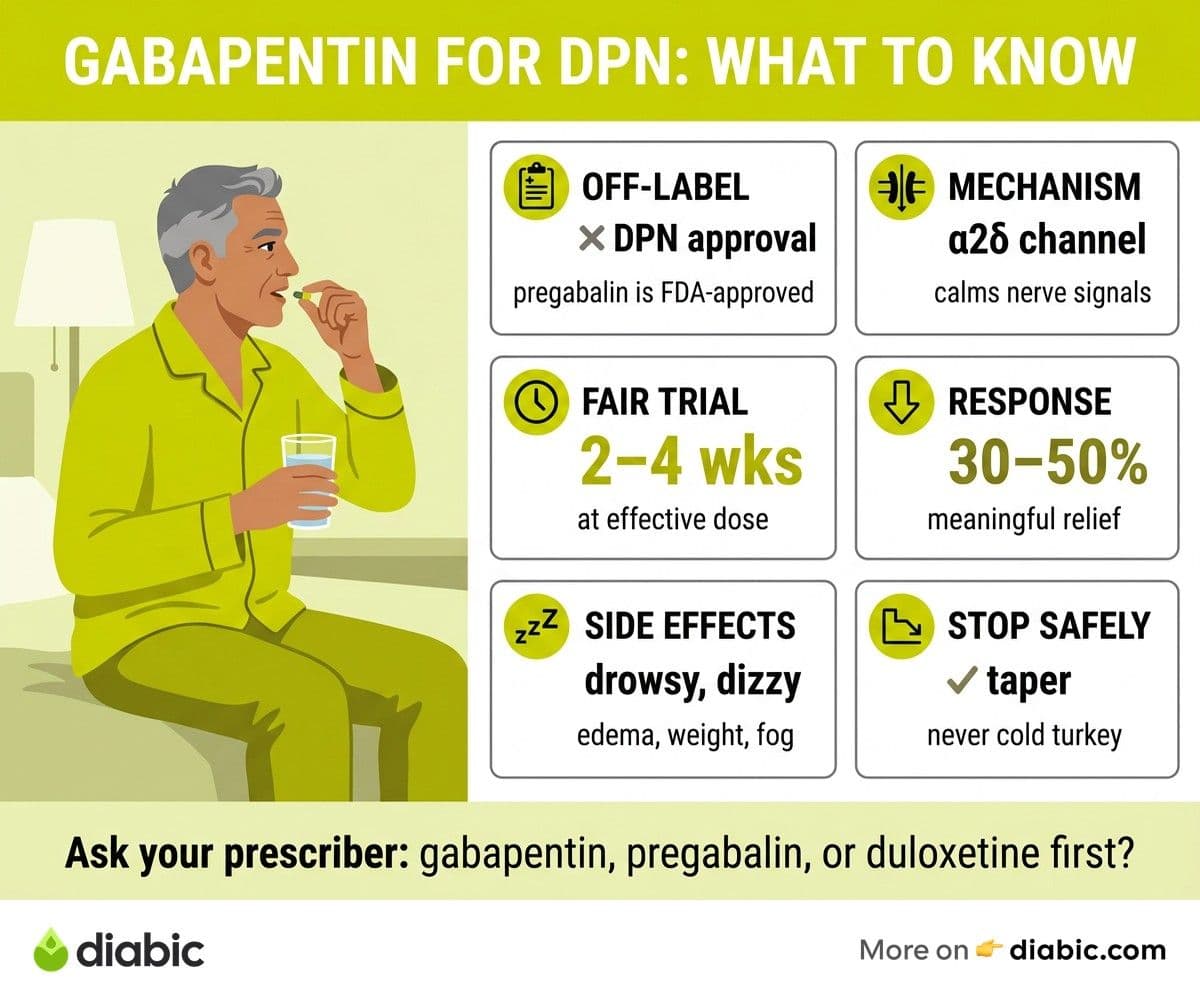
Gabapentin is one of the most widely prescribed medications for nerve pain, and the question of whether gabapentin diabetic peripheral neuropathy treatment is the right fit comes up often in clinic visits. It is not formally FDA-approved for this condition, yet doctors reach for it frequently because it can quiet the burning, tingling, and electric-shock sensations that make sleep and walking miserable.
If your provider has mentioned gabapentin, or you are weighing your own options before an appointment, understanding how it actually works helps you ask sharper questions. The decision is rarely cut and dried. Effectiveness, side effects, cost, and how the drug fits with the rest of your medication list all play a role.
This article covers what gabapentin is, what the research says about its effectiveness, the side effects that matter most, how it compares to duloxetine and pregabalin, and the questions worth raising with your doctor. Dosing decisions are individualized, so we will leave specific numbers to the prescriber who knows your full picture.
What Is Gabapentin and How Does It Work
Gabapentin is a medication originally developed in the 1990s as an add-on treatment for partial seizures. Researchers later noticed that patients taking it for epilepsy reported less nerve pain, which led to its widespread off-label use for neuropathic conditions, including diabetic peripheral neuropathy.
The drug works on the central nervous system rather than at the site of nerve injury. It binds to a specific subunit of voltage-gated calcium channels in the spinal cord and brain, which dampens the release of excitatory neurotransmitters. The practical result is that overactive pain signals travelling from damaged peripheral nerves get filtered down before they reach conscious awareness. The National Institute of Diabetes and Digestive and Kidney Diseases lists anticonvulsants like gabapentin among the standard options for managing painful diabetic neuropathy.
Despite the FDA approving gabapentin specifically for postherpetic neuralgia (the lingering pain after shingles) and partial seizures, it became a go-to for diabetic neuropathy because it tends to be cheap, generally well tolerated, and supported by decades of clinical use. Many of the people we hear from first encountered it as part of a broader diabetic neuropathy treatment overview their primary care doctor walked them through.
Gabapentin comes in capsules, tablets, and oral solution. Doctors usually start with a low dose and increase gradually over days or weeks to reduce side effects, with the target dose individualized to the person. If you are still trying to figure out whether your symptoms qualify as peripheral neuropathy, our piece on recognizing diabetic peripheral neuropathy covers the early signs.
How Effective Is Gabapentin Diabetic Peripheral Neuropathy Treatment
Clinical trials and meta-analyses generally support gabapentin as a reasonable option for painful diabetic peripheral neuropathy, with the caveat that response is highly individual. Some people get substantial relief, some get partial relief, and some get little or none. Predicting in advance which group you fall into is not yet possible.
The American Diabetes Association Standards of Care list gabapentinoids, including gabapentin and pregabalin, alongside SNRIs like duloxetine as recommended initial pharmacologic options for neuropathic pain in diabetes. Studies published in the Diabetes Care journal and similar peer-reviewed sources have generally shown that a meaningful subset of patients achieve at least 30 to 50 percent pain reduction on gabapentin compared with placebo, which is the threshold most researchers consider clinically significant.
How does it compare with the other commonly used drugs? Network meta-analyses suggest that gabapentin, pregabalin, and duloxetine sit in roughly the same effectiveness range for painful diabetic peripheral neuropathy, with differences mostly in side effect profiles, cost, and dosing convenience. There is no single "best" drug for everyone in this class.
Why some people respond and others do not is still an open research question. Genetic differences in pain processing, the type of nerve fibers most affected, the duration of neuropathy, and concurrent conditions like sleep disorders or depression all play a role. The honest answer is that finding the right medication often takes a couple of trials.
Timeline matters too. Most people do not feel meaningful relief on the first day. Research suggests that two to four weeks at an effective dose is a fair window to evaluate whether gabapentin is helping. If nothing has changed after that, it is reasonable to revisit the plan rather than push the dose higher indefinitely.
Common Side Effects to Know About
Gabapentin is generally considered well tolerated, but it is far from side-effect free. Knowing what to expect helps you tell the difference between a normal adjustment period and a sign that something needs to change.
Drowsiness and dizziness are the most commonly reported effects, especially in the first weeks after starting or after a dose increase. The Mayo Clinic gabapentin information notes that these effects often improve over time as the body adjusts. Many people take their largest dose at night for this reason. Until you know how the medication affects you, driving or operating heavy machinery is a conversation worth having with your doctor.
From my experience: I do not take gabapentin myself, but I have spent fourteen years with type 1 diabetes and watched several friends and family members try it. The single most useful piece of advice I have heard repeated is to give the dose ramp time and to be honest with your prescriber about side effects rather than quietly stopping. Most issues either resolve or have a workable solution, but only if your doctor knows about them.
Weight gain and peripheral edema (swelling, especially in the ankles and feet) are common enough to mention. For someone already managing diabetes, weight changes can affect glucose control and add to lower-limb stress. Track changes and bring them up at appointments rather than assuming they are nothing.
Cognitive effects, sometimes described as "brain fog," memory blips, or difficulty finding words, are reported by a meaningful minority of people on gabapentin. They tend to be dose-related. If these symptoms interfere with work or daily life, your doctor may adjust the dose or suggest an alternative.
Less common but important issues include mood changes and, rarely, suicidal thoughts. Gabapentin also has dependence and misuse potential, particularly when combined with opioids or alcohol, and stopping it abruptly can trigger withdrawal-like symptoms. Tapering on a doctor's plan rather than quitting cold turkey is the right move if discontinuation is on the table.
Who Might Benefit Most From Gabapentin
Among the diabetic peripheral neuropathy drugs available today, gabapentin tends to be a good fit for several specific situations. People with moderate to severe neuropathic pain that is interfering with sleep, walking, or daily function are the typical candidates. Those whose first-line option did not work, or who could not tolerate duloxetine or pregabalin, often try gabapentin next.
Cost is part of the picture. Generic gabapentin is inexpensive in most markets, which matters when treatment is likely to continue for years. People without insurance coverage for newer drugs sometimes find it the only realistic option.
Comorbidities also influence the choice. Someone with depression on top of neuropathy may benefit more from duloxetine, which treats both. Someone with significant kidney impairment needs careful dosing because gabapentin clears through the kidneys. Older adults are at higher risk of falls from sedation and dizziness, so the prescribing decision factors in age and balance.
If your symptoms center on burning or stabbing pain in the soles of your feet, gabapentin is one of the medications doctors commonly try. Our guide on diabetic neuropathy foot pain relief covers the broader playbook of approaches that often pair with medication.
What gabapentin does not do is reverse the underlying nerve damage or address the diabetes itself. It is a symptom-management tool that buys quality of life while you and your care team work on glucose, lifestyle, and the bigger picture.
Gabapentin vs Other Neuropathy Medications
The three medications most commonly used for painful diabetic peripheral neuropathy are gabapentin, pregabalin (brand name Lyrica), and duloxetine (brand name Cymbalta). Each has a slightly different profile.
Gabapentin and pregabalin are mechanistically related. Both bind the same calcium channel subunit and produce similar effects, but pregabalin is absorbed more predictably and has a more linear dose-response relationship, which can make it easier to titrate. Pregabalin is FDA-approved for painful diabetic peripheral neuropathy, while gabapentin is not. The trade-off is that pregabalin is typically more expensive and may have a higher rate of weight gain and edema. Our deep dive on Lyrica for diabetic peripheral neuropathy pain covers it in more detail.
Duloxetine works on a completely different system. It is a serotonin and norepinephrine reuptake inhibitor, an SNRI, which means it modulates pain through descending inhibitory pathways rather than calcium channels. Duloxetine is FDA-approved for diabetic peripheral neuropathic pain and is often a first-line choice, particularly for people who also have depression or generalized anxiety. Side effects skew toward nausea, dry mouth, and changes in blood pressure rather than sedation and weight gain. We have a closer look at duloxetine for diabetic neuropathy for readers comparing options.
Cost is often the deciding factor in real life. Generic gabapentin sits at the cheap end. Generic duloxetine is also affordable. Brand pregabalin used to be expensive, though generics have brought prices down meaningfully. Insurance formulary preferences vary widely, and a quick check of what is covered before your appointment saves time.
Combination therapy is sometimes used when monotherapy gives partial relief. A doctor might pair gabapentin with duloxetine, since they work through different mechanisms, rather than push either drug to its maximum dose alone. The decision is individualized and not something to attempt on your own.
The bottom line is that no single drug is best for everyone. Gabapentin, pregabalin, and duloxetine all have a place. Choosing among them depends on your symptom pattern, other health conditions, what you can afford, and how your body responds to the first few weeks of a trial.
Questions to Ask Your Doctor About Gabapentin
A focused appointment is more productive than a generic one. Bringing a short list of specific questions helps you and your prescriber make a decision you both feel confident about.
A few worth raising:
- Is gabapentin appropriate given my other medications, especially anything with sedating effects, opioids, or kidney implications?
- What dose should I start with, how often should we check in, and how will we adjust the dose if I do not feel relief?
- Which side effects should prompt me to call versus wait out the adjustment period?
- How long should I try gabapentin at an effective dose before we evaluate whether it is working?
- Are there alternatives we should consider first, like duloxetine or pregabalin, given my health history?
- If gabapentin does not work, what is plan B, and how do we taper off safely?
Bring up cost openly. If your insurance does not cover one option well, the prescriber can often pivot to a similar drug that is more affordable. Pharmacists are also a good source of practical advice on copays and manufacturer assistance programs.
Frequently Asked Questions
Does gabapentin work for diabetic neuropathy pain?
Research suggests that gabapentin reduces neuropathic pain in a meaningful subset of people with diabetic peripheral neuropathy, with response rates broadly similar to pregabalin and duloxetine. Some people get substantial relief, others get partial relief or none. A two to four week trial at an effective dose is typically used to gauge whether it is helping.
What are the side effects of gabapentin for neuropathy?
The most common side effects are drowsiness, dizziness, weight gain, and ankle swelling. Some people report cognitive fog. Less common but important issues include mood changes and, rarely, suicidal thoughts. Stopping gabapentin abruptly can cause withdrawal-like symptoms, so any discontinuation should be done with a tapering plan from your doctor.
Is gabapentin FDA-approved for diabetic neuropathy?
No. According to the Food and Drug Administration, gabapentin is FDA-approved for postherpetic neuralgia and as adjunctive therapy for partial seizures, not for diabetic peripheral neuropathy. The use of gabapentin for diabetic peripheral neuropathy is off-label, which is legal and common but worth knowing. Pregabalin and duloxetine, by contrast, are FDA-approved for painful diabetic peripheral neuropathy.
The choice to start gabapentin diabetic peripheral neuropathy therapy is rarely a yes or no question on its own. It is part of a wider plan that includes glucose management, foot care, sleep, and the other medications you take. Bring your symptoms, your priorities, and your concerns about cost and side effects into the conversation with your prescriber, and treat the first few weeks as a structured trial rather than a permanent commitment.
Dr. Shanto Arian is an internal medicine physician now specializing in clinical and aesthetic dermatology, with a parallel academic focus on epidemiology and public health. He holds an MBBS, MPH, MSc (UK), MRCP (UK), MRCPI (Ireland), Diploma in Dermatology (UK), and Diploma in Aesthetic Medicine (USA). Dr. Arian trained in internal medicine, including hospital work on hematology cases such as graft-versus-host disease, before moving toward dermatology. Skin is one of the earliest places diabetes shows itself, from acanthosis nigricans and diabetic dermopathy to slow foot wound healing, and that intersection is where his clinical and Diabic-review work meet. On Diabic, Dr. Arian medically reviews content on diabetes diagnosis, complications, dermatologic manifestations, and pharmacotherapy, ensuring every claim aligns with current ADA, NICE, and peer-reviewed literature.
Medically reviewed by
Dr. Rezwana Parvin Rumpa is an obstetrics and gynaecology specialist with clinical focus on gestational diabetes, PCOS, and fertility. She holds the MRCOG (Final Part) from the Royal College of Obstetricians and Gynaecologists in London, the MRCPI (Final Part) from the Royal College of Physicians of Ireland, and an MBBS from Shaheed Monsur Ali Medical College under Dhaka University. Dr. Rumpa serves as a Senior Medical Officer in the Obs and Gynae department at BRB Hospitals Ltd, where she has spent three years managing prenatal care, emergency obstetric cases, and women's-health surgery. On Diabic, she medically reviews content for women living with diabetes, with particular attention to pregnancy, PCOS, and reproductive-health intersections.
More from Health & Complications
View all
Diabetes and Dental Implants: What to Know First
Diabetes dental implants guide covering safety, A1C targets, recovery expectations, gum health prep, and what to ask your oral surgeon before surgery.

Burning Mouth Syndrome and Diabetes Explained
Burning mouth syndrome diabetes link explained, including neuropathy, dry mouth, and thrush causes plus treatment options that may bring real relief.

Dental Care for people with diabetes: Tips That Help
Practical dental care diabetics need, with real tips for protecting teeth and gums when diabetes raises your risk for oral health problems.
Clinician-reviewed habits, plain-language guides, and honest answers - the small shifts that make living with diabetes feel lighter, every day.