Oral Thrush and Diabetes: Causes and Treatment
Oral thrush diabetes connection explained, plus symptoms, antifungal treatment options, and how to keep this fungal infection from coming back.

In this article(28)
You run your tongue across the roof of your mouth and notice a faint white film, or maybe a cottony feeling that will not go away no matter how many times you sip water. For people managing blood sugar, that nagging sensation often turns out to be thrush. The oral thrush diabetes connection is well documented, and understanding it makes treatment far less mysterious.
Thrush is caused by Candida, a yeast that lives in most mouths quietly without causing problems. When the conditions in your mouth shift, that yeast can multiply quickly and turn into a stubborn infection. People with diabetes are more likely to experience this shift, and they often need a layered treatment plan that addresses both the fungus and the underlying blood sugar pattern feeding it.
This guide walks through why oral thrush diabetes flare-ups happen, what the infection looks like, how it is treated, and the daily habits that help keep it from returning. Most cases respond well to antifungal medication and steady glucose management, so the picture is rarely as bleak as that first cottony morning makes it feel.
Why Oral Thrush Diabetes Flare-Ups Happen
Candida albicans is an opportunistic yeast. It waits for the right environment, then takes off. Several features of diabetes happen to create exactly that environment, which is why research published in the Journal of Oral Pathology and Medicine consistently finds a higher prevalence of oral candidiasis in people with diabetes compared to the general population.
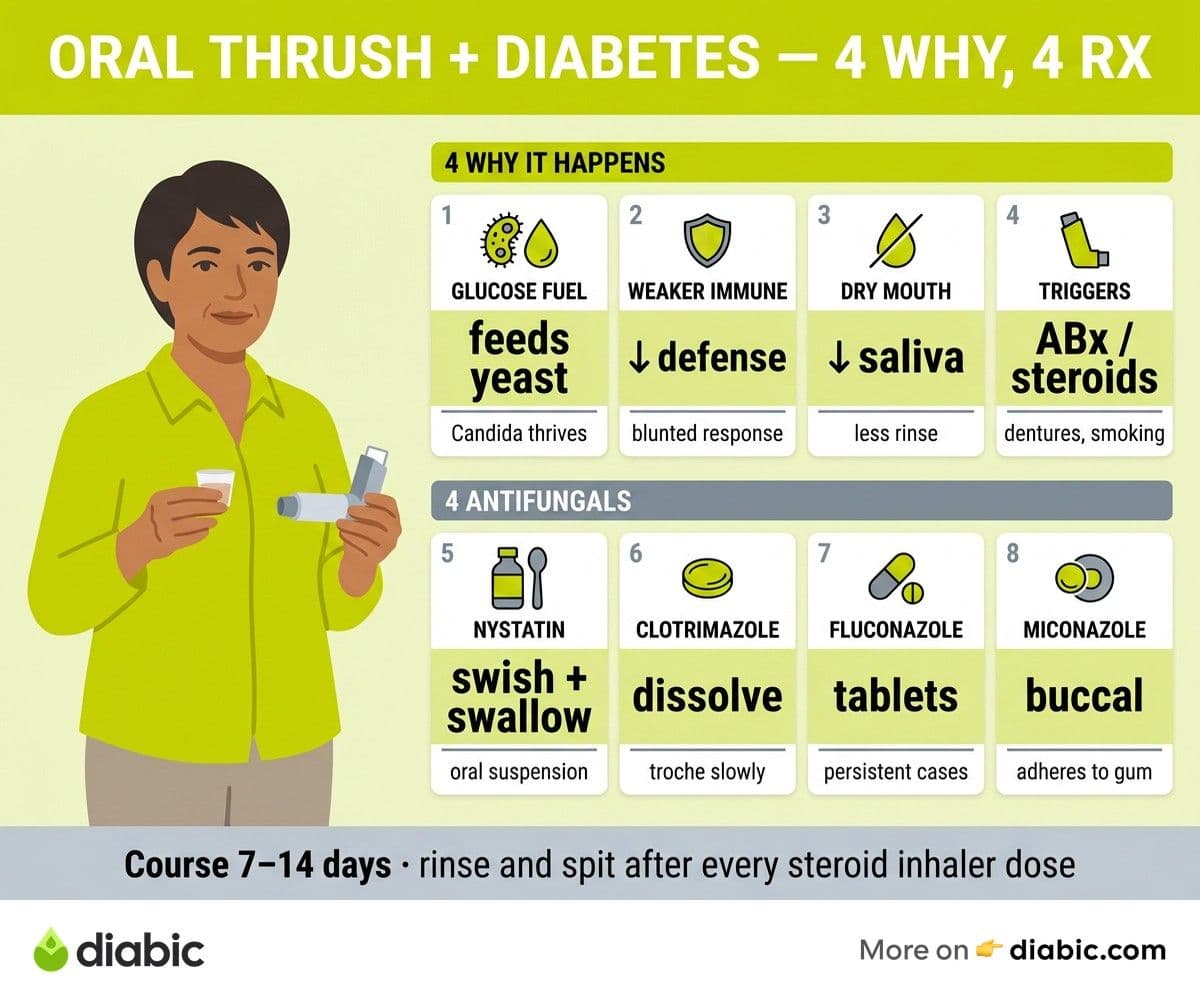
Glucose in saliva feeds yeast
When blood glucose runs high, glucose levels in saliva rise too. Candida uses sugar as a fuel source, so a sweeter oral environment gives it more to work with. The American Diabetes Association notes in its oral health guidance that elevated blood sugar contributes directly to oral infections, including fungal ones.
Immune defenses run a little quieter
Persistent hyperglycemia can blunt the activity of neutrophils and other immune cells that normally hold Candida in check. That muted response is one reason why thrush in diabetes can stick around longer or come back after treatment ends. It is not that your immune system has failed you. It is just operating with one hand behind its back when glucose stays elevated for stretches at a time.
Dry mouth removes a natural defense
Saliva is the mouth's first line of defense. It rinses food debris, contains antimicrobial proteins, and keeps tissues lubricated. Many people with diabetes experience xerostomia, or dry mouth, especially when blood sugar is high or when they take medications that reduce saliva flow. Less saliva means less protection, and Candida moves into the gap. Our piece on dry mouth causes and remedies covers this overlap in more detail.
Antibiotics and other contributing factors
A recent course of antibiotics, inhaled steroids for asthma, dentures, and smoking can all raise the risk of thrush. When any of these factors stack on top of diabetes, the chance of a flare goes up. People who use steroid inhalers should rinse their mouth with water after each use to lower the local Candida load.
How to Treat Oral Thrush When You Have Diabetes
Treating oral thrush diabetes flare-ups usually involves antifungal medication plus a closer look at glucose patterns. Both pieces matter. Skipping the blood sugar piece is one of the most common reasons thrush returns within weeks of treatment.
Antifungal medications
Your provider may prescribe a topical antifungal, a systemic one, or both depending on severity. According to the CDC's guidance on candidiasis, common options include:
- Nystatin oral suspension, swished and swallowed several times a day
- Clotrimazole troches, dissolved slowly in the mouth
- Fluconazole tablets for more persistent or extensive cases
- Miconazole buccal tablets that adhere to the gum
Most courses run 7 to 14 days. Finishing the full course matters even if symptoms clear early, because Candida is good at lying low and rebounding when treatment stops short.
Why blood sugar management is part of treatment
If your A1C has been climbing, addressing that pattern is part of the treatment, not a separate project. People with poorly managed glucose see higher rates of recurrent thrush even after antifungals work. Bringing your numbers closer to your target range, with help from your diabetes care team, lowers the salivary glucose that fed the yeast in the first place.
How long treatment typically takes
Mild cases often start improving within a few days. More extensive thrush may need two weeks of treatment, and sometimes a longer course if it spreads to the throat. If you wear dentures, your dentist will likely treat the appliance itself with an antifungal soak, since the plastic can harbor yeast and reinfect the mouth.
When to follow up
Call your provider if symptoms have not improved after a week of treatment, if swallowing becomes painful, or if white patches spread down the throat. Recurrent thrush deserves a deeper look, including bloodwork to check glucose patterns and a review of any other medications that may be contributing.
Recognizing Oral Thrush Symptoms
Thrush has a fairly distinctive look once you know what to watch for, but it can also resemble other oral conditions, which is why a clinical exam is the safest way to confirm.
Common signs include creamy white or pale yellow patches on the tongue, inner cheeks, gums, tonsils, or roof of the mouth. The patches often look like cottage cheese or curdled milk. If you wipe one off with gauze, the tissue underneath may appear red, raw, and sometimes bleeds slightly. That tenderness is a giveaway that what you are seeing is not just food residue.
Other symptoms layer on top of the visible patches:
- A persistent cottony or fuzzy feeling in the mouth
- Loss of taste or a metallic, off taste
- Soreness that makes eating, especially acidic or spicy foods, uncomfortable
- Cracked, red corners of the mouth (angular cheilitis)
- Difficulty swallowing if the infection extends down the throat
Thrush differs from coated tongue, which usually wipes off easily and does not leave irritated tissue beneath. It also differs from leukoplakia, which presents as white patches that cannot be scraped away. Burning mouth without visible patches points more toward burning mouth syndrome or other neuropathic causes rather than thrush.
Thrush and Diabetes: The Candida Connection
Candida is a normal resident of the human mouth. Most people carry small amounts without ever feeling a thing. The shift from harmless yeast to active infection happens when the local environment changes, and diabetes changes that environment in several quiet ways at once.
Beyond the saliva glucose and immune effects already covered, recurrent thrush can be a flag worth paying attention to. If you find yourself getting thrush more than once or twice a year, it may be a signal that blood sugar has been higher than your meter readings suggest, or that something else, like a new medication, is tipping the balance. Patterns of repeated yeast infections, including vaginal yeast or skin yeast issues, sometimes show up alongside oral thrush. Our guide to diabetes skin infection prevention walks through why yeast and bacteria can find easier footing when glucose runs high.
This is also a place where it is worth looking at the bigger picture rather than treating each flare in isolation. Recurrent thrush is rarely just bad luck.
From my experience: In my fourteen years with type 1 diabetes, oral thrush taught me to read my own data more honestly. The first time I had a stubborn case, my finger sticks looked fine, but my CGM trends told a different story about overnight highs I had been ignoring. Treating the thrush worked. Watching the trends and adjusting my basal rates kept it from coming back.
Candida in the Mouth and Other Oral Health Concerns
Oral candidiasis rarely stays neatly inside the mouth. It often turns up alongside, or causes, a few related issues that benefit from being recognized at the same time.
Angular cheilitis
The cracked, sore corners of the mouth that some people develop alongside thrush are caused by Candida thriving in the moist folds of skin at the corners of the lips. Treatment usually involves an antifungal cream applied to the corners while the oral medication addresses the inside of the mouth.
Denture-related infections
People who wear full or partial dentures are more prone to thrush, especially if the dentures are worn overnight or not cleaned thoroughly. The yeast can colonize the porous denture material and reinfect the gums repeatedly. Removing dentures at night, brushing them daily, and soaking them in an antifungal solution during a thrush flare are all standard parts of treatment.
When candidiasis spreads beyond the mouth
In rare cases, oral thrush can extend into the esophagus, causing pain when swallowing or a sensation of food sticking. This is called esophageal candidiasis and usually requires systemic antifungal treatment. People with significantly weakened immune systems can also develop invasive candidiasis, but this is uncommon in otherwise healthy people with diabetes whose glucose is being managed.
If you notice gum changes alongside thrush, our piece on diabetes and gum disease explains how the two conditions can overlap and how to address both with your dental team.
Preventing Oral Thrush from Recurring
Prevention is largely about removing the conditions that let Candida flourish. None of these steps are dramatic, but together they make a meaningful difference for people who have had thrush more than once.
Keep blood sugar within your target range
This is the single most important factor. The closer your glucose stays to your agreed-upon target, the less hospitable your saliva is to yeast. If you have noticed a pattern of thrush during periods of higher A1C, that is data worth bringing to your next appointment.
Maintain steady oral hygiene
Brushing twice a day with a soft-bristled brush, flossing daily, and replacing your toothbrush every three months (and after a thrush episode) keeps the overall microbial load lower. A clean mouth is a less welcoming mouth for opportunistic yeast.
Address dry mouth
Sip water throughout the day, chew sugar-free gum to stimulate saliva, and consider a saliva substitute if dryness is significant. Some over-the-counter mouth rinses are formulated for dry mouth and contain ingredients like xylitol that may help. Avoid alcohol-based mouthwashes, which can dry the tissues further.
Care for dentures properly
Remove dentures at night, brush them with a denture brush daily, and soak them in a cleaner. If you have had recurrent thrush, ask your dentist whether your dentures fit well, since poorly fitting appliances create irritation that yeast loves to colonize.
Rinse after inhaled steroids
If you use a steroid inhaler for asthma or COPD, rinse your mouth with water and spit after each dose. Using a spacer with your inhaler also reduces how much medication settles on oral tissues.
FAQ
Why is oral thrush common with diabetes?
High blood sugar raises glucose levels in saliva, which feeds Candida yeast. Diabetes can also blunt immune responses and is often paired with dry mouth, both of which reduce the body's natural ability to keep Candida in check. The combination creates ideal conditions for an overgrowth.
How to treat oral thrush when you have diabetes?
Treatment usually involves an antifungal medication prescribed by your provider, such as nystatin, clotrimazole, or fluconazole. Improving blood sugar management is equally important, since persistent hyperglycemia makes thrush harder to clear and more likely to come back. Talk to your doctor about both pieces of the plan.
Can oral thrush go away on its own with diabetes?
It usually does not. Without antifungal treatment, thrush in someone with elevated blood sugar tends to persist or worsen. Even mild cases generally benefit from a short course of medication paired with attention to glucose patterns.
Is oral thrush contagious?
It is not typically passed from person to person in the way a cold is, but the yeast can transfer between partners, between mother and infant during breastfeeding, or via shared utensils. People with diabetes are simply more susceptible to overgrowth than others.
How long does oral thrush last with diabetes?
With appropriate antifungal treatment, most cases improve within a few days and resolve in 1 to 2 weeks. Cases that linger beyond two weeks or recur frequently warrant a follow-up to look at blood sugar trends and other contributing factors.
If recurring oral thrush diabetes flares have been part of your picture, treat them as useful information. Talk to your diabetes care team about your recent A1C and CGM patterns, ask your dentist for a thorough exam, and look at whether dry mouth or other risk factors are part of the picture. The right combination of antifungal treatment and steady glucose management resolves most cases and keeps the oral thrush diabetes pattern from coming back.
Shahriar P. Shuvo is the founder of Diabic. He has lived with diabetes for over 14 years, and built Diabic to deliver the practical, evidence-based self-management tools he wished existed when he was first diagnosed. By trade, Shahriar is a senior design and frontend engineer with 6+ years shipping products at Agora, Timescale (now Tiger Data), and ShareTrip. He writes from the intersection of lived diabetes experience and product craft, focused on what works in daily management rather than what sounds good in a textbook.
Medically reviewed by
Dr. Shanto Arian is an internal medicine physician now specializing in clinical and aesthetic dermatology, with a parallel academic focus on epidemiology and public health. He holds an MBBS, MPH, MSc (UK), MRCP (UK), MRCPI (Ireland), Diploma in Dermatology (UK), and Diploma in Aesthetic Medicine (USA). Dr. Arian trained in internal medicine, including hospital work on hematology cases such as graft-versus-host disease, before moving toward dermatology. Skin is one of the earliest places diabetes shows itself, from acanthosis nigricans and diabetic dermopathy to slow foot wound healing, and that intersection is where his clinical and Diabic-review work meet. On Diabic, Dr. Arian medically reviews content on diabetes diagnosis, complications, dermatologic manifestations, and pharmacotherapy, ensuring every claim aligns with current ADA, NICE, and peer-reviewed literature.
More from Health & Complications
View all
Diabetes and Dental Implants: What to Know First
Diabetes dental implants guide covering safety, A1C targets, recovery expectations, gum health prep, and what to ask your oral surgeon before surgery.

Burning Mouth Syndrome and Diabetes Explained
Burning mouth syndrome diabetes link explained, including neuropathy, dry mouth, and thrush causes plus treatment options that may bring real relief.

Dental Care for people with diabetes: Tips That Help
Practical dental care diabetics need, with real tips for protecting teeth and gums when diabetes raises your risk for oral health problems.
Clinician-reviewed habits, plain-language guides, and honest answers - the small shifts that make living with diabetes feel lighter, every day.