Floaters, Vision Changes, and Diabetes Explained
Floaters vision diabetes explained: learn what causes them, when to worry, and how to protect your eye health with practical guidance from Diabic.

In this article(9)
Seeing floaters or noticing vision changes can be unsettling when you have diabetes. The good news is that floaters and vision shifts related to diabetes are often manageable, especially when you know what is happening and when to reach out to your eye care provider. Here is what you need to know.
We hear from readers every week who panic at the first sign of a drifting spot in their vision. That reaction is understandable. The relationship between floaters vision diabetes is real, but most early changes are not emergencies, and many are reversible with steady blood sugar management.
Knowing the difference between a temporary blur and a warning sign is part of taking care of your eyes long term. This guide walks you through both, plus what an eye exam actually looks for.
What Are Floaters and Why Do They Happen?
Floaters are small spots, threads, or cobweb shapes that drift across your field of vision. They tend to be more visible against bright backgrounds like a white wall or a sunny sky. Almost everyone develops a few floaters with age, but diabetes can change the picture.
The inside of your eye is filled with a clear gel called the vitreous. As tiny clumps of protein or cellular debris form within that gel, they cast shadows on the retina, and those shadows are what you perceive as floaters. The National Eye Institute explains that this process is part of normal aging in many people.
Diabetes adds a layer of complexity. Persistently high blood sugar can damage the tiny blood vessels in the retina, sometimes causing them to leak small amounts of blood into the vitreous. Those blood cells appear as a sudden cluster of new floaters or a shower of dark specks. That is why a sudden change in floaters with diabetes deserves a closer look rather than a wait-and-see approach.
Types of Vision Changes Common with Diabetes
Diabetes can affect your vision in several different ways, and not every change means the same thing. Some shifts are short-lived and tied to your blood sugar at the moment. Others may signal something happening deeper in the eye. Knowing which is which helps you respond appropriately.
Blurred vision is the most common complaint. When blood sugar swings high or drops fast, fluid can shift in and out of the lens, temporarily changing its shape. This kind of blur often clears within a few days of more stable readings, and our guide on blurred vision and diabetes causes covers the full picture.
Other vision changes worth recognizing include:
- Sudden floaters from small retinal hemorrhages, which may look like spots, threads, or a smoky haze
- Double vision tied to eye diabetic neuropathy, where nerves controlling eye movement are temporarily affected
- Dark spots, missing patches, or a wavy area in your central vision, which can point toward retinal swelling
- Trouble adjusting between bright and dim light, sometimes early in retinal changes
Research published in the ADA journal Diabetes Care shows that visual symptoms are often early markers of retinopathy progression, especially when changes happen suddenly or worsen over weeks rather than months. That is why tracking what you see, not just your numbers, matters.
When Floaters Vision Diabetes Symptoms Turn Serious
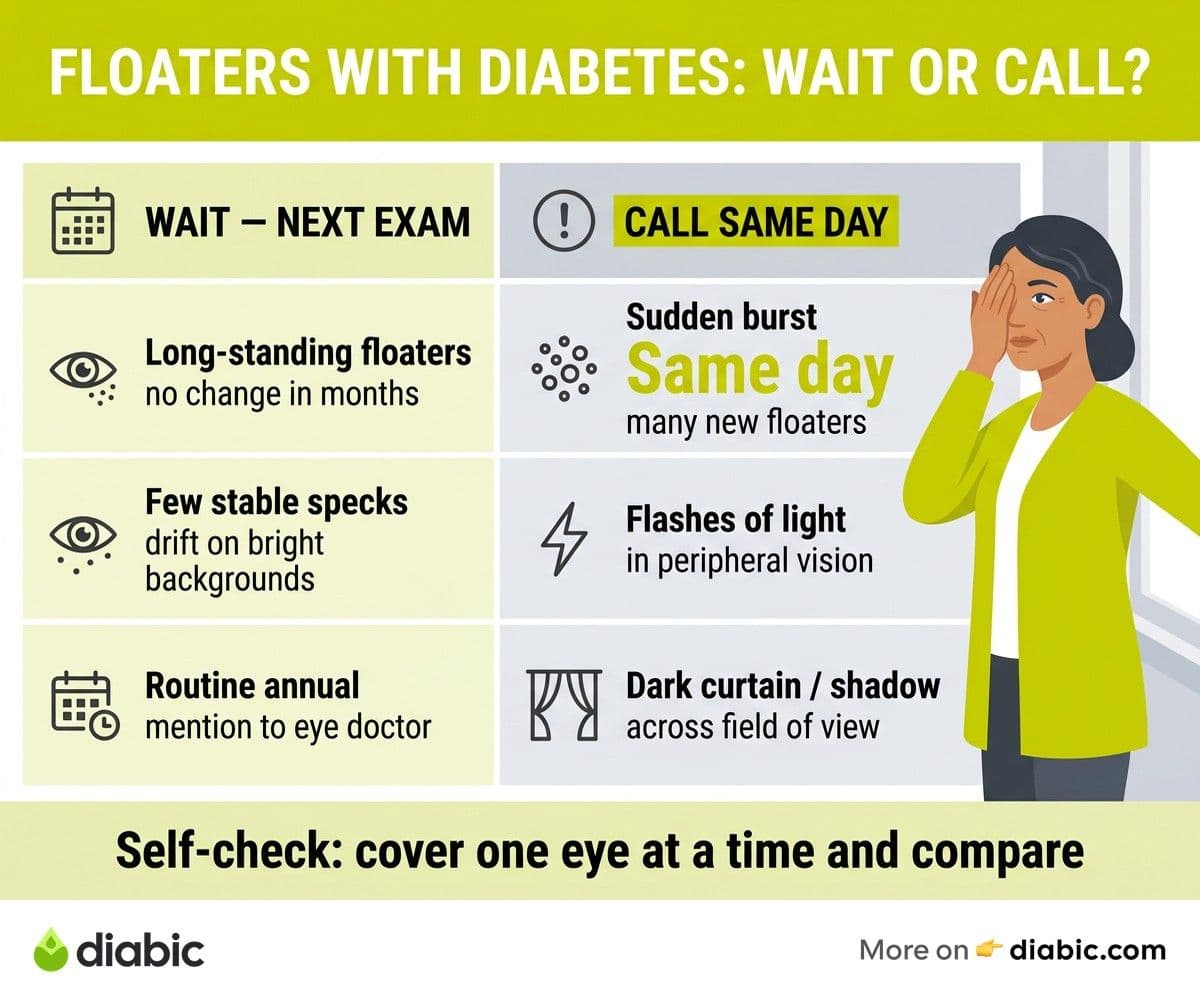
Most floaters are harmless. A few specific symptoms, though, deserve same-day attention. These are the moments when a quick phone call to your eye doctor is worth it, even if it turns out to be nothing.
Watch closely for any of these patterns:
- A sudden burst of new floaters, especially many at once
- Flashes of light, like a camera flash going off in your peripheral vision
- A dark shadow or curtain moving across part of your visual field
- Rapid loss of vision in one eye that does not return within minutes
- A cluster of red or dark specks that may indicate bleeding inside the eye
These symptoms can suggest a retinal tear, retinal detachment, or vitreous hemorrhage, all of which are more common in advanced diabetic eye disease. The Mayo Clinic recommends seeking emergency care for sudden floaters paired with flashes of light. Time matters because early treatment can prevent permanent vision loss.
If you have already been diagnosed with diabetic retinopathy symptoms and stages or diabetic macular edema, your threshold for calling should be even lower. Your retina specialist would rather hear from you about a false alarm than miss a real one.
From my experience: I once dismissed a sudden swarm of floaters during a stressful week, telling myself it was just stress and screen time. After 14 years with type 1 diabetes, I have learned that my eyes are usually the first place to flag a problem when control slips. That episode turned out to be a small bleed, caught early enough to manage without surgery. Now I treat any new floater pattern as a reason to call within 24 hours, not next week.
How Diabetes-Related Vision Changes Are Diagnosed
A thorough eye exam for someone with diabetes goes well beyond checking your prescription. The goal is to look at the retina, the optic nerve, and the surrounding blood vessels in detail. This is why your eye doctor likely uses dilating drops, even though they are inconvenient for the rest of the day.
A dilated eye exam widens your pupils so the provider can shine a light deep into the eye and inspect the retina. They look for tiny aneurysms, leaking vessels, swelling, and any signs of new blood vessel growth. The NIDDK guide on diabetic eye disease describes this exam as the cornerstone of catching problems before symptoms appear.
Many practices now also use optical coherence tomography, often shortened to OCT. This imaging test creates a cross-section of your retinal layers, similar to an ultrasound but with light. OCT can spot fluid buildup or thinning that the naked eye would miss. Your provider may also ask about recent A1C readings and recent blood sugar swings, since fluctuations alone can blur vision temporarily without any retinal damage.
Managing and Preventing Vision Changes
The single strongest protective factor for your eyes is steady blood sugar over time. Big swings are harder on the small vessels in the retina than a slightly higher steady number. That is why time in range and gradual A1C improvement tend to matter more than chasing perfect single readings.
Beyond glucose, two other numbers deserve attention. Blood pressure under good management reduces strain on the retinal vessels, and cholesterol within target helps prevent fatty deposits from forming in the retina. The American Diabetes Association emphasizes that these three factors work together, not in isolation.
Stick to a regular schedule of dilated eye exams. Most adults with type 2 diabetes are advised to start exams at diagnosis, while those with type 1 generally begin within five years of diagnosis, and our diabetes eye exam frequency guide breaks down the recommended cadence. Between appointments, call your eye doctor if you notice any sudden change, even if it seems minor. Catching issues early gives you the most options for treatment.
A few habits that help between exams:
- Track your floaters with a quick note in your phone if you notice a pattern
- Keep one hand to cover one eye periodically and check each eye separately
- Update your eye care provider any time your diabetes medications change significantly
- Wear sunglasses outdoors to limit ultraviolet exposure to already stressed retinal tissue
FAQ
Why do people with diabetes see floaters in their vision?
People with diabetes are more prone to floaters because high blood sugar can weaken tiny blood vessels in the retina. When those vessels leak even small amounts of blood into the vitreous gel, the cells appear as drifting specks or threads. Aging changes in the vitreous itself also contribute, and the two effects can stack on each other.
Are floaters a sign of diabetic retinopathy?
Floaters can be a sign of diabetic retinopathy, particularly when they appear suddenly or in clusters. They often indicate a small bleed from fragile retinal vessels, which is one feature of the proliferative stage. That said, not every floater means retinopathy, so a dilated exam is the only way to know for certain.
When should you see a doctor about floaters with diabetes?
Call your eye doctor within 24 hours if you notice a sudden increase in floaters, flashes of light, a dark curtain across your vision, or rapid vision loss. For a small number of stable floaters that have been present for weeks without change, mention them at your next routine exam. When in doubt, lean toward calling, since early treatment of retinal bleeding or tears is far easier than later treatment.
The honest takeaway on floaters vision diabetes concerns is that most early changes can be managed when you spot them quickly and stay on schedule with dilated exams. Treat new symptoms as information your eyes are sharing, keep your blood pressure and blood sugar moving in steady ranges, and lean on your eye care team between visits whenever something looks different. Talk to your doctor at the first sign of a sudden change rather than waiting for your next routine appointment.
Shahriar P. Shuvo is the founder of Diabic. He has lived with diabetes for over 14 years, and built Diabic to deliver the practical, evidence-based self-management tools he wished existed when he was first diagnosed. By trade, Shahriar is a senior design and frontend engineer with 6+ years shipping products at Agora, Timescale (now Tiger Data), and ShareTrip. He writes from the intersection of lived diabetes experience and product craft, focused on what works in daily management rather than what sounds good in a textbook.
Medically reviewed by
Dr. Shanto Arian is an internal medicine physician now specializing in clinical and aesthetic dermatology, with a parallel academic focus on epidemiology and public health. He holds an MBBS, MPH, MSc (UK), MRCP (UK), MRCPI (Ireland), Diploma in Dermatology (UK), and Diploma in Aesthetic Medicine (USA). Dr. Arian trained in internal medicine, including hospital work on hematology cases such as graft-versus-host disease, before moving toward dermatology. Skin is one of the earliest places diabetes shows itself, from acanthosis nigricans and diabetic dermopathy to slow foot wound healing, and that intersection is where his clinical and Diabic-review work meet. On Diabic, Dr. Arian medically reviews content on diabetes diagnosis, complications, dermatologic manifestations, and pharmacotherapy, ensuring every claim aligns with current ADA, NICE, and peer-reviewed literature.
More from Health & Complications
View all
Diabetes and Dental Implants: What to Know First
Diabetes dental implants guide covering safety, A1C targets, recovery expectations, gum health prep, and what to ask your oral surgeon before surgery.

Burning Mouth Syndrome and Diabetes Explained
Burning mouth syndrome diabetes link explained, including neuropathy, dry mouth, and thrush causes plus treatment options that may bring real relief.

Dental Care for people with diabetes: Tips That Help
Practical dental care diabetics need, with real tips for protecting teeth and gums when diabetes raises your risk for oral health problems.
Clinician-reviewed habits, plain-language guides, and honest answers - the small shifts that make living with diabetes feel lighter, every day.