Dry Skin and Type 2 Diabetes: Causes and Relief
Dry skin and type 2 diabetes go together more than most people realize. Learn the causes, what to put on shelves, and when dryness signals a real concern.

In this article(9)
Dry skin and type 2 diabetes are connected in ways that go beyond simple dehydration. When blood sugar runs high, the body loses moisture more quickly, and nerve damage can reduce the natural oils that keep skin supple. The good news is that effective relief is within reach once you understand the causes.
The link between dry skin and type 2 diabetes is one of those quiet symptoms that often gets dismissed as cosmetic. It is not. Cracked, itchy skin can be the first sign that blood sugar is running higher than usual, and on the feet it can open the door to serious complications.
This guide walks through why diabetes affects skin moisture, which areas need the most attention, and the daily habits that make a real difference.
Why Type 2 Diabetes Causes Dry Skin
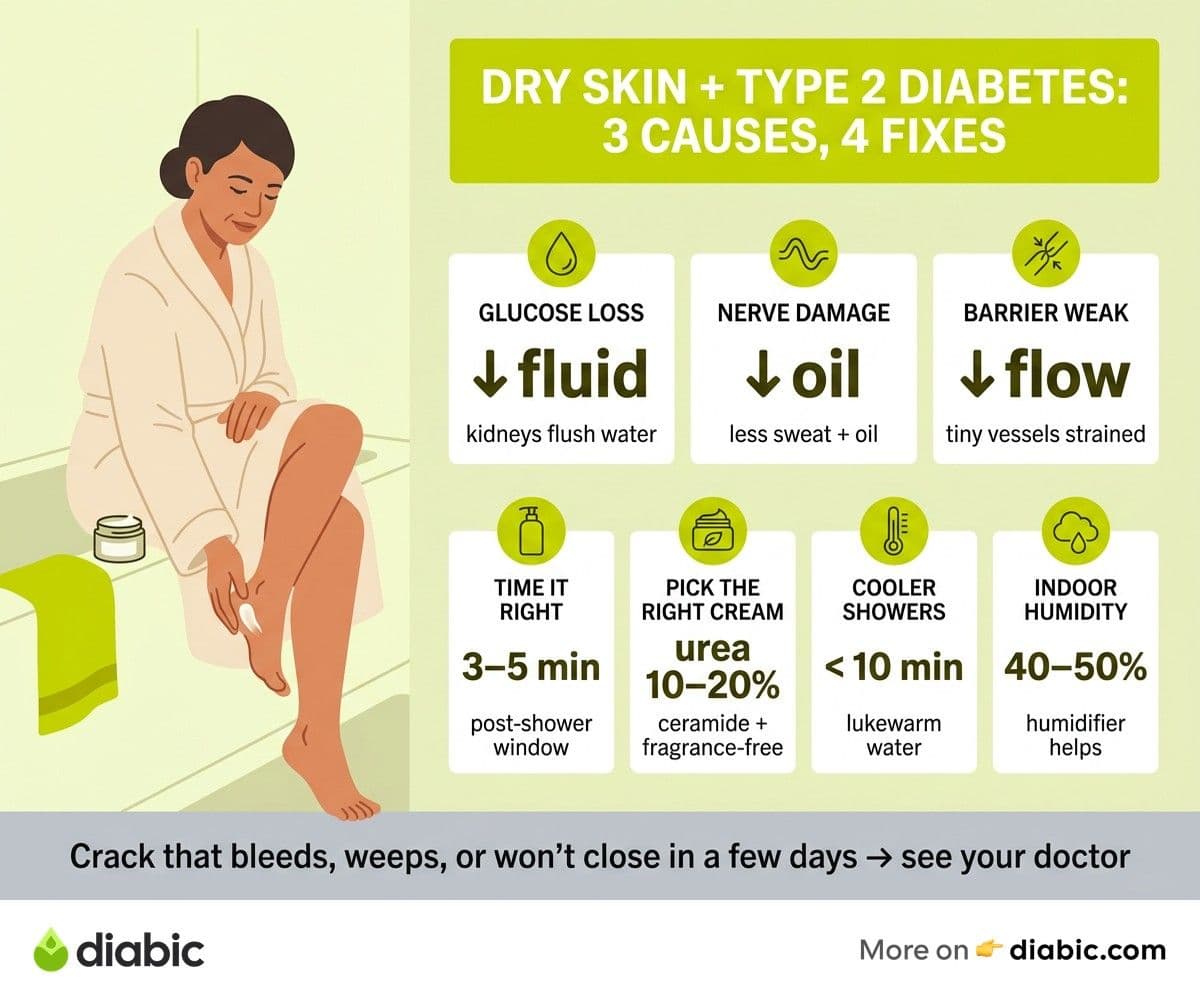
Three main mechanisms drive dryness in people with type 2 diabetes. The first is glucose-related fluid loss. When blood sugar runs high, the kidneys work harder to filter out excess sugar, pulling water along with it. The result is mild dehydration that shows up first in the skin and mucous membranes. The American Diabetes Association notes this as a common driver of dryness.
The second mechanism is nerve-related. Diabetic neuropathy can affect the autonomic nerves that control sweating and oil production. When those nerves are damaged, the skin in affected areas, often the feet and lower legs, produces less sweat and natural oil. The skin loses one of its built-in moisturizing systems, and dryness becomes harder to reverse with topicals alone.
Circulation is the third piece. Tiny vessels in the skin can be damaged by years of elevated glucose, slowing the delivery of nutrients and oxygen needed to maintain the skin barrier. Peer-reviewed research in Diabetes Care has documented these dermatological effects of hyperglycemia in detail.
A few other contributors worth mentioning:
- Diuretic medications, sometimes prescribed for blood pressure, increase fluid loss
- Some statins and metformin can occasionally cause skin reactions in sensitive people
- Cold weather, central heating, and long hot showers all worsen dryness
- Frequent finger sticks and CGM site rotation can dry out specific spots
For the bigger picture on skin issues tied to diabetes, our guide on skin complications of diabetes covers conditions that often share the same root cause.
Common Areas Affected
Dry skin from diabetes tends to follow a pattern. The areas farthest from the heart, with the most autonomic nerve involvement, show changes first. That is why the feet and lower legs are usually the most affected, followed by hands, elbows, and the scalp.
The NIDDK overview of diabetes and skin problems describes how the lower legs in particular often develop a thick, scaly appearance with persistent itch. Heels can crack deeply, sometimes painfully. Skin between the toes can become so dry it splits, creating an entry point for bacteria or fungus.
Hands and elbows commonly develop rough patches, especially in cold weather or after frequent washing. Knuckles can crack. The scalp may flake more than usual, which sometimes gets mistaken for dandruff but does not respond to typical anti-dandruff shampoos when the underlying cause is diabetes-related.
The feet deserve special attention because the consequences of dry skin there are different. A small crack on the back of your hand will heal in a few days. The same crack on a heel, especially in someone with neuropathy, can deepen unnoticed and become a wound that will not close. Our diabetic foot care and prevention guide covers the full daily routine, but the moisturizer piece alone makes a meaningful difference.
When Dry Skin and Type 2 Diabetes Become a Health Concern
Most dry skin is annoying rather than dangerous. The point at which it crosses into a medical concern is when the skin barrier breaks. Once cracks form, especially deeper ones, bacteria and fungi can move in. People with diabetes have a harder time fighting off these infections than the average person.
A few patterns signal that dry skin needs attention beyond moisturizer:
- Cracks that bleed, weep, or do not start healing within a few days
- Persistent itching that leads to scratching and open wounds
- Redness, warmth, or swelling around a dry patch
- Yellow, white, or green discharge from any crack
- Spreading rash or skin that feels hot
If any of these show up, particularly on the feet, treat it as a same-week issue rather than waiting for your next checkup. The Mayo Clinic guidance on dry skin flags similar warning signs and notes when professional care is appropriate.
Itching that becomes severe is another reason to escalate. Persistent itch can sometimes signal a yeast infection, a deeper allergic reaction, or in rare cases an issue with kidney function affecting how the body clears certain substances. Our companion guide on itchy skin with diabetes relief walks through the differences and what each one tends to respond to.
For people with diagnosed neuropathy, the rule is simpler. Inspect your feet and any other numb areas every single day, ideally at the same time, like before bed. You cannot rely on pain to tell you something is wrong, so visual inspection becomes the early warning system. Our diabetic wound healing at home guide is worth a read if you find a small wound and want to manage it carefully.
Daily Relief Strategies
The single most effective change for dry skin in diabetes is timing your moisturizer. Apply it within three to five minutes of stepping out of the shower or bath, while skin is still slightly damp. This traps water under the moisturizer rather than letting it evaporate, and the difference is noticeable within a week.
Choose products built for sensitive skin. The American Academy of Dermatology recommends fragrance-free, hypoallergenic moisturizers with humectants like glycerin, occlusives like petrolatum, and skin-identical lipids like ceramides. Urea at 10 to 20 percent and lactic acid in lower concentrations can help with thicker, scalier areas like heels.
Practical product principles to keep in mind:
- Cream and ointment textures lock in moisture better than lotions
- Fragrance-free is genuinely better, even if "unscented" sounds boring
- Reapply at least twice a day on hands and any exposed areas
- A separate, thicker product for the feet works well at bedtime
Bathing habits matter too. Use lukewarm water rather than hot, which strips more oil from the skin. Keep showers under 10 minutes when possible. Choose gentle, soap-free cleansers rather than antibacterial soaps, which are harsher than most people realize. Pat skin dry rather than rubbing.
Indoor air is often the hidden culprit. Central heating in winter and air conditioning in summer both lower indoor humidity, which dries the skin from the outside. A simple humidifier in the bedroom set to around 40 to 50 percent humidity can change how your skin feels in the morning.
From my experience: For years I used whatever lotion was in the bathroom and wondered why my heels still cracked every winter. The change came when I stopped treating moisturizer as a finishing touch and started treating it as a step. Within a week of using a urea-based foot cream right after showers, the cracks I had ignored for two winters started closing. After 14 years with type 1, I have come to think of moisturizer the same way I think about insulin timing. It works far better when applied at the right moment, not just at the right dose.
Long-Term Management
Steady blood sugar is the foundation that makes everything else work better. Skin dryness that is mostly driven by glucose-related fluid loss often improves within weeks once readings stabilize. That is one of those quiet wins that does not show up on a meter but is real.
Hydration matters, but probably less than most people think. Drinking water alone will not reverse skin that is dry from neuropathy or barrier damage. Steady fluid intake supports overall health, but it is not a substitute for moisturizer, blood sugar management, or treating any underlying skin condition.
A few sustainable long-term habits:
- Inspect your feet every day, ideally at the same time
- Moisturize feet, hands, and any other dry areas at least twice daily
- Protect skin from extreme weather, including wind, sun, and cold
- Avoid soaking your feet, which actually dries them out further
- Keep an eye out for changes in pigmentation, which our guide on diabetic dermopathy brown spots explains in depth
Knowing when to involve a specialist saves time. Your primary care provider can usually handle straightforward dry skin and recommend products. A dermatologist becomes useful when the skin is not responding, when itching is severe, or when there is a rash you cannot identify. For wound concerns, especially on the feet, a podiatrist or your endocrinologist's wound care team is often the right call.
FAQ
Why does type 2 diabetes cause dry skin?
Three main factors are at play. High blood sugar pulls fluid out of tissues through increased urination, leaving the skin slightly dehydrated. Diabetic neuropathy can damage the nerves that control sweating and oil production, reducing the body's natural moisturizing system. Reduced circulation in tiny skin vessels also limits the nutrients reaching the skin, weakening its barrier over time.
How to relieve dry skin from diabetes?
Apply a fragrance-free moisturizer with ceramides or urea within minutes of bathing, while skin is still damp. Use lukewarm rather than hot water, choose gentle soap-free cleansers, and reapply moisturizer at least twice a day. A humidifier indoors can help, especially in winter. Steady blood sugar management is the long-term foundation that makes topical care more effective.
Can moisturizing prevent diabetes skin complications?
Daily moisturizing reduces the risk of skin cracks and the infections that can follow, which is meaningful for people with diabetes. It does not prevent every skin complication, since some, like dermopathy or acanthosis nigricans, have different causes. Combining moisturizer with steady blood sugar management, daily skin checks, and prompt attention to any wounds gives the strongest protection.
The link between dry skin and type 2 diabetes deserves more attention than it usually gets. The patterns are predictable once you know them, the daily habits are simple to start, and steady blood sugar quietly does some of the heaviest lifting. Pick a fragrance-free cream you actually like, build the moisturize-after-shower habit, and check your feet at the same time each day. Small, consistent moves are how most people protect their skin for the long haul.
Shahriar P. Shuvo is the founder of Diabic. He has lived with diabetes for over 14 years, and built Diabic to deliver the practical, evidence-based self-management tools he wished existed when he was first diagnosed. By trade, Shahriar is a senior design and frontend engineer with 6+ years shipping products at Agora, Timescale (now Tiger Data), and ShareTrip. He writes from the intersection of lived diabetes experience and product craft, focused on what works in daily management rather than what sounds good in a textbook.
Medically reviewed by
Dr. Rezwana Parvin Rumpa is an obstetrics and gynaecology specialist with clinical focus on gestational diabetes, PCOS, and fertility. She holds the MRCOG (Final Part) from the Royal College of Obstetricians and Gynaecologists in London, the MRCPI (Final Part) from the Royal College of Physicians of Ireland, and an MBBS from Shaheed Monsur Ali Medical College under Dhaka University. Dr. Rumpa serves as a Senior Medical Officer in the Obs and Gynae department at BRB Hospitals Ltd, where she has spent three years managing prenatal care, emergency obstetric cases, and women's-health surgery. On Diabic, she medically reviews content for women living with diabetes, with particular attention to pregnancy, PCOS, and reproductive-health intersections.
More from Health & Complications
View all
Diabetes and Dental Implants: What to Know First
Diabetes dental implants guide covering safety, A1C targets, recovery expectations, gum health prep, and what to ask your oral surgeon before surgery.

Burning Mouth Syndrome and Diabetes Explained
Burning mouth syndrome diabetes link explained, including neuropathy, dry mouth, and thrush causes plus treatment options that may bring real relief.

Dental Care for people with diabetes: Tips That Help
Practical dental care diabetics need, with real tips for protecting teeth and gums when diabetes raises your risk for oral health problems.
Clinician-reviewed habits, plain-language guides, and honest answers - the small shifts that make living with diabetes feel lighter, every day.