Eye Diabetic Neuropathy: Causes, Symptoms, and Relief
Eye diabetic neuropathy can cause double vision or a drooping eyelid. Learn the causes, symptoms, and recovery timeline so you know what to expect.

In this article(10)
Waking up to double vision or a drooping eyelid is alarming, especially when you have diabetes. The first thought is usually stroke. The second is panic about your eyesight. Eye diabetic neuropathy, sometimes called diabetic cranial neuropathy, is a less commonly discussed form of nerve damage that produces these exact symptoms, and the prognosis is usually far better than people expect.
This post explains what is happening when diabetes affects the nerves that move your eyes, what symptoms to look for, how doctors diagnose it, and what recovery typically looks like.
What Is Eye Diabetic Neuropathy?
Eye diabetic neuropathy is damage to one of the cranial nerves that control eye movement and eyelid position, caused by diabetes. The three nerves involved are the third (oculomotor), fourth (trochlear), and sixth (abducens) cranial nerves. Each one moves specific eye muscles, so the symptoms depend on which nerve is affected.
This is a form of focal neuropathy, meaning it strikes one specific nerve rather than affecting many nerves at once. Most people are more familiar with recognizing diabetic peripheral neuropathy, which affects the feet and hands gradually over years. Cranial neuropathy is different. It often appears suddenly, sometimes overnight, and typically affects one eye at a time.
The mechanism comes down to small blood vessels. According to the NIDDK overview of diabetic neuropathy types, high blood sugar can injure the tiny vessels that supply nerves with oxygen and nutrients. When the supply to a cranial nerve is disrupted, the nerve temporarily stops working properly. The good news is that these nerves can heal once the blood supply recovers.
It is worth distinguishing this from diabetic retinopathy. Retinopathy damages blood vessels in the retina itself and threatens vision over time. This nerve-driven condition damages the muscles that move the eye, not the retina, and rarely causes lasting vision loss. We cover the retinal version in our piece on diabetic retinopathy symptoms and stages.
Symptoms of Cranial Nerve Damage in the Eyes
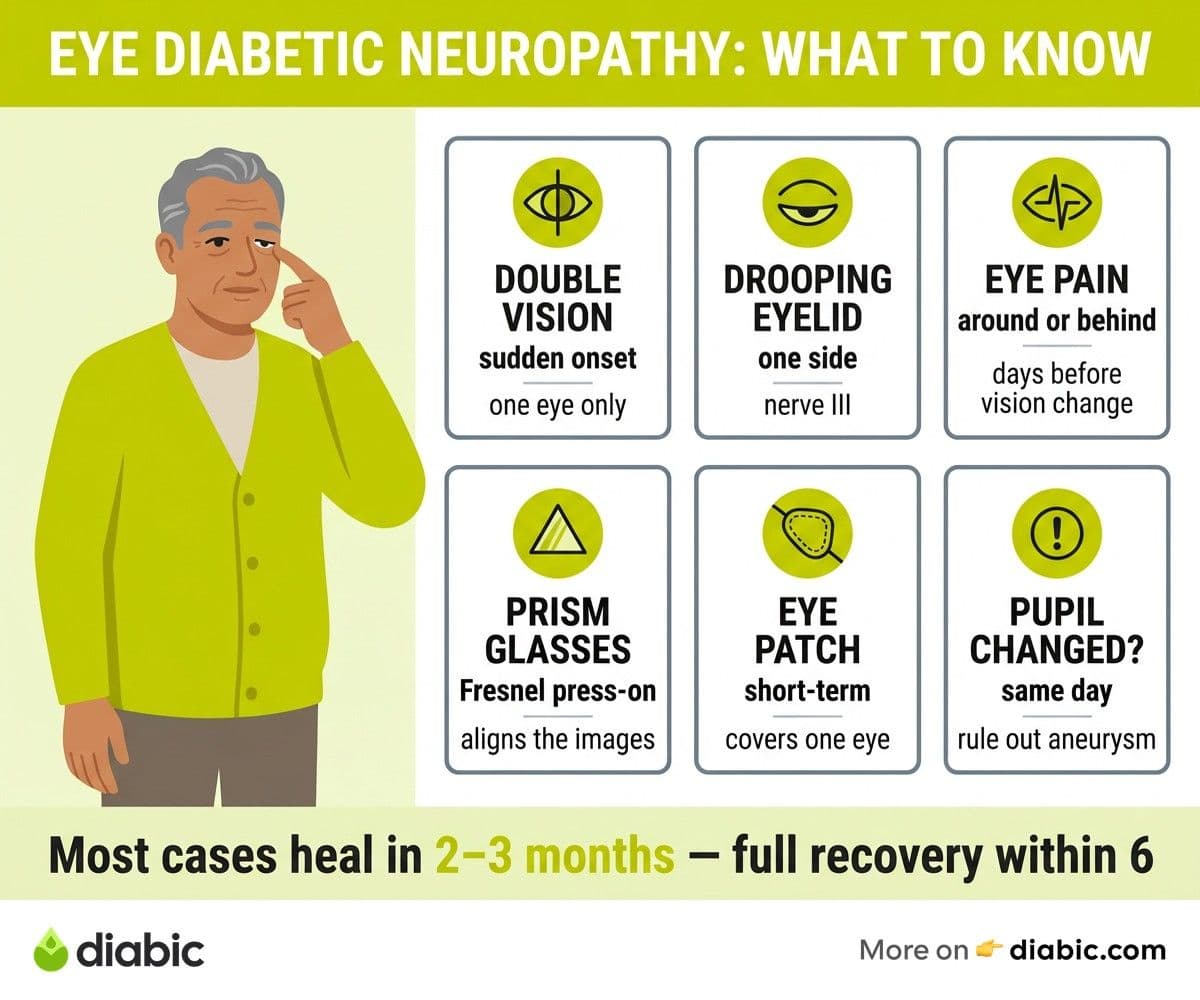
The classic first symptom is double vision (called diplopia). One eye sees an image in the correct position, the other sees it shifted, and your brain cannot fuse them into a single picture. Diplopia from cranial neuropathy usually appears suddenly and affects only certain directions of gaze, depending on which nerve is involved.
A drooping upper eyelid (ptosis) on one side often accompanies third cranial nerve involvement. Some people also notice the affected eye sits in a slightly different position than the other. You may not be able to look up, down, or inward fully on that side. Pain around or behind the affected eye is common in the days leading up to or alongside the visual changes.
Other diabetic neuropathy symptoms can travel with eye nerve issues. Headache on the affected side, light sensitivity, and a sense that your depth perception is off are all reported. Compared to retinal causes of blurred vision and diabetes, the symptoms of cranial neuropathy are more directional. Closing one eye usually eliminates the double vision, which is a useful clue at home and at the doctor's office.
Symptoms typically affect one eye at a time because the cranial nerves on each side are anatomically separate, and the small-vessel injury that causes the problem usually hits one nerve in isolation.
Causes and Risk Factors
The primary cause is microvascular damage from prolonged high blood sugar. Over time, the smallest arteries (called arterioles) supplying nerves can become narrowed or blocked. When this happens to a cranial nerve, the result is the sudden, focal symptoms described above.
Several factors raise the risk:
- Long duration of diabetes, especially when blood sugar has been elevated for years.
- High blood pressure, which compounds vascular damage.
- Smoking, which constricts small blood vessels.
- High cholesterol, particularly elevated LDL, which contributes to vessel narrowing.
- Older age, partly because vascular health declines naturally over time.
One thing that sometimes surprises people is that this kind of nerve injury can occur even with reasonable blood sugar management. The damage often reflects cumulative exposure over years rather than recent control. That is why this condition tends to appear in people who have lived with diabetes for a decade or more, even when their current numbers look fine.
This is also why your doctor will not interpret the diagnosis as a sign that you have failed at something. It is a known complication that can appear in well-managed diabetes, and the focus immediately shifts to ruling out other causes and supporting recovery.
Diagnosis and What to Expect
When you arrive at the clinic with sudden double vision or a drooping eyelid, your doctor's first job is to rule out anything more serious. Stroke, brain aneurysm, multiple sclerosis, and infection can all produce similar symptoms, and several are time-sensitive emergencies.
A neurological exam comes first. Your doctor will check eye movements in all directions, pupil responses to light, and the rest of your cranial nerves. The pattern of weakness usually identifies which nerve is involved within minutes. According to the Mayo Clinic guidance on cranial nerve palsy, an MRI of the brain is typically ordered, especially when the third cranial nerve is involved or when the pupil is affected, because those features raise concern for an aneurysm.
Blood work usually includes a recent A1C, glucose, and sometimes inflammatory markers. Your doctor may also send you to an ophthalmologist for a dilated eye exam to check the retina and rule out other vision-threatening causes. The team is essentially doing two things in parallel: confirming that diabetes is the most likely cause and confirming that nothing more dangerous is hiding underneath.
If you are unsure who to call when this happens, our guide to ophthalmologist vs optometrist for diabetes care walks through the differences. For sudden symptoms, an emergency room or urgent care visit is usually the right first stop.
Treatment and Recovery Options
Most cases resolve on their own within 2 to 3 months as the nerve heals. Treatment focuses on three things: supporting that healing, managing symptoms in the meantime, and preventing recurrence.
Blood sugar management is the foundation. Bringing A1C into a healthier range supports nerve repair and reduces the chance of another episode. Your provider may adjust your medications, recommend more frequent monitoring, or suggest a continuous glucose monitor to give better visibility into patterns. The ADA Standards of Care guidance on neuropathy also recommends managing blood pressure and cholesterol aggressively, since both contribute to small-vessel damage.
For double vision, prism glasses are the most common short-term fix. An optometrist or ophthalmologist can fit a temporary press-on prism (called a Fresnel prism) onto your existing glasses to align the images while the nerve heals. This restores functional vision for reading, driving (when your provider clears you), and daily life. Eye patching is an alternative when prisms are not practical. Covering one eye eliminates the double vision and is a reasonable comfort measure for short periods.
Pain, when it occurs, often responds to over-the-counter medications. If pain is severe or persistent, your doctor may prescribe medications used for nerve pain. Surgery is rarely needed for the person with diabetes form of cranial neuropathy. Studies published in Diabetes Care report that the majority of people see substantial recovery within 8 to 12 weeks, and full or near-full recovery within 3 to 6 months.
When to See a Doctor
Sudden onset of double vision always warrants immediate evaluation. The same goes for a new drooping eyelid, sudden eye pain that you have not experienced before, or any change in pupil size between the two eyes. Pupil involvement is the symptom that most worries doctors, because it can signal an aneurysm rather than diabetes.
If you also have weakness on one side of the body, slurred speech, severe headache, or trouble walking, treat it as a stroke and call emergency services immediately. Stroke and aneurysm rupture can produce symptoms that overlap with diabetic cranial neuropathy, and minutes matter.
For symptoms that develop over days rather than minutes (a slowly worsening droop, intermittent double vision), a same-week appointment with your doctor or eye specialist is usually appropriate. Bring your most recent A1C, a list of your medications, and notes on when symptoms started and what makes them better or worse.
Even after symptoms improve, follow-up matters. Your provider will want to recheck nerve function, review your blood sugar and blood pressure, and adjust your prevention plan. This is also a good moment to review your diabetes eye exam frequency, since the same vascular processes that cause cranial neuropathy can affect the retina too.
Frequently Asked Questions
What is eye diabetic neuropathy?
Eye diabetic neuropathy is damage to one of the cranial nerves (most commonly the third, fourth, or sixth) caused by diabetes-related injury to small blood vessels. It typically presents suddenly with symptoms like double vision, a drooping eyelid, or pain around one eye, usually affecting one side at a time.
Can cranial nerve damage from diabetes be treated?
Yes. The condition typically resolves on its own as the nerve heals, with the majority of people recovering within 2 to 3 months. Treatment focuses on supporting recovery (blood sugar, blood pressure, and cholesterol management), managing symptoms with prism glasses or eye patching, and ruling out more serious causes during the initial workup.
How long does diabetic cranial neuropathy take to heal?
Most cases improve substantially within 8 to 12 weeks, with full or near-full recovery within 3 to 6 months. A small number of people have residual double vision or weakness that may benefit from prism glasses or further evaluation. Recurrence in the same or opposite eye is possible, which is why ongoing diabetes management matters.
If you have noticed symptoms that fit eye diabetic neuropathy, please reach out to your healthcare provider promptly. Sudden eye changes deserve a real exam, not internet reassurance, and most people who get checked early walk out with a clear plan and a reasonable timeline for recovery.
Shahriar P. Shuvo is the founder of Diabic. He has lived with diabetes for over 14 years, and built Diabic to deliver the practical, evidence-based self-management tools he wished existed when he was first diagnosed. By trade, Shahriar is a senior design and frontend engineer with 6+ years shipping products at Agora, Timescale (now Tiger Data), and ShareTrip. He writes from the intersection of lived diabetes experience and product craft, focused on what works in daily management rather than what sounds good in a textbook.
Medically reviewed by
Dr. Shanto Arian is an internal medicine physician now specializing in clinical and aesthetic dermatology, with a parallel academic focus on epidemiology and public health. He holds an MBBS, MPH, MSc (UK), MRCP (UK), MRCPI (Ireland), Diploma in Dermatology (UK), and Diploma in Aesthetic Medicine (USA). Dr. Arian trained in internal medicine, including hospital work on hematology cases such as graft-versus-host disease, before moving toward dermatology. Skin is one of the earliest places diabetes shows itself, from acanthosis nigricans and diabetic dermopathy to slow foot wound healing, and that intersection is where his clinical and Diabic-review work meet. On Diabic, Dr. Arian medically reviews content on diabetes diagnosis, complications, dermatologic manifestations, and pharmacotherapy, ensuring every claim aligns with current ADA, NICE, and peer-reviewed literature.
More from Health & Complications
View all
Diabetes and Dental Implants: What to Know First
Diabetes dental implants guide covering safety, A1C targets, recovery expectations, gum health prep, and what to ask your oral surgeon before surgery.

Burning Mouth Syndrome and Diabetes Explained
Burning mouth syndrome diabetes link explained, including neuropathy, dry mouth, and thrush causes plus treatment options that may bring real relief.

Dental Care for people with diabetes: Tips That Help
Practical dental care diabetics need, with real tips for protecting teeth and gums when diabetes raises your risk for oral health problems.
Clinician-reviewed habits, plain-language guides, and honest answers - the small shifts that make living with diabetes feel lighter, every day.