Gestational Diabetes Causes and Risk Factors
Understanding gestational diabetes causes and risk factors helps remove guilt and confusion. Learn what drives the condition and what you can manage.

In this article(12)
- What Causes Gestational Diabetes During Pregnancy
- Who Is Most at Risk for Gestational Diabetes
- Hormones Among the Main Gestational Diabetes Causes
- Gestational Diabetes Symptoms and Early Recognition
- Genetics and Gestational Diabetes
- Lifestyle Factors That Influence Risk
- What You Cannot Change vs What You Can
Understanding gestational diabetes causes can help remove the guilt and confusion that often follow a diagnosis. This condition is driven by hormonal changes during pregnancy that affect how your body uses insulin, and certain risk factors make it more likely to develop. Knowing what is actually driving the numbers helps you focus on what you can manage rather than what you cannot change about your biology.
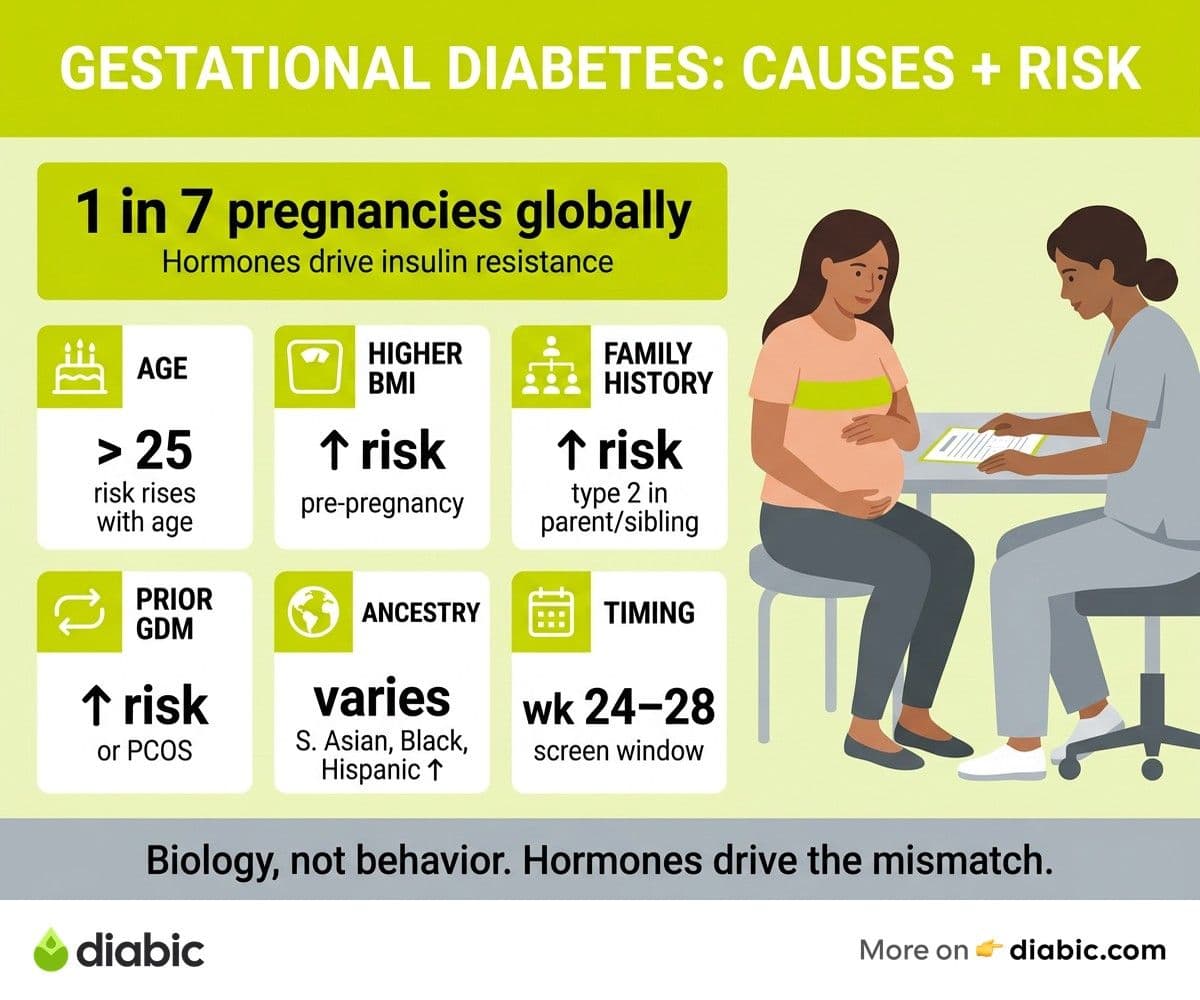
If you were just diagnosed at your second-trimester glucose screen, breathe. Gestational diabetes affects roughly one in seven pregnancies worldwide, according to global data summarized by international health bodies. You did not cause this by something you ate, and most people who develop it have a perfectly healthy pregnancy with the right care.
The pages that follow walk through the biology of why pregnancy itself can disrupt blood sugar, who tends to be at higher risk, what symptoms might or might not show up, and where to put your energy as you work with your care team.
What Causes Gestational Diabetes During Pregnancy
The short answer is hormones. The longer answer is more interesting and worth understanding because it shifts the framing from blame to biology. According to the NIDDK, gestational diabetes develops when pregnancy hormones, particularly those produced by the placenta, create a level of insulin resistance that the pancreas cannot fully match by producing more insulin.
Insulin resistance during pregnancy is actually normal and necessary. As pregnancy progresses, the placenta releases hormones that gradually make the mother's cells less responsive to insulin, which keeps more glucose available in the bloodstream for the growing baby. In a healthy pregnancy, the pancreas compensates by producing two to three times more insulin than usual, and blood sugar stays in the normal range.
When the pancreas cannot produce enough extra insulin to overcome this resistance, glucose builds up in the bloodstream and gestational diabetes appears. This is not a moral failing or a personal lapse. It is a mismatch between hormonal demand and pancreatic capacity, and that capacity is shaped by genetics, body chemistry, and a host of other factors largely outside daily control.
The condition typically appears in the second trimester, usually between weeks 24 and 28, which is why screening is scheduled in that window. By that point, placental hormone levels have risen enough to expose any insulin production limits the body may have. Our calm guide to gestational diabetes walks through what happens after a positive screen with practical context for what to expect next.
Who Is Most at Risk for Gestational Diabetes
Risk factors do not predict every case, and many people with no known risk factors are surprised by a diagnosis. Still, certain factors are associated with higher likelihood, and knowing where you sit can help you and your provider plan early monitoring if it is appropriate. The American College of Obstetricians and Gynecologists identifies several well-established risk factors in its practice guidance.
Age is one of the most consistent risk factors. People over 25 have a higher rate of gestational diabetes than younger pregnant people, and risk continues to rise into the late 30s and 40s. The reason appears to be the gradual decline in insulin sensitivity that comes with age, layered on top of the additional demand pregnancy creates.
Pre-pregnancy weight and body mass index are also strong predictors. Higher BMI before conception is associated with greater baseline insulin resistance, which means the pancreas has less reserve when pregnancy hormones add their demand. This relationship is not about appearance or willpower. It is about the underlying metabolic context the body brings into pregnancy.
Family history of diabetes, particularly type 2 in a parent or sibling, raises the likelihood meaningfully. So does a personal history of gestational diabetes in a previous pregnancy, prediabetes before this pregnancy, or polycystic ovary syndrome. There are also documented racial and ethnic disparities, with people of South Asian, East Asian, Hispanic, Black, and Indigenous backgrounds carrying higher rates of gestational diabetes than people of European descent. These disparities reflect a complex mix of genetics, social determinants, and access to care that deserves acknowledgment rather than oversimplification.
Hormones Among the Main Gestational Diabetes Causes
The hormonal mechanism behind gestational diabetes is worth understanding because it explains the timing, the resolution, and the predictable trajectory of the condition. Several placental hormones contribute, with human placental lactogen playing the most prominent role.
Human placental lactogen, also called HPL, rises steadily as pregnancy progresses. It alters maternal metabolism to favor the developing baby by increasing insulin resistance in the mother's tissues, which keeps more glucose and amino acids in circulation for the baby to use. Other hormones, including cortisol, estrogen, progesterone, and human chorionic somatomammotropin, contribute to the same shift.
The timing of gestational diabetes appearing in the second trimester is no accident. By weeks 24 to 28, placental hormone production has reached levels that expose any limits in maternal insulin production. This is also why screening is scheduled in this window. According to WHO global health data, this timing pattern is remarkably consistent across populations, even as overall prevalence varies.
The condition resolves after delivery for most people because the placental hormones that drove the insulin resistance are gone within hours of birth. Blood sugar typically returns to normal within days, although postpartum glucose testing is still recommended at six to twelve weeks to confirm resolution and identify anyone whose diabetes did not resolve. About half of people who had gestational diabetes will go on to develop type 2 diabetes within ten to twenty years, which is why ongoing monitoring matters even after a healthy resolution.
Gestational Diabetes Symptoms and Early Recognition
Most cases of gestational diabetes do not cause noticeable gestational diabetes symptoms, which is exactly why universal screening exists. The body tends to compensate quietly until the screening test reveals what is happening underneath. Many people are completely surprised by a positive result because they felt fine throughout the second trimester.
When symptoms of gestational diabetes do appear, they tend to mirror the classic high blood sugar pattern seen in other forms of diabetes. Increased thirst, more frequent urination, fatigue beyond what pregnancy normally brings, and occasional blurred vision are the most commonly reported. None of these symptoms are specific to gestational diabetes, and several overlap with normal pregnancy experiences, which adds to the case for screening rather than waiting for symptoms.
Screening matters more than symptom recognition for one practical reason. The metabolic effects of untreated gestational diabetes on the developing baby can be significant even when the mother feels well. Excess maternal glucose crosses the placenta and prompts the baby's pancreas to produce extra insulin, which can lead to larger birth weight, low blood sugar in the newborn after delivery, and other complications. Catching the condition early, even before symptoms would otherwise show, is what allows treatment to protect both pregnancies.
If you do notice persistent thirst, unusual fatigue, or other concerning patterns between scheduled visits, mention them to your provider rather than waiting. Early conversation rarely hurts, and providers can decide whether earlier glucose testing makes sense based on the full picture.
Genetics and Gestational Diabetes
The hereditary component of gestational diabetes risk is real but often misunderstood. Having a parent or sibling with type 2 diabetes does increase your likelihood of developing gestational diabetes, which suggests shared genetic factors that influence insulin production and insulin sensitivity. The connection is consistent enough that family history is part of standard risk assessment in most practices.
That said, genetics is a risk factor, not a guarantee. Many people with strong family histories never develop gestational diabetes, and many with no family history do. The genes involved appear to influence pancreatic capacity and insulin signaling in subtle ways that interact with body composition, age, ethnic background, and lifestyle factors during pregnancy. Our broader overview of whether diabetes is genetic walks through the inheritance picture in more depth for readers who want to dig deeper.
The connection to type 2 diabetes after pregnancy is also rooted partly in shared genetics. People who develop gestational diabetes have a higher lifetime risk of type 2, and that elevated risk appears in part because the genetic factors that exposed pancreatic limits during pregnancy continue to operate afterward. This is why postpartum follow-up and long-term monitoring are recommended, and why lifestyle changes that reduce insulin resistance can have benefits well beyond the pregnancy itself.
Knowing your family history matters for one practical reason. It can help your provider decide whether early screening, even before the standard 24-to-28-week window, is appropriate for you. Earlier identification means earlier management and, for many people, smoother outcomes.
Lifestyle Factors That Influence Risk
Lifestyle factors before and during pregnancy do influence gestational diabetes risk, although the influence is more modest than headlines sometimes suggest. The factors most consistently linked to lower risk are physical activity, dietary patterns rich in whole foods, and weight management before conception when that is feasible.
Physical activity in the months and years before pregnancy is associated with better insulin sensitivity, which means the pancreas has more reserve when pregnancy hormones add their demand. Walking, swimming, and other moderate aerobic activity all count, and the benefits accumulate even without intense training. During pregnancy, regular gentle activity continues to support insulin sensitivity and is generally safe for most pregnancies, although your provider should be the one to confirm what is appropriate for your situation.
Dietary patterns matter, although the evidence supports general principles more than specific diets. Higher intake of whole grains, vegetables, lean proteins, and healthy fats is associated with lower gestational diabetes risk in observational research. Lower intake of refined carbohydrates and sugary drinks tracks the same direction. None of this is about perfection, and the conversations we hear from readers most often involve guilt about food rather than constructive planning. Talking with a registered dietitian during preconception or early pregnancy can be far more useful than chasing a single dietary rule.
Weight management before conception, when applicable, is associated with reduced risk, although bringing it up in pregnancy itself is rarely the right framing. By the time you are pregnant, the focus shifts to nutrition and activity that supports both you and the baby, not weight loss.
What You Cannot Change vs What You Can
Some risk factors are not changeable, and accepting that is part of approaching gestational diabetes with clarity rather than self-blame. Age, ethnicity, family history, and the genetic factors that shape pancreatic capacity are not within your control, and treating them as personal failures only adds an unnecessary emotional load.
What you can shape are the modifiable factors, and even there the influence is partial rather than complete. Physical activity, dietary patterns, and weight before conception are the main areas where your choices contribute to the picture. During pregnancy itself, the focus shifts to working with your care team, attending screening appointments, and following the management plan if a diagnosis comes through.
If you are considered higher risk, talk to your provider about earlier screening. Some practices test at the first prenatal visit for people with strong risk factors and again at the standard window if the first test is normal. Earlier identification gives more time for the strategies that help, including gestational diabetes treatment options ranging from dietary adjustments to medication when needed.
The most important thing we can offer here is reassurance. Gestational diabetes does not mean you did something wrong, and most people who develop it have healthy pregnancies and healthy babies with appropriate care. The path forward is real and well mapped, and you do not have to walk it alone.
Frequently Asked Questions
What causes gestational diabetes during pregnancy?
Gestational diabetes occurs when pregnancy hormones, particularly those produced by the placenta, create insulin resistance that the body cannot fully compensate for. The pancreas may not produce enough extra insulin to keep blood sugar levels normal during the second half of pregnancy. This is a biological mismatch between hormonal demand and pancreatic capacity, not a result of anything done wrong during pregnancy.
Who is most at risk for gestational diabetes?
Risk factors include being over age 25, having a higher pre-pregnancy BMI, family history of type 2 diabetes, previous gestational diabetes, polycystic ovary syndrome, and certain ethnic backgrounds, including South Asian, East Asian, Hispanic, Black, and Indigenous heritage. Having risk factors does not guarantee the condition will develop, and many people with no known risk factors are diagnosed each year.
Can gestational diabetes be prevented?
Some risk reduction is possible through physical activity, dietary patterns rich in whole foods, and weight management before conception, but gestational diabetes cannot be fully prevented because it depends partly on genetics and hormones beyond personal control. Talk to your doctor about appropriate steps if you are at higher risk, including the possibility of earlier screening.
Does gestational diabetes go away after pregnancy?
Yes, for most people gestational diabetes resolves within days of delivery as the placental hormones that drove the insulin resistance disappear. Postpartum glucose testing at six to twelve weeks confirms resolution. Long-term follow-up is still recommended because about half of people who had gestational diabetes go on to develop type 2 diabetes within ten to twenty years, and earlier identification means better long-term outcomes.
If you are pregnant or planning a pregnancy and want to understand your risk, talk to your healthcare provider about an early conversation around gestational diabetes screening. Knowing the gestational diabetes causes that apply to you, understanding your personal risk picture, and showing up to your prenatal visits prepared can shape your experience considerably. Most pregnancies touched by this diagnosis still end with a healthy parent and a healthy baby when the right care is in place, and that care begins with a calm conversation about what you can and cannot change.
Dr. Rezwana Parvin Rumpa is an obstetrics and gynaecology specialist with clinical focus on gestational diabetes, PCOS, and fertility. She holds the MRCOG (Final Part) from the Royal College of Obstetricians and Gynaecologists in London, the MRCPI (Final Part) from the Royal College of Physicians of Ireland, and an MBBS from Shaheed Monsur Ali Medical College under Dhaka University. Dr. Rumpa serves as a Senior Medical Officer in the Obs and Gynae department at BRB Hospitals Ltd, where she has spent three years managing prenatal care, emergency obstetric cases, and women's-health surgery. On Diabic, she medically reviews content for women living with diabetes, with particular attention to pregnancy, PCOS, and reproductive-health intersections.
Medically reviewed by
Dr. Shanto Arian is an internal medicine physician now specializing in clinical and aesthetic dermatology, with a parallel academic focus on epidemiology and public health. He holds an MBBS, MPH, MSc (UK), MRCP (UK), MRCPI (Ireland), Diploma in Dermatology (UK), and Diploma in Aesthetic Medicine (USA). Dr. Arian trained in internal medicine, including hospital work on hematology cases such as graft-versus-host disease, before moving toward dermatology. Skin is one of the earliest places diabetes shows itself, from acanthosis nigricans and diabetic dermopathy to slow foot wound healing, and that intersection is where his clinical and Diabic-review work meet. On Diabic, Dr. Arian medically reviews content on diabetes diagnosis, complications, dermatologic manifestations, and pharmacotherapy, ensuring every claim aligns with current ADA, NICE, and peer-reviewed literature.
More from Diabetes Knowledge
View all
6 Safe Dessert for Gestational Diabetes Recipes You Can
Six dessert for gestational diabetes recipes that satisfy your sweet tooth without spiking blood sugar, with carb counts and pairing tips you can use.

8 High Fiber Foods That Help with Prediabetes
Add these 8 high fiber foods for prediabetes to slow glucose absorption, support steady blood sugar, and meet the daily fiber target most people miss.

Mediterranean Diet for Prediabetes: A Practical Guide
The mediterranean diet for prediabetes is one of the best-studied eating patterns for prevention. Here is what to eat, what to avoid, and how to start.
Clinician-reviewed habits, plain-language guides, and honest answers - the small shifts that make living with diabetes feel lighter, every day.