Caffeine and Type 1 Diabetes: What to Know
Caffeine and type 1 diabetes interact in surprising ways. Learn how coffee affects blood sugar, plus practical tracking tips to enjoy your cup.

In this article(15)
For many people with type 1 diabetes, the morning cup of coffee is non-negotiable. The aroma, the ritual, the gentle nudge into the day. The thing nobody tells you at diagnosis is that caffeine type 1 diabetes patterns are real, the relationship between the two is genuinely complicated, and a black coffee with zero carbs can still send your blood sugar climbing.
This guide walks through what the research actually says about caffeine and blood sugar in T1D, why your morning latte might behave differently from your afternoon iced coffee, and how to figure out your personal response without giving up your favorite drink. We will keep things practical, because real life rarely matches the textbook.
How Caffeine Type 1 Diabetes Patterns Show Up in Blood Sugar
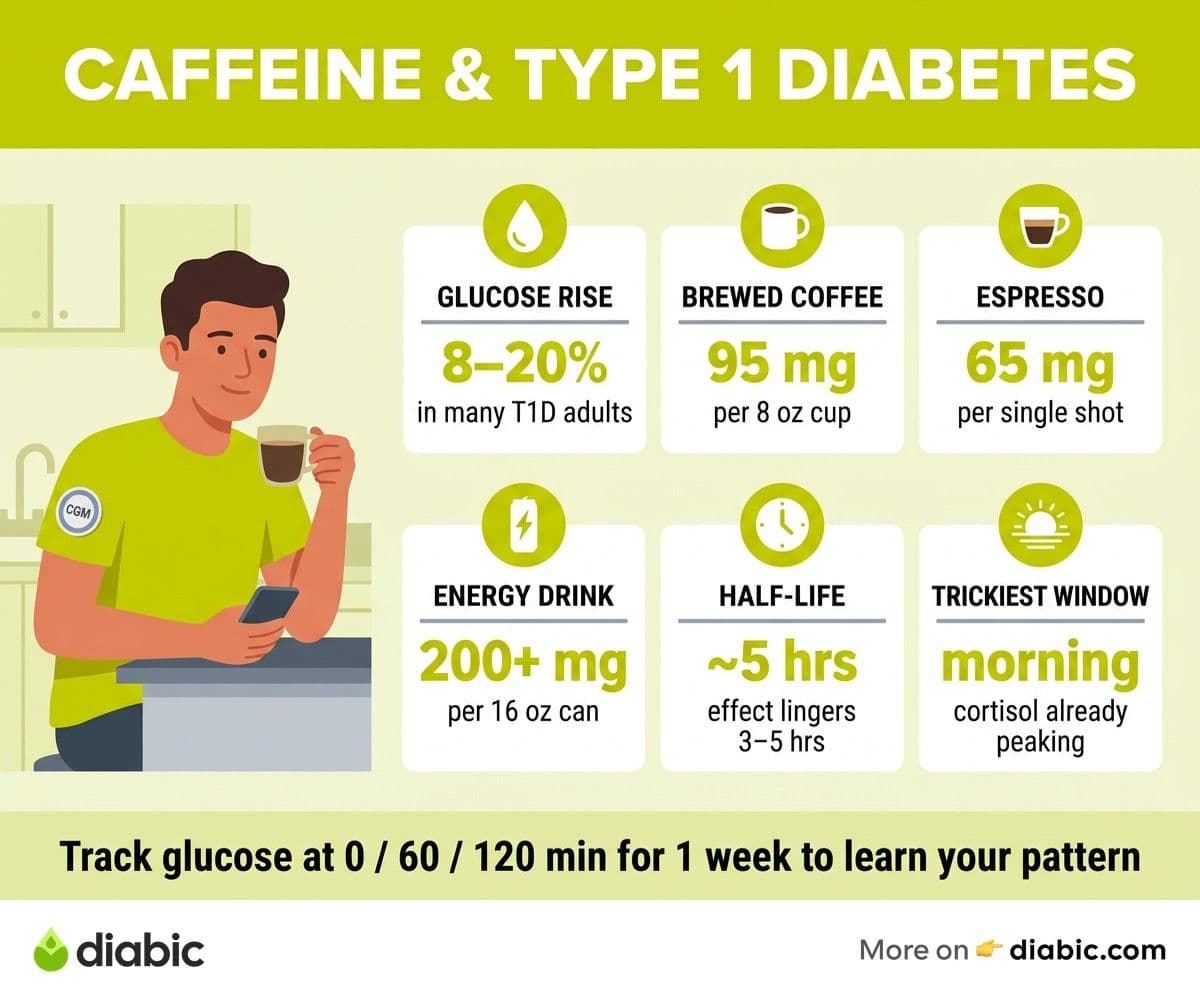
Caffeine is a stimulant, and stimulants tend to raise blood glucose by triggering hormones like adrenaline and cortisol. Several small studies, including work indexed in PubMed on caffeine and glucose metabolism in T1D, have observed post-caffeine blood sugar increases of roughly 8 to 20 percent in adults with type 1 diabetes. The average rise is modest, but the variation between individuals is dramatic.
A few factors shape how much caffeine moves your numbers. Your sensitivity to caffeine, how much you have eaten, the time of day, and your sleep the night before all matter. Mornings tend to be the trickiest window because cortisol is already peaking, and adding caffeine on top can amplify the dawn phenomenon that so many people with T1D recognize as unexplained early-day highs.
If you have noticed unexplained spikes that look nothing like your meals, caffeine is worth investigating. We cover the broader picture of glucose patterns in our piece on high blood sugar symptoms you should not ignore, which can help you separate caffeine-driven rises from other causes.
Why Morning Coffee Hits Differently
Insulin sensitivity is naturally lower in the early hours. When you stack caffeine on top of cortisol, growth hormone, and the dawn phenomenon, the effect compounds. Many people with T1D find that the same coffee at 7 a.m. produces a noticeable rise, while the same drink at 2 p.m. barely registers.
The takeaway is not that you have to swear off morning coffee. It is that your body might need a slightly different strategy in the morning than it does later in the day. Once you see this pattern, you can plan around it instead of being surprised by it.
Caffeine and Insulin Sensitivity
Caffeine works partly by blocking adenosine receptors in your tissues, which interferes with how cells take up glucose. According to the Mayo Clinic's guidance on caffeinated drinks and blood sugar, caffeine may temporarily reduce insulin sensitivity, meaning the same dose of insulin does not lower glucose quite as effectively for a few hours after intake.
Caffeine also nudges your adrenal system. It raises adrenaline (epinephrine), which tells the liver to release stored glucose, and it can elevate cortisol, which works against insulin. None of these effects are dangerous in normal doses, but they help explain why a zero-carb coffee can still drift you upward by 30 or 40 points.
There is also a tolerance angle. Habitual coffee drinkers often show a smaller glucose response than people who only drink caffeine occasionally. If you stopped coffee for a month and then restarted, the first week might look different from your old baseline.
How This Connects to Insulin Therapy
If you take basal-bolus insulin, the temporary insulin resistance from caffeine sometimes calls for a small adjustment around your morning dose. Some people find that a tiny pre-bolus before coffee, or a slight basal tweak, smooths out the pattern. We walk through the logic of dose timing in our guide to insulin therapy for type 1, and any of those changes are conversations to have with your endocrinologist rather than experiments to run alone.
The other variable is whether you eat with your coffee. A protein-and-fat breakfast usually blunts the caffeine spike. Black coffee on an empty stomach is the most likely scenario to produce a clean caffeine effect, which is exactly why empty-stomach coffee is the best diagnostic test for figuring out your own response.
Practical Tips for Coffee and Diabetes
The hardest part of figuring out caffeine and type 1 diabetes is that nobody else's data tells you what your data will look like. The good news is that a week of focused tracking is usually enough to see a clear pattern. Here is a simple approach that has worked for many in our community.
For one week, drink your usual coffee at your usual time, but capture three data points: blood sugar before the first sip, blood sugar at 60 minutes, and blood sugar at 120 minutes. If you wear a CGM, this is even easier because the curve tells the whole story. Keep meals consistent across the week so you are not chasing two variables at once.
Once you can see your pattern, a few small habits tend to help:
- Try having coffee after a small meal rather than on an empty stomach, since food usually blunts the rise.
- Watch out for hidden carbs in flavored lattes, syrups, oat milk, and creamers, which the American Diabetes Association nutrition guidance flags as common surprises.
- If you notice a consistent caffeine spike, talk to your provider about a small pre-bolus or a temporary basal increase.
- Stay hydrated, because caffeine is mildly diuretic and dehydration can also raise blood sugar.
From my experience: I have lived with T1D for 14 years, and coffee is the one variable I have tracked the most. For about a decade I assumed my morning highs were the dawn phenomenon. When I finally ran the empty-stomach black-coffee test, my CGM showed a clean 45-point rise within 90 minutes with no food, no insulin, and no other variable. Adjusting my morning bolus by a small amount, with my endo's guidance, turned a chronic frustration into a non-issue. The coffee never had to go.
If your meals are part of the puzzle, our daily living guide for type 1 diabetes walks through the small routines that keep mornings from going sideways. Beverage choices, in our experience, deserve the same attention as food.
Beyond Coffee: Other Sources of Caffeine
Coffee gets the spotlight, but caffeine sneaks into a lot of other places. A standard 8-ounce cup of brewed coffee has roughly 95 milligrams of caffeine, while a shot of espresso has around 65, a cup of black tea around 47, green tea around 28, and a 16-ounce energy drink can reach 200 milligrams or more. Diabetes UK notes that the cumulative dose across a day matters more than any single drink.
Pre-workout supplements often contain 150 to 400 milligrams per serving, sometimes alongside other stimulants that can also affect blood sugar. If you train in the morning and use one of these products, the combined caffeine plus exercise hormones can produce a meaningful glucose rise even with no carbs in the mix.
Sugar-Free Energy Drinks: A Nuanced Picture
Sugar-free energy drinks remove the obvious carb impact, but they often pack the highest caffeine doses on the shelf. They can also contain artificial sweeteners that some people find affect their gut or appetite. They are not off-limits for people with T1D, but they are not free of glucose effects either.
Chocolate is another stealth source. Dark chocolate has more caffeine than milk chocolate, and a 100-gram bar of 70 percent dark can carry 80 milligrams or so. A few squares with dinner are unlikely to matter, but a whole bar at 9 p.m. can ripple into your overnight numbers.
Some over-the-counter medications, especially headache and cold formulations, also contain caffeine. If you have noticed unexplained highs after a new medication, the ingredient label is worth a second look.
When to Cut Back or Switch
Caffeine is not the enemy, but it can quietly reshape your blood sugar patterns if your intake creeps up. Signs that it might be time to dial back include rising overnight numbers when you have an afternoon coffee, a creeping morning A1C trend that your meals do not explain, sleep that has gotten worse over time, or anxiety that is harder to manage.
Decaf is a useful middle ground. It is not zero caffeine (a typical cup has 2 to 15 milligrams) but it is roughly 90 percent lower than regular. Many people in our community alternate, keeping one regular cup in the morning and switching to decaf or herbal options afterward. The same applies to T1D athletes who use exercise tips that work with their training schedule and want to avoid stacking pre-workout caffeine with workout-related glucose swings.
If you are also working on broader lifestyle adjustments, our prediabetes diet primer has principles that translate well to T1D meal planning, including the role of beverages and added sugars.
Alternatives Worth Trying
Herbal teas like rooibos, peppermint, and chamomile contain no caffeine and can satisfy the warm-drink ritual. Chicory root coffee is another option that mimics coffee's bitterness. Matcha has caffeine but releases it more slowly than drip coffee, which some people find produces a smoother glucose response.
The point is not to give up something you love. It is to know your numbers well enough that you can keep what works and trim what does not.
FAQ
Does caffeine raise blood sugar in type 1 diabetes?
Research suggests caffeine can raise blood sugar in many people with type 1 diabetes by temporarily reducing insulin sensitivity and triggering a release of glucose from the liver. The effect is highly individual, with some people seeing little change and others seeing 30 to 50-point rises. Tracking your blood sugar before and 60 to 120 minutes after caffeine intake for a week is the simplest way to see your own pattern.
Can you drink coffee with type 1 diabetes?
Yes, most people with type 1 diabetes can enjoy coffee. The keys are knowing your personal response, keeping the coffee itself simple (avoiding sugary syrups and high-carb milks), and adjusting around your routine if you notice a consistent caffeine spike. Talk to your doctor about whether a small dose adjustment makes sense for your morning routine.
Is decaf coffee safe for type 1 diabetes?
Decaf coffee is generally a safe option and contains far less caffeine than regular. Some people with T1D switch to decaf in the afternoon to protect their sleep and overnight glucose. Decaf is not zero caffeine, so if you are very sensitive, expect a small effect.
How long does caffeine affect blood sugar?
Caffeine's effect on glucose typically peaks 30 to 90 minutes after intake and can linger for 3 to 5 hours, since caffeine has a half-life of roughly 5 hours in most adults. If you drink coffee in the late afternoon, some of that effect can carry into your evening insulin needs.
Does adding milk to coffee change the blood sugar response?
Yes, in two ways. The carbs in milk (about 12 grams per cup of dairy milk and varying amounts in plant milks) will raise blood sugar on their own. The protein and fat in milk can also blunt the caffeine response slightly. Knowing your milk's carb count and treating it like food is the cleanest approach for managing caffeine type 1 diabetes patterns.
Shahriar P. Shuvo is the founder of Diabic. He has lived with diabetes for over 14 years, and built Diabic to deliver the practical, evidence-based self-management tools he wished existed when he was first diagnosed. By trade, Shahriar is a senior design and frontend engineer with 6+ years shipping products at Agora, Timescale (now Tiger Data), and ShareTrip. He writes from the intersection of lived diabetes experience and product craft, focused on what works in daily management rather than what sounds good in a textbook.
Medically reviewed by
Dr. Rezwana Parvin Rumpa is an obstetrics and gynaecology specialist with clinical focus on gestational diabetes, PCOS, and fertility. She holds the MRCOG (Final Part) from the Royal College of Obstetricians and Gynaecologists in London, the MRCPI (Final Part) from the Royal College of Physicians of Ireland, and an MBBS from Shaheed Monsur Ali Medical College under Dhaka University. Dr. Rumpa serves as a Senior Medical Officer in the Obs and Gynae department at BRB Hospitals Ltd, where she has spent three years managing prenatal care, emergency obstetric cases, and women's-health surgery. On Diabic, she medically reviews content for women living with diabetes, with particular attention to pregnancy, PCOS, and reproductive-health intersections.
More from Diabetes Knowledge
View all
6 Safe Dessert for Gestational Diabetes Recipes You Can
Six dessert for gestational diabetes recipes that satisfy your sweet tooth without spiking blood sugar, with carb counts and pairing tips you can use.

8 High Fiber Foods That Help with Prediabetes
Add these 8 high fiber foods for prediabetes to slow glucose absorption, support steady blood sugar, and meet the daily fiber target most people miss.

Mediterranean Diet for Prediabetes: A Practical Guide
The mediterranean diet for prediabetes is one of the best-studied eating patterns for prevention. Here is what to eat, what to avoid, and how to start.
Clinician-reviewed habits, plain-language guides, and honest answers - the small shifts that make living with diabetes feel lighter, every day.