Diabetes Insulin Myths: What People Get Wrong
Common diabetes insulin myths cause fear and delay treatment. Here is what insulin therapy really involves, who needs it, and what the research actually.

In this article(13)
Diabetes insulin myths can cause real harm, from delaying necessary treatment to creating fear that has no basis in evidence. If you have been prescribed insulin or you are wondering whether you might need it someday, the stories you have heard probably do not match the science. Insulin is one of the most studied, most refined medications in modern medicine, yet misunderstandings about it persist.
Some of these misconceptions come from outdated experiences shared at family dinners. Others come from confusing one type of diabetes with another. A few come from simple fear of needles or change.
Here is a closer look at what people commonly get wrong about insulin, and what the evidence actually shows about how it fits into managing diabetes today.
The Most Common Diabetes Insulin Myths
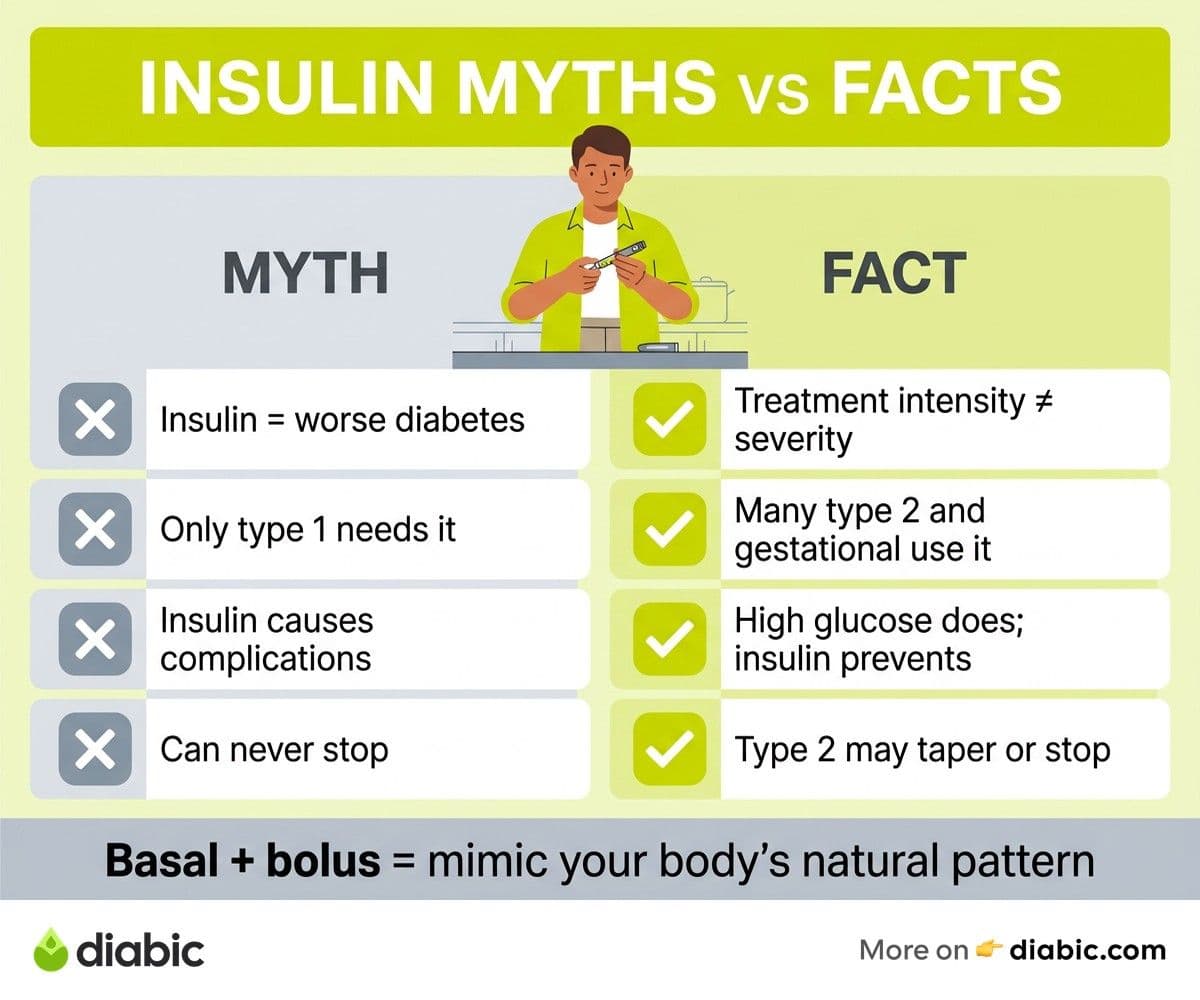
Most diabetes insulin myths fall into a handful of recurring claims that get repeated in waiting rooms, on social media, and across well-meaning conversations. The first is that insulin is only for type 1 diabetes. The second is that needing insulin means you have somehow failed. The third is that insulin causes weight gain and complications. The fourth is that once you start, you can never stop.
None of these holds up under careful review. The American Diabetes Association's standards of care make clear that insulin is a tool used across many forms of diabetes, often as the most effective option for keeping blood glucose in a healthy range. Treatment intensity reflects what your body needs in this season, not a grade on your effort.
Modern insulin formulations are also dramatically different from those used in past generations. Rapid-acting analogs, ultra-long-acting basal options, and smart pens have made dosing more flexible and predictable. The fears that lingered from the 1980s simply do not match the medication available today.
Does Needing Insulin Mean Diabetes Is Worse
The phrase "I had to go on insulin" often carries a weight that is not really earned. Many people interpret an insulin prescription as proof that things have gotten out of hand, when in reality it usually means the body's natural insulin production has changed. That change is part of how type 2 diabetes can progress over time, and it has very little to do with willpower.
Research on type 2 diabetes shows that beta cell function declines gradually for most people, regardless of how carefully they eat or exercise. By the time of diagnosis, beta cell capacity is often already reduced by 50 percent or more. This is not a moral failing. It is biology. If you want a fuller picture of how the condition evolves, our guide on whether diabetes can be cured addresses the difference between cure, remission, and ongoing management.
Treatment intensity does not equal disease severity in any straightforward way. A person on insulin and a person on metformin alone may have similar A1c numbers and similar long-term outcomes. What matters is whether the chosen treatment keeps blood glucose in a safe range with minimal side effects, not which medication appears on the label.
Diabetes UK puts it well in their patient education materials: insulin is a treatment option, not a punishment. The earlier this framing takes hold, the easier it becomes to discuss insulin honestly with your healthcare team.
From my experience: when I was first diagnosed with type 1 at twelve, I assumed insulin would be temporary. That assumption fell apart quickly, and I had to learn that needing insulin every day did not mean my body was broken. Over fourteen years, I have come to see insulin as the medication that lets me live a full, normal life. The same shift in framing can help people with type 2 who are starting insulin for the first time. It is medicine, not a verdict.
Is Insulin Only for Type 1 Diabetes
This is one of the most stubborn diabetes insulin myths, partly because for decades type 1 was called "insulin-dependent diabetes." That label is no longer used because it created a false impression that everyone else could avoid insulin entirely.
In reality, many people with type 2 diabetes use insulin, especially as the condition progresses and oral medications become less effective. Pregnant women with gestational diabetes sometimes need insulin to protect both their health and the baby's. People hospitalized for surgery, severe illness, or steroid treatment may use insulin temporarily even if they would not normally need it. The medication shows up across the full diabetes landscape.
For people with type 1 diabetes, insulin is not optional. The immune system has destroyed the beta cells that produce it, so external insulin replaces what the body can no longer make. Without it, blood glucose rises to dangerous levels within hours. Our explainer on how insulin therapy works for type 1 walks through the mechanics in more detail.
The line between "type 1 needs insulin" and "type 2 sometimes needs insulin" is real, but neither side of that line should carry stigma. Both groups are using a proven medication to do something the body cannot do on its own right now.
How Insulin Therapy Actually Works
Understanding insulin therapy for type 1 diabetes, or for anyone using insulin, starts with a simple concept. Healthy bodies produce two patterns of insulin: a steady background trickle (basal) and quick bursts in response to meals (bolus). Modern insulin therapy tries to mimic both patterns.
Basal insulin is typically long-acting and taken once or twice a day. It keeps blood glucose stable between meals and overnight. Bolus insulin is rapid-acting and taken before meals to cover the carbohydrates you eat. The goal is to match what your body would do naturally if it could.
Delivery has gotten much more flexible over the past decade. Insulin pens with hidden, micro-fine needles have largely replaced syringes for most people. Insulin pumps deliver continuous basal coverage and let you click a few buttons to give a meal dose. Continuous glucose monitors (CGMs) now talk directly to many pumps, automating dose adjustments in real time.
These tools do not eliminate the work of managing diabetes, but they have shifted what daily life with insulin looks like. Vacations, exercise, late dinners, and unexpected stress are all easier to navigate than they were even ten years ago.
Type 1 vs Type 2 Diabetes and Different Insulin Needs
Looking at type 1 vs type 2 diabetes side by side helps explain why insulin needs differ so much between the two. In type 1, the body produces no insulin at all, so every gram of carbohydrate eaten and every change in activity has to be matched with an outside dose. The math is constant, even with the help of pumps and CGMs.
In type 2, the body usually still produces some insulin, at least early on. The challenge is insulin resistance, where cells respond less effectively to the insulin that is present. Treatment often starts with lifestyle changes and oral medications that improve how the body uses its own insulin. Insulin from a pen or pump is added later if those approaches are not enough.
This difference shapes everything from dose size to flexibility. People with type 2 starting insulin often need only a small basal dose at first. People with type 1 typically need a full basal-bolus regimen from day one. For a deeper look at how the two conditions differ, our breakdown of the key differences between type 1 and type 2 covers the full picture.
What is diabetes underneath all this? It is a condition where the body cannot keep blood glucose in a healthy range, whether because insulin is missing, ineffective, or both. The treatment plan reflects which part of the system is struggling.
When Insulin Becomes Necessary for Type 2 Diabetes
For many people with type 2 diabetes, insulin enters the conversation years after diagnosis, sometimes a decade or more in. The reason is that beta cells, the pancreatic cells that make insulin, gradually lose function over time in type 2. When oral medications can no longer keep A1c in a safe range, insulin becomes the next logical step.
The landmark UK Prospective Diabetes Study (UKPDS) followed thousands of people with type 2 diabetes for over 20 years. It showed that early, intensive blood glucose management, including insulin when needed, reduced the long-term risk of complications. More recent research, summarized by the NIDDK, continues to support starting insulin earlier rather than waiting until problems develop.
Starting insulin sooner is not a sign of defeat. It often allows tired beta cells to rest, improves overall glucose stability, and reduces the cumulative damage of high blood sugar on nerves, eyes, and kidneys. The decision is best made in partnership with your doctor, based on your numbers and how your body is responding to current treatment.
If your provider raises insulin as an option, it usually means they see a clear benefit. Asking why now and what to expect is a fair starting point for the conversation.
Practical Steps If You Are Considering Insulin
Talking openly with your healthcare team makes a bigger difference than almost any other factor in starting insulin smoothly. Bring your blood glucose logs or CGM data to appointments. Ask what your A1c target is and how insulin would help reach it. If cost is a concern, ask about manufacturer savings programs or generic options.
Practice with the device before you have to use it under pressure. Most clinics will walk you through a saline injection or pen demonstration. The first injection is often the hardest, mostly because of anticipation, and most people are surprised by how minor the actual sensation is.
Plan for hypoglycemia, just in case. Keep fast-acting glucose tablets, juice, or candy nearby until you understand how your body responds to your starting dose. Knowing the signs of low blood sugar (shakiness, sweating, sudden hunger, confusion) can help you respond quickly if it happens.
Above all, give yourself time to adjust. Most people find that the first two weeks involve a learning curve, and the next few months bring real comfort with the routine. Insulin is a tool that gets easier the more you use it.
FAQ
Does needing insulin mean diabetes is worse?
Not necessarily. Insulin reflects your body's current needs, not how well you have managed your condition. Many people with type 2 diabetes need insulin as the disease progresses naturally over time, and insulin is the standard treatment for type 1 from day one. Treatment intensity is not the same as disease severity.
Is insulin only for type 1 diabetes?
No. While everyone with type 1 diabetes needs insulin, many people with type 2 also benefit from insulin therapy, particularly as beta cell function declines over time. Insulin is also commonly used in gestational diabetes and during hospital stays for people who would not normally need it.
Will insulin cause me to gain weight?
Some weight gain is possible when starting insulin, mostly because cells finally get the energy they were missing while glucose was running high. Working with a registered dietitian and adjusting doses thoughtfully can help minimize this. Talk to your doctor about strategies that fit your goals.
Can I stop insulin once I start?
Sometimes yes, especially in type 2 diabetes if lifestyle changes, weight loss, or other medications bring blood glucose into target range. People with type 1 diabetes need insulin permanently. Any change to your insulin plan should happen with your healthcare provider, not on your own.
Does insulin cause complications?
Insulin itself does not cause complications. Long-term high blood glucose is what damages nerves, eyes, kidneys, and the cardiovascular system. Insulin is a tool that helps prevent those complications by keeping glucose closer to a normal range.
These diabetes insulin myths fade quickly once you spend time with the actual evidence. Insulin is a precise, well-studied medication that gives millions of people the freedom to live full lives with diabetes. If you are considering it or have been prescribed it, you are not failing. You are using one of medicine's most reliable tools to take care of yourself.
Shahriar P. Shuvo is the founder of Diabic. He has lived with diabetes for over 14 years, and built Diabic to deliver the practical, evidence-based self-management tools he wished existed when he was first diagnosed. By trade, Shahriar is a senior design and frontend engineer with 6+ years shipping products at Agora, Timescale (now Tiger Data), and ShareTrip. He writes from the intersection of lived diabetes experience and product craft, focused on what works in daily management rather than what sounds good in a textbook.
Medically reviewed by
Dr. Rezwana Parvin Rumpa is an obstetrics and gynaecology specialist with clinical focus on gestational diabetes, PCOS, and fertility. She holds the MRCOG (Final Part) from the Royal College of Obstetricians and Gynaecologists in London, the MRCPI (Final Part) from the Royal College of Physicians of Ireland, and an MBBS from Shaheed Monsur Ali Medical College under Dhaka University. Dr. Rumpa serves as a Senior Medical Officer in the Obs and Gynae department at BRB Hospitals Ltd, where she has spent three years managing prenatal care, emergency obstetric cases, and women's-health surgery. On Diabic, she medically reviews content for women living with diabetes, with particular attention to pregnancy, PCOS, and reproductive-health intersections.
More from Diabetes Knowledge
View all
6 Safe Dessert for Gestational Diabetes Recipes You Can
Six dessert for gestational diabetes recipes that satisfy your sweet tooth without spiking blood sugar, with carb counts and pairing tips you can use.

8 High Fiber Foods That Help with Prediabetes
Add these 8 high fiber foods for prediabetes to slow glucose absorption, support steady blood sugar, and meet the daily fiber target most people miss.

Mediterranean Diet for Prediabetes: A Practical Guide
The mediterranean diet for prediabetes is one of the best-studied eating patterns for prevention. Here is what to eat, what to avoid, and how to start.
Clinician-reviewed habits, plain-language guides, and honest answers - the small shifts that make living with diabetes feel lighter, every day.