Can Type 2 Diabetes Be Reversed? What Research Says
Can type 2 diabetes be reversed? Research shows remission is possible for some, but the path is nuanced. Here is what the science actually says.

In this article(22)
Can type 2 diabetes be reversed? It is one of the most searched diabetes questions, and the answer is more nuanced than a simple yes or no. Research shows that remission is possible for some people, but the path and the permanence depend on several factors. Here is what the science actually says, without the hype that often surrounds the topic.
We are going to walk through the major studies, define the terms that get used loosely, and explain who tends to benefit most from reversal-focused approaches. The research is genuinely encouraging in places. It is also limited in ways that matter, especially for anyone who has had type 2 for a long time.
The honest summary up front is that "remission" is the right word for what some people achieve, and "cure" is not. Knowing the difference helps you set realistic expectations and have a more productive conversation with your care team.
What "Reversal" Really Means in Type 2 Diabetes
Language matters with this topic because the words people use shape the expectations they bring to treatment. The terms reversal, remission, and cure get used interchangeably in headlines, but they describe different things in clinical practice.
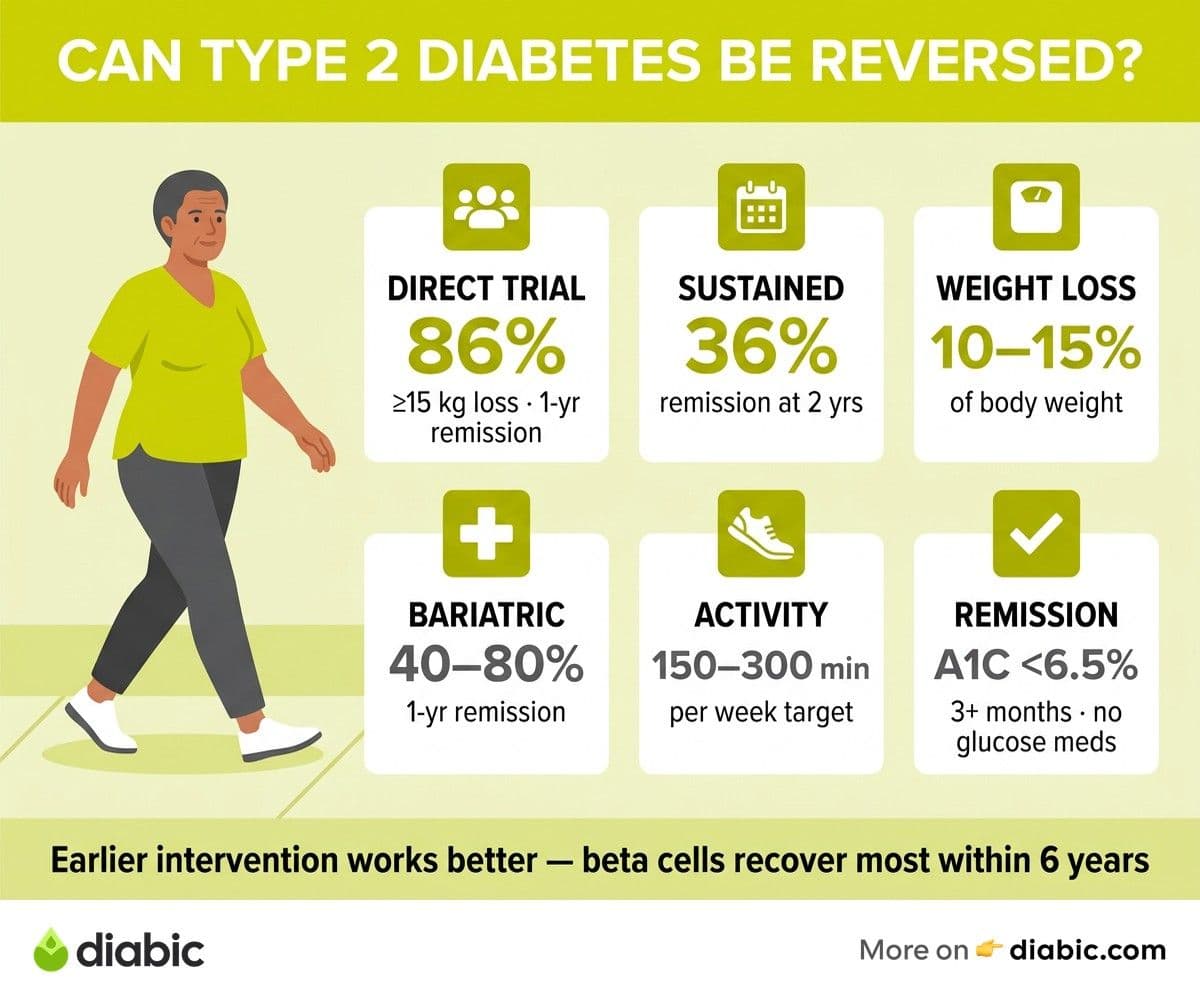
A consensus statement from the American Diabetes Association and other major organizations defines remission as an A1C below 6.5 percent maintained for at least three months without glucose-lowering medication. That is the medically agreed standard. The word "reversal" is more colloquial and tends to overstate what is actually happening biologically.
The condition is not gone in remission. The underlying predisposition to insulin resistance and beta cell stress remains. What changes is that blood sugar moves back into a non-diabetic range and stays there as long as the supportive behaviors continue. This is a meaningful clinical achievement and worth pursuing for those who can.
Cure, by contrast, would mean the condition is permanently eliminated and cannot return. No diet, drug, or surgery currently meets that bar for type 2 diabetes. Our broader piece on whether diabetes can be cured walks through the difference more thoroughly.
Why does the distinction matter? Because expecting permanent cure can lead to abandoning the habits that produced remission in the first place. A high percentage of people who achieve remission and then return to old patterns see blood sugar climb back into diabetic range within a year or two. Knowing remission is reversible in both directions sets up better long-term decisions.
Can Type 2 Diabetes Be Reversed? The Evidence
The research on reversal has matured significantly in the past decade. Several major trials have moved the conversation from anecdote to data. The picture they paint is consistent: substantial weight loss, especially when achieved early in the condition, can produce remission in a meaningful percentage of people.
The DiRECT trial
The Diabetes Remission Clinical Trial, known as DiRECT, is the most cited remission study. Conducted in the United Kingdom and published in The Lancet in 2018, the trial enrolled adults with type 2 diabetes diagnosed within the previous six years. Participants in the intervention group followed a low-calorie liquid diet of roughly 825 to 853 calories per day for 12 to 20 weeks, then transitioned to structured weight maintenance.
Results at one year were striking. Among participants who achieved at least 15 kg of weight loss (about 33 pounds), 86 percent achieved remission. Across the full intervention group, regardless of weight loss achieved, 46 percent reached remission compared to 4 percent in the standard care group. Two-year follow-up showed 36 percent of the intervention group still in remission, with sustained remission strongly tied to maintained weight loss.
DiRECT changed the conversation because it produced clinical-grade evidence that intensive lifestyle intervention could match or exceed many medication-only approaches in terms of glucose normalization. It also clarified that early intervention matters most, since the trial enrolled people within six years of diagnosis. Beta cell function recovers more readily in the early years.
The Diabetes Prevention Program
The Diabetes Prevention Program, a large NIH trial published in 2002, focused on prevention rather than reversal but produced lessons that apply to both. Adults with prediabetes who lost 5 to 7 percent of body weight and increased physical activity reduced their progression to type 2 by 58 percent over three years, outperforming metformin (31 percent reduction) and placebo. The NIDDK summary of the DPP findings is a useful reference for the durability of these results, which extended for more than 15 years in follow-up studies.
The DPP shows that lifestyle changes producing modest weight loss have powerful effects on glucose regulation. For people already diagnosed, the same principles often apply, though the percentage of body weight loss needed for remission tends to be higher.
Bariatric surgery studies
Bariatric surgery, particularly Roux-en-Y gastric bypass, produces remission rates that are higher and faster than lifestyle intervention alone. Multiple trials and observational studies show remission in 40 to 80 percent of people with type 2 in the first year after surgery, with rates declining slowly over time.
Surgery is not a cure either. Long-term studies show that some people who achieve remission post-surgery see diabetes return, particularly with weight regain. Surgery also carries surgical and nutritional risks that have to be weighed individually. For people with severe obesity and recent-onset type 2, it is one of the most effective tools available, and our deeper guide to type 2 diabetes treatment options covers how surgery fits into the broader treatment landscape.
How long remission needs to last
The 2021 ADA consensus statement defines remission as A1C below 6.5 percent for at least three months without glucose-lowering medication. Most researchers and clinicians treat sustained remission as something measured in years, not months. Long-term remission requires ongoing lifestyle maintenance, periodic glucose monitoring, and regular care team check-ins.
Lifestyle Approaches That Support Reversal
The shared thread across reversal research is significant, sustained weight loss combined with consistent physical activity. The specific dietary approach matters less than the calorie deficit and adherence. People succeed with low-carb, Mediterranean, low-calorie meal replacement, and whole-food plant-based approaches in roughly comparable rates when the underlying weight loss and consistency are similar.
Significant weight loss in the 10 to 15 percent range
DiRECT and similar trials suggest that 10 to 15 percent of body weight is a common threshold where remission becomes likely for many people. For someone weighing 220 pounds, that is 22 to 33 pounds. This is more than the 5 to 7 percent target used for prevention, reflecting the deeper metabolic shift required to move out of diabetes range.
Not everyone hits the threshold, and remission is still possible at lower weight loss percentages, especially in people with shorter diabetes duration. Each pound lost tends to produce some glucose improvement, even if the full remission threshold is not reached. Our guide to weight loss for prediabetes covers practical, non-extreme strategies that translate well to type 2 reversal goals.
Dietary approaches with the strongest evidence
Several dietary patterns have strong evidence for supporting remission. Low-calorie meal replacement programs in the 800 to 1,200 calorie range, used for 8 to 16 weeks under medical supervision, produced the rapid weight loss seen in DiRECT. Low-carbohydrate diets, generally below 100 grams of carbs per day, reliably lower blood glucose and often produce significant weight loss. Mediterranean-style eating produces slower weight loss but strong cardiovascular benefits and good glucose control.
The right diet is the one a person can actually follow for years. Trial-level adherence drops off in real life, and the diet that produces the best A1C in your kitchen at month 18 beats the diet that wins on paper.
Physical activity as an independent factor
Exercise improves insulin sensitivity through pathways that are partly independent of weight loss. Resistance training builds the muscle mass that absorbs glucose, while aerobic activity improves glucose uptake during and after exercise. Most reversal protocols include 150 to 300 minutes of moderate activity per week, which doubles the standard prevention target.
Movement after meals is particularly powerful. A 15 minute walk after dinner reliably lowers post-meal glucose, and consistent post-meal movement contributes to better A1C over time. If you are also working through how prediabetes relates to your trajectory, our piece on whether prediabetes can be reversed covers the easier end of the same spectrum.
Why early intervention matters
People diagnosed within the past six years have higher remission rates than those diagnosed longer ago. Beta cell function declines over time, and the more function remains, the more responsive the body is to lifestyle change. This is one of the strongest arguments for taking a new diagnosis seriously and exploring intensive options early, before the metabolic runway shortens.
This does not mean reversal is impossible after longer duration. It means the percentage of people who achieve full remission drops, while improvement in A1C and reduced medication needs remains achievable for many.
Medical Interventions for Reversal
Lifestyle is the foundation, but medical interventions can support or accelerate reversal in specific situations. Working with your care team to evaluate whether these options fit is worth the conversation, especially for people with severe obesity or persistently high A1C.
Bariatric surgery for eligible patients
Bariatric surgery is generally considered for adults with a BMI above 35 plus type 2 diabetes, or BMI above 40 regardless of diabetes. The most common procedures are sleeve gastrectomy and Roux-en-Y gastric bypass. Both produce significant glucose improvement, often within days of surgery, even before weight loss kicks in fully. The metabolic effects appear to involve changes in gut hormones and bile acid signaling, not just calorie restriction.
Surgery is not without trade-offs. Lifelong nutritional supplementation is required, surgical risks are real, and a small percentage of people see relapse over time. The Mayo Clinic guide to type 2 diabetes treatment covers when surgery is typically considered.
Very low-calorie diets under medical supervision
Very low-calorie diets in the 800 to 1,200 calorie range can produce DiRECT-style results, but they require medical supervision because of the risk of nutritional deficiencies, gallstones, and medication adjustments. Most programs include meal replacement shakes, regular check-ins, and a structured transition to whole foods.
These programs are not for everyone. They demand significant short-term commitment and are not suitable for pregnancy, certain medical conditions, or people on insulin without close oversight. When done well, they produce rapid, often life-changing improvements.
Medication strategies that preserve beta cell function
Some newer medications, including GLP-1 receptor agonists and SGLT2 inhibitors, appear to preserve beta cell function in ways that may support long-term outcomes. Metformin for type 2 diabetes remains foundational and may modestly improve insulin sensitivity, though it is not classically considered a reversal tool. Some clinicians use intensive medication protocols early in the diagnosis to lower glucose quickly, give beta cells a rest, and create a window for lifestyle intervention.
These approaches are individualized. Discussing them with your endocrinologist, especially if you are within the first few years of diagnosis, may surface options worth exploring.
What Happens After Remission
Reaching remission is not the finish line. It is the start of a long maintenance phase that determines whether the achievement holds. From my experience, after 14 years of managing diabetes, the people I have seen sustain remission longest are the ones who treat their post-remission routine with the same seriousness they treated the initial intervention.
Ongoing monitoring remains important. Most clinicians recommend A1C checks every three to six months for the first year of remission and at least annually after that. Home glucose monitoring may step down but does not disappear. The goal is to catch any drift back toward diabetic range early.
Risk of relapse is real. Weight regain is the most common trigger, followed by major life disruptions like illness, surgery, or significant stress that pull people away from supportive habits. Studies tracking participants from intensive intervention trials show that sustained weight loss is the single strongest predictor of sustained remission. Our follow-up guide on how type 2 diabetes progresses over the years covers what relapse can look like and how to respond if numbers start drifting.
Maintaining lifestyle changes for the long term requires planning, not willpower. People who succeed often build environments where the helpful choice is the easier choice, including regular movement, planned meals, and consistent sleep. They also stay connected to their care team, attend annual screenings for complications, and treat any drift in A1C as data rather than failure.
Regular follow-ups remain necessary even in confirmed remission. Eye exams, kidney function tests, foot checks, and lipid panels stay on the calendar because the underlying predisposition has not vanished. This is not pessimism. It is realism about what remission means and how to keep it.
FAQ
Can you reverse type 2 diabetes with diet and exercise?
Research shows that significant weight loss through diet and exercise can lead to type 2 diabetes remission in some people, especially those diagnosed recently whose beta cells still function reasonably well. The DiRECT trial found that 46 percent of participants who lost substantial weight achieved remission at one year. Ongoing lifestyle maintenance is required to keep blood sugar in the non-diabetic range.
Is type 2 diabetes reversal permanent?
Remission can last for years with sustained lifestyle changes, but it is not considered a permanent cure. The underlying predisposition to insulin resistance and beta cell stress remains, and blood sugar can return to diabetic levels if weight is regained or supportive habits stop. Ongoing monitoring and consistent healthy patterns are essential for maintaining remission long term.
How much weight do you need to lose to reverse type 2 diabetes?
Research suggests that losing 10 to 15 percent of body weight is associated with the highest remission rates, though even smaller losses can improve A1C and reduce medication needs. Earlier diagnosis, shorter diabetes duration, and faster initial weight loss are all linked to better remission outcomes. Working with a care team to set a realistic target makes the process safer and more sustainable.
Can type 2 diabetes be reversed without medication?
Some people achieve remission through lifestyle changes alone, particularly those diagnosed within the past few years with reasonably preserved beta cell function. For others, medication remains an important part of management. Discontinuing medication should always happen under medical supervision, since stopping suddenly can cause dangerous glucose spikes. Talk to your doctor before making any changes.
Does intermittent fasting reverse type 2 diabetes?
Intermittent fasting can support weight loss and improve insulin sensitivity, and some studies show it produces remission in a portion of participants when combined with overall calorie reduction. The evidence base is smaller than for low-calorie or low-carb approaches, but it is growing. Whether it works depends on the individual, the specific protocol, and how well it fits into long-term life. Talk to your doctor before starting fasting protocols, especially if you are on glucose-lowering medication.
Shahriar P. Shuvo is the founder of Diabic. He has lived with diabetes for over 14 years, and built Diabic to deliver the practical, evidence-based self-management tools he wished existed when he was first diagnosed. By trade, Shahriar is a senior design and frontend engineer with 6+ years shipping products at Agora, Timescale (now Tiger Data), and ShareTrip. He writes from the intersection of lived diabetes experience and product craft, focused on what works in daily management rather than what sounds good in a textbook.
Medically reviewed by
Dr. Shanto Arian is an internal medicine physician now specializing in clinical and aesthetic dermatology, with a parallel academic focus on epidemiology and public health. He holds an MBBS, MPH, MSc (UK), MRCP (UK), MRCPI (Ireland), Diploma in Dermatology (UK), and Diploma in Aesthetic Medicine (USA). Dr. Arian trained in internal medicine, including hospital work on hematology cases such as graft-versus-host disease, before moving toward dermatology. Skin is one of the earliest places diabetes shows itself, from acanthosis nigricans and diabetic dermopathy to slow foot wound healing, and that intersection is where his clinical and Diabic-review work meet. On Diabic, Dr. Arian medically reviews content on diabetes diagnosis, complications, dermatologic manifestations, and pharmacotherapy, ensuring every claim aligns with current ADA, NICE, and peer-reviewed literature.
More from Diabetes Knowledge
View all
6 Safe Dessert for Gestational Diabetes Recipes You Can
Six dessert for gestational diabetes recipes that satisfy your sweet tooth without spiking blood sugar, with carb counts and pairing tips you can use.

8 High Fiber Foods That Help with Prediabetes
Add these 8 high fiber foods for prediabetes to slow glucose absorption, support steady blood sugar, and meet the daily fiber target most people miss.

Mediterranean Diet for Prediabetes: A Practical Guide
The mediterranean diet for prediabetes is one of the best-studied eating patterns for prevention. Here is what to eat, what to avoid, and how to start.
Clinician-reviewed habits, plain-language guides, and honest answers - the small shifts that make living with diabetes feel lighter, every day.