Can You Manage Type 2 Diabetes Without Medication?
Can you manage type 2 diabetes without medication? An honest, evidence-based look at when lifestyle works alone and when meds truly help.

In this article(9)
Sitting in a clinic chair with a fresh type 2 diabetes diagnosis, one of the first questions people ask is whether they can avoid taking pills for life. Can you manage type 2 diabetes without medication? For some people the answer is yes, at least for a stretch of time, and sometimes for years. For others, medication is what keeps blood sugar from quietly damaging eyes, kidneys, and nerves. We want to give you an honest look at what the research says, who tends to do well with a lifestyle-only approach, and when adding medication is the wiser choice.
This is not a moral question, even though the internet often frames it that way. Needing medication does not mean you failed at willpower, and not needing it does not make you virtuous. Type 2 diabetes is shaped by genetics, body composition, age, and how long you have had elevated blood sugar, factors that have nothing to do with character. The goal is healthy numbers and a long, full life, and the path looks different for different bodies.
From my experience: I live with type 1, so insulin has never been optional for me, but I have spent 14 years watching how often the world treats medication for any kind of diabetes as a verdict on character. Two close family members of mine manage type 2, one with metformin and lifestyle changes and one without medication so far, and the difference between them comes down to body chemistry and how recently they were diagnosed, not effort. That comparison is what I think of every time someone asks me whether pills are a sign they did something wrong.
Can You Manage Type 2 Diabetes Without Medication: When It Works
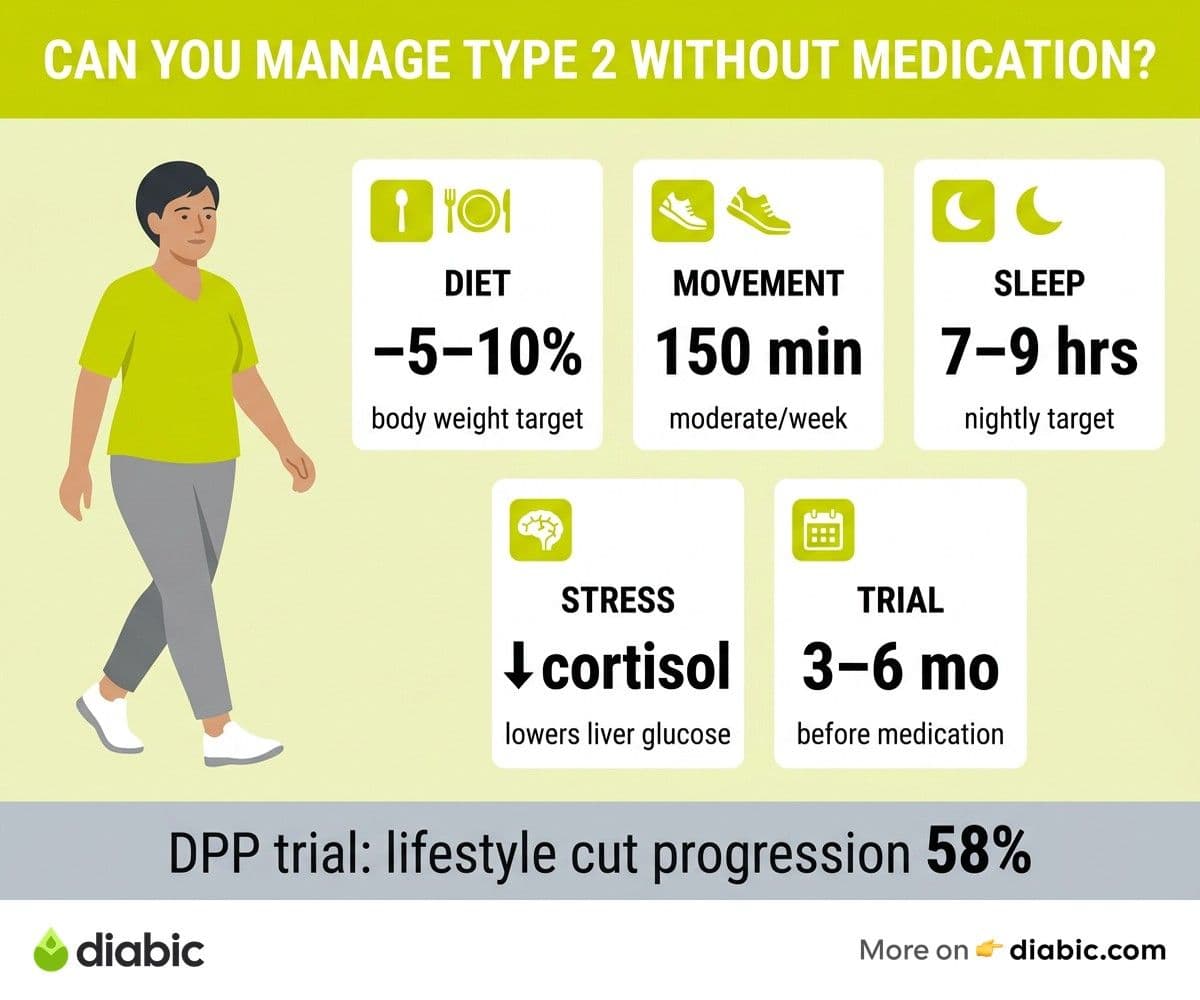
The strongest evidence that diabetes can be managed without medication, at least for some people, comes from the Diabetes Prevention Program (DPP) and the DiRECT trial. The DPP showed that intensive lifestyle changes (modest weight loss and 150 minutes of weekly activity) reduced progression to type 2 diabetes by 58% in adults at high risk (CDC DPP overview). The DiRECT trial in the UK went further, achieving remission of type 2 diabetes in 46% of participants on an intensive weight-management program for one year, most without medication.
A few patterns show up in people who do well with a lifestyle-only approach. They tend to be diagnosed early, with an A1C in the 6.5 to 7.0% range, and often within a decade of diagnosis (pancreatic beta cells lose function over time). They are usually able to make significant changes in eating, movement, and sleep, and they have a healthcare team comfortable monitoring closely.
Many providers offer a 3-to-6-month trial of lifestyle changes before starting medication when blood sugar is mildly elevated and cholesterol, blood pressure, and kidney function look reasonable. You and your provider track A1C, fasting glucose, and how you feel, then decide together. If your numbers were in prediabetes territory before diagnosis, our explainer on prediabetes and what it means goes deeper. There is also a useful distinction between management (healthy range, often with medication) and remission (A1C below 6.5% for at least three months without glucose-lowering medication). Both outcomes are wins.
Dietary Changes That Make the Biggest Impact
Food is the single most powerful lever for blood sugar in the early years after diagnosis, and small daily decisions add up faster than people expect. The shift that moves the needle most is reducing refined carbohydrates and added sugars, which spike glucose fastest and require the most insulin to clear. That means rethinking white bread, sugary drinks, sweetened cereals, and the steady drip of pastries and crackers between meals. None need to be banned forever, but they belong in a smaller role.
What replaces them matters just as much. Building meals around non-starchy vegetables, lean protein, healthy fats, and high-fiber whole grains flattens post-meal glucose curves and keeps you full longer. The plate method (half vegetables, a quarter lean protein, a quarter whole grains) travels well to restaurants and rushed weeknights. Fiber matters because it slows glucose entering the bloodstream and feeds gut bacteria tied to better insulin sensitivity.
There is no single "diabetes diet" that works for everyone. Mediterranean, lower-carb, plant-forward, and DASH patterns have all shown A1C improvements in randomized trials (NIDDK on diabetes diet). What matters most is whether you can stick with it, whether it fits your culture and family, and whether it produces results in your numbers. A registered dietitian can help you build a plan around foods you actually like, the most underrated predictor of long-term success. If insulin resistance is part of your picture, our insulin resistance diet covers food patterns that improve cellular response, and we also cover reversing insulin resistance in earlier stages.
How Physical Activity Helps Manage Blood Sugar
Movement is the second most powerful lever, and it works in ways food cannot. When you exercise, muscles pull glucose out of the bloodstream without needing as much insulin. Insulin sensitivity stays elevated for up to 24 to 48 hours after a moderate session, which is why daily or near-daily activity outperforms one heroic weekend workout.
The American Diabetes Association recommends at least 150 minutes of moderate aerobic activity each week (brisk walking, swimming, cycling) plus two or three resistance training sessions. Resistance training matters because muscle is metabolically active tissue, and more of it means a bigger glucose buffer that can absorb meals without large spikes. You do not need a gym; bodyweight squats, wall pushups, and resistance bands at home count.
A surprisingly simple strategy with strong evidence is walking after meals. A 10-to-15-minute walk within 30 minutes of finishing a meal can blunt the post-meal glucose spike, sometimes by 20 to 30 mg/dL (study via Diabetes Care). If you have been inactive, start small and build consistency before duration. Five minutes once or twice a day is a foundation. Talk to your doctor before starting a new exercise program if you have known heart disease, severe neuropathy, or significant retinopathy.
Other Lifestyle Factors That Affect Blood Sugar
Food and movement get most of the attention, but three other factors quietly shape your numbers. Sleep is the first. Just one night under six hours measurably reduces insulin sensitivity the next day, and chronic short sleep is linked to higher A1C and weight gain. Aim for seven to nine hours, keep consistent bed and wake times, and treat any suspected sleep apnea, which is more common in type 2 diabetes.
Stress is the second. When cortisol stays elevated, the liver releases more glucose, which is why morning numbers can drift up during a hard week even when eating has not changed. Stress management is part of diabetes care, whether that means meditation, yoga, time outside, therapy, or protecting two evenings a week from work email.
Weight is the third, and it is the most fraught. Modest weight loss (5 to 10% of body weight) can meaningfully improve blood sugar, blood pressure, and cholesterol, and larger losses (15% or more) drive higher rates of remission. We say this without judgment. For people carrying extra weight, intentional and sustainable weight loss is one of the most reliable paths to fewer medications; for people who are not, it is not the lever to pull. Smoking deserves a brief mention: tobacco use accelerates every diabetes complication that exists, and quitting is the single highest-impact change a smoker with diabetes can make.
When Medication Becomes Necessary
For many people, type 2 diabetes is progressive. The pancreas produces less insulin over time, and the body grows more resistant to what remains. This is biology, not personal failure. If your A1C stays above target after three to six months of solid lifestyle changes, medication is the next reasonable step, and the longer you delay it when blood sugar is elevated, the more risk you accept for eye, kidney, and nerve damage.
Sometimes starting medication right away is the right call. The 2025 ADA Standards of Care recommend considering early metformin (and sometimes additional agents) when A1C at diagnosis is above 8.5 to 9%, when symptoms are present, or when cardiovascular and kidney risks are elevated (ADA Standards of Care). Newer classes like GLP-1 receptor agonists and SGLT2 inhibitors also offer cardiovascular and kidney protection beyond glucose lowering.
Needing medication is not a failure. Insulin is a hormone your body needs, and helping it do its job is no different from wearing glasses to help your eyes. The most effective approach for most people is medication and lifestyle changes working together, since each makes the other more effective. Our overview of type 2 diabetes treatment options lays them out without jargon. Never stop or skip prescribed diabetes medication on your own, even if your numbers look good for a while. Talk to your doctor about any changes, including stepping medication down after meaningful improvement, which many providers are glad to support when it is safe.
Making the Decision with Your Healthcare Team
Shared decision-making is the standard of good diabetes care, which means your values and preferences belong in the conversation alongside the lab results. If avoiding medication for as long as possible matters to you, say that out loud. If testing your blood sugar five times a day sounds exhausting, say that too. A good provider works with what is realistic for your life, not what looks tidiest on paper.
Useful questions to bring to your next appointment: What is my A1C target, and why? What would a 3-to-6-month lifestyle trial look like? What signs would tell us it is time to start medication? If I do start, are there options we could later step down from? Are there newer medications I should know about that protect my heart or kidneys? Set goals that are measurable and have a timeline. "Eat better" is not a goal; "reduce sugary drinks to fewer than two per week and walk 20 minutes after dinner four nights a week" is. Pair every goal with a check-in date, ideally a follow-up A1C in three months.
Regular monitoring is non-negotiable regardless of which path you take. A continuous glucose monitor or a home meter, used thoughtfully, turns guesswork into learning. We have written more about diabetes management habits that hold up in real life, including how to track without burning out. Whatever path you and your healthcare team choose, the goal is healthy numbers and a long, full life, not a moral verdict on your choices.
FAQ
How to manage type 2 diabetes without medication?
Managing type 2 diabetes without medication usually involves four pillars working together: a balanced eating pattern that limits refined carbs and emphasizes fiber, vegetables, lean protein, and healthy fats; at least 150 minutes per week of moderate aerobic activity plus two resistance sessions; seven to nine hours of sleep; and active stress management. This works best when blood sugar is mildly elevated at diagnosis and you are partnering with a healthcare team that can monitor closely. Talk to your doctor about whether a 3-to-6-month lifestyle trial is right for your situation.
What lifestyle changes help manage type 2 diabetes?
The changes with the strongest evidence are reducing refined carbs and added sugars, eating more fiber and non-starchy vegetables, getting regular aerobic and resistance exercise, sleeping seven to nine hours, managing stress, and (where relevant) modest weight loss. Smoking cessation is the highest-impact change for people who smoke. Even 5 to 10% weight loss can meaningfully improve A1C, blood pressure, and cholesterol.
So can you manage type 2 diabetes without medication for the long haul? For some people, yes, especially when the diagnosis is recent and lifestyle changes are sustainable. For others, medication and lifestyle together produce the steadiest numbers, the lowest complication risk, and the most freedom in daily life. The honest answer is that the question is best revisited every three to six months with your provider, using your A1C, your trends, and your real-life capacity as the data, not a fixed verdict made on diagnosis day.
Shahriar P. Shuvo is the founder of Diabic. He has lived with diabetes for over 14 years, and built Diabic to deliver the practical, evidence-based self-management tools he wished existed when he was first diagnosed. By trade, Shahriar is a senior design and frontend engineer with 6+ years shipping products at Agora, Timescale (now Tiger Data), and ShareTrip. He writes from the intersection of lived diabetes experience and product craft, focused on what works in daily management rather than what sounds good in a textbook.
Medically reviewed by
Dr. Shanto Arian is an internal medicine physician now specializing in clinical and aesthetic dermatology, with a parallel academic focus on epidemiology and public health. He holds an MBBS, MPH, MSc (UK), MRCP (UK), MRCPI (Ireland), Diploma in Dermatology (UK), and Diploma in Aesthetic Medicine (USA). Dr. Arian trained in internal medicine, including hospital work on hematology cases such as graft-versus-host disease, before moving toward dermatology. Skin is one of the earliest places diabetes shows itself, from acanthosis nigricans and diabetic dermopathy to slow foot wound healing, and that intersection is where his clinical and Diabic-review work meet. On Diabic, Dr. Arian medically reviews content on diabetes diagnosis, complications, dermatologic manifestations, and pharmacotherapy, ensuring every claim aligns with current ADA, NICE, and peer-reviewed literature.
More from Treatment & Medication
View all
Recognizing Diabetic Coma Warning Signs Early
Learn to spot diabetic coma warning signs early. We cover DKA, HHS, and severe hypoglycemia symptoms, plus when to call 911 for immediate help.

Switching to Injectable Diabetes Medication: What to Expect
Switching to injectable diabetes medication can feel daunting. Learn what to expect, how to manage side effects, and why this step is progression, not.

Hyperglycemic Hyperosmolar Syndrome: Warning Signs to Know
Hyperglycemic hyperosmolar syndrome is a serious type 2 diabetes emergency. Learn the warning signs, triggers, and when to call 911 for HHS care.
Clinician-reviewed habits, plain-language guides, and honest answers - the small shifts that make living with diabetes feel lighter, every day.