Pre Diabetes Explained: Numbers, Risks, Next Steps
A pre diabetes diagnosis is a turning point, not a sentence. Learn what the numbers mean, what to watch for, and the steps that move you forward.

In this article(15)
Hearing the words "pre diabetes" from your doctor can feel like a warning siren going off in a quiet room. Your mind races, you wonder what you did wrong, and you start mentally rewriting your grocery list before you leave the parking lot. We want to slow that moment down with you, because this result is actually one of the most hopeful pieces of information your body can give you.
This middle ground means your blood sugar is higher than normal but has not yet crossed into type 2 diabetes territory. That gap is real, measurable, and workable. Below, we will walk through what the numbers mean, what to watch for, how the diagnosis is made, and what you can do next without flipping your life upside down.
What Pre Diabetes Means and Why It Matters
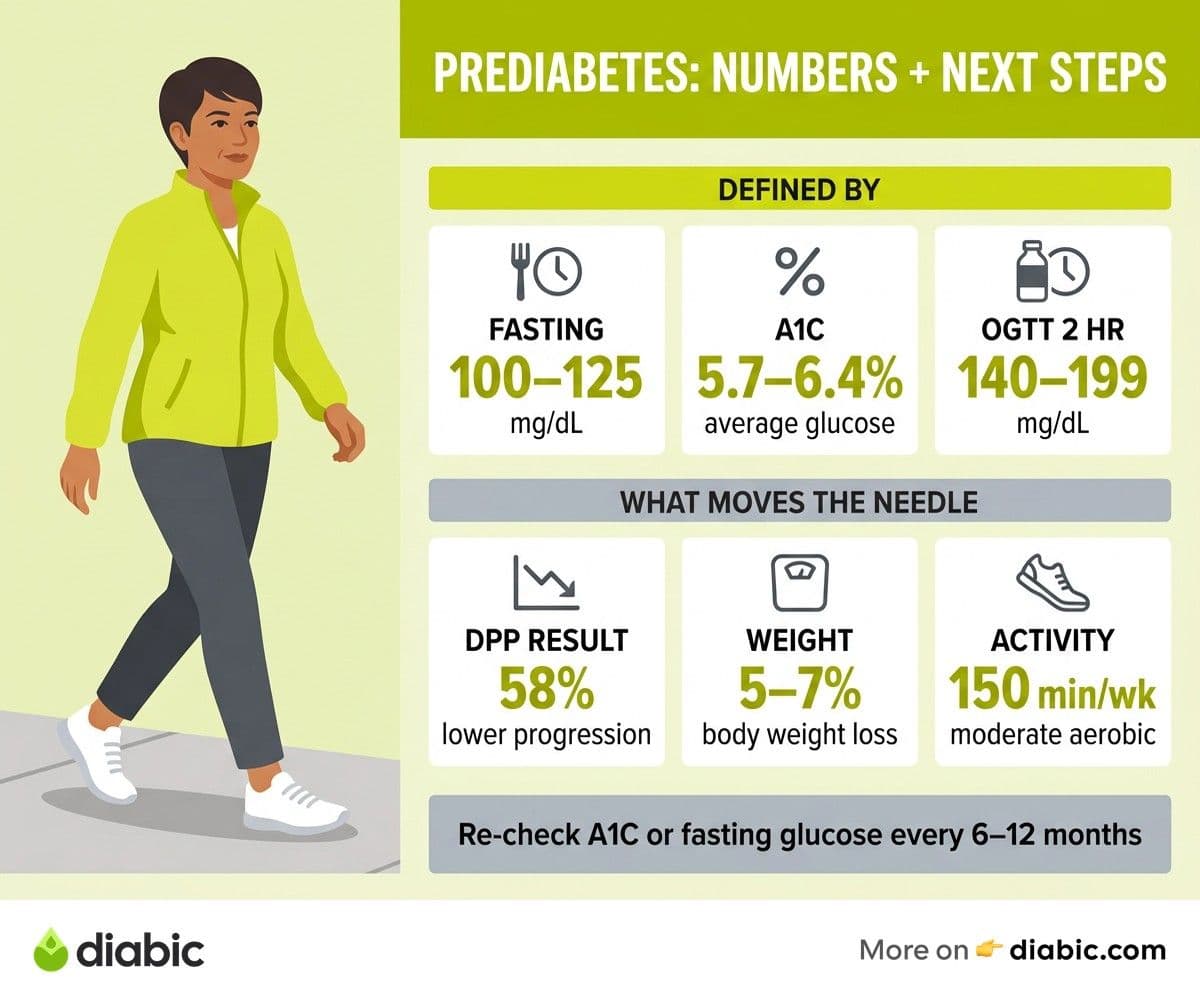
This condition describes blood sugar levels that sit above normal but below the threshold that defines type 2 diabetes. According to the American Diabetes Association Standards of Care 2025, the diagnostic ranges are a fasting glucose of 100 to 125 mg/dL, an A1C of 5.7 to 6.4 percent, or a two-hour oral glucose tolerance test result of 140 to 199 mg/dL. If your most recent labs landed in any of those windows, that is what your provider is talking about.
The scale of this is bigger than most people realize. The Centers for Disease Control and Prevention estimates that roughly one in three American adults has the condition, and more than 80 percent of them do not know it. Many find out only when a routine screening pulls back the curtain, which is part of why looking at a blood sugar levels chart alongside your own numbers can be such a clarifying first step.
What makes this category important is what it predicts. Without changes, a meaningful share of people in this range progress to type 2 diabetes within five to ten years. With changes, that progression slows or stops for most people, which is why we treat the diagnosis as a pivot point rather than a verdict.
Common Signs and Symptoms to Watch For
One of the trickiest parts of this stage is that it usually does not announce itself. Most people feel completely fine, which is exactly why so many cases stay hidden until a blood test catches them. If you have been hunting for obvious diabetes symptoms and not finding any, that does not mean your numbers are in the clear, it just means symptoms are an unreliable messenger at this point.
When subtle signs do appear, they tend to overlap with the early signs of diabetes that providers learn to flag. These can include slightly increased thirst, more frequent trips to the bathroom, persistent fatigue that sleep does not fix, and blurry vision that comes and goes. None of these are unique to blood sugar issues, which is part of why they get brushed off or blamed on stress, screen time, or aging.
There is one physical clue worth knowing about. Some people develop dark, velvety patches of skin on the back of the neck, in the armpits, or in skin folds, a finding called acanthosis nigricans that can hint at insulin resistance. If you notice that, or any of the symptoms of diabetes we listed above, mention it at your next appointment. Routine screening remains far more reliable than waiting for your body to send a clear signal.
How the Diagnosis Is Made
There are three blood tests your provider can use to land on this diagnosis, and they each look at your sugar from a slightly different angle. The fasting plasma glucose test measures your blood sugar after at least eight hours without food, and a result of 100 to 125 mg/dL falls in the at-risk range. It is a common starting point because it is quick, inexpensive, and widely available.
The A1C test, sometimes called HbA1c or glycohemoglobin, gives a longer view by estimating your average blood sugar over the previous two to three months. A result between 5.7 and 6.4 percent puts you in the same category, and you can read more about what your A1C number means if you want to understand how that average is calculated. Because A1C does not require fasting and reflects a longer pattern, many providers lean on it for screening.
The oral glucose tolerance test, or OGTT, is more involved. You drink a sweet glucose solution, then have your blood drawn two hours later to see how your body handled the load. A two-hour value of 140 to 199 mg/dL meets the criteria, and this test is sometimes used in pregnancy or when other results are borderline. The National Institute of Diabetes and Digestive and Kidney Diseases notes that providers often confirm the result with a repeat test, since a single number on a single day is not the full picture.
Why your numbers may not match between tests
It is common for one test to flag elevated glucose while another sits at the high end of normal. Hydration, illness, stress, sleep, and even lab equipment can nudge results. If your provider orders a follow-up, that is careful care, not a red flag.
Risk Factors That Make the Diagnosis More Likely
The condition does not pick people at random. Certain factors raise the odds, and knowing yours helps you and your provider decide how often to screen and how aggressively to act on early changes. None of these factors are about blame, they are about pattern recognition.
The most established risk factors include the following:
- A family history of type 2 diabetes, especially in a parent or sibling
- Carrying excess weight, particularly around the midsection
- A sedentary lifestyle with little structured physical activity
- A history of gestational diabetes or giving birth to a baby weighing more than nine pounds
- Polycystic ovary syndrome (PCOS), which is closely tied to insulin resistance
- Being 45 years or older, since risk climbs with age
- Belonging to certain ethnic backgrounds with statistically higher risk, including African American, Hispanic or Latino, Native American, Asian American, and Pacific Islander communities
If several of these apply to you, that is useful information rather than a sentence. It tells you that screening matters more, and that small lifestyle shifts may carry outsized benefits.
What You Can Do After the Diagnosis
This is the section where the news turns into a plan. The strongest evidence we have for slowing or reversing the progression to type 2 diabetes comes from lifestyle change, and the size of the effect is genuinely encouraging. The landmark Diabetes Prevention Program study, published in the New England Journal of Medicine and now backed by decades of follow-up, found that structured lifestyle change reduced the risk of developing type 2 diabetes by 58 percent compared with a placebo group.
Eat in a way you can sustain
There is no single mandatory eating plan here. Research consistently supports the Mediterranean and DASH eating patterns, both of which lean on vegetables, legumes, whole grains, fish, nuts, and olive oil while keeping ultra-processed foods and sugary drinks limited. Adding fiber-rich foods at most meals tends to flatten post-meal blood sugar spikes, and our insulin resistance diet breakdown walks through specific food swaps that are easy to start with.
The point is not to chase a perfect plate. It is to build a way of eating that you genuinely want to keep up six months from now, because consistency does more than perfection here.
Move more, even in small doses
The CDC National Diabetes Prevention Program recommends about 150 minutes of moderate physical activity per week, which works out to roughly 30 minutes a day, five days a week. That can be brisk walking, cycling, swimming, dancing, or anything that nudges your heart rate up and feels doable. Short bouts count too, and several recent studies suggest that walking for 10 to 15 minutes after meals helps moderate blood sugar responses.
Strength training adds value on top of cardio. Building muscle improves how your body uses insulin, which is one of the underlying issues at this stage.
Aim for modest, realistic weight change
If you are carrying extra weight, the research is clear that a 5 to 7 percent loss meaningfully lowers the chance of progressing to type 2 diabetes. For someone weighing 200 pounds, that is 10 to 14 pounds, not a dramatic transformation. Slow, sustained change tends to outperform crash approaches, and our guide on reversing insulin resistance covers what makes weight changes stick over time.
Build a monitoring plan with your provider
Talk to your doctor about how often to recheck your A1C or fasting glucose, whether home glucose monitoring is worth doing for you, and what target ranges they want to see. Some people benefit from a brief trial with a continuous glucose monitor to learn how specific foods affect their numbers. Others do well with periodic lab checks alone. There is also a thoughtful conversation to have about managing type 2 without medication versus adding medication early, and your provider can help weigh that based on your full risk picture.
This result did not happen because you are weak, lazy, or broken. Genetics, environment, sleep, and stress all play a role. What it offers is information at a stage when small changes still carry large rewards.
Frequently Asked Questions
Can prediabetes be reversed?
Research shows that many people in this range can return their blood sugar to a normal level through lifestyle changes like regular physical activity, more fiber-rich and minimally processed eating, and modest weight loss. The CDC Diabetes Prevention Program has shown that these changes can reduce the risk of developing type 2 diabetes by up to 58 percent. Reversal is not guaranteed for everyone, but meaningful improvement is realistic for most.
What is the blood sugar range for prediabetes?
The condition is defined as a fasting blood sugar between 100 and 125 mg/dL, an A1C between 5.7 and 6.4 percent, or an oral glucose tolerance test result between 140 and 199 mg/dL. If your numbers fall in this range, talk to your healthcare provider about a prevention plan that fits your life, your risk factors, and your goals.
How often should I get tested if I have it?
Most providers recommend rechecking A1C or fasting glucose every six to twelve months once the diagnosis has been made, though your doctor may suggest a different schedule based on your trajectory. If your numbers are improving, testing may stretch out, and if they are climbing, your provider will likely want to look more closely.
A Practical Next Step
If you take one thing from this piece, let it be this: book a 15-minute follow-up with your provider, bring your most recent lab numbers, and ask for a written prevention plan you can take home. Then pick one small, specific change to start this week, whether that is a 20-minute post-dinner walk, swapping sugary drinks for sparkling water, or adding a serving of vegetables to lunch. The condition responds to consistency more than intensity, and the people who do best are usually the ones who stack small wins over time rather than overhauling everything at once.
We are glad you are paying attention to this. A pre diabetes result is not a failure, it is a heads-up, and you have more room to act here than you probably realize. If you want to keep reading, our diagnosis and lab test library has more on understanding your numbers, and our community is full of people who have been exactly where you are now.
Shahriar P. Shuvo is the founder of Diabic. He has lived with diabetes for over 14 years, and built Diabic to deliver the practical, evidence-based self-management tools he wished existed when he was first diagnosed. By trade, Shahriar is a senior design and frontend engineer with 6+ years shipping products at Agora, Timescale (now Tiger Data), and ShareTrip. He writes from the intersection of lived diabetes experience and product craft, focused on what works in daily management rather than what sounds good in a textbook.
Medically reviewed by
Dr. Shanto Arian is an internal medicine physician now specializing in clinical and aesthetic dermatology, with a parallel academic focus on epidemiology and public health. He holds an MBBS, MPH, MSc (UK), MRCP (UK), MRCPI (Ireland), Diploma in Dermatology (UK), and Diploma in Aesthetic Medicine (USA). Dr. Arian trained in internal medicine, including hospital work on hematology cases such as graft-versus-host disease, before moving toward dermatology. Skin is one of the earliest places diabetes shows itself, from acanthosis nigricans and diabetic dermopathy to slow foot wound healing, and that intersection is where his clinical and Diabic-review work meet. On Diabic, Dr. Arian medically reviews content on diabetes diagnosis, complications, dermatologic manifestations, and pharmacotherapy, ensuring every claim aligns with current ADA, NICE, and peer-reviewed literature.
More from Treatment & Medication
View all
Recognizing Diabetic Coma Warning Signs Early
Learn to spot diabetic coma warning signs early. We cover DKA, HHS, and severe hypoglycemia symptoms, plus when to call 911 for immediate help.

Switching to Injectable Diabetes Medication: What to Expect
Switching to injectable diabetes medication can feel daunting. Learn what to expect, how to manage side effects, and why this step is progression, not.

Hyperglycemic Hyperosmolar Syndrome: Warning Signs to Know
Hyperglycemic hyperosmolar syndrome is a serious type 2 diabetes emergency. Learn the warning signs, triggers, and when to call 911 for HHS care.
Clinician-reviewed habits, plain-language guides, and honest answers - the small shifts that make living with diabetes feel lighter, every day.