Can You Reverse Insulin Resistance? What the Research
Can you reverse insulin resistance? Research shows lifestyle changes can significantly improve insulin sensitivity. Here is what actually works.

In this article(12)
- What Is Insulin Resistance?
- How to Know If You Have It
- Can Insulin Resistance Actually Be Reversed?
- Dietary Changes That Improve Insulin Sensitivity
- Exercise as a Powerful Insulin Sensitizer
- Weight Management and Metabolic Sensitivity
- Medications That Help Improve Sensitivity
- Sleep, Stress, and Other Overlooked Factors
- A Practical Place to Start
If your doctor recently mentioned the words insulin resistance, you probably walked out of the appointment with one big question: can this actually be undone? It is the right question to ask, and the honest answer is more hopeful than most people expect. Research suggests that many people can meaningfully improve their insulin sensitivity, even if "reversal" is not the word most clinicians prefer.
Roughly one in three American adults is thought to have it, often without knowing. The condition sits quietly in the background, raising your risk of type 2 diabetes, heart disease, and metabolic syndrome over years. Understanding what is happening inside your body, and what the evidence shows about turning it around, gives you a real path forward instead of vague worry.
From my experience: Living with type 1 for 14 years, I see insulin sensitivity shift in real time on my Dexcom. After a stretch of bad sleep and skipped workouts, my correction doses stop landing the way they used to and I find myself stacking units to chase a 240. Then one good week of regular walks and earlier bedtimes, and the same meal needs noticeably less insulin to behave. The biology that drives type 2 insulin resistance is not identical, but the pattern that sleep and movement change how cells listen to insulin holds true in both directions.
What Is Insulin Resistance?
Insulin is a hormone your pancreas releases after meals to help glucose move from your bloodstream into your cells, where it gets used for energy. With insulin resistance, your cells stop responding to that signal efficiently. Your pancreas compensates by pumping out more insulin, which keeps blood sugar in a normal range for a while but creates its own set of problems over time.
This is why the condition is sometimes called "silent". Blood sugar can look fine on a routine test for years while insulin levels climb steadily in the background. Eventually the pancreas cannot keep up, fasting glucose starts to rise, and the picture shifts toward prediabetes and what it means and then type 2 diabetes if nothing changes.
The condition rarely travels alone. The NIDDK overview describes how the condition sits at the center of a cluster that includes higher blood pressure, abnormal cholesterol, and abdominal weight gain, a pattern doctors call metabolic syndrome. It also overlaps with polycystic ovary syndrome (PCOS), nonalcoholic fatty liver disease, and elevated cardiovascular risk. The good news is that the same lifestyle factors that drive the problem forward can also push it back.
How to Know If You Have It
The most frustrating thing about the symptoms is how non-specific they can feel. You might notice a heavy crash an hour or two after a carb-heavy meal, persistent afternoon fatigue, sugar cravings that hit even when you are not truly hungry, or brain fog that lifts after you eat protein. Many people also describe weight that seems to settle around the midsection no matter how carefully they eat.
There are a few physical clues worth knowing about. Acanthosis nigricans, dark velvety patches of skin on the back of the neck, armpits, or groin, is a classic sign of high insulin levels. Skin tags often show up alongside it. A waist circumference above 35 inches for women or 40 inches for men also points strongly toward this pattern, regardless of overall body weight.
Symptoms alone are never enough for a diagnosis, though. Your provider can confirm the picture with lab work, including a fasting glucose, a fasting insulin, an A1C, and a calculation called HOMA-IR that combines fasting glucose and insulin to estimate sensitivity. An oral glucose tolerance test sometimes adds clarity when fasting numbers are borderline. If any of the symptoms above sound familiar, this is a conversation worth having at your next appointment rather than guessing on your own.
Can Insulin Resistance Actually Be Reversed?
Here is where language matters. Most endocrinologists will not use the word "cure" because the underlying tendency, shaped by genetics, age, and body composition, does not disappear. What can change, sometimes dramatically, is how sensitive your cells are to insulin right now. That distinction is the difference between a fixed sentence and an ongoing condition you can influence.
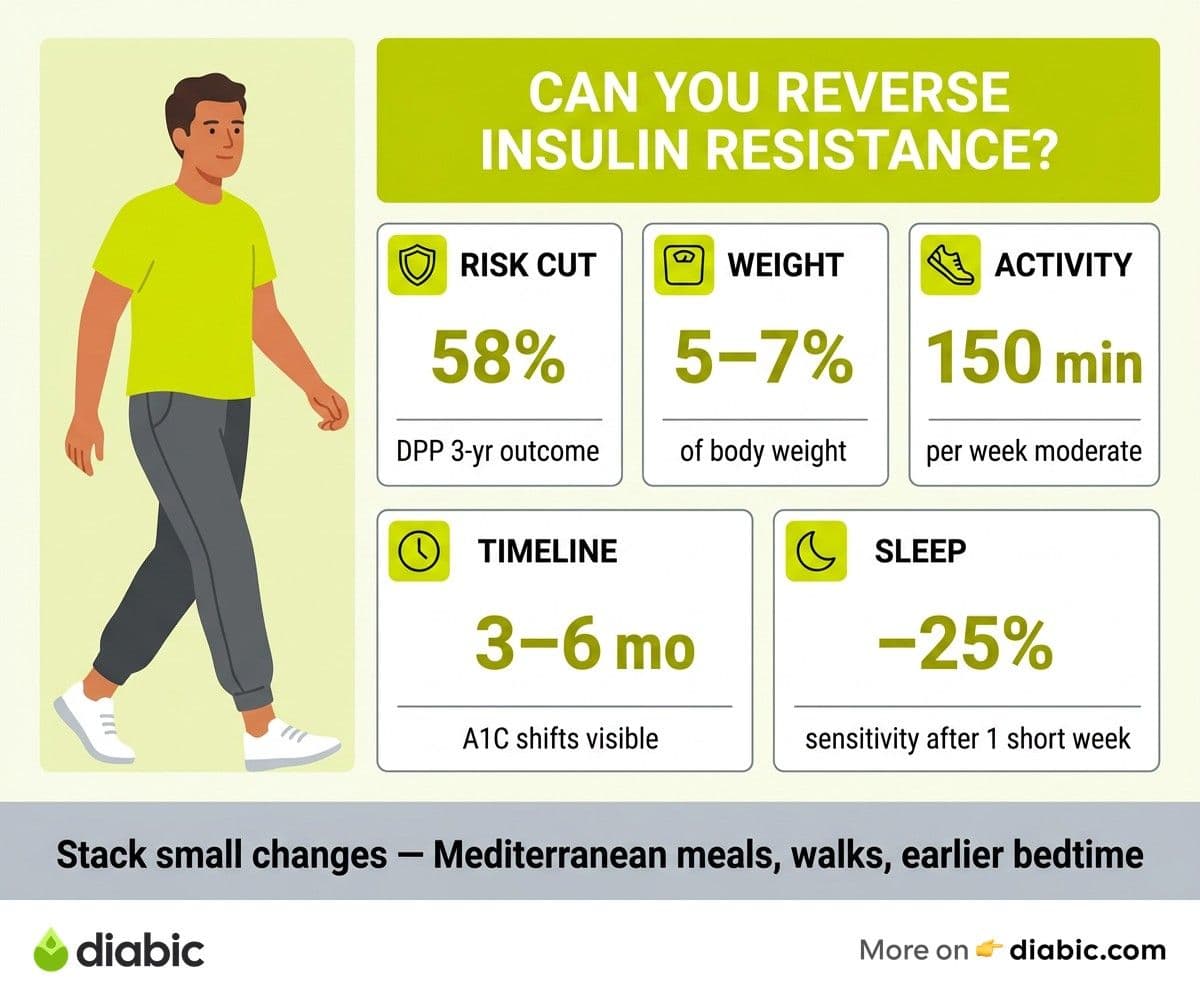
The evidence for meaningful improvement is strong. The Diabetes Prevention Program, a landmark trial run by the CDC and NIH, followed more than 3,000 adults with prediabetes. The lifestyle group, which aimed for 7% weight loss and 150 minutes of moderate activity per week, cut their risk of progressing to type 2 diabetes by 58% over three years. The original results were published in The New England Journal of Medicine and have since been replicated in dozens of follow-up studies worldwide.
The DiRECT trial in the UK pushed the conversation further by showing that nearly half of adults with established type 2 diabetes achieved remission after a structured weight-loss program, with results sustained at the two-year mark in many participants. Long-term follow-up published in Diabetes Care suggests these gains can hold for years when people maintain the underlying habits. Translation: insulin sensitivity is not a fixed trait. It is responsive to what you do, and earlier intervention almost always produces better outcomes.
What we want to be honest about is that "responsive" is not the same as "easy." The people who see the biggest shifts are usually the ones who layer several changes at once and stick with them past the first few weeks. If that sounds intimidating, the right framing is progress, not perfection.
Dietary Changes That Improve Insulin Sensitivity
Diet is the lever most people reach for first, and for good reason. The ADA Standards of Care consistently rank nutrition therapy alongside physical activity as foundational for managing the condition and preventing type 2 diabetes. The catch is that there is no single diet that works for everyone. What does the most reliable damage is the modern pattern of refined carbohydrates, sugar-sweetened drinks, and ultra-processed snacks that dominate so many shopping carts.
A few principles show up across nearly every successful approach. Reducing refined carbohydrates and added sugars lowers the insulin demand on your pancreas. Increasing fiber from vegetables, legumes, berries, nuts, and intact whole grains slows glucose absorption and feeds gut bacteria that play a role in metabolic health. Healthy fats from olive oil, avocados, fatty fish, and nuts replace some of the empty calories from processed foods.
The Mediterranean pattern has the deepest evidence base of any single approach. Studies in Diabetes Care and other peer-reviewed journals have repeatedly linked Mediterranean-style eating to better insulin sensitivity, lower A1C, and reduced cardiovascular risk. You do not need to live in Greece to benefit. A simple practical shift looks like vegetables filling half your plate, a palm-sized portion of protein, a thumb of olive oil or another healthy fat, and a smaller portion of slow carbohydrates like beans or quinoa. For more meal-by-meal guidance, our diet guide for poor insulin sensitivity breaks down what to put on your plate and what to skip.
Exercise as a Powerful Insulin Sensitizer
If diet is the foundation, exercise is the multiplier. Moving your muscles is one of the few things that can pull glucose out of the bloodstream without needing extra insulin to do it. Research in the Journal of Clinical Endocrinology and Metabolism shows that a single bout of moderate exercise can improve insulin sensitivity for up to 48 hours afterward, which is why consistency matters more than intensity for most people starting out.
Both aerobic and resistance training help, and the combination is better than either alone. Walking, cycling, swimming, and jogging build cardiovascular fitness and improve how efficiently your muscles use glucose. Lifting weights or doing bodyweight strength work builds and preserves muscle tissue, which acts as a glucose reservoir. More muscle means more places for sugar to go after meals.
The minimum effective dose recommended by the ADA and CDC is 150 minutes of moderate-intensity activity per week, plus two strength sessions. That sounds like a lot until you break it into 30 minutes, five days a week, which can be a brisk walk after lunch and dinner. Sitting less also matters independently. Standing up every 30 to 60 minutes during long sedentary stretches improves post-meal glucose responses, even on days you do not "exercise" in the formal sense.
If you have been mostly sedentary, start small and build. A 10-minute walk after meals is a legitimate beginning, and many people find that habit alone drops their post-meal blood sugar noticeably within a couple of weeks.
Weight Management and Metabolic Sensitivity
Body composition is one of the strongest modifiable drivers of insulin sensitivity. The DPP famously showed that a 5% to 7% weight loss meaningfully reduced diabetes risk, and follow-up studies have confirmed that even modest reductions in visceral fat, the deep fat around your organs, can improve insulin signaling within months. The point is not a number on a scale. The point is the metabolic shift that comes with it.
Visceral fat behaves differently from the subcutaneous fat under your skin. It releases inflammatory signals and free fatty acids that interfere with how cells respond to insulin. This is why waist circumference often correlates better with this pattern than overall body weight does. Two people at the same weight can have very different metabolic profiles based on where their body stores fat.
Sustainable approaches almost always beat crash diets in the long run. Very-low-calorie regimens can produce fast scale wins but often trigger muscle loss and metabolic adaptations that make the underlying problem worse once weight comes back. Steady changes, the kind you could see yourself doing a year from now, tend to stick. If you want practical guidance on this, our piece on losing weight when insulin is misfiring covers what actually moves the needle. Non-scale markers worth tracking include waist measurements, energy levels, sleep quality, and trends in your fasting glucose or A1C.
Medications That Help Improve Sensitivity
Lifestyle is foundational, but medication is a legitimate tool when it is needed. The DPP itself compared lifestyle to metformin and to placebo. Both lifestyle and metformin reduced diabetes risk, with lifestyle slightly ahead overall, though metformin worked particularly well for younger participants and those with higher BMI.
Metformin is the most studied option here and is generally well tolerated, with the main side effects being gastrointestinal and usually temporary. Our metformin deep dive covers how it works and what to expect. GLP-1 receptor agonists are a newer class that addresses both blood sugar and weight, with strong cardiovascular and kidney benefits in trials. Thiazolidinediones like pioglitazone act as direct insulin sensitizers and still have a place for select patients, though side effects mean they are used more selectively today.
Talk to your doctor about whether medication makes sense alongside the changes you are already making. Medication is not a shortcut, and it is not a moral failing either. For some people, a few months on metformin while they build new habits is the difference between progress and stalling out. For more on the full landscape, see our overview of treatment options.
Sleep, Stress, and Other Overlooked Factors
The factors people skip are often the ones doing the most damage. A single night of restricted sleep can drop insulin sensitivity by around 25%, according to research summarized in Sleep Medicine Reviews. Chronic short sleep, the five- and six-hour nights so many of us treat as normal, raises cortisol, increases hunger hormones, and shifts food choices toward higher-carb comfort eating. If you are doing everything else right and not seeing improvement, sleep is the first place to look.
Chronic stress works through similar pathways. Sustained cortisol elevation tells your liver to release more glucose, blunts insulin signaling, and encourages visceral fat storage. You cannot eliminate stress, but you can change how your body processes it. Brief daily practices like walks outside, breathwork, journaling, or strength training all show measurable effects on metabolic markers in clinical trials.
Emerging research on the gut microbiome adds another layer. Diets rich in fiber and fermented foods support bacterial diversity, which appears to influence how efficiently your body handles glucose and inflammation. We are still early in this science, but the practical takeaway lines up with the rest: the same patterns that help everywhere else also help here.
FAQ
How long does it take to turn the condition around?
Timelines vary depending on starting point and the depth of the changes you make. Many people see improvements in fasting blood sugar and energy within two to four weeks of consistent exercise and dietary shifts. Measurable changes in A1C and fasting insulin typically show up in three to six months. Your healthcare provider can track your progress with periodic lab work and help you adjust along the way.
What are the first signs of poor insulin sensitivity?
Early signs often include persistent fatigue (especially after meals), difficulty losing weight despite real effort, increased hunger and sugar cravings between meals, and weight gain around the midsection. Dark patches of skin on the neck, armpits, or groin (acanthosis nigricans) and a sudden increase in skin tags can also be visible indicators worth mentioning to your doctor.
A Practical Place to Start
If you remember one thing from this piece, let it be that insulin resistance is responsive. Your cells can become more sensitive again with the right inputs, even if the underlying tendency stays in the background. The most reliable starting point is the smallest change you can keep: a 15-minute walk after dinner, swapping one sugary drink for water, going to bed 30 minutes earlier. Stack one habit on the next, work with your provider to track real numbers, and give it three to six months before judging the result.
We built Diabic as a place where people working on insulin resistance can find clear information and a community that gets it. Pick one change this week, and come back next week ready to add another.
Shahriar P. Shuvo is the founder of Diabic. He has lived with diabetes for over 14 years, and built Diabic to deliver the practical, evidence-based self-management tools he wished existed when he was first diagnosed. By trade, Shahriar is a senior design and frontend engineer with 6+ years shipping products at Agora, Timescale (now Tiger Data), and ShareTrip. He writes from the intersection of lived diabetes experience and product craft, focused on what works in daily management rather than what sounds good in a textbook.
Medically reviewed by
Dr. Shanto Arian is an internal medicine physician now specializing in clinical and aesthetic dermatology, with a parallel academic focus on epidemiology and public health. He holds an MBBS, MPH, MSc (UK), MRCP (UK), MRCPI (Ireland), Diploma in Dermatology (UK), and Diploma in Aesthetic Medicine (USA). Dr. Arian trained in internal medicine, including hospital work on hematology cases such as graft-versus-host disease, before moving toward dermatology. Skin is one of the earliest places diabetes shows itself, from acanthosis nigricans and diabetic dermopathy to slow foot wound healing, and that intersection is where his clinical and Diabic-review work meet. On Diabic, Dr. Arian medically reviews content on diabetes diagnosis, complications, dermatologic manifestations, and pharmacotherapy, ensuring every claim aligns with current ADA, NICE, and peer-reviewed literature.
More from Treatment & Medication
View all
Recognizing Diabetic Coma Warning Signs Early
Learn to spot diabetic coma warning signs early. We cover DKA, HHS, and severe hypoglycemia symptoms, plus when to call 911 for immediate help.

Switching to Injectable Diabetes Medication: What to Expect
Switching to injectable diabetes medication can feel daunting. Learn what to expect, how to manage side effects, and why this step is progression, not.

Hyperglycemic Hyperosmolar Syndrome: Warning Signs to Know
Hyperglycemic hyperosmolar syndrome is a serious type 2 diabetes emergency. Learn the warning signs, triggers, and when to call 911 for HHS care.
Clinician-reviewed habits, plain-language guides, and honest answers - the small shifts that make living with diabetes feel lighter, every day.