Metformin for Insulin Resistance: What to Know
Metformin for insulin resistance, explained. We cover how it works, common side effects, B12 considerations, and what to ask your provider.

In this article(9)
If your provider has mentioned metformin for insulin resistance, you are in very common company. It is one of the most prescribed medications in the world, and it has been a first-line option for type 2 diabetes for decades. That long track record is reassuring, but it also means there is a lot of folklore floating around about what the pill does, what it does not do, and what it feels like to take.
We wrote this to give you a clear, non-prescriptive overview before your next appointment. We will walk through how metformin actually works, the side effects most people run into, the rarer issues worth knowing about, and the questions worth raising with your healthcare team. None of this replaces a conversation with your provider, who knows your full medical history and can match the specifics of dose and timing to you.
How Metformin for Insulin Resistance Works
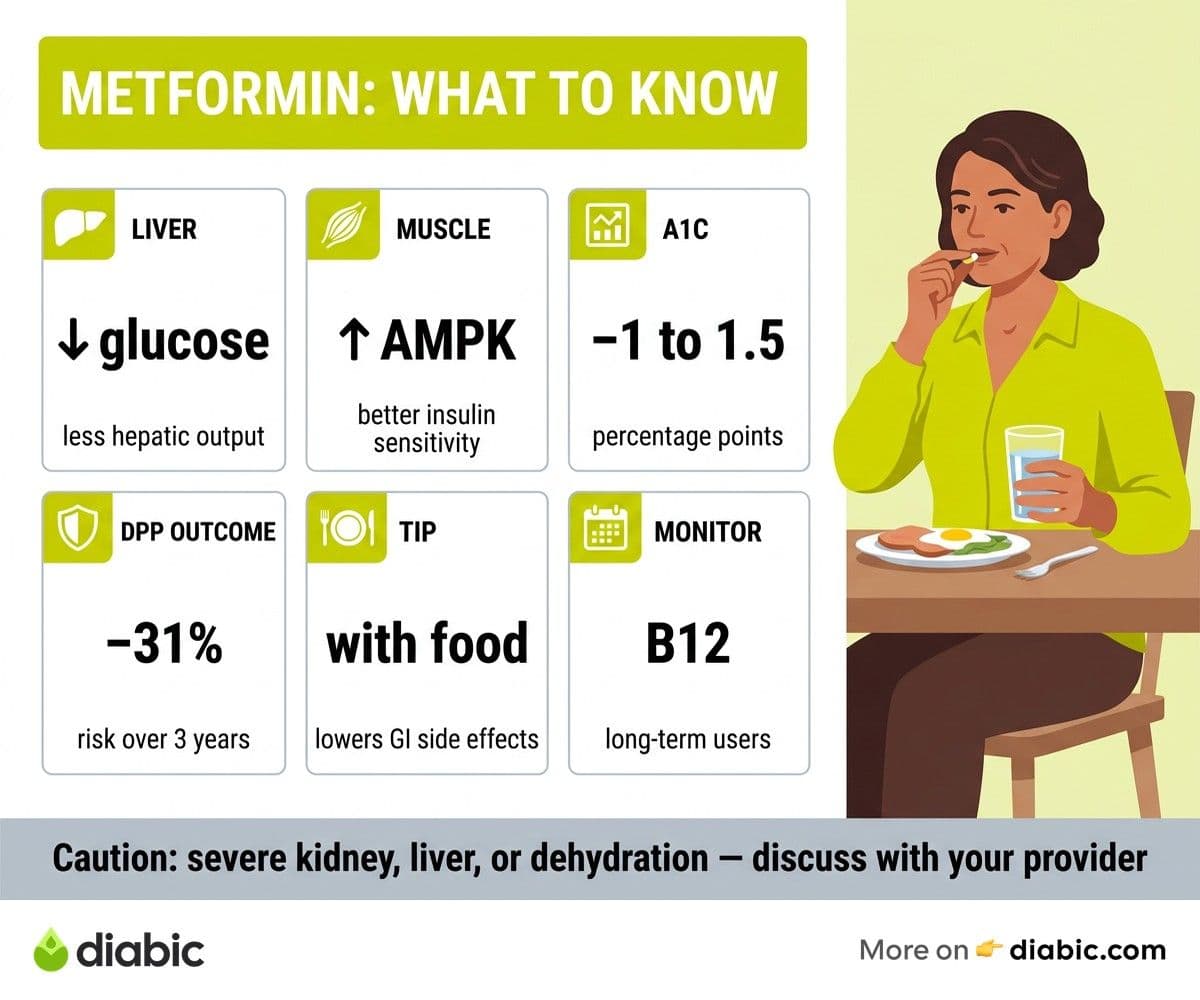
Metformin belongs to a class of medications called biguanides, and its main job is reducing the amount of glucose your liver releases into the bloodstream. When you have insulin resistance, your liver tends to overproduce glucose even when blood sugar is already adequate, which is one reason fasting numbers creep up. By tamping down that hepatic glucose production, metformin lowers fasting blood sugar without forcing your pancreas to make more insulin.
The second mechanism, and the one most relevant to insulin resistance, is improved insulin sensitivity at the cellular level. Metformin activates an enzyme called AMP-activated protein kinase, or AMPK, which helps muscle cells take up glucose more efficiently in response to insulin. The American Diabetes Association continues to list metformin as a preferred initial pharmacologic agent for type 2 diabetes precisely because of this dual effect on liver output and peripheral insulin sensitivity (diabetesjournals.org).
A third feature worth highlighting is what metformin does not do. It does not stimulate the pancreas to release more insulin, which means it carries a much lower risk of causing low blood sugar on its own compared with sulfonylureas or insulin itself. That safety profile, combined with its low cost and decades of post-market data, is why insulin resistance drugs like metformin remain so widely used. The Cochrane Database of Systematic Reviews has summarized the long-term efficacy data across dozens of trials (cochranelibrary.com).
What Metformin Can and Cannot Do
It helps to be honest about the realistic ceiling of any single medication. Metformin can lower fasting glucose, improve A1C by roughly 1 to 1.5 percentage points for many people, and support modest weight loss or weight stability where other diabetes drugs sometimes cause weight gain. The landmark Diabetes Prevention Program study, published in the New England Journal of Medicine, also showed that metformin reduced progression from prediabetes to type 2 diabetes by about 31 percent over three years (nejm.org).
What metformin does not do is replace lifestyle change. The same DPP study found that intensive lifestyle intervention outperformed metformin, cutting progression to type 2 diabetes by 58 percent. The strongest outcomes we see clinically tend to come when medication and lifestyle work together, not when one is asked to compensate for the absence of the other. We talk more about how the two layers reinforce each other in our overview of insulin resistance treatment options.
We also want to be careful about claims that metformin reverses insulin resistance or diabetes. Metformin can meaningfully improve insulin sensitivity and blood sugar numbers while you take it, but the underlying physiology often returns when the medication is stopped, especially without sustained lifestyle work. If you are interested in reversing insulin resistance over time, metformin can be one piece of that picture rather than the whole answer. Many people also wonder about metformin and weight loss specifically, and the honest answer is that effects are usually modest and vary widely.
Common Side Effects and How to Manage Them
The most common side effects of metformin are gastrointestinal, and they are the reason a fair number of people stop taking it before they reach a stable dose. Nausea, diarrhea, stomach cramps, gas, and a metallic taste in the mouth tend to show up in the first one to two weeks. For most people, these symptoms ease as the body adjusts, but the first stretch can be genuinely uncomfortable.
There are practical steps that often help with tolerability, and they are worth raising with your provider. Taking metformin with food rather than on an empty stomach is the simplest one. The extended-release formulation tends to cause fewer GI symptoms than immediate-release for many people, so a switch is sometimes worth asking about. Slow titration, where the dose is increased gradually over weeks rather than starting at the maximum, is another standard approach that providers use to reduce side effects. Our deeper write-up on metformin side effects in detail covers more of these adjustments.
Two longer-term considerations are worth flagging. First, metformin can lower vitamin B12 absorption over years of use, and B12 deficiency can cause fatigue, neuropathy symptoms, and cognitive changes. The FDA prescribing information notes this risk, and many providers now check B12 levels periodically in people on long-term metformin (fda.gov). Second, lactic acidosis is a rare but serious complication, with risk concentrated in people who have significant kidney impairment, heart failure, severe liver disease, or who become acutely dehydrated. Symptoms like unusual muscle pain, trouble breathing, severe stomach pain, or extreme fatigue warrant immediate medical attention.
Dosage Considerations to Discuss with Your Provider
We are not going to give you specific milligrams or a titration schedule, because the right dose depends on your kidney function, other medications, tolerability, and how your blood sugar responds. What we can say is that providers typically start low and increase gradually over several weeks, both to reduce GI side effects and to find the effective dose without overshooting. There is also a maximum daily dose recommended in prescribing guidelines, which your provider will keep you under.
The questions worth bringing to that appointment are practical ones. You can ask whether immediate-release or extended-release makes more sense for you, what time of day to take it relative to meals, what to do if you miss a dose, and how often your kidney function and B12 should be checked. If you are on other medications, including supplements and herbal products, share the full list so your provider can flag any interactions.
A note on adjusting on your own. We have heard from people who skip doses on low-carb days, double up after a missed morning, or stop the medication entirely once their numbers improve. None of those moves are advisable without your provider's input, since they can affect glycemic control, kidney safety, and your A1C trajectory. If something about the schedule is not working, that is a useful conversation, not a reason to freelance.
Who Should and Should Not Take Metformin
Metformin is a primary candidate for adults with type 2 diabetes, particularly when insulin resistance is the dominant feature. It is also commonly prescribed off-label for people with prediabetes who are at high risk of progression, especially those under 60 with a body mass index above 35 or a history of gestational diabetes, per ADA guidance. Women with polycystic ovary syndrome and significant insulin resistance are another group where metformin is frequently considered, sometimes for its effects on cycle regularity and metabolic markers.
There are situations where metformin is either not appropriate or needs careful evaluation. Significant chronic kidney disease, particularly when estimated glomerular filtration rate falls below certain thresholds, is the main contraindication, since impaired kidney clearance is the biggest driver of lactic acidosis risk. Severe liver disease, decompensated heart failure, active alcohol misuse, and acute illnesses that cause dehydration also raise concerns. Pregnancy and breastfeeding are separate conversations where metformin is sometimes used and sometimes paused, and your obstetric and diabetes teams should align on the plan.
For everyone else, the decision usually comes down to a benefit and risk discussion grounded in your full medical history, lab work, and goals. The NIDDK has a useful patient-facing overview of how metformin fits into broader diabetes management (niddk.nih.gov). Bringing your questions, your medication list, and a sense of what matters to you in daily life will make that conversation more productive.
Frequently Asked Questions
How long does metformin take to work for insulin resistance?
Most people see some improvement in fasting blood sugar within the first one to two weeks, while the fuller effect on A1C and insulin sensitivity typically takes about three months to show up. Your provider will likely recheck A1C around that point to assess how the medication is working alongside your lifestyle changes. If numbers are not moving as expected, that is information to bring back to the appointment rather than a sign that metformin will never help.
What dose of metformin is used for insulin resistance?
We are not going to put a specific dose in writing here, because the right amount depends on your kidney function, tolerability, and how your blood sugar responds. Providers generally start at a low dose and increase gradually over several weeks to limit GI side effects and find the level that works for you. Your prescriber will determine the right dose for your specific situation, and you should follow that plan rather than adjusting on your own.
Can you stop metformin once your blood sugar improves?
Stopping metformin is a decision to make with your healthcare provider, not on your own. For some people with prediabetes who have made significant lifestyle changes, a supervised taper may be appropriate, while others benefit from staying on the medication long term. Stopping abruptly can allow blood sugar to climb back up, so the safer path is to bring the question to your next appointment along with your recent home glucose data.
The honest summary on metformin for insulin resistance is that it is one of the most reliable, lowest-cost tools available, but it works best as part of a layered plan rather than a standalone fix. Pair it with the lifestyle changes your provider recommends, keep your follow-up labs on the calendar, and treat the medication as a steady support rather than a switch you flip on and off.
Dr. Shanto Arian is an internal medicine physician now specializing in clinical and aesthetic dermatology, with a parallel academic focus on epidemiology and public health. He holds an MBBS, MPH, MSc (UK), MRCP (UK), MRCPI (Ireland), Diploma in Dermatology (UK), and Diploma in Aesthetic Medicine (USA). Dr. Arian trained in internal medicine, including hospital work on hematology cases such as graft-versus-host disease, before moving toward dermatology. Skin is one of the earliest places diabetes shows itself, from acanthosis nigricans and diabetic dermopathy to slow foot wound healing, and that intersection is where his clinical and Diabic-review work meet. On Diabic, Dr. Arian medically reviews content on diabetes diagnosis, complications, dermatologic manifestations, and pharmacotherapy, ensuring every claim aligns with current ADA, NICE, and peer-reviewed literature.
Medically reviewed by
Dr. Rezwana Parvin Rumpa is an obstetrics and gynaecology specialist with clinical focus on gestational diabetes, PCOS, and fertility. She holds the MRCOG (Final Part) from the Royal College of Obstetricians and Gynaecologists in London, the MRCPI (Final Part) from the Royal College of Physicians of Ireland, and an MBBS from Shaheed Monsur Ali Medical College under Dhaka University. Dr. Rumpa serves as a Senior Medical Officer in the Obs and Gynae department at BRB Hospitals Ltd, where she has spent three years managing prenatal care, emergency obstetric cases, and women's-health surgery. On Diabic, she medically reviews content for women living with diabetes, with particular attention to pregnancy, PCOS, and reproductive-health intersections.
More from Treatment & Medication
View all
Recognizing Diabetic Coma Warning Signs Early
Learn to spot diabetic coma warning signs early. We cover DKA, HHS, and severe hypoglycemia symptoms, plus when to call 911 for immediate help.

Switching to Injectable Diabetes Medication: What to Expect
Switching to injectable diabetes medication can feel daunting. Learn what to expect, how to manage side effects, and why this step is progression, not.

Hyperglycemic Hyperosmolar Syndrome: Warning Signs to Know
Hyperglycemic hyperosmolar syndrome is a serious type 2 diabetes emergency. Learn the warning signs, triggers, and when to call 911 for HHS care.
Clinician-reviewed habits, plain-language guides, and honest answers - the small shifts that make living with diabetes feel lighter, every day.