Does Metformin Cause Weight Loss? What the Research
Does metformin cause weight loss? We unpack the research, the realistic numbers, and how it compares to dedicated weight loss medications.

In this article(10)
Does metformin cause weight loss is one of the most searched questions about any diabetes medication, and the honest answer is "sometimes, modestly, and not for everyone." The internet tends to flatten this into either a miracle story or a dismissal, and neither version matches what the studies actually report. If you are starting metformin, or wondering whether the scale will move, you deserve a clearer picture than the one that usually circulates.
We want to lay out what the research shows, why metformin behaves the way it does in the body, and where it sits in a landscape that now includes much stronger weight loss drugs. Along the way we will be honest about its limits, because pretending metformin is something it is not tends to lead to disappointment and stopped prescriptions. This medication has earned its spot in diabetes care for good reasons, and weight is only one piece of that story.
A quick note before we go further. We are not going to discuss specific dosing or how to start, stop, or change a prescription. Those decisions belong with your prescriber, who knows your kidney function, your other meds, and the rest of your health picture.
Does Metformin Cause Weight Loss? What the Research Actually Shows
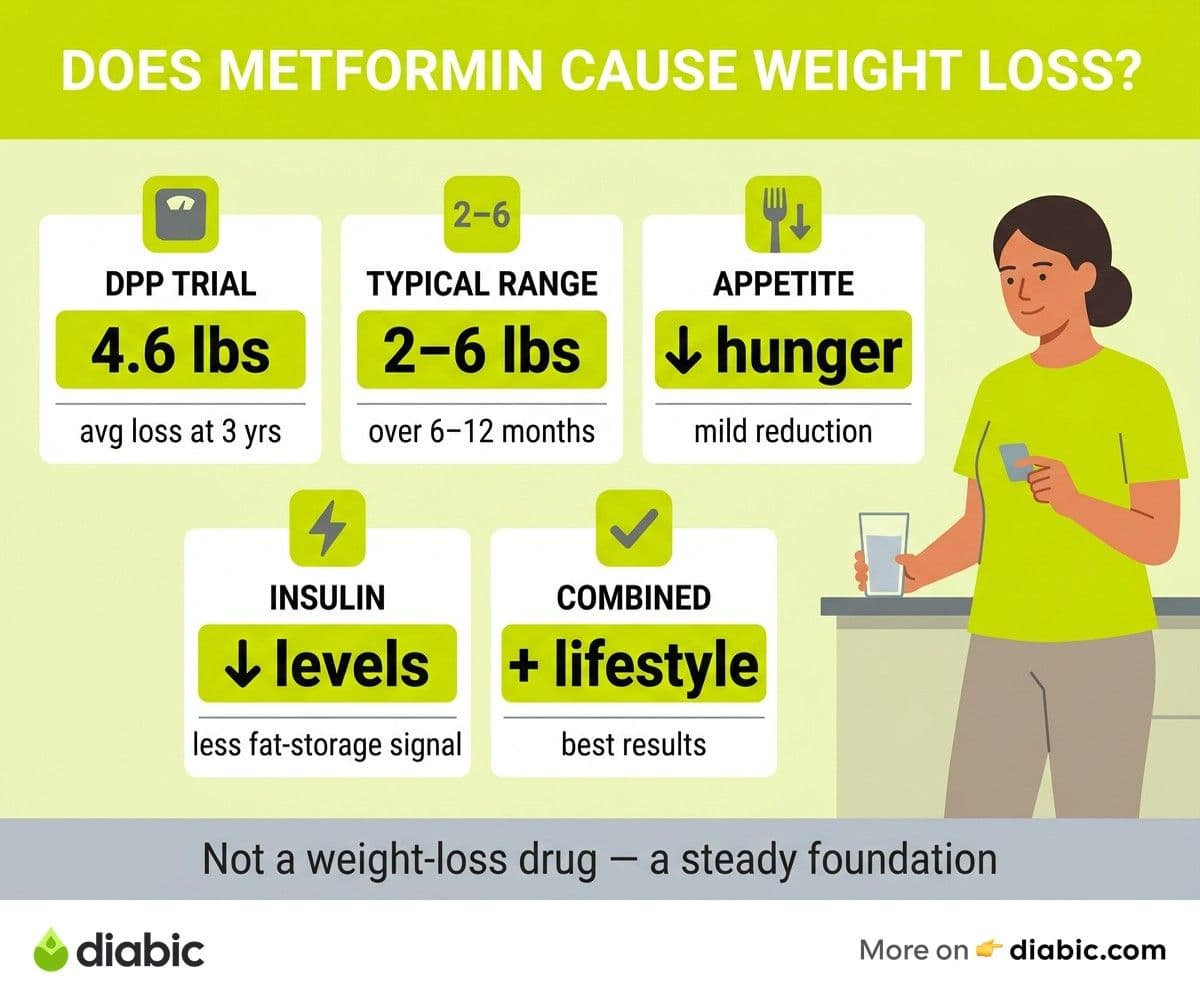
The cleanest data on metformin and weight comes from the Diabetes Prevention Program, a landmark trial published in the New England Journal of Medicine. Adults at high risk for type 2 diabetes were randomized to placebo, metformin, or an intensive lifestyle intervention. Over roughly three years, the metformin group lost an average of about 4.6 pounds, the placebo group lost almost nothing, and the lifestyle group lost about 12.3 pounds. The difference was real, durable, and modest, all at once.
Longer follow-up from the DPP Outcomes Study showed that metformin's weight effect persisted for years in many participants, which is unusual. Most weight loss interventions see regain, and yet metformin held a small advantage out past a decade in people who kept taking it. That durability is one of the reasons clinicians like the drug, even though the absolute number on the scale is not dramatic. A few pounds that stay off tend to matter more than a bigger drop that rebounds.
Meta-analyses tell a similar story. A pooled analysis in Obesity Reviews covering thousands of participants found average weight loss in the range of two to six pounds across studies, with bigger effects in people who had insulin resistance or higher starting weights. People with normal insulin sensitivity and lower BMI saw very little change, which is part of why metformin is not classified or marketed as a weight loss drug. The FDA prescribing information describes weight as a secondary effect rather than a treatment indication, and that framing matters.
If you are coming to metformin from a place of insulin resistance, our piece on metformin for insulin resistance walks through why this group tends to see the more noticeable effects on the scale.
How Metformin May Affect Your Weight
The mechanism is more interesting than the headline. Metformin does not burn fat or block calorie absorption the way some weight loss drugs do. It works upstream, on the systems that decide how your body handles fuel, and weight changes show up as a downstream consequence rather than a direct goal. Understanding this helps explain why the effect is modest and why it varies so much from person to person.
The first piece is appetite. A meaningful share of people on metformin report less hunger, especially in the first weeks, and some of that is tied to the gastrointestinal side effects the drug is famous for. Mild nausea, fullness, or shifts in taste can quietly trim a few hundred calories a day without you tracking it. We cover what to expect and how the side effects usually settle in our guide to metformin side effects, because the appetite effect tends to fade as the body adjusts.
The second piece is insulin sensitivity. Metformin reduces glucose production in the liver and improves how cells respond to insulin, which means your pancreas does not have to pump out as much insulin to get the same job done. Lower circulating insulin matters for weight because insulin is a fat-storage signal. When levels run high all day, the body holds onto fat more readily, and the gentle drop metformin produces seems to release some of that storage pressure. This is part of why people with stronger insulin resistance see bigger changes.
There is also growing evidence about the gut microbiome. Research suggests metformin shifts the balance of bacteria in ways that may influence energy extraction and inflammation, and these changes show up alongside the metabolic ones. The full picture is still being mapped, but it adds nuance to the simple "appetite suppression" story. None of these mechanisms turn metformin into a weight loss drug. Together they explain why a few pounds tend to come off and stay off in people who respond, especially when paired with better food and movement habits.
Metformin Versus Dedicated Weight Loss Medications
The medication landscape looks very different than it did even five years ago. GLP-1 receptor agonists like semaglutide and the dual agonist tirzepatide produce weight loss that dwarfs what metformin can do, often in the range of fifteen to twenty percent of body weight in trials. According to clinical trial data summarized by the American Diabetes Association, these drugs work primarily through appetite signaling and gastric emptying, and they do so with a strength metformin was never designed for.
This does not make metformin obsolete. It makes the comparison the wrong one to draw. Metformin is inexpensive, generic, has decades of safety data, and remains a first-line treatment for type 2 diabetes for reasons that go beyond weight. It also lowers cardiovascular risk markers, is taken orally, and does not require injections or specialty pharmacy access. For many people, especially those navigating cost or insurance limits, metformin remains the entry point, and a GLP-1 may layer on later if weight or glucose targets are not being met. We dig into the newer class in our piece on GLP-1 receptor agonists.
The right question is not "which one wins" but "which one fits this person right now." Plenty of treatment plans use both, and plenty use metformin alone for years with good results. Weight loss and type 2 diabetes management overlap, but they are not the same goal, and your prescriber is balancing both.
What Metformin Cannot Do for Weight Loss
Setting realistic expectations is part of using this drug well. Metformin is not a substitute for the eating and movement changes that drive most lasting weight loss. The DPP made this point clearly when the lifestyle group nearly tripled the weight loss of the metformin group. If you are hoping the medication will carry the load while habits stay the same, you are likely to be disappointed, and disappointment is one of the most common reasons people quit medications that were actually helping them.
Some people simply do not lose any weight on metformin, and a smaller group gains a little. That does not mean the medication is failing you on the metrics that matter most, including A1C, fasting glucose, and long-term complication risk. Weight is one signal among several, and a stable weight on metformin can still represent a real win compared with the trajectory you were on before. Reframing what success looks like protects your motivation when the scale is stubborn.
It is also worth saying out loud that weight is not a moral test. The shame that gets baked into weight conversations in diabetes care is one of the reasons we manage your diabetes better when we leave that shame at the door. Metformin gives some people a small assist. It does not deliver a verdict on your worth or your effort. Our guide on losing weight with insulin resistance covers strategies that pair well with the medication without turning weight into the only marker of progress.
Combining Metformin With Lifestyle Changes for Better Results
The studies are unanimous on this part. Metformin and lifestyle change together outperform either alone, and the gap shows up quickly. Type 2 weight loss tends to follow the same arithmetic, where small changes stacked together produce results bigger than the sum of their parts. The ADA Standards of Care recommends pairing pharmacologic treatment with structured lifestyle support for exactly this reason.
A few practical pairings tend to work for our readers. Eating patterns that flatten glucose spikes, like building meals around protein, fiber, and healthy fats before starches, reduce the insulin demand metformin is already lowering. Regular movement, even short walks after meals, sharpens insulin sensitivity in the muscles, which complements the drug's action in the liver. Sleep matters more than people credit, because short sleep raises cortisol and insulin resistance in ways that work directly against your medication. None of this requires a perfect plan. It requires a plan you can repeat.
The most useful step you can take is treating your prescriber and diabetes educator as partners in this. Share what is working, what is not, what the scale is doing, and how you are feeling on the medication. Adjustments happen all the time, and metformin is rarely the last word in a treatment plan. It is more often a foundation that other choices build on.
FAQ
How much weight can you lose on metformin?
Most studies report an average loss of about two to six pounds over six to twelve months, with the Diabetes Prevention Program landing near 4.6 pounds at three years. Some people lose more, and some lose nothing. The amount tends to be larger in people with significant insulin resistance, higher starting weight, or paired lifestyle changes, and smaller in people without those factors.
Does metformin help you lose belly fat?
Some research suggests metformin may modestly reduce visceral fat, the kind stored around abdominal organs that carries the highest metabolic risk. The effect appears tied to improvements in insulin sensitivity rather than direct fat burning. Combining the medication with regular movement and a balanced eating pattern remains the most reliable approach for reducing abdominal fat, and the medication alone should not be expected to target it.
Why am I not losing weight on metformin?
Several factors can blunt the effect, including normal insulin sensitivity to begin with, lifestyle patterns that offset the drug's mild appetite reduction, dose adjustments still settling in, or simply individual variation. Weight loss is a secondary effect of metformin, not a guaranteed outcome, and the medication can still be doing important work on glucose, insulin, and cardiovascular markers even when the scale stays put.
Is it safe to take metformin only for weight loss?
Metformin is approved for type 2 diabetes and prediabetes, and some clinicians prescribe it off-label for related conditions like polycystic ovary syndrome. Using it purely for weight loss without a metabolic indication is not a use the FDA labeling supports, and the modest effect would not justify it for most people compared with options that target weight more directly. This is a conversation to have with your healthcare provider rather than a decision to make on your own.
So, does metformin cause weight loss in a way that lives up to the search-bar hype? For most people, the honest answer is a quiet yes, with a small number on the scale and a longer list of metabolic wins underneath it. Treat the medication as a foundation rather than a finish line, and the steady changes it produces over time tend to add up to more than the headline number suggests.
Dr. Shanto Arian is an internal medicine physician now specializing in clinical and aesthetic dermatology, with a parallel academic focus on epidemiology and public health. He holds an MBBS, MPH, MSc (UK), MRCP (UK), MRCPI (Ireland), Diploma in Dermatology (UK), and Diploma in Aesthetic Medicine (USA). Dr. Arian trained in internal medicine, including hospital work on hematology cases such as graft-versus-host disease, before moving toward dermatology. Skin is one of the earliest places diabetes shows itself, from acanthosis nigricans and diabetic dermopathy to slow foot wound healing, and that intersection is where his clinical and Diabic-review work meet. On Diabic, Dr. Arian medically reviews content on diabetes diagnosis, complications, dermatologic manifestations, and pharmacotherapy, ensuring every claim aligns with current ADA, NICE, and peer-reviewed literature.
Medically reviewed by
Dr. Rezwana Parvin Rumpa is an obstetrics and gynaecology specialist with clinical focus on gestational diabetes, PCOS, and fertility. She holds the MRCOG (Final Part) from the Royal College of Obstetricians and Gynaecologists in London, the MRCPI (Final Part) from the Royal College of Physicians of Ireland, and an MBBS from Shaheed Monsur Ali Medical College under Dhaka University. Dr. Rumpa serves as a Senior Medical Officer in the Obs and Gynae department at BRB Hospitals Ltd, where she has spent three years managing prenatal care, emergency obstetric cases, and women's-health surgery. On Diabic, she medically reviews content for women living with diabetes, with particular attention to pregnancy, PCOS, and reproductive-health intersections.
More from Treatment & Medication
View all
Recognizing Diabetic Coma Warning Signs Early
Learn to spot diabetic coma warning signs early. We cover DKA, HHS, and severe hypoglycemia symptoms, plus when to call 911 for immediate help.

Switching to Injectable Diabetes Medication: What to Expect
Switching to injectable diabetes medication can feel daunting. Learn what to expect, how to manage side effects, and why this step is progression, not.

Hyperglycemic Hyperosmolar Syndrome: Warning Signs to Know
Hyperglycemic hyperosmolar syndrome is a serious type 2 diabetes emergency. Learn the warning signs, triggers, and when to call 911 for HHS care.
Clinician-reviewed habits, plain-language guides, and honest answers - the small shifts that make living with diabetes feel lighter, every day.