Early Gestational Diabetes Symptoms Women Miss
Most gestational diabetes symptoms hide behind normal pregnancy changes. Learn the early signs to watch for and when to ask for testing before 24 weeks.

In this article(16)
Most women with gestational diabetes have no obvious gestational diabetes symptoms at all, which is exactly why so many cases go undetected until the routine glucose screening at 24 to 28 weeks. The few warning signs that do appear, like extra thirst, more frequent bathroom trips, and persistent fatigue, are easy to write off as ordinary pregnancy. That overlap is real, and it is why the condition is so frequently missed.
That said, there are subtle early signs of gestational diabetes that, when recognized, can prompt earlier testing and lead to better outcomes for both mother and baby. The goal here is not to make anyone anxious about every twinge during pregnancy. It is to help you separate the signals worth flagging to your provider from the everyday changes that come with growing a human being.
Why Gestational Diabetes Symptoms Often Stay Hidden
Pregnancy itself causes many of the same changes that gestational diabetes does. Increased thirst comes from expanded blood volume. More frequent urination is partly a function of the uterus pressing on the bladder and partly the kidneys filtering more fluid. Fatigue is almost universal, especially in the first and third trimesters. When elevated blood sugar produces these same symptoms, there is no clear way to tell the difference without a lab test.
The other reason so many cases go unnoticed is that blood sugar elevation in gestational diabetes is usually moderate, not extreme. Numbers tend to creep up gradually as placental hormones rise, especially after meals, and most women feel essentially normal even when their fasting or postmeal glucose is above target. The Centers for Disease Control and Prevention (CDC) notes that universal screening exists precisely because symptoms cannot be relied on for diagnosis.
This is also why universal screening at 24 to 28 weeks is the standard of care across major guidelines. By that window, placental hormones have reached the levels that most affect insulin sensitivity, so the screening is more likely to detect changes. If you want to dig deeper into how the screening itself works, our walk-through of the glucose test during pregnancy covers the one-step and two-step protocols in detail.
Early Signs Worth Watching For
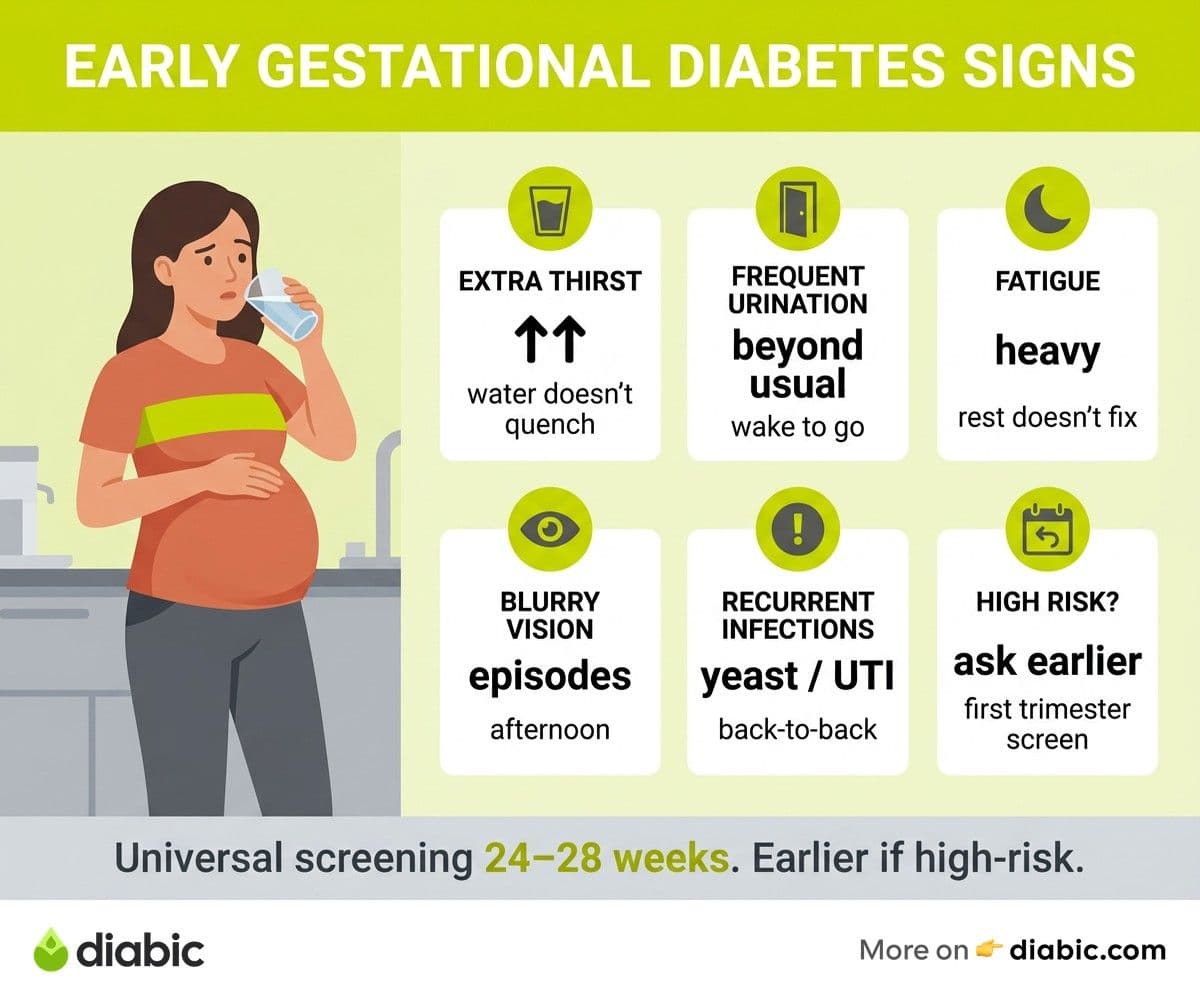
While there is no symptom that diagnoses gestational diabetes on its own, a cluster of changes can be worth raising with your provider. The key word is cluster, because any single sign in isolation is rarely meaningful in pregnancy. When several appear together or intensify quickly, that pattern is what makes them worth a conversation.
Excessive Thirst Beyond Normal Pregnancy Levels
Most pregnant women drink more water than they did before pregnancy, and that is a healthy adaptation. Gestational diabetes can push thirst into a different category, where you wake up at night to drink, finish a bottle of water and immediately want another, and feel dry-mouthed even after several glasses. The technical term is polydipsia, and it happens because high blood sugar pulls water out of cells and into the bloodstream.
If your thirst feels disproportionate, especially during the second trimester when many women have settled into a steadier routine, mention it. Track how much fluid you are drinking for a couple of days before the appointment so you have something concrete to share. A pattern is more useful to your provider than a vague impression.
Frequent Urination That Increases Significantly
Pregnancy makes you pee more, full stop. The change worth noting is a marked increase in frequency that does not match the timeline you would expect. Many women experience a peak in urination during the first trimester (hormonal) and again in the third trimester (uterine pressure on the bladder), with relative relief in the second trimester.
If you find yourself urinating much more often during the second trimester, especially at night, that pattern can indicate the kidneys filtering excess glucose. Excess sugar in urine pulls water with it, which is why high blood sugar so reliably increases urine output. Pair this observation with thirst and fatigue, and the cluster gets harder to ignore.
Fatigue That Feels Disproportionate
First-trimester fatigue is famous, and third-trimester fatigue makes sense given how much weight you are carrying. The fatigue worth flagging is the kind that hits in the second trimester, when many women feel relatively energetic, or fatigue that intensifies suddenly without an obvious cause. When cells cannot efficiently use glucose for energy, you can feel drained even after a full night of sleep.
Knowing what blood sugar normally looks like outside pregnancy can help you contextualize this kind of energy slump. Our guide to normal blood sugar levels by age lays out the reference ranges that providers use, which makes pregnancy targets easier to understand by comparison.
Recurring Yeast or Urinary Tract Infections
Higher glucose levels in urine and vaginal secretions can fuel yeast (candida) growth, leading to recurrent yeast infections. Similarly, sugar-rich urine creates a more hospitable environment for the bacteria that cause urinary tract infections. If you are getting a second or third yeast infection during a single pregnancy, or treating UTIs in close succession, that pattern deserves attention.
Yeast and UTIs are common in pregnancy for many reasons that have nothing to do with blood sugar, so this is not a diagnostic sign on its own. It is a piece of the puzzle that, combined with other clusters, may shift your provider's plan.
Blurred Vision
Blurred vision in pregnancy is often hormonal, related to fluid shifts in the cornea and lens. When blood sugar is consistently high, those same lenses can swell from osmotic changes and produce vision changes that come and go. If you notice your vision is suddenly less sharp, prescription glasses do not feel right, or focus shifts from day to day, mention it to your provider. Vision changes can also signal preeclampsia, so they are always worth flagging.
Who Is at Higher Risk
Some women carry a meaningfully higher risk of gestational diabetes from the first day of pregnancy, and recognizing that risk is a powerful reason to ask about earlier testing. The American Diabetes Association (ADA) risk factor criteria identify several factors that should prompt screening before 24 weeks.
The most consistent risk factors include:
- Family history of type 2 diabetes, especially in a parent or sibling, since genetic predisposition to insulin resistance carries into pregnancy.
- BMI above 30 before pregnancy, which is associated with greater baseline insulin resistance.
- Previous gestational diabetes in an earlier pregnancy, the single strongest predictor of recurrence.
- Age over 25, with risk rising steadily into the late 30s and beyond.
- Certain ethnic and racial backgrounds, including Hispanic, Black, Asian, Pacific Islander, and Native American heritage, which are associated with higher rates for reasons that are still being studied.
- PCOS or other insulin resistance conditions, since these patterns of metabolism predate pregnancy.
If any of these apply to you, the case for early testing is strong. For women weighing pregnancy with diabetes risk in mind, our preconception planning checklist covers what to address with your provider before you conceive.
When to Ask for Early Testing
If you have one or more risk factors, ask your provider about glucose testing at your first prenatal visit. The American College of Obstetricians and Gynecologists (ACOG) recommends early screening for women with risk factors, often using A1C, fasting glucose, or a glucose tolerance test in the first trimester. The point is not to wait for symptoms.
Early testing serves two purposes. First, it can catch pre-existing diabetes that was missed before pregnancy, which changes how care is coordinated from the start. Second, it can identify women whose insulin resistance is high enough to warrant tighter monitoring, even if formal gestational diabetes criteria are not met until later.
An A1C above 5.9% in the first trimester is generally a flag for closer follow-up, because A1C tends to drop in pregnancy as red blood cells turn over faster. A first-trimester A1C of 6.5% or higher usually indicates pre-existing type 2 diabetes rather than gestational diabetes, and care plans differ. If your initial fasting glucose is above 95 mg/dL or your A1C is above 5.9%, ask what the follow-up plan looks like.
From my experience: Living with type 1 for 14 years has taught me that the worst part of any diabetes diagnosis is usually the surprise. The women I have spoken with in our community who came into pregnancy aware of their risk, and tested early, almost universally felt more in control than the ones who learned at 28 weeks. The information itself is not the hard part. The hard part is feeling caught off guard, and early testing is one of the few things that meaningfully prevents that.
What Happens After a Gestational Diabetes Diagnosis
A gestational diabetes diagnosis sets a new care plan in motion, and most of it is grounded in everyday choices rather than medication. The March of Dimes patient guidance emphasizes that dietary management is the first step for the majority of women, with insulin or oral medication added only if blood sugar targets are not met through food and movement alone.
Your provider will set specific blood sugar targets for pregnancy, which are tighter than non-pregnant ranges. Typical pregnancy targets are fasting below 95 mg/dL and one-hour postmeal below 140 mg/dL, though your numbers may vary. You will check your blood sugar four to six times a day in most plans, usually fasting in the morning and after each main meal.
Our gestational diabetes diet guide walks through the food strategies that most reliably keep postmeal numbers in range, including how to balance carbs with protein and fiber and how to time meals to support steady glucose. Many women find that small shifts (swapping juice for whole fruit, eating eggs with toast instead of cereal, taking a 10-minute walk after meals) make most of the difference.
Prenatal visits become more frequent, and your provider may add additional ultrasounds and fetal monitoring in the third trimester to track baby's growth and amniotic fluid levels. Most women with well-managed gestational diabetes have healthy pregnancies and uncomplicated deliveries. The diagnosis adds attention, but it does not necessarily add complications.
Looking Ahead After Delivery
Blood sugar usually returns to normal within a few days of delivery, but follow-up testing matters. Your provider will schedule an A1C or fasting glucose test at six to twelve weeks postpartum to confirm your numbers have normalized, and recommend periodic testing every one to three years afterward. Women who have had gestational diabetes carry a higher lifetime risk of type 2 diabetes, and research suggests breastfeeding may help reduce that risk.
Lifestyle habits matter more than ever in the years after a gestational diabetes pregnancy. Balanced meals, regular movement, and adequate sleep meaningfully reduce your long-term risk. The diagnosis is best understood as an early signal, not a verdict. It tells you something about how your metabolism behaves under stress, and you can use that information to take care of yourself for decades to come.
FAQ
What are the early signs of gestational diabetes?
The most common early signs are excessive thirst, increased urination, persistent fatigue, recurring yeast or urinary tract infections, and occasional blurred vision. None of these are diagnostic on their own, since pregnancy causes similar symptoms. A cluster of these changes, especially in the second trimester, is worth raising with your provider.
Can you have gestational diabetes without symptoms?
Yes, and this is the most common scenario. Most women with gestational diabetes feel essentially normal until their routine screening at 24 to 28 weeks. This is exactly why universal screening exists, since symptoms cannot reliably detect the condition.
Should I ask for early testing if I have risk factors?
If you have one or more major risk factors (family history of type 2 diabetes, BMI above 30, previous gestational diabetes, age over 25, certain ethnic backgrounds, or PCOS), most current guidelines recommend testing at your first prenatal visit. Talk to your provider about whether an A1C, fasting glucose, or glucose tolerance test makes sense for your situation.
Does gestational diabetes always mean I will need insulin?
No. Most women with gestational diabetes manage their blood sugar through diet, movement, and home monitoring without needing insulin or oral medication. If targets cannot be met through lifestyle alone, your provider may recommend medication, but this is not a sign of failure or a worse outcome.
If you want a clearer picture of how the diagnostic process works, our walk-through of the glucose test during pregnancy covers what to expect at each step. The more you know going in, the easier it is to make decisions that fit your life. Subtle gestational diabetes symptoms rarely show up as one dramatic moment, so trust the cluster, write down what you notice between visits, and bring those notes to your next prenatal appointment.
Dr. Rezwana Parvin Rumpa is an obstetrics and gynaecology specialist with clinical focus on gestational diabetes, PCOS, and fertility. She holds the MRCOG (Final Part) from the Royal College of Obstetricians and Gynaecologists in London, the MRCPI (Final Part) from the Royal College of Physicians of Ireland, and an MBBS from Shaheed Monsur Ali Medical College under Dhaka University. Dr. Rumpa serves as a Senior Medical Officer in the Obs and Gynae department at BRB Hospitals Ltd, where she has spent three years managing prenatal care, emergency obstetric cases, and women's-health surgery. On Diabic, she medically reviews content for women living with diabetes, with particular attention to pregnancy, PCOS, and reproductive-health intersections.
Medically reviewed by
Dr. Shanto Arian is an internal medicine physician now specializing in clinical and aesthetic dermatology, with a parallel academic focus on epidemiology and public health. He holds an MBBS, MPH, MSc (UK), MRCP (UK), MRCPI (Ireland), Diploma in Dermatology (UK), and Diploma in Aesthetic Medicine (USA). Dr. Arian trained in internal medicine, including hospital work on hematology cases such as graft-versus-host disease, before moving toward dermatology. Skin is one of the earliest places diabetes shows itself, from acanthosis nigricans and diabetic dermopathy to slow foot wound healing, and that intersection is where his clinical and Diabic-review work meet. On Diabic, Dr. Arian medically reviews content on diabetes diagnosis, complications, dermatologic manifestations, and pharmacotherapy, ensuring every claim aligns with current ADA, NICE, and peer-reviewed literature.
More from Living with Diabetes
View all
A Gentle Chair Yoga Routine for people with diabetes
A gentle chair yoga for people with diabetes routine with safe poses, modifications for neuropathy, retinopathy, and joint pain, plus tips for older.

Shift Work and Diabetes: Managing Irregular Hours
Shift work and diabetes is a tough combination. Learn how to manage meals, sleep, medication, and blood sugar when your hours rotate or flip overnight.

Dating with Diabetes: When to Tell a New Partner
Dating with diabetes brings unique disclosure questions. Here is when to tell a new partner, what to say, and how to handle the conversation with.
Clinician-reviewed habits, plain-language guides, and honest answers - the small shifts that make living with diabetes feel lighter, every day.