What Blood Sugar Level is Dangerous: the Signs
Learn what level of blood sugar is dangerous, how to recognize a crisis early, and exactly when to call 911 or head to the emergency room.

In this article(14)
Knowing what level of blood sugar is dangerous can be the difference between catching a crisis at home and ending up in the emergency room. Blood sugar that climbs too high or drops too low does not always feel dramatic in the moment, which is part of what makes it risky. The warning signs are often subtle until they suddenly are not.
This guide walks through the thresholds that providers consider dangerous, the symptoms that signal a serious episode, and the specific moments when you should stop trying to manage things at home and call for help. It is not meant to scare anyone, since most days for most people with diabetes do not involve any of this. It is meant to make sure that when something does go sideways, you know how to recognize it and act quickly.
What Level of Blood Sugar Is Dangerous
There is no single number that defines danger for everyone, because context matters as much as the value itself. A reading of 200 mg/dL one hour after a large meal looks different from 200 mg/dL after fasting overnight. Age, type of diabetes, current medications, and whether ketones are present all shift the picture. That said, there are widely recognized thresholds that mark when blood sugar moves from "out of range" to "needs prompt action."
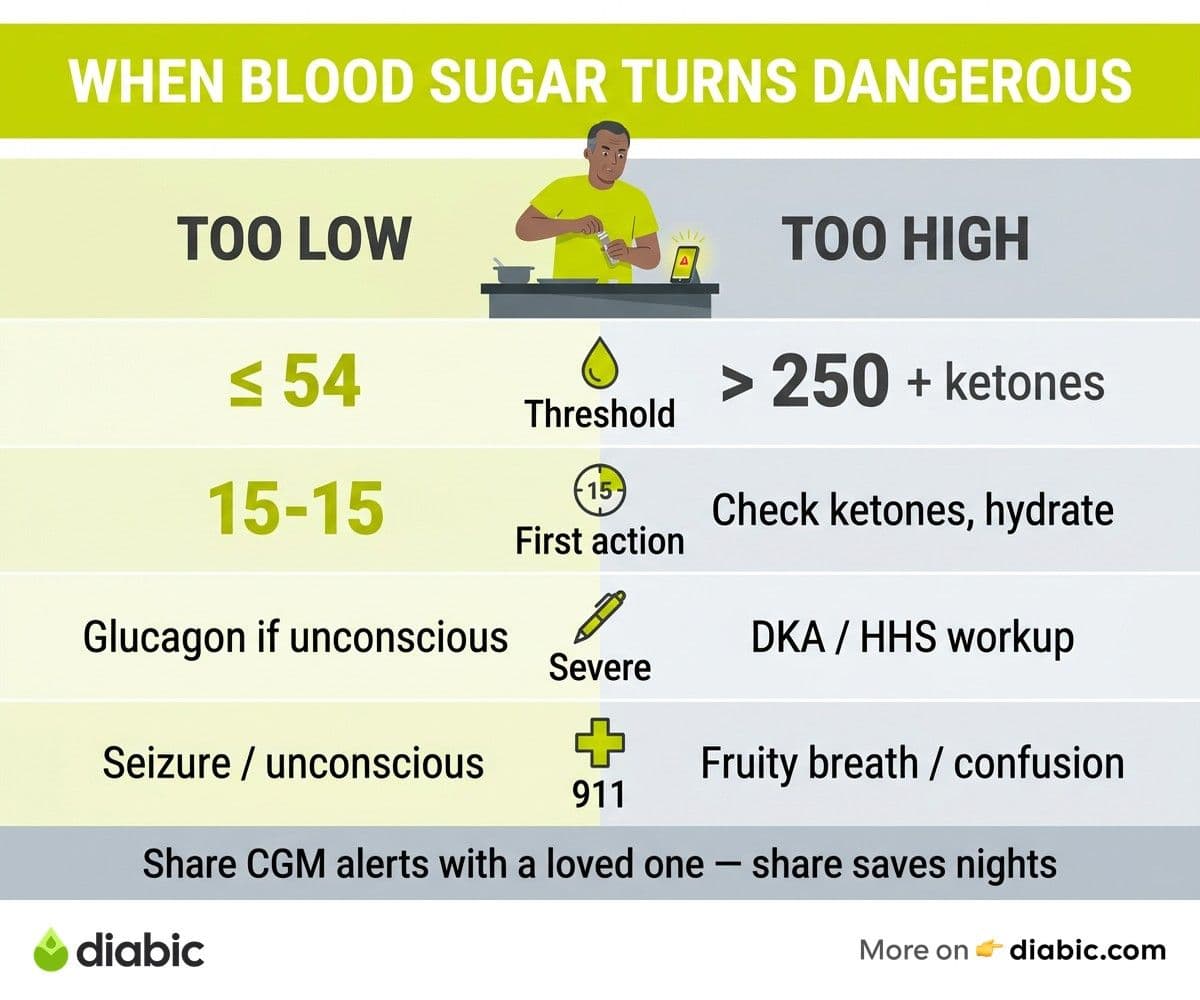
The American Diabetes Association (ADA) Standards of Care define hypoglycemia in three levels. Level 1 is a glucose alert at or below 70 mg/dL. Level 2 is clinically significant hypoglycemia at or below 54 mg/dL, which is the threshold most often associated with serious cognitive symptoms. Level 3 is severe hypoglycemia involving altered mental or physical status that requires assistance from another person, regardless of the exact number.
On the high end, blood sugar above 250 mg/dL with moderate to large ketones is considered urgent because of the risk of diabetic ketoacidosis (DKA). Blood sugar above 600 mg/dL, especially in older adults with type 2 diabetes, can indicate hyperosmolar hyperglycemic state (HHS), which is a medical emergency. For broader reference points outside crisis territory, our normal blood sugar levels chart by age lays out the everyday targets, and our fasting blood sugar explained guide covers how to read morning numbers.
Why Type 1 and Type 2 Thresholds Can Differ
People with type 1 diabetes generally face a higher risk of severe hypoglycemia because their treatment relies on injected or pumped insulin that does not adjust automatically to falling blood sugar. People with type 2 diabetes managed without insulin or sulfonylureas typically do not experience hypoglycemia at all, since their bodies still produce some insulin and glucagon counter-regulation. Treatment regimen, not diagnosis, is what most determines risk.
On the high end, type 1 diabetes is more strongly associated with DKA, while type 2 diabetes (especially in older adults) is more strongly associated with HHS. Both are medical emergencies, but they develop differently and produce slightly different warning signs. Knowing which pattern matches your situation helps you respond appropriately.
Recognizing High Blood Sugar Symptoms
High blood sugar symptoms tend to build gradually, which is part of why they can be missed. The early signs are subtle: a little extra thirst, more frequent bathroom trips, blurry vision, and fatigue that does not match how much sleep you got. On their own, any of these can be explained away. Together, especially if they last more than a few hours, they are a clear signal.
As blood sugar climbs higher, more pronounced symptoms appear. Dry mouth and skin, headache, and difficulty concentrating are common in the 250 to 350 mg/dL range. Nausea, abdominal pain, and vomiting often signal that ketones are accumulating, which is a hallmark of DKA. The Endocrine Society's clinical guidance on hyperglycemic crises describes the progression from elevated glucose to overt acidosis, and emphasizes that nausea and vomiting are red flags that should not be ignored.
Fruity-smelling breath is one of the classic signs of DKA, caused by acetone in exhaled air. Most people cannot smell it on themselves, but a partner or family member often can. Rapid, deep breathing (called Kussmaul respiration) is another late sign, as the body tries to blow off carbon dioxide to compensate for blood acidity. By the time confusion, slurred speech, or loss of consciousness appears, the situation is fully emergent.
When High Blood Sugar Becomes Urgent
A reading above 250 mg/dL warrants action even without symptoms. Check ketones (urine strips or a blood ketone meter), drink water, and if you take insulin, consider a correction dose per your provider's plan. If ketones are moderate or high, or if vomiting prevents you from keeping fluids down, that is the threshold to call your provider or head to the ER.
Older adults with type 2 diabetes face a different pattern. HHS develops more slowly than DKA, often over days, and can produce blood sugars above 600 mg/dL with severe dehydration but minimal ketones. Confusion, weakness on one side of the body, and seizures can occur. HHS has a higher mortality rate than DKA, so any reading above 500 mg/dL with significant symptoms should prompt a 911 call.
Recognizing Low Blood Sugar Symptoms
Low blood sugar symptoms typically come on quickly, which is both a blessing (you usually notice) and a curse (you have less time to respond). The early signs are adrenergic: shakiness, sweating, racing heart, tingling around the lips or fingers, and a sudden, intense hunger. Most people learn to recognize these early symptoms within a few months of starting insulin or sulfonylureas.
When blood sugar drops further, neuroglycopenic symptoms appear, because the brain itself is not getting enough glucose. These include confusion, irritability, difficulty speaking, blurry or double vision, and trouble making simple decisions. Some people describe feeling drunk. Coworkers and family members are often the first to notice, since the person experiencing the low may not realize anything is wrong.
Severe hypoglycemia (under 54 mg/dL or any low requiring assistance) can cause seizures, loss of consciousness, and inability to swallow. At this point, oral carbs are no longer safe, and emergency glucagon becomes the right tool. The JDRF guidance on severe hypoglycemia and glucagon use is worth reviewing if you or a household member uses insulin.
Hypoglycemia Unawareness
Some people with long-standing diabetes lose the early warning signs of hypoglycemia. The shakiness, sweating, and racing heart simply do not show up anymore, and the first symptom they experience is confusion or worse. This is called hypoglycemia unawareness, and it develops most often in people who have frequent lows, as the body downregulates its adrenergic response.
If you have noticed that lows now feel different than they used to, or that you are finding yourself in the 50s without realizing it, talk to your provider. Strict avoidance of lows for several weeks can sometimes restore awareness, and a CGM with predictive low alerts can serve as an external warning system. We cover related patterns in our piece on blood sugar drops at night, which is when many lows go undetected.
When to Go to the Emergency Room
The decision to head to the ER (or call 911) usually comes down to one of three patterns. First, blood sugar that is dangerously elevated and does not respond to your usual correction approach, especially with ketones present. Second, blood sugar that is dangerously low and is not coming up after the standard 15-15 rule. Third, any episode involving altered mental status, seizure, or loss of consciousness.
The CDC emergency guidance lays out the specific signs that warrant an ER visit:
- Blood sugar above 300 mg/dL that does not respond to correction within a few hours
- Vomiting that prevents you from keeping fluids or insulin down
- Moderate to large urine ketones or a blood ketone reading above 1.5 mmol/L
- Rapid, deep breathing or fruity-smelling breath
- Severe abdominal pain that is new or worsening
- Confusion, slurred speech, or loss of consciousness
- A seizure of any kind
Call 911 (or your local emergency number) if the person is unconscious, having a seizure, or unable to keep fluids down. Do not try to drive someone in this state, and do not drive yourself if your blood sugar is dangerously low. Our sick day checklist for diabetes covers the at-home decision tree for illness, but anything beyond a routine sick day belongs in a clinical setting.
What to Do While You Wait for Help
For high blood sugar with symptoms, hydrate with water if you can keep it down, check ketones, and follow your provider's correction plan if you have one. Do not stack correction doses on top of each other. Insulin takes time to work, and giving extra doses too close together can drive blood sugar dangerously low after the high resolves. If you are not sure how much insulin to give, call your provider's after-hours line rather than guess.
For low blood sugar, the standard response is the 15-15 rule: 15 grams of fast-acting carbs (glucose tablets, juice, regular soda, honey), wait 15 minutes, recheck. If still below 70 mg/dL, repeat. If the person cannot safely swallow, do not put food in their mouth. Use emergency glucagon (Baqsimi nasal, Gvoke prefilled pen or syringe, or compounded kit) and call 911.
From my experience: I have lived with type 1 diabetes for 14 years, and I have had two genuinely scary lows in that time. One came in the middle of the night, and the only reason it did not get worse is that my CGM woke my wife before it woke me. Setting up alerts that loop in someone you trust is, in my view, the single most useful thing you can do. The technology is not perfect, but it does not have to be perfect to save you on the night your body fails to wake you up.
Keep a small emergency kit accessible at home, in your car, and at work. Include glucose tablets or gel, a glucagon kit (and know its expiration date), spare CGM sensors and test strips, and a card with your emergency contacts and current medications. Make sure at least one person in your daily life knows where it is and how to use it.
How to Prevent Dangerous Blood Sugar Episodes
The single best predictor of fewer crises is consistent monitoring. Whether you use a CGM or fingersticks, checking often enough to catch trends (not just snapshot values) makes the biggest difference. CGM alerts for high and low thresholds give you a heads-up before you reach a danger zone, which is especially valuable overnight and during exercise.
Communicate clearly with the people around you. Household members, close coworkers, and travel companions should know that you have diabetes, what your warning signs look like, and where your emergency supplies live. The conversation feels awkward the first time, but it pays off the one day it matters.
Adjust your routine for changing seasons, illness, and travel. Insulin needs shift with temperature, activity, stress, and hormones. Work with your provider to revisit your plan at least once a year, and more often if you notice patterns drifting. Our daily self-care diabetes routine walks through the habits that quietly prevent most emergencies before they start.
FAQ
What level of blood sugar is dangerous?
Blood sugar below 54 mg/dL is considered severe hypoglycemia. Above 250 mg/dL with moderate to high ketones is considered urgent because of DKA risk. Above 600 mg/dL is a medical emergency, especially in older adults at risk of HHS. These thresholds vary slightly by individual and treatment plan, so confirm your specific targets with your provider.
When should you go to the ER for high blood sugar?
Head to the ER if blood sugar stays above 300 mg/dL despite correction, you have moderate or high ketones, you cannot keep fluids down, you are breathing rapidly with fruity breath, or you have severe abdominal pain. Call 911 for confusion, seizure, or loss of consciousness.
What is hypoglycemia unawareness?
Hypoglycemia unawareness is the loss of early warning symptoms (shakiness, sweating, fast heartbeat) that normally signal a low. People with this pattern may not realize their blood sugar is dropping until they are already confused. Strict avoidance of lows for several weeks and use of a CGM with predictive alerts can help restore some awareness. Talk to your provider if you suspect this is happening to you.
Can high blood sugar kill you?
Severely high blood sugar can be fatal if it leads to untreated DKA or HHS. Both conditions cause dangerous shifts in body chemistry, severe dehydration, and (without treatment) coma or death. With prompt medical care, both conditions are treatable. The risk is in delay, not in the diagnosis itself.
If you want to keep building your confidence around at-home monitoring, our pieces on normal blood sugar levels by age and building a daily self-care routine are good places to go next. The more familiar your numbers become, the easier it is to spot when something is genuinely off. Knowing what level of blood sugar is dangerous for you specifically, written down somewhere your household can find it, is one of the simplest pieces of preparation you can do this week.
Shahriar P. Shuvo is the founder of Diabic. He has lived with diabetes for over 14 years, and built Diabic to deliver the practical, evidence-based self-management tools he wished existed when he was first diagnosed. By trade, Shahriar is a senior design and frontend engineer with 6+ years shipping products at Agora, Timescale (now Tiger Data), and ShareTrip. He writes from the intersection of lived diabetes experience and product craft, focused on what works in daily management rather than what sounds good in a textbook.
Medically reviewed by
Dr. Shanto Arian is an internal medicine physician now specializing in clinical and aesthetic dermatology, with a parallel academic focus on epidemiology and public health. He holds an MBBS, MPH, MSc (UK), MRCP (UK), MRCPI (Ireland), Diploma in Dermatology (UK), and Diploma in Aesthetic Medicine (USA). Dr. Arian trained in internal medicine, including hospital work on hematology cases such as graft-versus-host disease, before moving toward dermatology. Skin is one of the earliest places diabetes shows itself, from acanthosis nigricans and diabetic dermopathy to slow foot wound healing, and that intersection is where his clinical and Diabic-review work meet. On Diabic, Dr. Arian medically reviews content on diabetes diagnosis, complications, dermatologic manifestations, and pharmacotherapy, ensuring every claim aligns with current ADA, NICE, and peer-reviewed literature.
More from Living with Diabetes
View all
A Gentle Chair Yoga Routine for people with diabetes
A gentle chair yoga for people with diabetes routine with safe poses, modifications for neuropathy, retinopathy, and joint pain, plus tips for older.

Shift Work and Diabetes: Managing Irregular Hours
Shift work and diabetes is a tough combination. Learn how to manage meals, sleep, medication, and blood sugar when your hours rotate or flip overnight.

Dating with Diabetes: When to Tell a New Partner
Dating with diabetes brings unique disclosure questions. Here is when to tell a new partner, what to say, and how to handle the conversation with.
Clinician-reviewed habits, plain-language guides, and honest answers - the small shifts that make living with diabetes feel lighter, every day.