Postpartum Diabetes Management: a Recovery Guide
Postpartum diabetes management explained: insulin shifts, GDM follow-up testing, mood, and newborn-care strategies that fit real recovery.

In this article(9)
The hospital discharge paperwork rarely says much about what comes next for blood sugar. You leave with a baby, a recovery plan focused on bleeding and stitches, and a vague suggestion to follow up with your endocrinologist or primary care doctor. Meanwhile your body is doing something dramatic: hormones that shaped pregnancy are crashing, your insulin sensitivity is rebounding, and a tiny human needs you every two to three hours.
We wrote this because postpartum diabetes management deserves its own conversation, separate from pregnancy. Whether you lived with type 1, type 2, or gestational diabetes during your pregnancy, the weeks and months after delivery come with their own set of blood sugar curveballs. The good news is that the patterns are predictable enough to plan around, especially once you know what to expect from your specific situation.
This guide pulls together what changes physiologically, what testing you need, how to keep blood sugar reasonable while caring for a newborn, and how to protect your mental health when sleep is a memory. None of it replaces the care plan your team builds with you, but it can help you walk into those appointments with better questions.
What Happens to Blood Sugar After Delivery
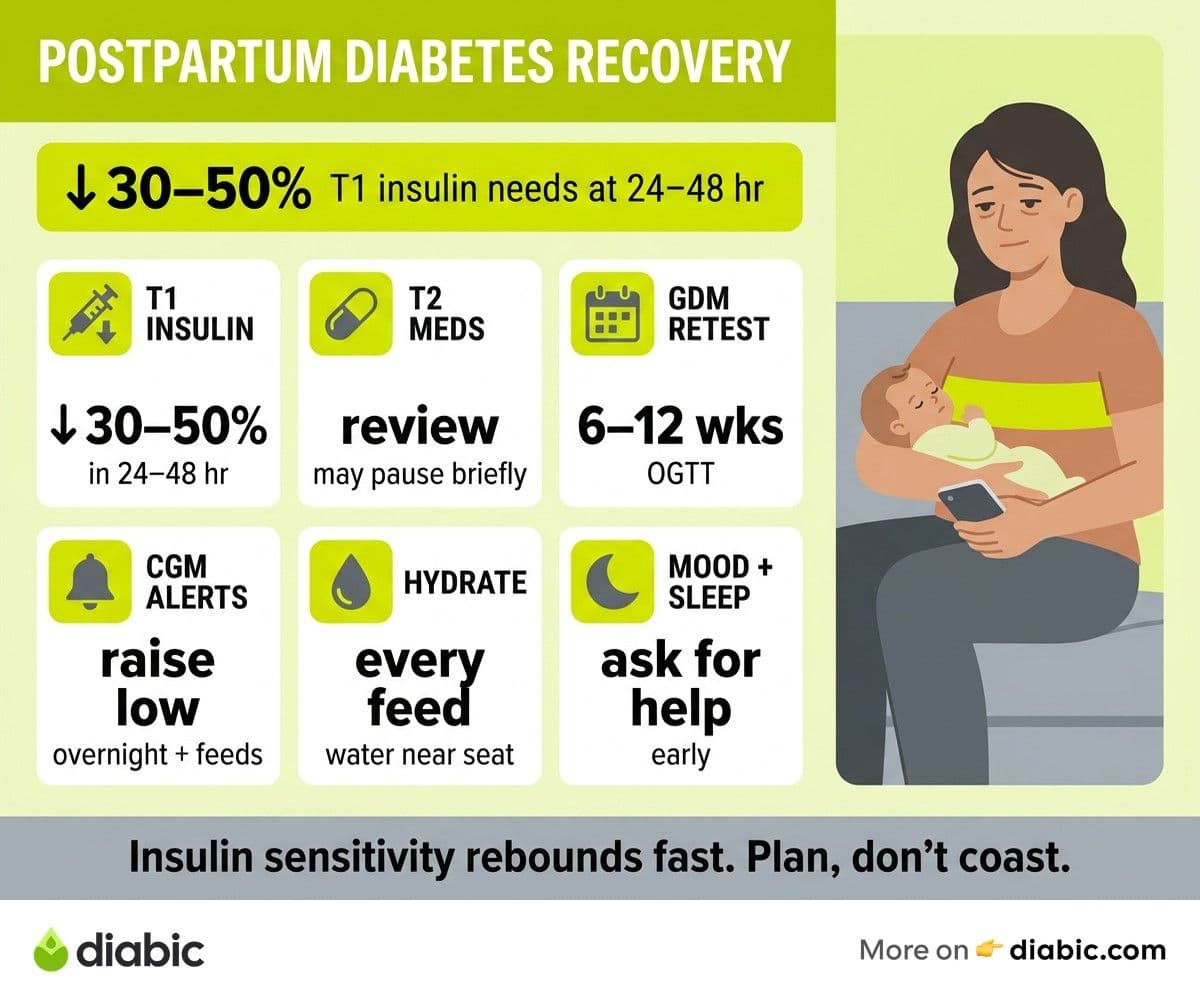
The placenta is the engine that drives much of pregnancy's insulin resistance, and once it leaves your body, the math changes fast. For people with type 1 diabetes, insulin needs can drop by 30 to 50 percent within the first 24 to 48 hours after delivery, sometimes more. Many endocrinologists adjust pump basals or long-acting insulin doses immediately at delivery, then again at 24 hours, then weekly as the body settles. If your team has not already shared a postpartum insulin plan, ask before you go home.
For type 2 diabetes, the picture varies. If you used insulin during pregnancy because oral medications were paused, your provider may transition you back to metformin or other oral options once you are stable, especially if you plan to breastfeed. Some people find their type 2 enters a quiet phase for weeks or months after delivery as insulin sensitivity improves. Others see blood sugar climb back toward pre-pregnancy levels. Either way, this is the moment to schedule a real follow-up rather than coast on assumptions.
Gestational diabetes follows a different arc. Blood sugar usually normalizes within hours or days of delivery for most people, since the hormonal driver is gone. That does not mean the story ends there. The American Diabetes Association recommends a postpartum oral glucose tolerance test at 4 to 12 weeks to check for persistent diabetes or prediabetes, because somewhere between 5 and 10 percent of women with gestational diabetes are diagnosed with type 2 diabetes immediately postpartum.
Hormonal swings keep the picture messy for everyone. Cortisol spikes, estrogen and progesterone drop, prolactin rises if you are breastfeeding, and thyroid function can wobble. All of this affects glucose. Expect more variability than usual for the first six to eight weeks, and lean on a continuous glucose monitor if you have one. Patterns that looked clean during late pregnancy will not necessarily hold.
Postpartum Testing and Follow-Up for Gestational Diabetes
If you had gestational diabetes, the single most important appointment of your fourth trimester is the postpartum glucose tolerance test. The American College of Obstetricians and Gynecologists recommends a 75-gram oral glucose tolerance test at 4 to 12 weeks postpartum, not just a fasting glucose check. The reason matters: a fasting test alone misses a meaningful portion of cases where post-meal blood sugar is the problem. Ask specifically for the OGTT if your provider only orders fasting labs.
The longer-term picture is what tends to surprise people. Women with a history of gestational diabetes have roughly a 50 percent lifetime risk of developing type 2 diabetes, according to the CDC. That is not a sentence, but it is a signal. Annual screening with an A1C or fasting glucose is recommended for life, with closer monitoring during the first decade after delivery and around any future pregnancies.
Lifestyle factors carry real weight here. Breastfeeding, weight stabilization in the first year postpartum, regular movement, and a gestational diabetes diet approach to carbohydrates can all measurably reduce future risk. None of this is about earning your way out of a diagnosis. It is about giving your body the easiest possible runway as you recover and as your future self enters perimenopause and beyond.
For people with type 1 or type 2 diabetes who are now postpartum, testing looks different. Resume your usual A1C cadence, schedule a dilated eye exam if pregnancy delayed it, and check thyroid function if you have not already. Postpartum thyroiditis affects roughly 5 to 10 percent of women in the first year after delivery and is more common in people with type 1. Ask about contraception planning at the same visit, since pregnancy spacing and method choice both affect blood sugar.
Managing Blood Sugar While Caring for a Newborn
Newborn care is fundamentally incompatible with the kind of structured day that makes blood sugar predictable. You will eat at strange hours, sleep in fragments, and forget when you last took a medication. Accepting that as the baseline is more useful than trying to engineer your way back to your old routine. The goal for the first 12 weeks is steady-enough numbers, not perfect ones.
Sleep deprivation does measurable things to glucose. Studies in the Diabetes Care journal link short sleep with elevated cortisol, increased insulin resistance, and stronger hunger cues for high-carb foods. You cannot eliminate the disruption, but you can plan around it. Pre-portion snacks that combine protein and slow carbs, keep glucose tabs at the bedside and in the diaper bag, and treat hypoglycemia at the first symptom rather than finishing a feed first.
Meal prep with a newborn looks different from meal prep before a newborn. Think one-handed foods that do not require attention: hard-boiled eggs, Greek yogurt with berries, cheese sticks, nut butter on whole-grain toast, leftover roasted vegetables and chicken. If breastfeeding and diabetes is part of your picture, you will likely need an extra 300 to 500 calories a day and may notice blood sugar drops during or after feeds. Small carb top-ups before nursing sessions help many people.
A few logistics that make a real difference in the first month:
- Stash a hypoglycemia kit in every room you might end up trapped in with a sleeping baby on your chest
- Set medication and insulin reminders on your phone, even if you have never needed reminders before
- Delegate the non-diabetes tasks ruthlessly: laundry, dishes, thank-you notes can wait
- Keep a simple log of feeds, meds, and any lows so you can spot patterns when your brain is too tired to do it in real time
Building a sustainable daily self-care routine in this season means lowering your standards on purpose. Two glucose checks at predictable times beat six scattered ones you forget to record. A 10-minute walk with the stroller beats a 45-minute workout you keep skipping.
Emotional Recovery and Mood
Postpartum mood changes are common in any new parent, and diabetes raises the stakes. Research published in Diabetic Medicine suggests women with diabetes are roughly twice as likely to develop postpartum depression as women without diabetes. Type 1, type 2, and gestational diabetes all show elevated risk, with the highest rates in people who used insulin during pregnancy.
A few reasons stack up. Hormonal shifts after delivery affect mood regulation directly. Sleep deprivation amplifies anxiety and depressive symptoms. The cognitive load of diabetes, counting carbs, dosing insulin, watching a CGM, does not pause for a newborn. And the quiet grief of a high-risk pregnancy, NICU time, or birth that did not go as planned can take months to surface.
The signals to watch for include persistent sadness, intrusive thoughts about harm, inability to sleep when the baby sleeps, panic around feeds or blood sugar checks, feelings of detachment from the baby, and anhedonia that lasts beyond two weeks. These are medical symptoms, not character flaws. The Edinburgh Postnatal Depression Scale is the standard screening tool, and most providers use it at the six-week visit. Ask for it earlier if you need to, and ask again at three and six months.
It also helps to name the difference between diabetes distress vs depression. Distress is the burnout specific to managing a chronic condition, and it responds to different interventions than clinical depression, including peer support and care-team adjustments. Both can coexist postpartum. Both deserve attention. Postpartum Support International maintains a free helpline at 1-800-944-4773 that can connect you to therapists familiar with chronic illness.
You are not failing if this season is harder than you expected. It is objectively harder with diabetes, and asking for help, mental health, lactation, endocrine, primary care, is a clinical decision, not a personal one.
Postpartum Diabetes Management: Planning for What Comes Next
The first six weeks are about stabilization. The next six months are about building a sustainable rhythm, and the year after delivery is when many people start thinking about future pregnancies, contraception, and longer-term diabetes goals. Each of those conversations belongs with your care team, but a few framing questions help.
For contraception, ask which methods are compatible with breastfeeding, your specific diabetes type, and any cardiovascular risk factors. Hormonal options affect blood sugar differently from copper IUDs, and the choice often shapes the next year of glucose patterns. For pregnancy spacing, the ACOG recommendation is generally at least 18 months between delivery and the next conception, with longer intervals often recommended for people with diabetes to allow for A1C optimization.
Postpartum diabetes management is a moving target, and the right plan at six weeks will not be the right plan at six months. Build in checkpoints with your endocrinologist or diabetes educator at 6 weeks, 3 months, 6 months, and a year. Bring data, bring questions, and bring honesty about what is actually working at home rather than what looks good on paper.
Frequently Asked Questions
What happens to diabetes after giving birth?
It depends on which type. Gestational diabetes usually resolves within hours to days as placental hormones leave your system, but follow-up testing at 4 to 12 weeks is essential because some cases progress to type 2 diabetes. Type 1 insulin needs typically drop sharply right after delivery and continue to shift over the following weeks, requiring close dose adjustments. Type 2 may quiet down temporarily or rebound to pre-pregnancy levels, and oral medications that were paused during pregnancy may be restarted depending on whether you are breastfeeding.
How do I manage blood sugar postpartum with a newborn?
Lower your expectations on structure and raise your expectations on simplicity. Pre-portion snacks that combine protein and slow carbs, keep hypoglycemia treatments in every room you might feed in, set medication reminders on your phone, and use a CGM if you have access to one. Sleep fragmentation will create variability you cannot eliminate, so focus on catching lows and highs early rather than preventing every fluctuation. Schedule a real follow-up with your endocrinologist or primary care provider in the first six weeks to recalibrate your plan.
When should I get tested after gestational diabetes?
The American Diabetes Association and ACOG both recommend a 75-gram oral glucose tolerance test at 4 to 12 weeks postpartum, not just a fasting glucose check. After that, annual screening with an A1C or fasting glucose is recommended for life because of the elevated lifetime risk of type 2 diabetes. Closer monitoring is reasonable in the first decade postpartum and around any future pregnancies, and folding those visits into your broader postpartum diabetes management plan keeps the timeline from slipping.
Dr. Rezwana Parvin Rumpa is an obstetrics and gynaecology specialist with clinical focus on gestational diabetes, PCOS, and fertility. She holds the MRCOG (Final Part) from the Royal College of Obstetricians and Gynaecologists in London, the MRCPI (Final Part) from the Royal College of Physicians of Ireland, and an MBBS from Shaheed Monsur Ali Medical College under Dhaka University. Dr. Rumpa serves as a Senior Medical Officer in the Obs and Gynae department at BRB Hospitals Ltd, where she has spent three years managing prenatal care, emergency obstetric cases, and women's-health surgery. On Diabic, she medically reviews content for women living with diabetes, with particular attention to pregnancy, PCOS, and reproductive-health intersections.
Medically reviewed by
Dr. Shanto Arian is an internal medicine physician now specializing in clinical and aesthetic dermatology, with a parallel academic focus on epidemiology and public health. He holds an MBBS, MPH, MSc (UK), MRCP (UK), MRCPI (Ireland), Diploma in Dermatology (UK), and Diploma in Aesthetic Medicine (USA). Dr. Arian trained in internal medicine, including hospital work on hematology cases such as graft-versus-host disease, before moving toward dermatology. Skin is one of the earliest places diabetes shows itself, from acanthosis nigricans and diabetic dermopathy to slow foot wound healing, and that intersection is where his clinical and Diabic-review work meet. On Diabic, Dr. Arian medically reviews content on diabetes diagnosis, complications, dermatologic manifestations, and pharmacotherapy, ensuring every claim aligns with current ADA, NICE, and peer-reviewed literature.
More from Living with Diabetes
View all
A Gentle Chair Yoga Routine for people with diabetes
A gentle chair yoga for people with diabetes routine with safe poses, modifications for neuropathy, retinopathy, and joint pain, plus tips for older.

Shift Work and Diabetes: Managing Irregular Hours
Shift work and diabetes is a tough combination. Learn how to manage meals, sleep, medication, and blood sugar when your hours rotate or flip overnight.

Dating with Diabetes: When to Tell a New Partner
Dating with diabetes brings unique disclosure questions. Here is when to tell a new partner, what to say, and how to handle the conversation with.
Clinician-reviewed habits, plain-language guides, and honest answers - the small shifts that make living with diabetes feel lighter, every day.