Libido and Blood Sugar: What's the Real Connection?
Libido and blood sugar are linked through hormones, nerves, and mood. Here is what changes with diabetes and what actually helps bring desire back.

In this article(9)
If your sex drive has quietly faded since your diabetes diagnosis, or if it dips when your numbers run high for a few days, you are not imagining the pattern. The relationship between libido and blood sugar is real, well documented, and rarely talked about in a fifteen minute appointment. Most people leave the doctor's office with a new prescription and a vague promise that things will settle, never knowing that desire itself can rise and fall with glucose.
We hear from people who feel selfish for wanting their old sex life back when there is so much else to manage. That feeling makes sense, and it also misses the point. Sexuality is part of how you live in your body, and your body is exactly what diabetes touches first. Treating low desire as a side issue keeps the real causes hidden, when most of them are addressable once you know where to look.
From my experience: A few years into using a CGM, I started noticing the connection in real time. After a week of nights spent fighting a 230 with stacked corrections, my interest in much of anything, including sex, was gone. After a stretch of flatter Dexcom curves and decent sleep, it came back without me trying. The graphs made it impossible to keep telling myself it was all in my head, even though for years that was the easier story.
How Blood Sugar Affects Hormones and Libido
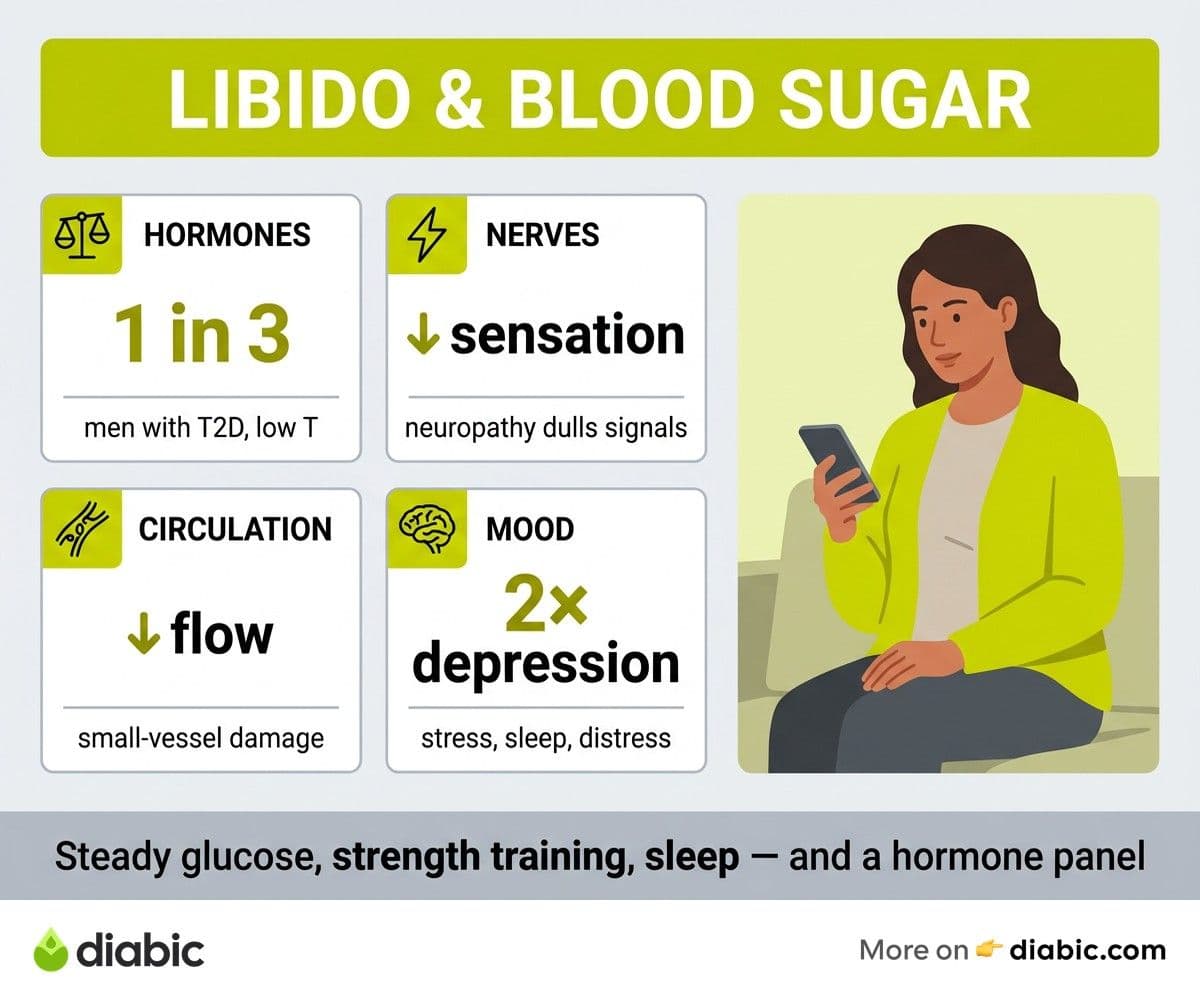
The connection between libido and blood sugar starts with hormones, and hormones do not work in isolation. Chronic high glucose suppresses testosterone in men, and roughly one in three men with type 2 diabetes have low testosterone levels according to research published in Diabetes Care. In women, insulin resistance shifts estrogen and androgen ratios, often through the same pathways that drive polycystic ovary syndrome. The result on either end is a quieter signal telling your brain and body that sex is worth the energy.
There is also a protein called sex hormone binding globulin, or SHBG, that decides how much of your sex hormones are actually free to do their job. Insulin resistance lowers SHBG, which sounds like it would free up more hormones, but in practice it disrupts the balance and is associated with reduced libido in both sexes. The Endocrine Society flags this in its guidance on metabolic and reproductive health, recommending that hormone panels be considered when sexual symptoms appear alongside elevated glucose.
Blood sugar variability matters as much as the average. A day with two big swings can leave you feeling wrung out, irritable, and uninterested in anything that requires mental presence, sex included. Even people with an A1C in range describe this. If your numbers are stable on paper but you ride a roller coaster between meals, your libido is likely paying part of the bill.
The Role of Neuropathy and Circulation
Desire starts in the brain, but arousal lives in the nerves and blood vessels, and diabetes affects both. Diabetic neuropathy can dull the genital sensation that helps the body shift from interest to arousal, and it tends to develop slowly enough that people adapt without noticing what they have lost. For more on this pattern, see our piece on erectile dysfunction and diabetes, which covers how nerve and vascular changes show up first in men but follow similar mechanisms in women.
Circulation is the other half. Erections, clitoral engorgement, and vaginal lubrication all rely on healthy blood flow, and the same small vessel damage that threatens your eyes and kidneys can affect the pelvic vasculature. The National Institute of Diabetes and Digestive and Kidney Diseases notes that sexual problems are among the most common, and most underreported, complications of diabetes.
These changes are progressive, which is the part nobody wants to hear and also the part that gives you uses. Earlier and steadier blood sugar management slows nerve and vessel damage, and in some cases the body recovers function it had quietly given up. Treatments exist for both nerve related and circulation related issues, including PDE5 inhibitors, pelvic floor therapy, vacuum devices, and topical estrogen for women dealing with vaginal changes. None of this is a lost cause unless you treat it as one.
Psychological Factors That Reduce Desire
Living with diabetes is mentally expensive, and the bill often comes due in the bedroom. Diabetes related stress, anxiety, and depression are all linked to lower libido in research, and the rates of depression in people with diabetes are roughly double those in the general population. Our guide on how diabetes anxiety affects blood sugar walks through the loop where worry drives glucose up and rising glucose drives more worry, which leaves very little room for desire.
Body image is another quiet contributor. Weight changes, insulin pumps clipped to a waistband, continuous glucose monitor sensors visible on an arm, the small bruises from finger sticks and injections, all of it can make people feel less at home in their own skin. The American Psychological Association has good resources on the link between chronic illness and sexual self image, and the short version is that this is a normal grief, not a personal failing. Naming it helps. Hiding it does not.
Relationship dynamics also shift when diabetes shows up. A partner who starts asking about your numbers at every meal can slide from supportive into something that feels more like a parent, and that role is rarely sexy. Performance anxiety adds another layer, especially after a low during sex or an unexpected high afterwards. For a deeper look at how to talk through this with a partner, our piece on sex and diabetes covers practical scripts and habits that take the pressure down.
Strategies to Reset Libido and Blood Sugar Together
The honest answer is that there is no single fix, because libido is multifactorial and so is diabetes. What helps is treating the contributors as a stack rather than chasing one cause at a time. Start with blood sugar variability, since stable glucose is the foundation that makes the other changes possible. If you are not already tracking, consider whether a continuous glucose monitor would surface patterns you cannot see from finger sticks alone, especially around stress, sleep, and the hours after meals.
Movement is the next lever, and the research here is unusually strong. Regular exercise raises testosterone, lifts mood, improves circulation, and sharpens insulin sensitivity, all of which feed directly back into desire and arousal. You do not need a gym membership or a structured program. Walking briskly most days, adding two short strength sessions a week, and getting enough sleep covers most of what the studies actually measured. Sleep alone is worth highlighting, because sleep deprivation crashes testosterone in men within a single week and disrupts cycle related hormones in women.
Then comes the medical conversation, which most people skip. Bring sexual symptoms to your endocrinologist or primary care provider directly, and ask three things specifically. First, can we check testosterone, estrogen, SHBG, and thyroid? Second, are any of my current medications, especially blood pressure drugs and SSRIs, contributing to this? Third, is a referral to a urologist, gynecologist, or pelvic floor physical therapist appropriate? You may need to bring it up more than once before it lands as a real problem rather than a soft complaint.
Finally, address the emotional layer with the same seriousness you give the physical one. Therapy, especially with someone who works with chronic illness or sexual health, often does more for desire than any supplement on the market. Couples counseling helps when the dynamic has shifted into caregiver and patient. Talking openly with your partner about what feels different, what still works, and what you are willing to try changes more than people expect.
Frequently Asked Questions
Does blood sugar affect sex drive?
Yes, and the link runs through hormones, energy, mood, and nerve and vessel function. High blood sugar suppresses testosterone in men and disrupts estrogen and androgen balance in women, while glucose swings produce the kind of fatigue and irritability that crowd out desire. Over time, nerve and circulation changes from chronically elevated glucose also reduce the physical signals that drive arousal. Stabilizing blood sugar will not always restore libido on its own, but it removes a common and reversible piece of the puzzle.
How do blood sugar swings affect libido?
Swings hit libido in two ways. Acutely, a high or low leaves you depleted, foggy, and physically uncomfortable, none of which pairs well with intimacy, especially if a low has interrupted sex in the past. Chronically, frequent swings drive cortisol and inflammation upward, which suppresses sex hormone production and contributes to the same metabolic patterns that lower SHBG. People who reduce their time outside range often report that desire returns gradually within weeks, even before any other change.
Hormonal Changes from Diabetes: Men and Women?
In men, type 2 diabetes is strongly associated with low testosterone, and the relationship runs in both directions, with low testosterone also predicting future insulin resistance. In women, insulin resistance disrupts the hypothalamic pituitary ovarian axis, contributing to irregular cycles, lower estrogen at certain points, and androgen excess in others. Menopause layers on top of all of this and accelerates some of the same changes. A full hormone panel is reasonable to request when sexual symptoms appear alongside diabetes, and our guide on hormonal changes from diabetes walks through what to ask for and how to interpret results.
The Role of Neuropathy?
Neuropathy in the autonomic and small fiber nerves can reduce genital sensation, lubrication signaling, and the reflexes that produce erections and orgasms. It often shows up first as numbness, reduced intensity of orgasm, or a longer time to arousal, rather than as obvious pain. Earlier glucose management slows progression, and pelvic floor therapy, topical treatments, and medications can compensate for some of what is lost. If sensation has changed noticeably over six to twelve months, it is worth bringing up with a provider rather than waiting.
The thread that runs through all of this is that libido and blood sugar are rarely separate problems. Desire is the place where your hormones, nerves, sleep, mood, relationship, and glucose meet, and when one of those is off, the others tend to show it here first. That is good news, because it means you have many more entry points than the single line of treatment most clinics offer. Start with the one that feels least overwhelming this week, and bring the rest into a real conversation with your provider rather than carrying it alone.
Shahriar P. Shuvo is the founder of Diabic. He has lived with diabetes for over 14 years, and built Diabic to deliver the practical, evidence-based self-management tools he wished existed when he was first diagnosed. By trade, Shahriar is a senior design and frontend engineer with 6+ years shipping products at Agora, Timescale (now Tiger Data), and ShareTrip. He writes from the intersection of lived diabetes experience and product craft, focused on what works in daily management rather than what sounds good in a textbook.
Medically reviewed by
Dr. Rezwana Parvin Rumpa is an obstetrics and gynaecology specialist with clinical focus on gestational diabetes, PCOS, and fertility. She holds the MRCOG (Final Part) from the Royal College of Obstetricians and Gynaecologists in London, the MRCPI (Final Part) from the Royal College of Physicians of Ireland, and an MBBS from Shaheed Monsur Ali Medical College under Dhaka University. Dr. Rumpa serves as a Senior Medical Officer in the Obs and Gynae department at BRB Hospitals Ltd, where she has spent three years managing prenatal care, emergency obstetric cases, and women's-health surgery. On Diabic, she medically reviews content for women living with diabetes, with particular attention to pregnancy, PCOS, and reproductive-health intersections.
More from Living with Diabetes
View all
A Gentle Chair Yoga Routine for people with diabetes
A gentle chair yoga for people with diabetes routine with safe poses, modifications for neuropathy, retinopathy, and joint pain, plus tips for older.

Shift Work and Diabetes: Managing Irregular Hours
Shift work and diabetes is a tough combination. Learn how to manage meals, sleep, medication, and blood sugar when your hours rotate or flip overnight.

Dating with Diabetes: When to Tell a New Partner
Dating with diabetes brings unique disclosure questions. Here is when to tell a new partner, what to say, and how to handle the conversation with.
Clinician-reviewed habits, plain-language guides, and honest answers - the small shifts that make living with diabetes feel lighter, every day.