Breastfeeding and Diabetes: What You Need to Know
Breastfeeding and diabetes can work beautifully together. Here is what to expect with blood sugar, insulin needs, hypo risk, medication safety, and.

In this article(10)
If you are weighing whether to breastfeed after a pregnancy that involved diabetes, we want to start with the most important point. Breastfeeding and diabetes are a strong pairing, not a conflict. Your milk gives your baby an exceptional start, and the act of nursing offers your body a gentle metabolic reset that often improves blood sugar in the months after birth.
That said, breastfeeding does change the rules a bit. Your insulin needs may shift, hypoglycemia risk goes up during feeds (especially overnight), and a few medications need a second look once you are nursing. We will walk through what to expect, how to plan for it, and the small habits that make those first months easier.
How Breastfeeding and Diabetes Interact in the First Months
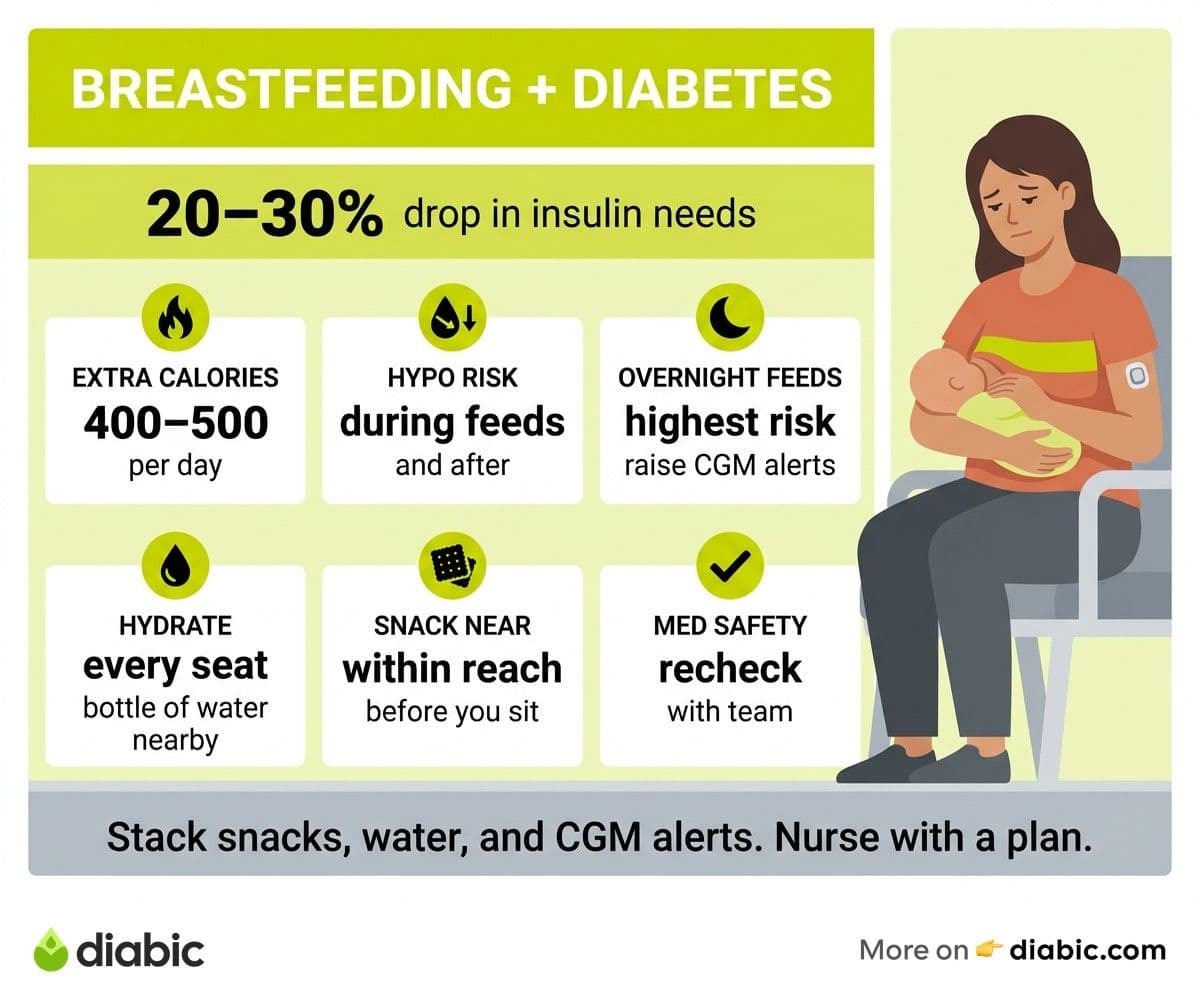
Producing breast milk is metabolically expensive. Your body burns through roughly 400 to 500 extra calories a day to make milk, and a meaningful share of that energy comes from glucose pulled out of your bloodstream. Many parents notice their numbers running lower than expected for the first few weeks, particularly during and right after feeds. The American Diabetes Association's pregnancy and lactation guidance notes that insulin requirements can drop by 20 to 30 percent compared with pre-pregnancy doses, sometimes more in the early weeks.
This drop is part of why breastfeeding tends to lower long-term type 2 diabetes risk for the parent, even after weaning. It is also why a feed at 3 a.m. can pull blood sugar into hypo territory before you realize what is happening. Setting up your environment for that reality (snacks within arm's reach, slightly higher CGM low alerts, a glass of water at the bedside) prevents most surprises.
Hydration deserves its own mention. Breastfeeding pulls a remarkable amount of fluid from your body, and dehydration can mimic or worsen blood sugar swings. Keeping a bottle of water near every place you nurse is not optional. If you are still navigating the recovery side of birth itself, our postpartum recovery guide for diabetes covers the broader picture of what your body is doing in those first weeks. Parents who managed pregnancy with type 1 diabetes often see the steepest insulin shifts after birth and benefit from frequent contact with their endocrinology team during the transition.
Insulin Needs and Blood Sugar Targets While Nursing
If you used insulin during pregnancy, expect your needs to drop sharply right after delivery and then settle into a new pattern over the following weeks. Many parents who needed two or three times their pre-pregnancy dose during the third trimester find themselves below their pre-pregnancy dose during early lactation. This is normal physiology, not a sign that something is off.
Blood sugar targets while nursing are generally a touch higher than the tight pregnancy targets you may have grown used to. The NIDDK postpartum diabetes guidance and most endocrinology teams aim for fasting numbers in the 90 to 120 mg/dL range and post-meal numbers under 180 mg/dL during breastfeeding, though your team will tailor this based on your history. Aiming too low risks repeated hypos that disrupt feeds and recovery alike.
Hypoglycemia patterns are worth tracking actively. Many parents notice a reliable dip about 30 to 60 minutes after the start of a long feed, especially overnight. CGM data is gold here. Watching the trend across a week often reveals a feeding-time pattern that you can prevent with a small snack rather than chase with juice. If you find yourself running low at the same time every night, our piece on why blood sugar drops at night and how to prevent it gives you a framework for adjusting.
If your team adjusted blood sugar targets during pregnancy, the postpartum window is a good time to revisit them. Targets shift again as feeds become shorter, longer, more frequent, or less frequent, so checking in every few weeks during the first three months pays off.
Medications and Breastfeeding Safety
Insulin is the most lactation-friendly diabetes medication available. The molecule is too large to pass into breast milk in any meaningful amount, which is why endocrinologists routinely keep parents on insulin through breastfeeding without concern. The NIH LactMed database entry on insulin confirms that insulin is considered safe during lactation.
Metformin is generally considered compatible with breastfeeding as well. Small amounts pass into milk, but research has not shown harm to nursing infants at typical adult doses. Your provider will weigh your specific situation, including kidney function and any ongoing gestational diabetes care, before resuming or adjusting it. We do not recommend specific dosing decisions in either direction, because those belong to a conversation with your team.
Several other diabetes and adjacent medications need a closer look during lactation. SGLT2 inhibitors, GLP-1 receptor agonists, statins, and certain blood pressure medications may be paused or swapped while you are nursing. The LactMed database is a free, searchable resource that summarizes the lactation evidence for almost every medication you can think of, and it is the same source many providers consult. Bring your full medication list to your six-week postpartum appointment, including over-the-counter products and supplements, and ask which to keep, which to pause, and which to swap.
Nutrition for Breastfeeding Mothers With Diabetes
Eating well during lactation looks similar to eating well during pregnancy, with a few notable adjustments. You need roughly 450 to 500 extra calories a day to support milk production, and the quality of those calories matters as much as the quantity. Lean protein, whole grains, healthy fats, and fiber-rich vegetables stabilize blood sugar while giving your body what it needs to make milk.
Spreading food across the day prevents both highs and lows. Three meals plus two or three snacks usually works better than two large meals, especially during the cluster-feeding weeks when your baby seems to want milk every hour. Pair carbs with protein or fat to slow the rise, and keep a snack near your nursing chair so you never end a feed wondering whether you should eat. Many of the principles from a gestational diabetes friendly eating pattern translate well to lactation, particularly the emphasis on fiber and protein at every meal.
Nighttime feeds deserve a small ritual of their own. A pre-feed snack of about 15 to 20 grams of slow carbs paired with a little protein (think whole-grain toast with peanut butter, or a small bowl of Greek yogurt with berries) prevents most overnight lows without spiking morning numbers. If you wake to feed already feeling shaky, a faster-acting source like a small glass of milk or a few crackers handles the moment, and you can fine-tune the bedtime snack the next day.
Hydration once again earns repeated mention. Aim for at least eight to ten glasses of water daily, more in hot weather or if your milk supply is on the lower side. Caffeine in moderate amounts is fine, but heavy caffeine can dehydrate you and disrupt baby sleep. Alcohol guidance is its own conversation worth having with your provider.
Practical Tips for Day-to-Day Breastfeeding With Diabetes
The smaller habits often determine whether breastfeeding feels sustainable. We have gathered a handful of the ones that come up most often in conversations with parents who have done this well, including those navigating breastfeeding after pregnancy with type 1 diabetes.
- Set up nursing stations. Wherever you nurse most often, keep fast-acting glucose, a snack, water, and your phone within reach. You should never need to leave the chair to treat a low.
- Raise your CGM low alert. Many endocrinologists suggest moving the low alert from 70 to 80 mg/dL while breastfeeding, because the few extra minutes of warning matter when you are holding a baby.
- Check before, during, and after feeds for the first two weeks. This sounds excessive, and it is, briefly. Two weeks of close data builds the personal pattern that lets you stop checking so often once you trust it.
- Plan for cluster feeding. Babies sometimes nurse every 30 to 60 minutes for hours at a stretch, especially during growth spurts. A bigger snack or a small meal at the start of a cluster session prevents the cumulative blood sugar drop.
- Treat fed as the goal, not exclusively breastfed. Combination feeding with formula is a valid choice if breastfeeding is not working, and it does not erase the benefits of the milk you have already given. Resources from the La Leche League's support for mothers with chronic conditions can help you decide what works for your family.
If sleep deprivation is hitting blood sugar harder than feeds are, sharing nighttime duties (pumped milk, formula top-ups, a partner who handles changing) can preserve your overnight metabolism. There is no medal for doing it all alone.
Looking Ahead Past the Newborn Stage
As your baby grows, feeds typically become more efficient and predictable. Many parents find that by three to four months, blood sugar patterns settle into a new normal that is much easier to manage than the chaotic early weeks. By the time solid foods enter the picture, milk volume drops and insulin needs creep back toward pre-pregnancy levels.
Weaning is its own transition. Doing it gradually, over weeks rather than days, gives your body time to adjust insulin and your breasts time to slow milk production comfortably. Sudden weaning can spike blood sugar and trigger mastitis, neither of which you want. Touch base with your endocrinologist before and during the wean so dose changes follow your milk supply rather than chasing it.
The benefits of breastfeeding and diabetes management together extend well past the nursing months. Studies from organizations like the American Academy of Pediatrics and ongoing diabetes research suggest that breastfeeding modestly lowers your child's lifetime risk of obesity and type 2 diabetes, while reducing your own long-term risk as well. Whatever path your feeding takes, you have already done a great deal of careful work to get here.
Frequently Asked Questions
How does breastfeeding affect blood sugar with diabetes?
Breastfeeding lowers blood sugar in two ways. The act of producing milk burns extra glucose, and the hormonal shifts after birth often increase insulin sensitivity. Many parents need 20 to 30 percent less insulin during early lactation than they did before pregnancy. Hypoglycemia risk rises, especially during and right after long feeds and overnight, so most providers recommend slightly higher CGM low alerts and a planned snack at the start of nighttime feeds.
Is it safe to breastfeed with diabetes?
Yes. Breastfeeding is encouraged for parents with type 1, type 2, and gestational diabetes, and major medical bodies like the ADA, ACOG, and AAP support nursing as a healthy choice. Insulin is safe during lactation, and metformin is generally considered compatible. A few other diabetes-related medications need review with your provider, so bring a full list to your postpartum visits. As with any health decision, work with your team to tailor the plan to your situation.
How quickly do insulin needs change after birth if I am breastfeeding?
The biggest drop usually happens within the first 48 hours after delivery, with further adjustments over the following weeks. Many parents end up below their pre-pregnancy doses during the early months of breastfeeding. Frequent communication with your endocrinologist during the first six to eight weeks helps you avoid both highs and severe lows as your body settles into its new rhythm.
The honest summary on breastfeeding and diabetes is that it is doable, supported by every major medical body, and worth the early work to dial in. Lean on your endocrinology, lactation, and pediatric teams in the first weeks, and let the rhythms of feeds and dose adjustments settle into something sustainable rather than something perfect.
Dr. Rezwana Parvin Rumpa is an obstetrics and gynaecology specialist with clinical focus on gestational diabetes, PCOS, and fertility. She holds the MRCOG (Final Part) from the Royal College of Obstetricians and Gynaecologists in London, the MRCPI (Final Part) from the Royal College of Physicians of Ireland, and an MBBS from Shaheed Monsur Ali Medical College under Dhaka University. Dr. Rumpa serves as a Senior Medical Officer in the Obs and Gynae department at BRB Hospitals Ltd, where she has spent three years managing prenatal care, emergency obstetric cases, and women's-health surgery. On Diabic, she medically reviews content for women living with diabetes, with particular attention to pregnancy, PCOS, and reproductive-health intersections.
Medically reviewed by
Dr. Shanto Arian is an internal medicine physician now specializing in clinical and aesthetic dermatology, with a parallel academic focus on epidemiology and public health. He holds an MBBS, MPH, MSc (UK), MRCP (UK), MRCPI (Ireland), Diploma in Dermatology (UK), and Diploma in Aesthetic Medicine (USA). Dr. Arian trained in internal medicine, including hospital work on hematology cases such as graft-versus-host disease, before moving toward dermatology. Skin is one of the earliest places diabetes shows itself, from acanthosis nigricans and diabetic dermopathy to slow foot wound healing, and that intersection is where his clinical and Diabic-review work meet. On Diabic, Dr. Arian medically reviews content on diabetes diagnosis, complications, dermatologic manifestations, and pharmacotherapy, ensuring every claim aligns with current ADA, NICE, and peer-reviewed literature.
More from Living with Diabetes
View all
A Gentle Chair Yoga Routine for people with diabetes
A gentle chair yoga for people with diabetes routine with safe poses, modifications for neuropathy, retinopathy, and joint pain, plus tips for older.

Shift Work and Diabetes: Managing Irregular Hours
Shift work and diabetes is a tough combination. Learn how to manage meals, sleep, medication, and blood sugar when your hours rotate or flip overnight.

Dating with Diabetes: When to Tell a New Partner
Dating with diabetes brings unique disclosure questions. Here is when to tell a new partner, what to say, and how to handle the conversation with.
Clinician-reviewed habits, plain-language guides, and honest answers - the small shifts that make living with diabetes feel lighter, every day.