How to Build a Daily Self-Care Diabetes Routine
Build a daily self care diabetes routine that works in real life, with morning, midday, and evening steps to keep blood sugar steady and habits sticking.

In this article(16)
Managing diabetes every single day without a daily self care diabetes routine is like navigating without a map. You might get where you are going eventually, but a consistent routine saves energy, reduces decision fatigue, and keeps your blood sugar more predictable. The trick is building a structure flexible enough to survive busy weeks without falling apart.
This guide walks through a morning-to-night flow you can adapt to your work schedule, family life, and treatment plan. Each section is short on theory and heavy on what to actually do, so you can pick the parts that fit and skip what does not.
Morning Routine: Start Your Day Right
The first hour after waking sets the tone for your entire blood sugar day. A consistent morning sequence lets you spot problems early, take medications on time, and give your body the steady fuel it needs. The CDC's diabetes self-management page lists morning glucose checks and consistent medication timing as two of the highest-impact habits for daily management.
Check your blood sugar first thing, before coffee or food, while you are still in bed or at the bedside. This fasting reading tells you how your overnight insulin or medication worked and gives you a baseline to plan breakfast. Compare it against your target range from your care team and make a quick mental note if it is consistently high or low across several mornings, since patterns matter more than one number.
Take morning medications at the same time every day, ideally within a 30-minute window. Set a phone alarm with a label that says exactly which dose, since most people take more than one medication and the brain skips details when half asleep. If your medication needs to be taken with food, pair the alarm with breakfast prep so the two happen together.
Eat a balanced breakfast that includes protein, fiber, and healthy fat alongside any carbohydrates. Eggs with whole-grain toast, Greek yogurt with berries and nuts, or a smoothie with protein powder, spinach, and a small amount of fruit all keep blood sugar steadier than cereal alone. Refer to a normal blood sugar chart to check whether your post-breakfast number falls in the range your provider recommends.
Brief morning movement, even 10 minutes of walking or light stretching, helps with morning glucose and the dawn phenomenon many people with diabetes experience. You do not need a gym session before work to see benefits, and consistency beats intensity for daily blood sugar levels. If you run into diabetes fatigue most mornings, talk to your provider about timing changes that may help.
A 10-minute morning sequence that fits any schedule
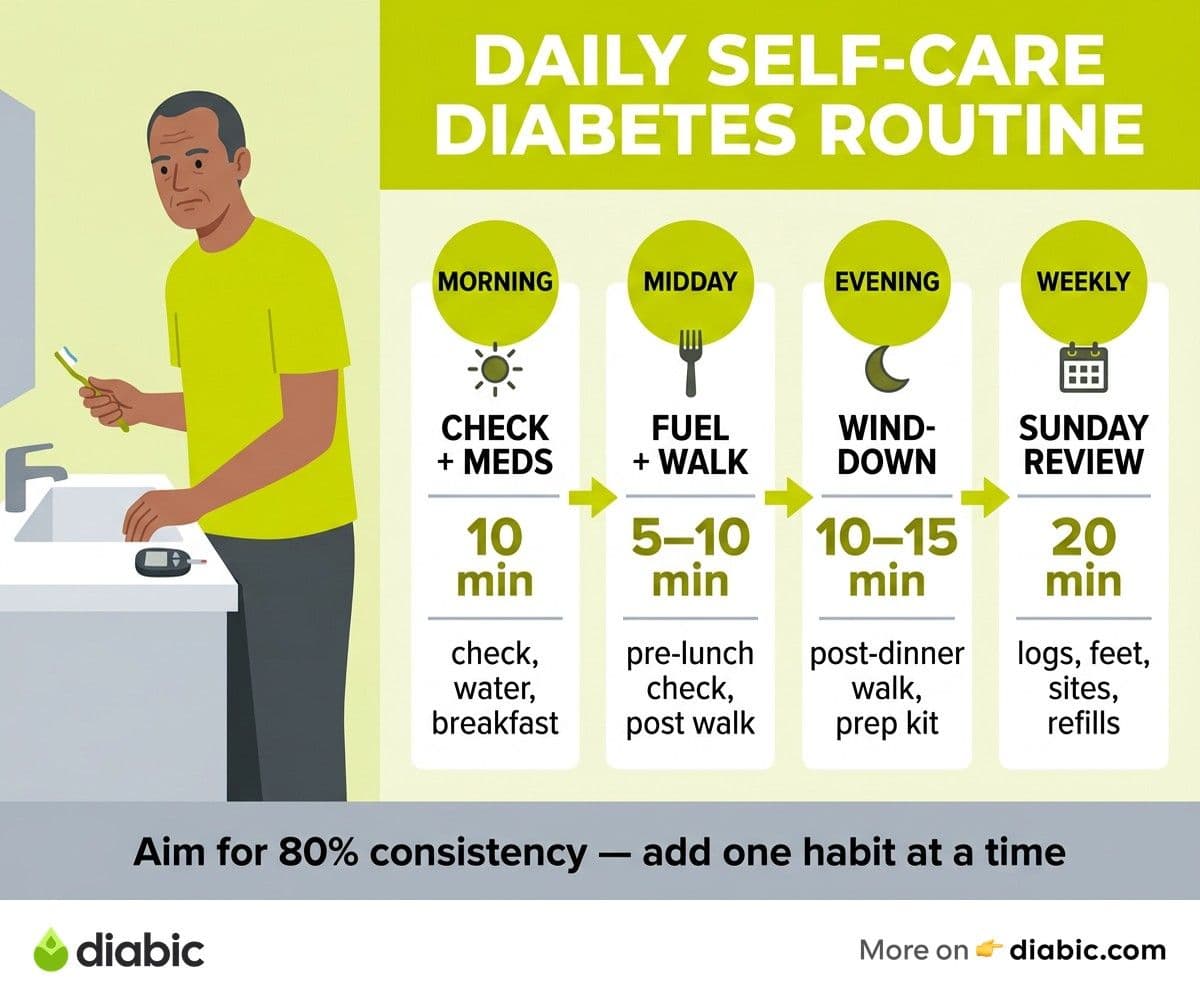
Wake up, check blood sugar, drink a glass of water, take medication if scheduled, and eat a balanced breakfast within 30 to 60 minutes. Add a five to ten minute walk if your schedule allows, or stack stretching with brushing your teeth. Repeat the same order daily until it feels automatic.
Midday Check-In: Staying Steady Through Work
Workdays are where most diabetes routines fall apart, especially when meetings run long and lunch gets pushed to 2 PM. A simple midday check-in protects you from the spikes and crashes that come from skipped meals, caffeine on an empty stomach, and sitting for hours. Managing diabetes at work goes deeper on workplace-specific tactics, but a few daily habits cover most of it.
Check your blood sugar before lunch, especially if you take mealtime insulin or medications that work with food. The pre-lunch reading helps you dose appropriately, recognize if morning insulin is wearing off, and catch a low before it gets worse. Set a recurring calendar block at the same time every day so colleagues learn to schedule around it.
Eat a balanced lunch and avoid skipping meals, even when work feels chaotic. Skipping lunch and "powering through" tends to cause an afternoon crash followed by overeating at dinner, which spikes evening blood sugar levels. Pack a backup option, an apple with peanut butter, a string cheese, or a protein bar, in case the day gets away from you.
Stay hydrated throughout the morning and afternoon. Dehydration raises blood sugar by concentrating glucose in the bloodstream, and many people who think they are hungry in the afternoon are actually thirsty. Keep a water bottle on your desk, refill it twice before lunch, and treat coffee and tea as supplements to water rather than replacements.
Take a short walk after lunch when you can, even for five to ten minutes. A post-meal walk lowers post-lunch glucose by helping muscles use circulating sugar for fuel, and it doubles as a mental reset before the afternoon stretch. If you cannot leave the building, walking the stairs or doing a few laps around the office floor counts.
What to do when your day blows up
When meetings or travel break the routine, fall back to two non-negotiables: check blood sugar and eat something with protein and fiber within the next 90 minutes. The other steps can slide on a busy day, but skipping these two is what turns a hectic afternoon into a 250 mg/dL evening reading.
Evening Wind-Down: Setting Up for a Good Night
Evening is where tomorrow's blood sugar starts. The choices you make in the three hours before bed, food, movement, and medication timing, shape your overnight numbers and your morning fasting reading. A predictable wind-down sequence is one of the highest-uses parts of any diabetes routine.
Check your blood sugar after dinner, ideally one to two hours after the meal. The post-dinner reading shows how your insulin or medication handled the meal and gives you a chance to course-correct before bed. If you consistently see high readings after dinner, talk to your provider about meal composition, dose timing, or whether a sleep and blood sugar connection factor like late eating may be contributing.
Light activity after dinner, a 10 to 15 minute walk or gentle stretching, lowers post-meal glucose and helps with sleep quality. The evening walk does not replace structured exercise, but it produces real metabolic benefits and signals to your body that the day is winding down. Walking with a partner, listening to a podcast, or pairing the walk with calling a family member makes it stick longer than discipline alone.
Prep your supplies for the next day before you go to bed. Lay out your insulin pen, test strips, lancets, snacks for treating lows, and any backup supplies, so the morning routine starts with everything in place. People who pack their next-day kit at night report fewer skipped doses and missed checks, especially on early-morning workdays.
A consistent bedtime supports your circadian rhythm and morning glucose, and the connection between sleep and blood sugar runs in both directions. Aim for the same sleep window seven days a week, within a 30 to 60 minute range, and protect it from late-night scrolling. Sleep deprivation raises insulin resistance the next day, which makes morning numbers harder to manage.
A simple wind-down checklist for the last hour before bed
Check blood sugar one final time, take any evening medication on schedule, lay out tomorrow's supplies, drink a small glass of water, and dim the lights to signal your brain that sleep is coming. Skip late caffeine and high-carb snacks unless you are correcting a low. Aim for the same lights-out time most nights of the week.
Weekly Self-Care Tasks That Protect the Daily Routine
A daily routine catches the small stuff, but a weekly check-in catches the patterns the daily routine cannot see. The Association of Diabetes Care and Education Specialists' AADE7 self-care behaviors framework describes weekly review as a core habit for people managing diabetes, alongside daily monitoring and medication adherence.
Review your blood sugar logs for patterns once a week. Look for repeating high or low readings at the same time of day, days where everything went sideways, and trends across multiple days. Most CGM apps generate weekly reports automatically, and even paper logs reveal patterns when you scan them on Sunday evening with a cup of tea.
Refill medications and supplies before you run out. Set a calendar reminder on the day you would normally hit a one-week supply remaining, since pharmacy delays and insurance prior authorizations can stretch a "tomorrow" refill into a five-day gap. The same logic applies to CGM sensors, pump infusion sets, and lancets.
Foot checks belong on the weekly list, not the monthly one, especially if you have had diabetes for several years. Look for blisters, cuts, redness, calluses, and any changes in skin color or temperature. People with reduced sensation in their feet often miss small wounds, and weekly inspection catches problems before they become serious.
Skin and injection site checks matter for anyone using insulin or other injectable medications. Rotate sites systematically across your abdomen, thighs, and arms, and watch for lipohypertrophy, the thickened lumps that develop from overusing the same spot. Rotation extends the life of usable injection real estate and keeps absorption consistent.
A 20-minute Sunday self-care block
Pick one fixed time each week, like Sunday evening, and run through five tasks: review blood sugar logs, check medication and supply stock, inspect feet, inspect injection sites, and write down anything to discuss at your next provider appointment. Twenty minutes a week prevents most of the middle-of-the-night problems people end up calling their care team about.
Building Habits That Stick
Knowing what to do is different from doing it consistently, and habit science offers practical tools that work with your existing routines rather than against them. Research published in journals like the Journal of Behavioral Medicine shows that small, repeated behaviors tied to existing cues stick far better than ambitious lifestyle overhauls. The science aligns with what people with diabetes already know from experience.
Start with one new habit at a time and let it run for at least three weeks before adding another. Trying to add morning glucose checks, evening walks, foot inspections, and meal logging in the same week guarantees that nothing sticks. Pick the single habit that would have the biggest impact on your blood sugar levels right now, and protect that one until it feels automatic.
Tie new diabetes tasks to existing routines using a technique called habit stacking. Brush teeth, then check blood sugar. Pour morning coffee, then take medications. Sit down to dinner, then dose insulin. The existing habit becomes the cue, and the new task piggybacks on a behavior your brain already runs without thinking.
Use phone alarms and app reminders for the first 30 days of any new diabetes routine. The alarms feel annoying at first, but they offload memory and let you stop relying on willpower. Most people can drop the alarms after a month, once the new behavior becomes automatic, but some people choose to keep them indefinitely. Both approaches are valid.
Track your consistency, not perfection. Aim for 80 percent on most habits and treat the missed days as data, not failure. People who track perfect-or-nothing tend to abandon routines after the first slip, while people who aim for a high consistency rate keep going for years. The ADA's standards of care emphasize sustainable self-management over short-term perfection for the same reason.
From my experience: I have lived with type 1 diabetes for 14 years, and the routine I follow now barely resembles what I tried in year one. I learned that the routines that survive are the ones I attached to existing habits, not the ones I built in a notebook on a Sunday afternoon. Start small, attach the new behavior to something you already do, and give it a few weeks before you decide whether it works.
What to do when you fall off the routine
Skip the guilt and rebuild from one habit. Pick the single most important task, usually morning blood sugar checks or medication timing, and re-anchor it to a daily cue. Add the next habit only after the first feels automatic again. The sick day checklist for diabetes covers what to do when illness disrupts the routine for several days at a stretch.
Pulling Your Daily Self Care Diabetes Routine Together
A daily self care diabetes routine works because it shows up the same way every day, even when motivation is low. Morning check, balanced breakfast, midday review, post-lunch walk, evening wind-down, weekly Sunday block. None of these steps are dramatic. Together, they reduce the mental load of diabetes by enormous margins and leave more energy for everything else in your life.
Pick one habit from this guide to add this week. Tie it to something you already do, set a phone alarm if you need to, and give it three weeks before you judge whether it works. Then add the next one. That is how a daily self care diabetes routine that lasts gets built.
If you want company on the way, browse our wider daily self-care library or join the Diabic community to swap routines with other people who are doing the same work.
Frequently Asked Questions
What does a daily diabetes self-care routine look like?
A typical routine includes a morning blood sugar check, on-time medication, a balanced breakfast, a midday glucose check before lunch, post-meal movement, an evening blood sugar check after dinner, light activity, and consistent bedtime. Weekly tasks add log review, refill checks, and foot and injection site inspections. The exact order and timing depend on your medications, work schedule, and care team's recommendations.
How do I create a diabetes management routine?
Start by listing the non-negotiables your provider has prescribed, like medication doses, monitoring frequency, and meal timing. Anchor each task to an existing daily cue, brushing teeth, pouring coffee, sitting down to lunch. Use phone alarms for the first 30 days. Add new habits one at a time, give each three weeks to settle, and track consistency rather than perfection.
How long does it take a diabetes routine to feel automatic?
Most habits take three to eight weeks of consistent practice before they feel automatic, depending on the complexity of the task and how clearly it ties to an existing routine. Simple habits like taking morning medication next to a coffee maker tend to stick within three weeks, while more complex routines like meal planning take longer. Patience matters more than perfection.
What should I do when I fall off my diabetes routine?
Restart with one anchor habit, usually morning blood sugar checks or medication timing, and rebuild from there. Skip the guilt, since shame disrupts routines more than the missed days do. Add the next habit only after the first feels automatic again. A daily self care diabetes routine is a long-running practice, not a streak, and rebuilding after a slip is part of how it lasts. If illness or a major life event disrupts the plan for more than a week, talk to your care team about a temporary adjusted version.
Shahriar P. Shuvo is the founder of Diabic. He has lived with diabetes for over 14 years, and built Diabic to deliver the practical, evidence-based self-management tools he wished existed when he was first diagnosed. By trade, Shahriar is a senior design and frontend engineer with 6+ years shipping products at Agora, Timescale (now Tiger Data), and ShareTrip. He writes from the intersection of lived diabetes experience and product craft, focused on what works in daily management rather than what sounds good in a textbook.
Medically reviewed by
Dr. Rezwana Parvin Rumpa is an obstetrics and gynaecology specialist with clinical focus on gestational diabetes, PCOS, and fertility. She holds the MRCOG (Final Part) from the Royal College of Obstetricians and Gynaecologists in London, the MRCPI (Final Part) from the Royal College of Physicians of Ireland, and an MBBS from Shaheed Monsur Ali Medical College under Dhaka University. Dr. Rumpa serves as a Senior Medical Officer in the Obs and Gynae department at BRB Hospitals Ltd, where she has spent three years managing prenatal care, emergency obstetric cases, and women's-health surgery. On Diabic, she medically reviews content for women living with diabetes, with particular attention to pregnancy, PCOS, and reproductive-health intersections.
More from Living with Diabetes
View all
A Gentle Chair Yoga Routine for people with diabetes
A gentle chair yoga for people with diabetes routine with safe poses, modifications for neuropathy, retinopathy, and joint pain, plus tips for older.

Shift Work and Diabetes: Managing Irregular Hours
Shift work and diabetes is a tough combination. Learn how to manage meals, sleep, medication, and blood sugar when your hours rotate or flip overnight.

Dating with Diabetes: When to Tell a New Partner
Dating with diabetes brings unique disclosure questions. Here is when to tell a new partner, what to say, and how to handle the conversation with.
Clinician-reviewed habits, plain-language guides, and honest answers - the small shifts that make living with diabetes feel lighter, every day.