Prediabetes Symptoms: What to Look For
Prediabetes symptoms are subtle and easy to miss. Learn the early warning signs, why most people feel fine, and when to ask for a blood test.

In this article(10)
Prediabetes symptoms are famously subtle, which is exactly what makes the condition so dangerous. Most people with prediabetes feel perfectly fine while their blood sugar quietly climbs above the normal range. By the time clearer warning signs appear, the body has often been struggling for years.
Knowing what to look for, even when the signs are faint, gives you a head start on prevention. The good news is that prediabetes is reversible for many people, especially when caught early.
This guide walks through the common signs, why they often go unnoticed, and how to know when it is time to ask your doctor for a simple blood test.
Common Signs of Prediabetes
The signs of prediabetes are easy to miss because they tend to look like other ordinary issues: a busy week, poor sleep, getting older, drinking too much coffee. The body is remarkably good at adapting in the early stages, which is why many people never feel anything is wrong.
When symptoms do show up, here are the ones worth paying attention to:
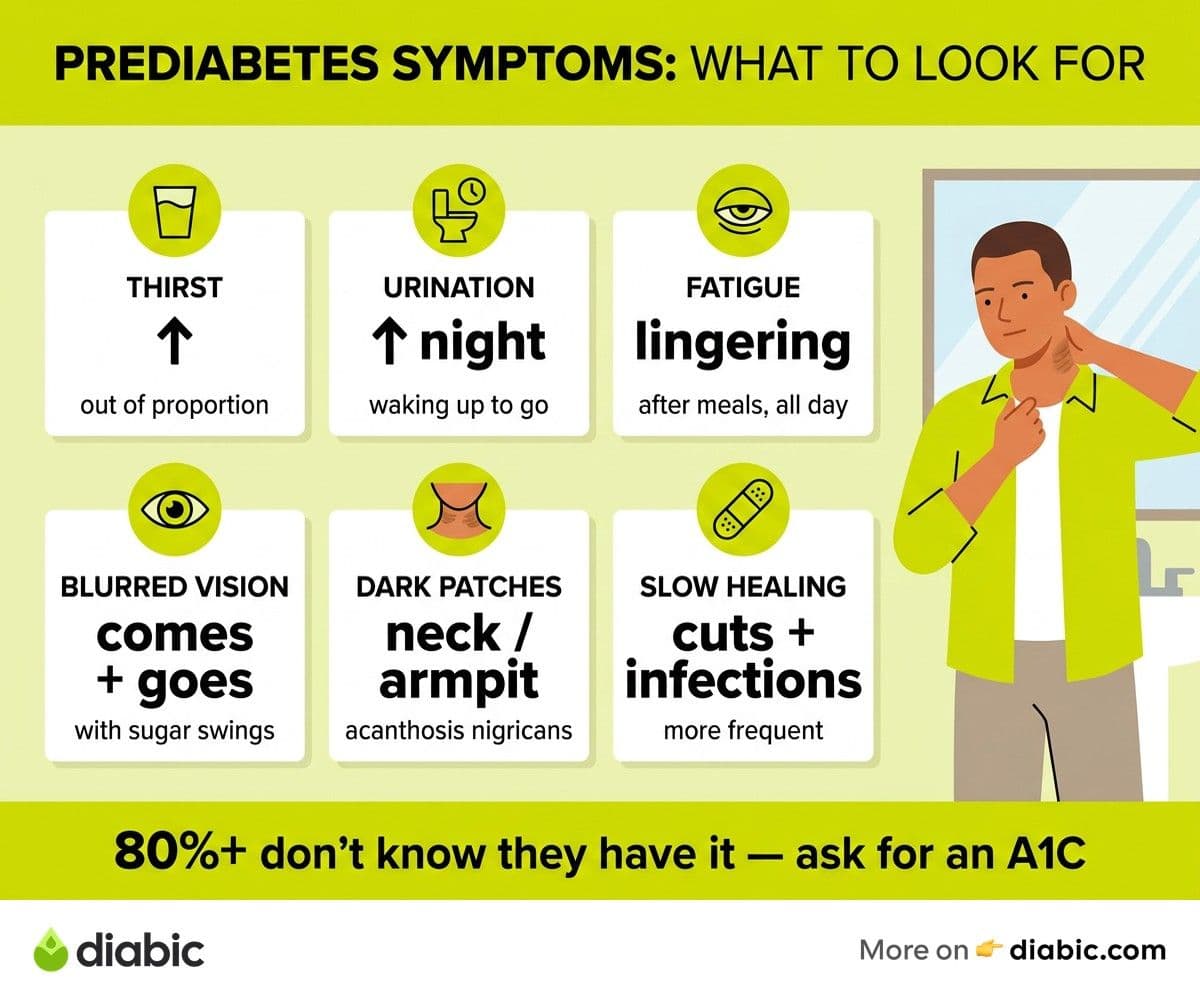
- Increased thirst that seems out of proportion to how much you have been drinking or how warm the weather is.
- More frequent urination, especially waking up at night to use the bathroom when that did not used to happen.
- Fatigue that lingers after meals or persists throughout the day even when you feel like you have slept enough.
- Blurred vision that comes and goes, often when blood sugar swings.
- Dark patches of skin on the back of the neck, armpits, or knuckles, called acanthosis nigricans, which can signal insulin resistance.
- Slow-healing cuts or more frequent skin and gum infections than usual.
The American Diabetes Association notes that many of these signs reflect the body's early response to rising blood glucose. Some people also notice insulin resistance symptoms like sugar cravings, brain fog, or stubborn weight around the midsection that does not budge with the usual approaches.
Why Most Symptoms of Prediabetes Go Unnoticed
The hard truth about symptoms of prediabetes is that the most common symptom is no symptom at all. The Centers for Disease Control and Prevention estimates that more than 80 percent of Americans with prediabetes do not know they have it. That number is staggering, and it points to why testing matters more than waiting for warning signs.
There are a few reasons prediabetes hides so well. Blood sugar in the prediabetes range is elevated, but not dramatically so. The pancreas often compensates by pumping out extra insulin, which can keep glucose mostly in check for years. Meanwhile, symptoms like fatigue and thirst overlap with stress, dehydration, perimenopause, sleep problems, and ordinary aging.
Most prediabetes diagnoses come from a routine annual physical, not from someone walking into a clinic listing symptoms. If you have read about prediabetes: why catching it now matters, you already know the early window is when lifestyle changes have the biggest impact. That window is easy to miss if you are waiting for your body to send a clearer signal.
From my experience: when my mother was eventually diagnosed with type 2 diabetes, she had been in the prediabetes range for at least five years without a single noticeable symptom. She felt fine. Her doctor caught it during a routine A1C test, and by then the window for easy reversal had narrowed. That is why I push everyone in my family to ask for an A1C check at their annual visit, especially after age 35.
Prediabetes and the Broader Diabetes Symptom Picture
Prediabetes sits on a spectrum that runs from healthy blood sugar through type 2 diabetes. Where prediabetes blends quietly into the background, type 2 diabetes eventually starts producing more obvious symptoms: significant thirst, repeated yeast infections, persistent fatigue, numbness in the feet, and noticeable vision changes.
The progression from silent prediabetes to symptomatic diabetes can take years or even a decade. For some people, prediabetes never produces a single symptom and they jump straight to a type 2 diagnosis the day a doctor delivers the news. Others experience a slow buildup. There is no single timeline.
Prediabetes also overlaps with early signs of diabetes that many people do not connect to blood sugar at all, like skin tags, frequent thirst at night, or unexplained weight gain around the abdomen. The NIDDK explains how insulin resistance underlies all of this, gradually wearing down the pancreas before clinical diabetes is reached.
When to Get Tested for Prediabetes
Because symptoms are unreliable, testing is the only way to know for sure. The American Diabetes Association recommends that all adults start screening at age 35, or earlier if there are risk factors like family history of diabetes, overweight or obesity, sedentary lifestyle, history of gestational diabetes, polycystic ovary syndrome, or belonging to a higher-risk ethnic group.
Three tests are commonly used to detect prediabetes:
- A1C test measures average blood sugar over the past two to three months. A result between 5.7 and 6.4 percent indicates prediabetes.
- Fasting plasma glucose measures blood sugar after at least eight hours of fasting. A result between 100 and 125 mg/dL falls in the prediabetes range.
- Oral glucose tolerance test (OGTT) measures blood sugar two hours after drinking a standard glucose drink. A result between 140 and 199 mg/dL indicates prediabetes.
The Mayo Clinic notes that if your initial result is borderline, your provider may recommend retesting in three to six months to confirm. Our guide on prediabetes A1C walks through what the numbers actually mean for day-to-day choices.
Risk also varies by sex and life stage. Women, in particular, may experience different patterns. Our piece on symptoms of prediabetes in females covers signs like recurring yeast infections, irregular cycles, and skin changes that often get attributed to other causes first.
What to Do If You Notice Prediabetes Symptoms
If any of the signs above feel familiar, the most useful step is also the simplest: ask your doctor for an A1C test. It is a single blood draw, usually inexpensive, and it does not require fasting. You do not need a referral or specialist visit to start the conversation.
If your result lands in the prediabetes range, that is not a diagnosis of failure. Research suggests that lifestyle changes, like modest weight loss, regular physical activity, and a more balanced eating pattern, may help return blood sugar to the normal range for many people. Programs like the CDC's National Diabetes Prevention Program have shown meaningful results.
Talk to your doctor about a personalized plan, especially if you have other risk factors. The earlier you act, the more options you have.
FAQ
Can you feel prediabetes symptoms?
Most people with prediabetes do not feel any symptoms at all. When symptoms do appear, they tend to be mild: slightly more thirst, a bit more fatigue, or skin changes like darkened patches on the neck. Because these signs are so easy to dismiss, blood testing remains the most reliable way to detect prediabetes.
What are the early signs of prediabetes?
Early signs can include increased thirst, frequent urination, unexplained fatigue, blurred vision, slow-healing cuts, and dark velvety patches of skin around the neck or armpits. However, many people have no signs at all. Risk factors like family history, being overweight, and a sedentary lifestyle are often better indicators than symptoms alone.
How long can you have prediabetes without symptoms?
It is common to have prediabetes for years without any noticeable symptoms. Some people remain asymptomatic until they progress to type 2 diabetes. This is why the CDC recommends regular screening starting at age 35, or earlier if you have risk factors.
Can prediabetes go away on its own?
Prediabetes does not typically reverse on its own, but research suggests it can often be reversed through lifestyle changes. Modest weight loss, regular activity, and an improved eating pattern have been shown to return many people to a normal blood sugar range. Talk to your doctor about a plan that fits your situation.
The most reassuring thing about prediabetes is that it is the only stage on the diabetes spectrum where reversal is genuinely on the table for most people. Prediabetes symptoms may be quiet, but a single blood test gives you the information you need to act, and small consistent steps from there can change the trajectory. Talk to your doctor about an A1C check at your next visit if any of the signs above feel familiar.
Shahriar P. Shuvo is the founder of Diabic. He has lived with diabetes for over 14 years, and built Diabic to deliver the practical, evidence-based self-management tools he wished existed when he was first diagnosed. By trade, Shahriar is a senior design and frontend engineer with 6+ years shipping products at Agora, Timescale (now Tiger Data), and ShareTrip. He writes from the intersection of lived diabetes experience and product craft, focused on what works in daily management rather than what sounds good in a textbook.
Medically reviewed by
Dr. Shanto Arian is an internal medicine physician now specializing in clinical and aesthetic dermatology, with a parallel academic focus on epidemiology and public health. He holds an MBBS, MPH, MSc (UK), MRCP (UK), MRCPI (Ireland), Diploma in Dermatology (UK), and Diploma in Aesthetic Medicine (USA). Dr. Arian trained in internal medicine, including hospital work on hematology cases such as graft-versus-host disease, before moving toward dermatology. Skin is one of the earliest places diabetes shows itself, from acanthosis nigricans and diabetic dermopathy to slow foot wound healing, and that intersection is where his clinical and Diabic-review work meet. On Diabic, Dr. Arian medically reviews content on diabetes diagnosis, complications, dermatologic manifestations, and pharmacotherapy, ensuring every claim aligns with current ADA, NICE, and peer-reviewed literature.
More from Diabetes Knowledge
View all
6 Safe Dessert for Gestational Diabetes Recipes You Can
Six dessert for gestational diabetes recipes that satisfy your sweet tooth without spiking blood sugar, with carb counts and pairing tips you can use.

8 High Fiber Foods That Help with Prediabetes
Add these 8 high fiber foods for prediabetes to slow glucose absorption, support steady blood sugar, and meet the daily fiber target most people miss.

Mediterranean Diet for Prediabetes: A Practical Guide
The mediterranean diet for prediabetes is one of the best-studied eating patterns for prevention. Here is what to eat, what to avoid, and how to start.
Clinician-reviewed habits, plain-language guides, and honest answers - the small shifts that make living with diabetes feel lighter, every day.