Sleep Apnea and Diabetes: a Two-Way Problem Most People Miss
Sleep apnea and diabetes feed each other in a hidden cycle. Learn how to spot the signs, get screened, and protect your blood sugar at night.

In this article(11)
If your morning blood sugar keeps creeping up no matter how carefully you eat at dinner, the problem might not be on your plate at all. It might be in your bedroom. The relationship between sleep apnea and diabetes is one of the most overlooked stories in modern metabolic health, and once you understand how the two conditions feed each other, a lot of frustrating numbers start to make sense.
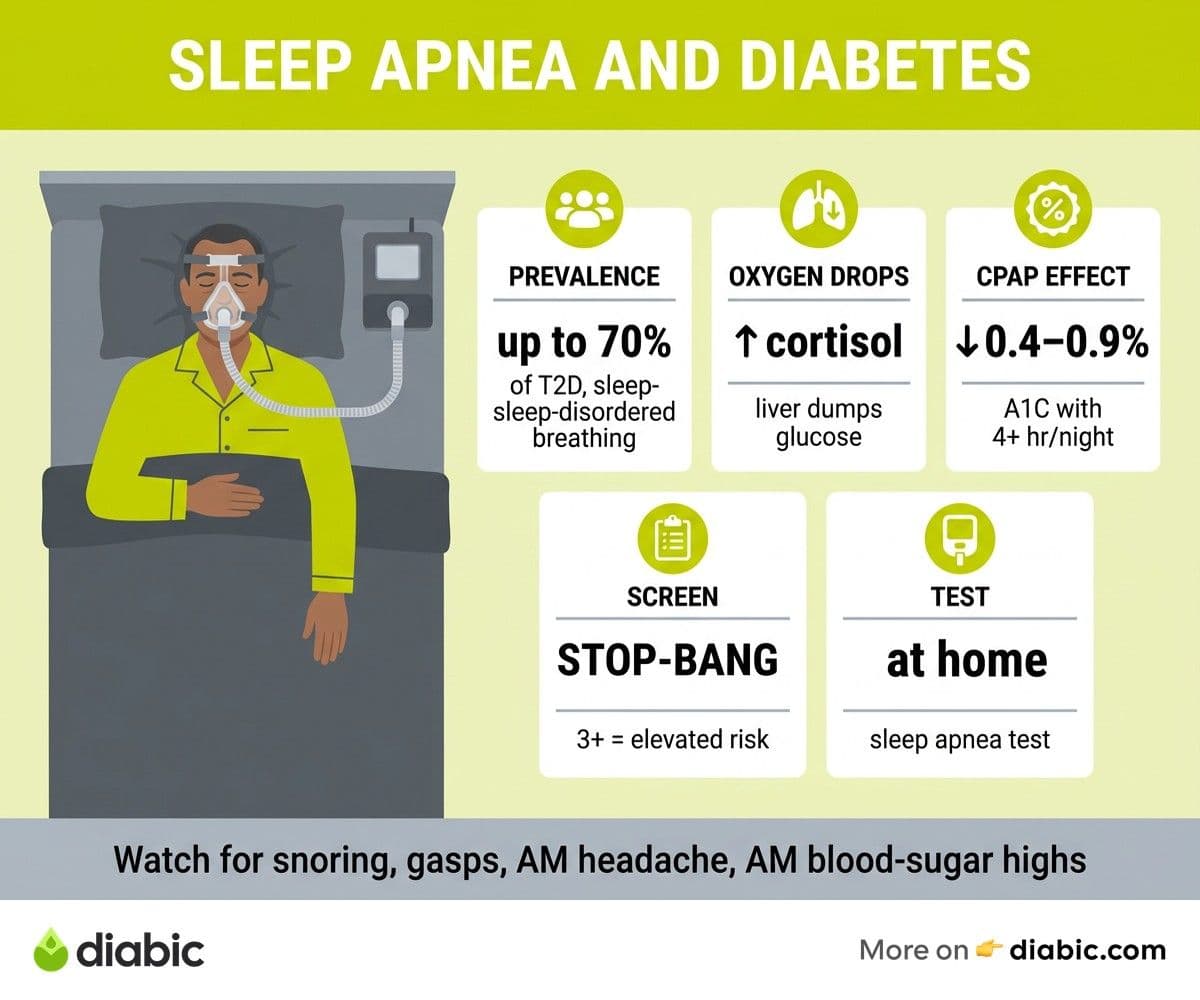
Up to 70% of people with type 2 diabetes have some form of sleep-disordered breathing, according to research summarized by the American Diabetes Association, yet most are never tested. That means a huge slice of the diabetes community is trying to manage glucose with one hand tied behind their back. We want to walk you through what is actually happening, how to recognize the signs, and what an honest conversation with your doctor about a sleep study can look like.
From my experience: A few years into using a Dexcom (the G6 era for me), I started noticing my overnight CGM line would drift up between roughly 3 and 5 a.m. on nights I had slept poorly, even when dinner was identical to the nights it stayed flat. I am a thin guy with type 1, not the textbook OSA risk profile, and yet a screenshot of one bad week was enough for my endocrinologist to take the question seriously. The pattern on the graph turned out to be a quieter conversation about sleep quality, not just basal rates, and that shift in framing changed how I read my own data.
The Two-Way Link Between Sleep Apnea and Diabetes
Obstructive sleep apnea, often shortened to OSA, happens when the soft tissues in your throat collapse during sleep and briefly block your airway. Each pause lowers the oxygen in your blood and forces your brain to half-wake you up so you can breathe again. You may not remember any of it in the morning, but your body has been through dozens or hundreds of these mini-emergencies overnight. The National Heart, Lung, and Blood Institute notes that this pattern silently affects an estimated 30 million American adults.
Here is where diabetes enters the picture. Repeated drops in oxygen, called intermittent hypoxia, trigger inflammation and stress hormones that push your cells to become more resistant to insulin. At the same time, the conditions that raise your risk of type 2 diabetes, such as carrying extra weight around the midsection, also raise the odds that the airway will collapse at night. Autonomic neuropathy, a nerve complication common in long-standing diabetes, can further weaken the muscles that keep the airway open while you sleep.
The result is a loop that feeds itself. Poor sleep worsens insulin resistance, higher glucose contributes to weight gain and nerve changes, and those changes make the apnea worse. We see this same pattern echoed in the broader research on circadian rhythm and metabolic health, including how shift work and diabetes interact when sleep gets disrupted on a regular basis. Untreated OSA makes blood sugar harder to manage no matter how disciplined your meals or medications are.
How Sleep Apnea Affects Blood Sugar Overnight
Every time the airway collapses, your sympathetic nervous system fires up. That stress response releases cortisol and adrenaline, which tell your liver to dump glucose into your bloodstream so your muscles are ready to fight or flee. The problem is that you are not fighting anything. You are lying in bed, and that extra glucose has nowhere productive to go. Over a full night of repeated episodes, this can leave your fasting blood sugar elevated by morning even when nothing about your dinner or bedtime snack changed.
Fragmented sleep also reduces insulin sensitivity the next day, which is part of the broader sleep and blood sugar connection we have written about elsewhere. A landmark review in Lancet Respiratory Medicine found that adults with untreated OSA show measurable reductions in glucose tolerance and higher inflammatory markers compared to peers with healthy sleep. The cells become slower to respond to insulin, the pancreas works harder, and over time A1C drifts upward.
There is also good news in the same body of research. Continuous positive airway pressure therapy, known as CPAP, can improve A1C by roughly 0.4 to 0.9 percentage points in people with both type 2 diabetes and moderate to severe OSA, particularly when the device is worn for at least four hours a night. That is the kind of improvement many people chase with a new medication or a major diet overhaul. For some, it turns out the missing piece was simply uninterrupted breathing. The benefit varies from person to person, but the trend across studies is consistent enough that screening has become a meaningful part of diabetes care.
Signs You Might Have Undiagnosed Sleep Apnea
Loud snoring is the most famous symptom, but it is far from the only one. Many people with OSA snore softly or not at all, especially women, while others gasp or choke briefly without ever fully waking up. A bed partner often notices these episodes long before the person experiencing them does. If someone has nudged you in the ribs because your breathing went silent for a beat too long, that observation is worth taking seriously.
Daytime clues matter just as much as nighttime ones. Waking with a dry mouth or a dull headache is common because mouth breathing and oxygen swings irritate the airway and brain overnight. Persistent fatigue that does not improve with more time in bed is another red flag, and it overlaps heavily with the reasons diabetes makes you so tired in general. If you find yourself nodding off during meetings, after lunch, or behind the wheel, the issue may be sleep quality rather than sleep quantity.
Blood sugar patterns can be a quiet tip-off too. Unexplained morning highs, an A1C that will not budge despite consistent effort, or growing insulin needs without an obvious lifestyle change can all point toward poor overnight breathing. The American Diabetes Association Standards of Care now recommend asking patients with diabetes about sleep symptoms during routine visits, partly because the link is so well established. If your provider has not raised the topic, you can.
The STOP-BANG screening you can do at home
One of the simplest tools clinicians use is called STOP-BANG, an eight-question checklist endorsed by the American Academy of Sleep Medicine. It looks at Snoring, Tiredness, Observed apnea, blood Pressure, BMI over 35, Age over 50, Neck circumference, and male Gender. Scoring three or more "yes" answers suggests an elevated risk and is usually enough reason to pursue formal testing. It is not a diagnosis, but it gives you and your doctor a concrete starting point for the conversation.
We like this tool because it costs nothing, takes two minutes, and turns a vague worry into something measurable. You can run through the questions yourself tonight, write down your score, and bring it to your next appointment. Pair it with a few notes about your morning glucose patterns and any feedback from a bed partner, and you have a strong case for further evaluation.
Getting Tested and What CPAP Can Do for Glycemic Control
Sleep studies have come a long way. While in-lab polysomnography is still the gold standard for complex cases, home sleep apnea tests are now widely available, covered by most insurance plans, and surprisingly easy to use. A small device tracks your breathing, oxygen levels, and heart rate while you sleep in your own bed, and a sleep specialist reads the results within a few days. For people with classic symptoms and no other major medical complications, this is often the most practical first step.
If a study confirms moderate to severe OSA, CPAP therapy is usually the first treatment offered. The machine delivers a steady stream of air through a mask to keep the airway open, and modern units are quieter and lighter than the bulky devices many people remember. The first few weeks involve an adjustment period as you find a mask that fits well and learn to fall asleep with the gentle airflow. Most people who stick with it report deeper sleep, fewer morning headaches, and steadier energy within a month.
The metabolic payoff often follows. Beyond the A1C improvements mentioned earlier, consistent CPAP use is associated with better blood pressure, reduced cardiovascular risk, and in some cases lower insulin requirements. We recommend retesting your A1C three to six months after starting therapy so you can see the impact for yourself, then revisiting your medication plan with your provider based on the new numbers. Pair the device with the broader habits we cover in our piece on improving sleep quality with diabetes, and the gains tend to compound.
Alternatives when CPAP is not the right fit
CPAP works for many people, but it is not the only option. Custom oral appliances fitted by a dentist trained in sleep medicine can reposition the jaw to keep the airway open and are often a good choice for mild to moderate OSA. Positional therapy, which keeps you off your back during the night, helps in cases where apnea episodes cluster in one sleeping position. Weight loss, when appropriate and approached gently, can meaningfully reduce severity, and newer surgical and nerve-stimulation options exist for people who cannot tolerate other treatments.
The right path depends on the severity of your apnea, your anatomy, and your personal preferences. A good sleep specialist will walk you through the trade-offs without pushing one solution. The point is that doing nothing is the worst option, especially when diabetes is also in the picture.
When to Talk to Your Doctor About a Sleep Study
If you recognized yourself in more than a couple of the signs above, the next step is a real conversation with your healthcare provider. You do not need to wait for an annual physical. A short message through your patient portal that mentions your symptoms, your STOP-BANG score, and any glucose patterns you have noticed is usually enough to get the ball rolling. Talk to your doctor about whether a home sleep test or an in-lab study makes more sense for your situation.
Be specific about what you have observed. Mention how often you wake feeling unrested, what your bed partner has noticed, and whether your morning glucose readings have shifted. If you use a continuous glucose monitor, screenshots of overnight trends can be powerful evidence. The more concrete the picture you paint, the easier it is for your provider to advocate for the right testing and, if needed, a referral to a sleep specialist.
Insurance coverage for sleep studies and CPAP equipment has expanded significantly, and many primary care offices can now order home tests directly. If cost is a concern, ask about in-network sleep labs and durable medical equipment suppliers before you commit. Understanding the relationship between sleep apnea and diabetes is the first step, but turning that knowledge into a tested diagnosis and a working treatment plan is what actually moves your numbers.
Frequently Asked Questions
Does sleep apnea make diabetes worse?
Yes, the evidence is consistent on this point. Untreated OSA increases insulin resistance, raises overnight cortisol, and contributes to higher fasting glucose and A1C. People with both conditions also face a higher risk of cardiovascular complications than those with diabetes alone. Treating the apnea does not cure diabetes, but it removes a significant obstacle to managing it well.
Can treating sleep apnea improve blood sugar?
For many people, yes. Studies consistently show A1C improvements of roughly 0.4 to 0.9 percentage points in people with type 2 diabetes who use CPAP for at least four hours per night over several months. Improvements in fasting glucose, blood pressure, and daytime energy often appear within the first few weeks. Results vary by individual, so retesting your A1C three to six months after starting treatment is the best way to measure your own response.
Are home sleep tests as accurate as in-lab studies?
For straightforward cases of suspected obstructive sleep apnea, home tests are accurate enough to guide diagnosis and treatment, and they are far more convenient. In-lab studies remain the better choice when other sleep disorders are suspected, when symptoms are severe, or when the home test results are unclear. Your sleep physician can recommend which type fits your situation.
The link between sleep apnea and diabetes is real, treatable, and often missed. If any of this sounds familiar, talk to your doctor about a screen and a possible sleep study. Better breathing at night tends to make every other piece of diabetes management easier.
Shahriar P. Shuvo is the founder of Diabic. He has lived with diabetes for over 14 years, and built Diabic to deliver the practical, evidence-based self-management tools he wished existed when he was first diagnosed. By trade, Shahriar is a senior design and frontend engineer with 6+ years shipping products at Agora, Timescale (now Tiger Data), and ShareTrip. He writes from the intersection of lived diabetes experience and product craft, focused on what works in daily management rather than what sounds good in a textbook.
Medically reviewed by
Dr. Rezwana Parvin Rumpa is an obstetrics and gynaecology specialist with clinical focus on gestational diabetes, PCOS, and fertility. She holds the MRCOG (Final Part) from the Royal College of Obstetricians and Gynaecologists in London, the MRCPI (Final Part) from the Royal College of Physicians of Ireland, and an MBBS from Shaheed Monsur Ali Medical College under Dhaka University. Dr. Rumpa serves as a Senior Medical Officer in the Obs and Gynae department at BRB Hospitals Ltd, where she has spent three years managing prenatal care, emergency obstetric cases, and women's-health surgery. On Diabic, she medically reviews content for women living with diabetes, with particular attention to pregnancy, PCOS, and reproductive-health intersections.
More from Living with Diabetes
View all
A Gentle Chair Yoga Routine for people with diabetes
A gentle chair yoga for people with diabetes routine with safe poses, modifications for neuropathy, retinopathy, and joint pain, plus tips for older.

Shift Work and Diabetes: Managing Irregular Hours
Shift work and diabetes is a tough combination. Learn how to manage meals, sleep, medication, and blood sugar when your hours rotate or flip overnight.

Dating with Diabetes: When to Tell a New Partner
Dating with diabetes brings unique disclosure questions. Here is when to tell a new partner, what to say, and how to handle the conversation with.
Clinician-reviewed habits, plain-language guides, and honest answers - the small shifts that make living with diabetes feel lighter, every day.