Why Does Diabetes Make You Tired? What Helps
Wondering why does diabetes make you tired? We explain the real causes of diabetes fatigue and share practical steps to get your energy back.

In this article(10)
If diabetes makes you feel like you are dragging through every day no matter how much you sleep, you are not imagining it. Fatigue is one of the most common and least talked about symptoms of diabetes, and it can feel deeply unfair when you are doing everything right and still running on empty. Understanding why does diabetes make you tired is the first step toward getting your energy back, and the answers are usually more layered than a single low or high reading.
We hear from readers who feel guilty for being exhausted, as if tiredness is a personal failure rather than a physical one. It is not. The biology behind diabetes-related fatigue is real, well documented, and often treatable once you know where to look. This guide walks through the main causes, the warning signs that need a doctor visit, and the small daily shifts that can move the needle on your energy.
From my experience: The day after a missed overnight low feels different in a way I can almost set my watch by, a heavy, foggy tiredness that no second cup of coffee touches. The first time I caught one on my CGM after waking up at 73 mg/dL with the alarm already going, I finally understood why some Tuesdays felt twice as long as others. Smoothing the overnights changed my afternoons more than any morning routine ever did.
Why Does Diabetes Make You Tired in the First Place
At the most basic level, fatigue with diabetes comes down to a fuel problem. Glucose is the body's preferred energy source, and when insulin is missing, insufficient, or not working well, your cells struggle to pull that glucose in to use it. The sugar stays in the bloodstream while your muscles and brain run on fumes, which is why you can feel wiped out even after a full meal. The American Diabetes Association lists fatigue alongside thirst and frequent urination as a hallmark symptom for exactly this reason.
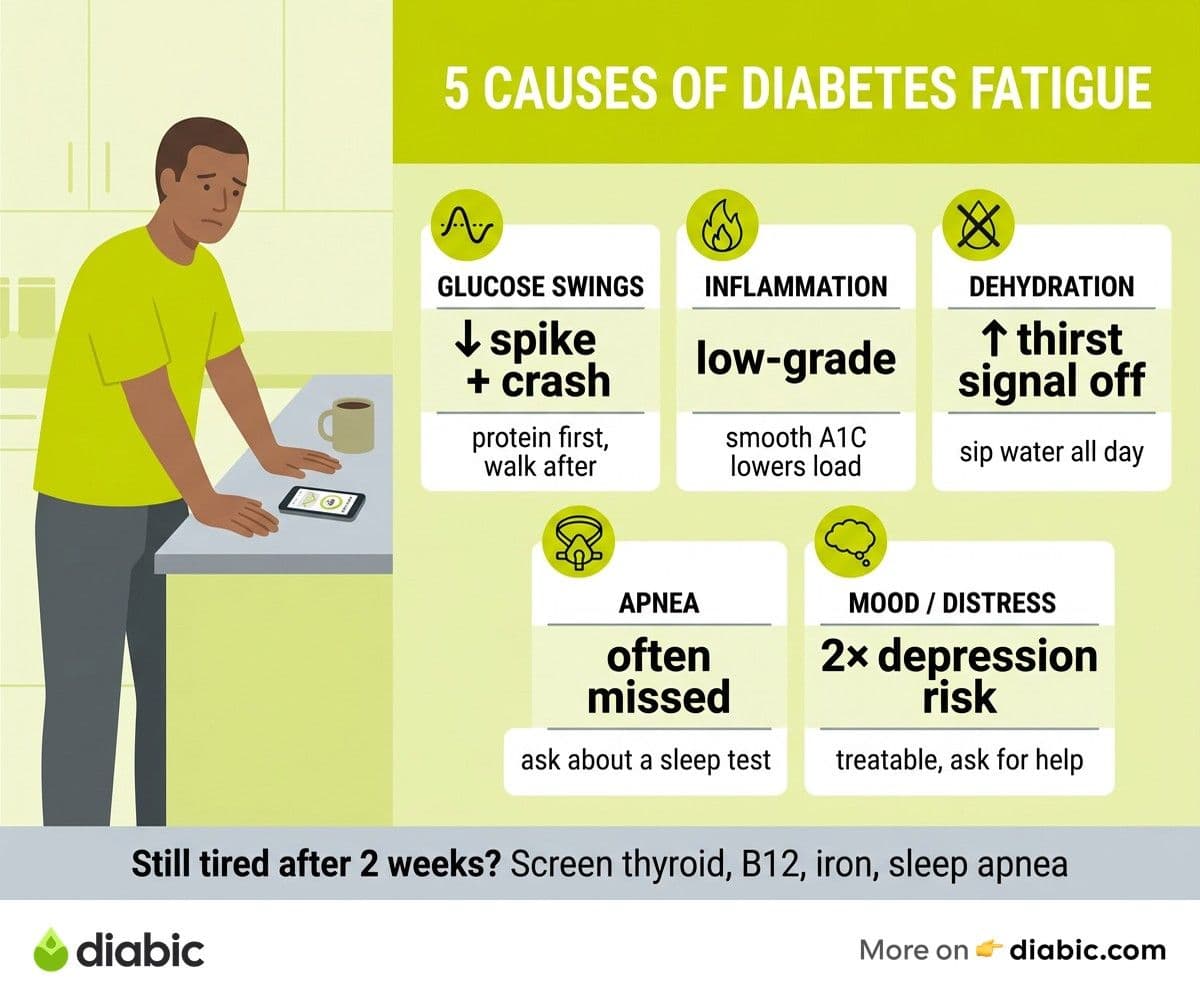
There is also a chemical layer to consider. Chronically elevated blood sugar fuels low-grade inflammation across the body, and inflammation is metabolically expensive. Your immune system is essentially running in the background all day, which leaves less energy for everything else you want to do. Add in the dehydration that comes from high glucose pulling water out through the kidneys, and you have a setup that primes the body for exhaustion before lunch.
It helps to think of fatigue as a signal, not a character flaw. When you are tired, your body is telling you that something in the system needs attention, whether that is a glucose pattern, a sleep issue, or a nutrient gap. Listening to that signal early often saves you from bigger problems down the road.
The Role of Blood Sugar Swings in Daily Tiredness
Tiredness and diabetes are often linked less to your average glucose and more to how much your numbers move around. A sharp post-meal spike followed by a steep drop can leave you foggy, irritable, and desperate for a nap, even if your A1C looks fine on paper. Research published in Diabetes Care has connected glycemic variability to mood symptoms and quality of life, and many people notice the energy hit before they ever see it on a meter.
Lows are their own kind of exhausting. Even a mild hypoglycemic episode triggers a stress response, releases adrenaline, and burns through reserves your body then has to rebuild. Two or three of those in a week add up to a chronic feeling of being depleted, and overnight lows you sleep through can wreck the next day without you ever knowing what happened.
Overnight stability matters just as much as daytime numbers. If your glucose is rollercoastering between 2 a.m. and 6 a.m., you are spending the night in light, fragmented sleep instead of the deep restorative kind. Smoothing out those swings, especially around meals, is one of the highest-uses moves you can make. Our guide on preventing post-meal blood sugar spikes walks through specific tactics like meal sequencing and timing.
The broader sleep and blood sugar connection runs in both directions, which is part of what makes fatigue so stubborn. Poor sleep raises insulin resistance the next morning, and unstable glucose then disturbs the next night's sleep, looping you into a tired cycle that can be hard to break without a deliberate plan.
Sleep Apnea, Mood, and the Hidden Energy Drains
Sleep apnea is dramatically more common in people with type 2 diabetes than in the general population, and it is widely underdiagnosed. If you snore, wake up with headaches, or feel unrested after eight hours in bed, this is worth raising with your doctor. The American Academy of Sleep Medicine has published guidance noting that untreated sleep apnea worsens insulin resistance, so addressing it can improve both your energy and your glucose at the same time. You can read more in our deep dive on sleep apnea and diabetes.
Depression and what clinicians call diabetes distress are another major source of fatigue, and they often hide in plain sight. The mental load of constant decisions, finger sticks, food math, and pump or pen logistics is genuinely tiring, and over months it can shade into a low mood that drains motivation. According to the National Institute of Diabetes and Digestive and Kidney Diseases, people with diabetes are roughly twice as likely to experience depression as those without. Treating the mood piece often lifts the fatigue alongside it.
Medications can also play a role you may not have considered. Metformin can deplete vitamin B12 over time, beta-blockers used for heart or blood pressure can blunt energy and mask hypoglycemia symptoms, and certain insulin regimens may contribute to overnight lows that wreck sleep. None of this means you should stop a prescribed medication on your own, but it is fair to ask your provider whether anything on your list could be feeding the tiredness.
When Fatigue Is a Sign of Something More Serious
If your blood sugar looks stable and you are still bone-tired for weeks at a time, the search needs to widen beyond glucose. Thyroid dysfunction is a common companion to diabetes, especially type 1, and an underactive thyroid produces fatigue that no amount of sleep will fix. The Endocrine Society recommends periodic thyroid screening for people with diabetes, and a simple blood panel can rule it in or out.
Anemia is another suspect that often goes missed. Iron deficiency, B12 deficiency, and the anemia that can accompany early kidney changes all produce a heavy, breathless kind of tiredness. People with diabetes are at higher risk for kidney involvement over time, and reduced kidney function can lower the production of erythropoietin, the hormone that tells your body to make red blood cells. A standard complete blood count and a kidney panel can catch most of these.
Watch for fatigue that arrives suddenly or pairs with other warning signs. Severe tiredness with nausea, fruity breath, deep rapid breathing, or very high glucose readings can signal diabetic ketoacidosis and needs urgent care. Fatigue paired with unexplained weight loss, fevers, or new pain deserves a same-week appointment. Talk to your doctor about persistent fatigue that interferes with daily life for more than two weeks, especially if your usual energy fixes are not budging it.
Practical Strategies That Actually Move the Needle
The most effective energy-boosting work tends to be unglamorous and consistent rather than dramatic. Stabilizing glucose through smaller, more frequent shifts in food and activity usually outperforms big overhauls, and it is easier to sustain when life gets busy. Our diabetes fatigue management tips post collects the specific routines our community has found most useful, but a handful of basics will get most people noticeably further.
A few practices worth trying for two to three weeks before judging the results:
- Build meals around protein, fiber, and healthy fats first, then add starches, which softens the post-meal curve that often causes afternoon crashes.
- Keep a consistent sleep window, even on weekends, and protect the last hour before bed from screens and bright overhead lights.
- Move your body for ten to fifteen minutes after meals, since a short walk lowers post-meal glucose more reliably than almost any other quick intervention.
- Drink water steadily through the day rather than catching up at night, because even mild dehydration shows up as fatigue and brain fog.
- Review your medication list with your provider once a year and ask specifically whether any item could be contributing to tiredness or B12 depletion.
Caffeine deserves a quick word. It can paper over fatigue in the short term but often makes the underlying sleep debt worse, especially after noon. The Sleep Foundation notes that caffeine has a half-life of around five to six hours, so an afternoon coffee is still working in your system at bedtime. If you rely on it to function, that itself is useful information about what your body is asking for.
Finally, give yourself credit for the energy management you already do. Living with diabetes is steady cognitive work, and the fact that you are reading about fatigue means you are already taking it seriously. Small, repeated wins compound, and most readers who stick with two or three of the steps above start noticing a shift within a month.
Frequently Asked Questions
Why does diabetes make you so tired all the time?
Persistent tiredness with diabetes usually comes from a combination of unstable glucose, poor sleep quality, low-grade inflammation, and sometimes an unrelated issue like thyroid problems, anemia, or B12 deficiency that diabetes makes more likely. If you have been tired for more than a couple of weeks, it is worth a full workup rather than assuming glucose is the only culprit.
How can you fight tiredness from diabetes?
Start with the basics that have the biggest payoff: smooth out post-meal spikes, protect your sleep window, walk after meals, hydrate steadily, and ask your provider about screening for thyroid issues, anemia, and B12 levels. Pair those habits with an honest look at mood and stress, since depression and diabetes distress are common and very treatable sources of fatigue.
Is feeling tired after eating a sign of diabetes?
Heavy post-meal fatigue can be a sign of a blood sugar spike-and-crash pattern, which is common in both prediabetes and diabetes. If it happens regularly, mention it to your doctor and ask about checking your fasting glucose, A1C, or a glucose tolerance test to understand what is going on.
Can low blood sugar cause fatigue the next day?
Yes. Even a mild overnight low you slept through can leave you feeling drained, foggy, and emotionally flat the following day, since your body spent the night responding to the stress rather than resting. If you wake up unusually tired with headaches or sweat-damp sheets, talk to your provider about checking for nighttime hypoglycemia.
The honest answer to why does diabetes make you tired is rarely a single cause. It is usually two or three quiet drains stacked together: an unstable post-lunch curve, a sleep window that keeps shifting, an unscreened thyroid, a bottle of caffeine carrying you through the afternoon. Pull on each thread one at a time. Track the change for a couple of weeks before declaring it works or does not. The energy you are looking for is rarely far away once the right two or three pieces line up.
Shahriar P. Shuvo is the founder of Diabic. He has lived with diabetes for over 14 years, and built Diabic to deliver the practical, evidence-based self-management tools he wished existed when he was first diagnosed. By trade, Shahriar is a senior design and frontend engineer with 6+ years shipping products at Agora, Timescale (now Tiger Data), and ShareTrip. He writes from the intersection of lived diabetes experience and product craft, focused on what works in daily management rather than what sounds good in a textbook.
Medically reviewed by
Dr. Shanto Arian is an internal medicine physician now specializing in clinical and aesthetic dermatology, with a parallel academic focus on epidemiology and public health. He holds an MBBS, MPH, MSc (UK), MRCP (UK), MRCPI (Ireland), Diploma in Dermatology (UK), and Diploma in Aesthetic Medicine (USA). Dr. Arian trained in internal medicine, including hospital work on hematology cases such as graft-versus-host disease, before moving toward dermatology. Skin is one of the earliest places diabetes shows itself, from acanthosis nigricans and diabetic dermopathy to slow foot wound healing, and that intersection is where his clinical and Diabic-review work meet. On Diabic, Dr. Arian medically reviews content on diabetes diagnosis, complications, dermatologic manifestations, and pharmacotherapy, ensuring every claim aligns with current ADA, NICE, and peer-reviewed literature.
More from Living with Diabetes
View all
A Gentle Chair Yoga Routine for people with diabetes
A gentle chair yoga for people with diabetes routine with safe poses, modifications for neuropathy, retinopathy, and joint pain, plus tips for older.

Shift Work and Diabetes: Managing Irregular Hours
Shift work and diabetes is a tough combination. Learn how to manage meals, sleep, medication, and blood sugar when your hours rotate or flip overnight.

Dating with Diabetes: When to Tell a New Partner
Dating with diabetes brings unique disclosure questions. Here is when to tell a new partner, what to say, and how to handle the conversation with.
Clinician-reviewed habits, plain-language guides, and honest answers - the small shifts that make living with diabetes feel lighter, every day.