7 Ways to Prevent Blood Sugar Spikes After Meals
Prevent blood sugar spikes after meals with 7 research-backed strategies: food order, post-meal walks, low-glycemic carbs, vinegar, stress, and more.

In this article(11)
Blood sugar spikes after meals are one of the most frustrating parts of diabetes management, especially when you thought you made a good food choice. You eat what feels like a reasonable lunch, glance at your meter or CGM an hour later, and the number is 80 points higher than where you started. The good news is that small, research-backed changes to how and when you eat can make a real difference in those post-meal numbers.
These seven strategies work whether you live with type 1, type 2, or pre-diabetes. None of them require a complete diet overhaul or another expensive supplement. They are habits and tweaks that fit into the meals you already eat, and most people see improvements in their post-meal readings within a week or two of consistent practice. If you want a broader framework, our guide to building a daily self-care diabetes routine shows how these meal habits stack with the rest of your day.
Why Blood Sugar Spikes After Meals
Understanding the mechanics behind blood sugar spikes after meals makes the fixes feel less arbitrary. Carbohydrates break down into glucose faster than protein or fat, which is why a plain bagel sends your number higher and faster than a chicken breast with broccoli. The American Diabetes Association's nutrition guidelines explain that the type, amount, and timing of carbohydrates all influence the post-meal curve.
The glycemic index and glycemic load of a meal also shape the spike. White rice, white bread, and most cereals digest quickly and pour glucose into the blood within 15 to 30 minutes. Steel-cut oats, lentils, and barley release glucose more slowly because their fiber and structure slow digestion. Insulin timing, dose accuracy, and underlying insulin resistance add another layer, which is why two people eating the same plate can see very different curves.
Stress, sleep, and the hours leading up to a meal also matter. Cortisol from poor sleep or a stressful morning raises blood sugar before food even hits your stomach. If your morning numbers run high without an obvious cause, our explainer on dawn phenomenon vs Somogyi effect walks through what might be happening overnight. The takeaway is that a post-meal spike is rarely about one food. It is about the whole context.
1. Eat Protein and Fat Before Carbs
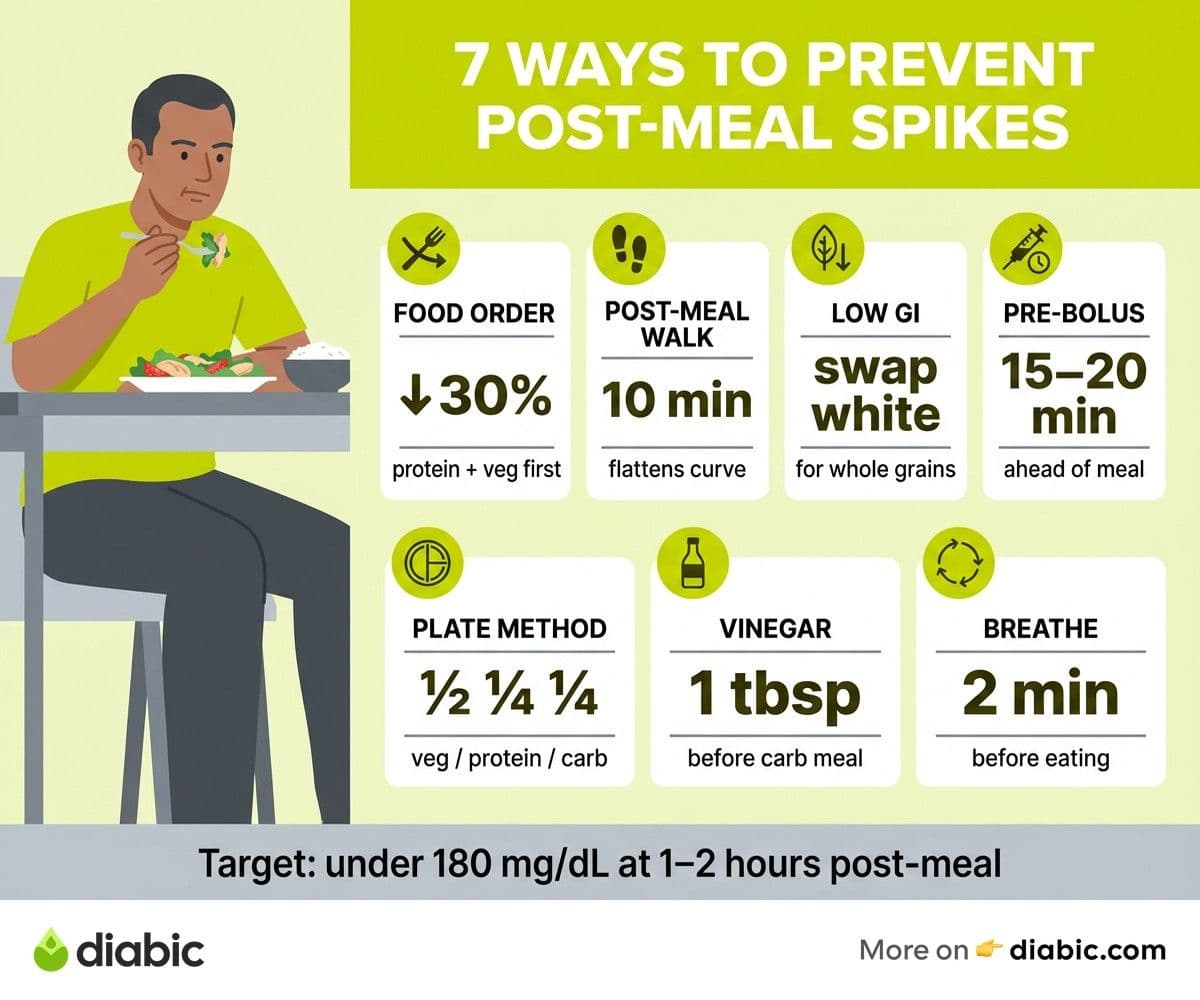
The order in which you eat foods on your plate changes how fast carbs are absorbed. A 2015 study published in Diabetes Care found that eating vegetables and protein before carbohydrates lowered post-meal glucose by roughly 30 percent compared to eating the same foods in reverse order. The mechanism is straightforward: protein and fiber slow gastric emptying, so the carbs that follow drip into the bloodstream rather than flood it.
Practice this with the meals you already eat. Start your dinner with the salad and chicken, then move to the rice or pasta. At breakfast, eat the eggs before the toast. The food is identical and the calories are the same. Only the sequence changes, and the spike often shrinks noticeably.
2. Take a 10-Minute Walk After Eating
A short walk after a meal is one of the most reliable ways to flatten a post-meal curve. The CDC recommends regular physical activity as a core part of blood sugar management, and even brief, light movement matters more than people expect. Walking activates your muscles, which pull glucose out of the blood without needing additional insulin.
Ten minutes is enough to make a difference. You do not need a track, a fitness app, or special clothes. Walk around the block, pace your house, or do a few laps of the office hallway. People who walk after each of their three main meals often see lower average blood sugars than people who exercise the same total amount in one block at the gym.
3. Choose Low-Glycemic Carbs
Not all carbs are created equal, and swapping high-glycemic foods for lower-glycemic versions reduces spikes without cutting carbs entirely. Brown rice instead of white. Steel-cut oats instead of instant. Whole-grain sourdough instead of plain white bread. Sweet potato instead of mashed potato. Each swap keeps the meal recognizable and lowers the impact.
Pair carbs with fiber, protein, or healthy fat to slow digestion further. A slice of whole-grain toast on its own spikes faster than the same toast with avocado and an egg. Our list of 8 foods that won't spike your blood sugar is a useful reference for stocking the kitchen with steady-energy options.
4. Time Your Insulin Correctly
For people who use mealtime insulin, pre-bolusing 15 to 20 minutes before eating gives the insulin a head start so it peaks at roughly the same time the carbs hit. Rapid-acting insulins still take 15 to 30 minutes to start working, even though they are called "rapid." Eating at injection time means the carbs win the race and you spike before the insulin catches up.
Pre-bolus timing varies by person, by meal, and by starting blood sugar. A high pre-meal reading needs more lead time. A low one needs less, or none. Talk to your endocrinologist or diabetes educator about finding the right window for your insulin type and your typical meals. This is not a one-size-fits-all calculation, and getting it wrong in either direction creates problems.
5. Control Portion Sizes
Portion size is often the hidden driver behind a stubborn spike. A reasonable bowl of rice in a restaurant is frequently three or four servings by USDA standards, and the carbs add up fast. The diabetes plate method is a simple visual: half the plate non-starchy vegetables, a quarter lean protein, a quarter starchy carbs.
Measure portions for a few days at home so your eyes learn what a real serving looks like. Once your visual sense is calibrated, you can stop measuring and still eat reasonable amounts even at restaurants or family dinners. Awareness sticks even when the measuring cup goes back in the drawer. If you want this slotted into a wider routine, our daily self-care diabetes routine post puts portion habits inside a full day.
6. Add Vinegar or Lemon to Meals
Acetic acid in vinegar appears to slow carbohydrate digestion and improve insulin sensitivity in the hours after a meal. A study published by the BMJ Open Diabetes Research and Care reviewed multiple trials and found that vinegar consumed before or with a meal modestly reduced postprandial glucose. One tablespoon of apple cider vinegar in water before a carb-heavy meal is the most common protocol, though plain vinegar in salad dressing works the same way.
Lemon juice on salads, fish, or in a glass of water before meals appears to have a similar effect, though the evidence is smaller. Neither is a magic fix, and neither replaces medication or insulin, but for many people they take the edge off a spike at almost no cost. Skip the gummy vinegar supplements; they are expensive and the dose is unreliable.
7. Manage Stress Before Eating
Cortisol raises blood sugar independent of food, and a stressful 30 minutes before a meal can shift the entire curve upward. If you sit down to eat already wound up from traffic, an argument, or back-to-back meetings, your liver is already releasing glucose by the time you take the first bite.
Two minutes of slow, deep breathing before eating measurably lowers cortisol and gives your nervous system a chance to switch from fight-or-flight to rest-and-digest. Some people pray before meals, others just close their eyes and breathe. The form matters less than the pause. Our quick guide to breathing exercises for blood sugar walks through three simple patterns you can do at the table without anyone noticing.
From my experience: I spent the first decade with type 1 ignoring the food order and pre-bolus tricks because they sounded too small to matter. The week I finally tried them together, my average post-meal CGM peak dropped about 40 mg/dL on the same meals. The lesson was that small changes stack, and stacking is what turns "I tried it once" into a different curve on the graph.
FAQ
Why does blood sugar spike after meals?
Blood sugar spikes after meals because carbohydrates break down into glucose and enter the bloodstream faster than insulin can clear them, especially when meals are high in refined carbs, eaten quickly, or consumed without protein and fiber. Stress, poor sleep, and inaccurate insulin timing make the spike worse. Slowing digestion with food order, lower-glycemic carbs, vinegar, and a post-meal walk are the most reliable ways to flatten the curve.
How long after eating does blood sugar peak?
Blood sugar typically peaks 60 to 90 minutes after a meal, though refined carbs can spike earlier (30 to 45 minutes) and high-fat meals can delay the peak by two to three hours. The American Diabetes Association recommends a target post-meal reading under 180 mg/dL one to two hours after starting to eat. CGM users see this curve directly; finger-stick users can check at the one-hour and two-hour marks to find their own peak.
Preventing blood sugar spikes after meals is not about willpower or perfection. It is about stacking small, evidence-based habits until the spikes shrink on their own. Pick one of these seven this week, get used to it, and add another. Talk to your doctor about which strategies fit your medication plan, and trust that the numbers improve with practice.
Shahriar P. Shuvo is the founder of Diabic. He has lived with diabetes for over 14 years, and built Diabic to deliver the practical, evidence-based self-management tools he wished existed when he was first diagnosed. By trade, Shahriar is a senior design and frontend engineer with 6+ years shipping products at Agora, Timescale (now Tiger Data), and ShareTrip. He writes from the intersection of lived diabetes experience and product craft, focused on what works in daily management rather than what sounds good in a textbook.
Medically reviewed by
Dr. Shanto Arian is an internal medicine physician now specializing in clinical and aesthetic dermatology, with a parallel academic focus on epidemiology and public health. He holds an MBBS, MPH, MSc (UK), MRCP (UK), MRCPI (Ireland), Diploma in Dermatology (UK), and Diploma in Aesthetic Medicine (USA). Dr. Arian trained in internal medicine, including hospital work on hematology cases such as graft-versus-host disease, before moving toward dermatology. Skin is one of the earliest places diabetes shows itself, from acanthosis nigricans and diabetic dermopathy to slow foot wound healing, and that intersection is where his clinical and Diabic-review work meet. On Diabic, Dr. Arian medically reviews content on diabetes diagnosis, complications, dermatologic manifestations, and pharmacotherapy, ensuring every claim aligns with current ADA, NICE, and peer-reviewed literature.
More from Living with Diabetes
View all
A Gentle Chair Yoga Routine for people with diabetes
A gentle chair yoga for people with diabetes routine with safe poses, modifications for neuropathy, retinopathy, and joint pain, plus tips for older.

Shift Work and Diabetes: Managing Irregular Hours
Shift work and diabetes is a tough combination. Learn how to manage meals, sleep, medication, and blood sugar when your hours rotate or flip overnight.

Dating with Diabetes: When to Tell a New Partner
Dating with diabetes brings unique disclosure questions. Here is when to tell a new partner, what to say, and how to handle the conversation with.
Clinician-reviewed habits, plain-language guides, and honest answers - the small shifts that make living with diabetes feel lighter, every day.