The Sleep and Blood Sugar Connection Explained
The sleep and blood sugar connection works both ways. Here's how a single bad night affects your glucose, and how to break the cycle for good.

In this article(9)
You wake up after a restless night, check your meter, and the number is higher than you expected. Nothing changed about dinner, your medication, or your morning routine, yet your fasting glucose tells a different story. The sleep and blood sugar connection is the missing link most of us overlook, and once you see how the two feed each other, your numbers start to make a lot more sense.
For people managing diabetes, sleep is not just rest. It is one of the most powerful metabolic levers you have, working quietly in the background to influence insulin sensitivity, hormone balance, and how your body handles every meal the next day. The relationship runs in both directions, which is why a rough week of sleep can quietly nudge your A1C upward without any obvious dietary culprit. Understanding why this happens gives you a practical place to start.
From my experience: A 3am low feels different from a 3pm low. After more than a decade with T1D, I have learned that the wakeups at 73 mg/dL with my Dexcom alarm already going leave a kind of grit in my eyes that lasts the whole next day. The morning fasting reading is almost always higher than my pattern would predict, and I used to blame dinner. The real culprit was the broken sleep itself.
How Poor Sleep Raises Blood Sugar
Even one short night can change how your body responds to insulin. Research published in Diabetes Care has shown that healthy adults restricted to roughly four hours of sleep for several nights develop measurable insulin resistance, with their cells responding less efficiently to the same amount of insulin. That means your pancreas has to work harder to keep glucose in range, and if you already live with diabetes, the gap between what your body needs and what it can produce or use widens quickly.
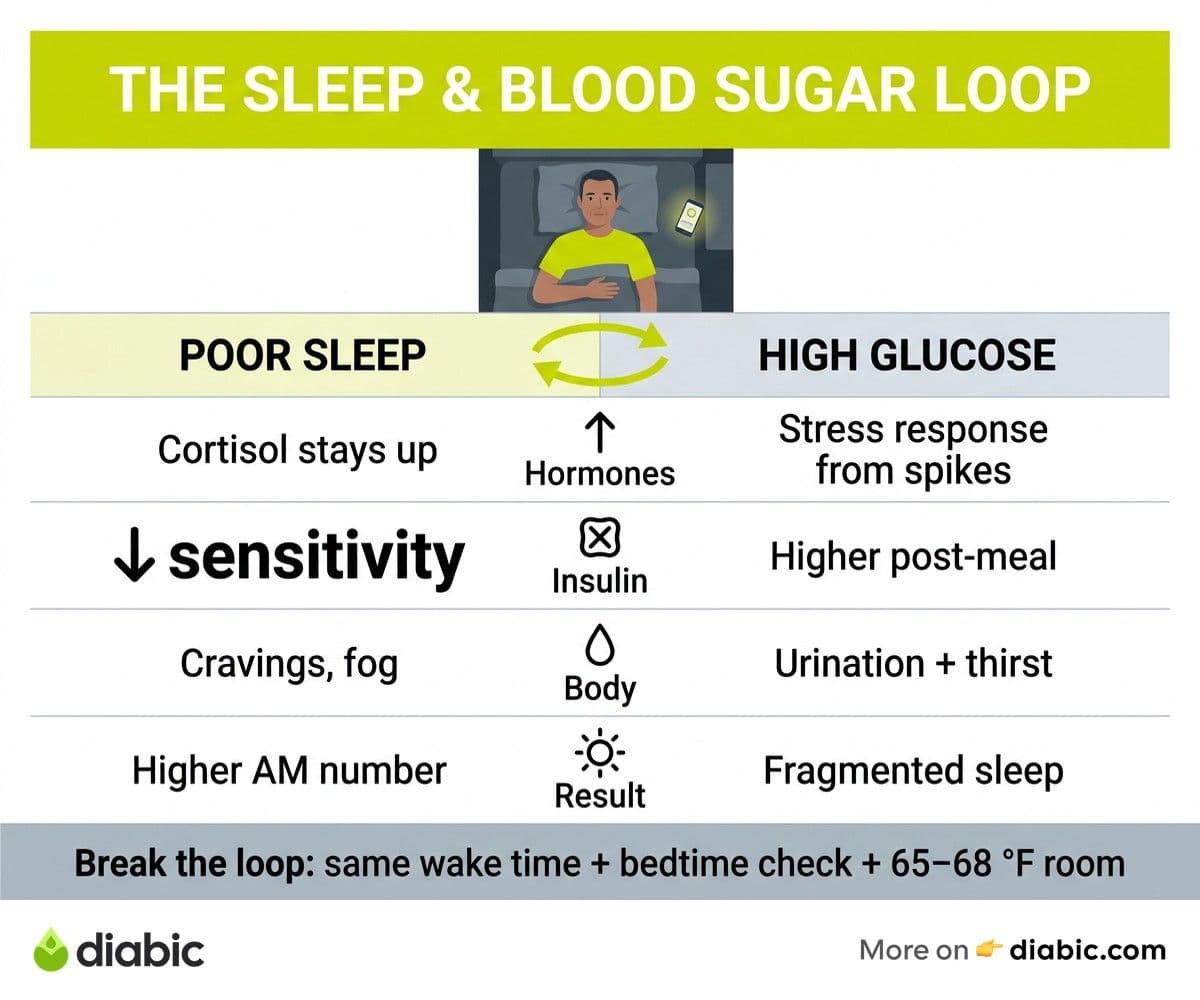
Hormones explain much of the effect. When you cut sleep short, cortisol stays elevated longer into the morning, growth hormone secretion shifts, and the sympathetic nervous system stays mildly activated. All three of these push the liver to release more glucose into the bloodstream, which is one reason fasting numbers creep up after poor sleep. This same mechanism overlaps with the dawn phenomenon, where natural early-morning hormone surges raise glucose before you have eaten anything.
The long-term picture is just as compelling. Studies summarized in the Lancet Diabetes & Endocrinology have linked habitual short sleep, generally under six hours per night, to higher A1C levels and a greater risk of developing type 2 diabetes over time. The effect is not subtle either. Even moving from eight hours to six hours of sleep has been shown to reduce glucose tolerance in otherwise healthy adults within a single week.
There is also the question of breathing during sleep. Untreated sleep apnea and diabetes often travel together, and the repeated drops in oxygen that come with apnea events trigger stress responses that raise nighttime glucose. If you snore loudly, wake up gasping, or feel exhausted despite a full night in bed, this is a conversation worth having with your provider.
How High Blood Sugar Disrupts Sleep
Now flip the relationship around. When glucose runs high overnight, your kidneys try to flush the excess sugar through urine, which means more bathroom trips and a thirstier, drier mouth. That alone fragments sleep into shorter chunks, and the deeper restorative stages never get a fair chance to develop. Many people describe feeling unrefreshed after eight hours in bed without realizing their glucose was the saboteur.
High overnight glucose also brings physical discomfort that keeps the nervous system on edge. Skin can feel itchy, legs can feel restless, and blood vessels work harder to circulate the thicker, more concentrated blood. People with diabetic neuropathy often notice that the burning, tingling, or pins-and-needles sensations in the feet and hands intensify at night, which makes finding a comfortable sleeping position frustrating.
The opposite end of the spectrum matters too. When blood sugar drops at night, your body releases adrenaline and other counter-regulatory hormones to bring glucose back up, which can wake you with a racing heart, sweat-soaked sheets, or vivid dreams. You might not always remember the wake-up clearly, but the disrupted sleep quality is real, and the rebound high that follows can complicate the next morning's reading.
What makes this so frustrating is the loop it creates. Poor sleep raises tomorrow's glucose, and elevated glucose sabotages tomorrow night's sleep, and around it goes. Tiredness and diabetes start reinforcing each other until breaking the cycle feels almost impossible without a deliberate plan. The good news is that small, consistent changes at either end of the loop can begin to soften the pattern within a week or two.
The Role of Sleep Stages in Glucose Regulation
Not all sleep is created equal when it comes to your metabolism. Deep sleep, also called slow-wave sleep, is the phase where your body does its heaviest metabolic housekeeping. According to the National Sleep Foundation, insulin sensitivity peaks during slow-wave sleep, your brain consolidates memory, and growth hormone pulses help repair tissue. When this stage is fragmented or shortened, your cells respond less efficiently to insulin the next day, which shows up as higher post-meal spikes.
REM sleep, the dreaming phase, plays a different but equally important role. Disrupted REM sleep has been linked to changes in appetite-regulating hormones such as leptin and ghrelin, with the net effect being stronger cravings for fast-acting carbs and sweets the following day. If you have ever noticed that a bad night leaves you reaching for cookies by mid-afternoon, the science supports what your body is telling you. Hormonal hunger after poor sleep is real and biological, not a failure of willpower.
The architecture of healthy sleep matters more than the raw number of hours on the clock. Cycling through light, deep, and REM sleep four to six times a night is what produces the metabolic benefits, and that cycling depends on consistent timing. Going to bed and waking at unpredictable hours, or shifting your schedule wildly on weekends, can blunt deep sleep even when total time in bed stays the same. Your circadian rhythm influences glucose tolerance directly, with the American Diabetes Association noting that meal timing and sleep timing are both pieces of the same metabolic puzzle.
Practical Tips for Strengthening the Sleep and Blood Sugar Connection
Start with the foundation that costs nothing: a consistent bedtime and wake time, even on weekends. The body learns when to release melatonin, when to lower core temperature, and when to begin its overnight repair work, and it does all of this best when the schedule is predictable. Even a thirty-minute swing each night can disrupt the rhythm enough to reduce deep sleep, so aim for the same window seven nights a week.
What you eat in the three hours before bed matters more than most people realize. Heavy, high-carb meals late at night can keep glucose elevated through the early sleep cycles, and alcohol fragments sleep in the second half of the night even when it helps you fall asleep faster. We recommend a lighter evening meal with protein, fiber, and healthy fats, and ideally finishing dinner three hours before lights out. There are more strategies in our guide on improving sleep quality that build on this foundation.
Your sleep environment carries surprising weight. A cool room around sixty-five to sixty-eight degrees, blackout curtains, and minimal noise help you stay in deep sleep longer. Phones, tablets, and bright overhead lights in the hour before bed suppress melatonin and delay sleep onset, so dimming the lights and putting screens away creates a real biological signal that the day is ending. Even small upgrades, such as a sleep mask or a white-noise machine, can shift your nights noticeably.
Finally, treat bedtime as a glucose checkpoint. A quick reading before you brush your teeth tells you whether you need a small protein snack to prevent an overnight low, or whether you should walk for ten minutes to bring a high gently down before sleep. The goal is not to chase a perfect number, but to start the night within a range your body can hold steady through the early sleep cycles. The American Diabetes Association recommends working with your care team to set a personal bedtime range that fits your medication, activity, and life.
Frequently Asked Questions
How does poor sleep affect blood sugar?
Poor sleep raises blood sugar through several pathways at once. It increases insulin resistance, meaning your cells respond less efficiently to insulin, and it elevates cortisol and other stress hormones that prompt the liver to release extra glucose. Even a single night of restricted sleep can produce measurable changes in glucose tolerance the next day, and chronic short sleep is linked to higher A1C levels over months and years. The effect compounds when sleep is also fragmented by apnea, nighttime urination, or anxiety.
Does getting more sleep lower blood sugar?
Returning to seven to nine hours of consistent, quality sleep often improves glucose readings within a week or two for many people. The improvement comes from restored insulin sensitivity, calmer cortisol patterns, and better appetite regulation that reduces carb cravings. Sleep alone will not replace medication, nutrition, or movement, but it amplifies the benefit of all three. If you are doing everything else right and still struggling with stubborn numbers, sleep is one of the first places we suggest looking.
What is a healthy bedtime blood sugar?
Bedtime targets vary by person, but many providers suggest a general range of roughly 100 to 140 mg/dL for adults with diabetes, adjusted for individual risk of overnight lows. Talk to your doctor about a personal target that accounts for your medications, age, and how often you experience nighttime hypoglycemia. The right number is the one that lets you sleep safely without spiking or crashing before morning.
Why do I wake up at 3 a.m. with my heart racing?
Waking with a racing heart in the early morning hours can be a sign of nighttime hypoglycemia, where your body releases adrenaline to push glucose back up. It can also be linked to sleep apnea, anxiety, or rebound responses to medication timing. A continuous glucose monitor or a few nights of overnight finger-stick checks can help identify the pattern, and your care team can adjust from there. Episodes like this are often a clue that the sleep and blood sugar connection deserves a closer look in your overall plan.
Shahriar P. Shuvo is the founder of Diabic. He has lived with diabetes for over 14 years, and built Diabic to deliver the practical, evidence-based self-management tools he wished existed when he was first diagnosed. By trade, Shahriar is a senior design and frontend engineer with 6+ years shipping products at Agora, Timescale (now Tiger Data), and ShareTrip. He writes from the intersection of lived diabetes experience and product craft, focused on what works in daily management rather than what sounds good in a textbook.
Medically reviewed by
Dr. Rezwana Parvin Rumpa is an obstetrics and gynaecology specialist with clinical focus on gestational diabetes, PCOS, and fertility. She holds the MRCOG (Final Part) from the Royal College of Obstetricians and Gynaecologists in London, the MRCPI (Final Part) from the Royal College of Physicians of Ireland, and an MBBS from Shaheed Monsur Ali Medical College under Dhaka University. Dr. Rumpa serves as a Senior Medical Officer in the Obs and Gynae department at BRB Hospitals Ltd, where she has spent three years managing prenatal care, emergency obstetric cases, and women's-health surgery. On Diabic, she medically reviews content for women living with diabetes, with particular attention to pregnancy, PCOS, and reproductive-health intersections.
More from Living with Diabetes
View all
A Gentle Chair Yoga Routine for people with diabetes
A gentle chair yoga for people with diabetes routine with safe poses, modifications for neuropathy, retinopathy, and joint pain, plus tips for older.

Shift Work and Diabetes: Managing Irregular Hours
Shift work and diabetes is a tough combination. Learn how to manage meals, sleep, medication, and blood sugar when your hours rotate or flip overnight.

Dating with Diabetes: When to Tell a New Partner
Dating with diabetes brings unique disclosure questions. Here is when to tell a new partner, what to say, and how to handle the conversation with.
Clinician-reviewed habits, plain-language guides, and honest answers - the small shifts that make living with diabetes feel lighter, every day.