Magnesium Supplements and Diabetes
A research-backed look at magnesium supplements and diabetes, covering blood sugar effects, the best forms, safe dosing, and food sources to consider.

In this article(17)
If you have ever scanned the supplement aisle wondering whether magnesium supplements diabetes claims hold up, you are not alone. Of all the minerals studied in connection with blood sugar, magnesium has one of the strongest research bases, and yet it is also one of the most misunderstood. The short version: research consistently shows magnesium deficiency is common in people with type 2 diabetes, and supplementation may modestly improve insulin sensitivity and glucose markers in those who are running low.
This post walks through what the studies actually say, the differences between magnesium forms, dosing and safety considerations, and how food sources stack up. Talk to your doctor before starting any new supplement, especially if you take diabetes medication.
The Link Between Magnesium Supplements and Diabetes
Magnesium is a quiet workhorse. It is involved in more than 300 enzymatic reactions, including the ones your body uses to make insulin work, move glucose into cells, and convert food into energy. When magnesium runs low, those processes get sluggish, which is part of why the mineral has drawn so much attention from diabetes researchers.
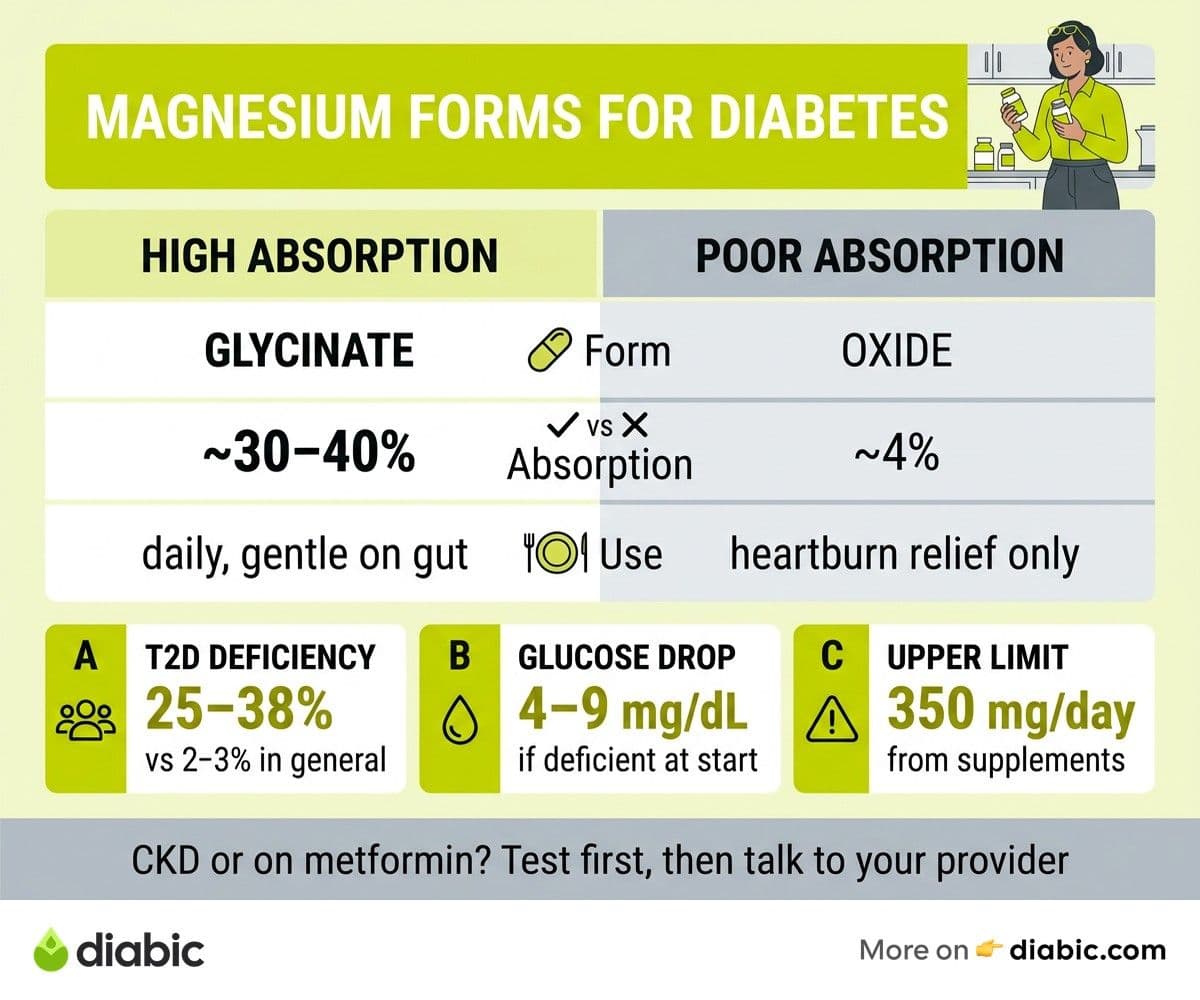
People with type 2 diabetes are more likely to be magnesium deficient than people without diabetes. Studies summarized in the American Journal of Clinical Nutrition have found that 25 to 38 percent of people with type 2 diabetes have low blood magnesium, compared with about 2 to 3 percent in the general population. The relationship runs both ways. Diabetes encourages magnesium loss through urine when blood sugar is high, and low magnesium then makes insulin resistance worse, creating a loop that is hard to break.
Large prospective cohort studies have also linked higher dietary magnesium intake with lower risk of developing type 2 diabetes in the first place. The protective effect tends to show up across diverse populations and persists after adjusting for fiber, body weight, and overall diet quality. None of this proves magnesium prevents or treats diabetes, but it makes the mineral one of the more research-supported nutrients in the conversation around metabolic health.
From my experience: 14 years in, the only supplement my endocrinologist has ever brought up unprompted is magnesium, and only after a blood test showed I was on the low side. That order of operations (test first, supplement second) is worth borrowing.
Magnesium Supplements Diabetes Management Outcomes
Magnesium supplements for diabetes tend to attract attention for a few specific outcomes: fasting glucose, insulin sensitivity, and HbA1c. The research here is not flashy, but it is reasonably consistent. A 2017 meta-analysis in Nutrients Journal pooled 18 randomized controlled trials and found that magnesium supplementation, typically 250 to 450 mg daily for 4 to 24 weeks, modestly improved fasting glucose and insulin sensitivity markers compared with placebo.
Effects on HbA1c are smaller and less reliable in studies that included participants with normal magnesium levels at baseline. The pattern suggests something intuitive: if you are deficient, supplementation may help. If you are already replete, adding more probably will not move your numbers much. This is the opposite of "more is better," and it is the reason many clinicians recommend testing serum magnesium before starting a supplement.
Timelines matter too. Most studies show meaningful improvements only after 8 to 12 weeks of consistent intake, with some changes taking even longer. If you start magnesium expecting to see your CGM trace transform in a week, you are setting yourself up for disappointment. A realistic expectation is a small, supportive shift layered on top of the foundations: food, activity, sleep, and your prescribed medications.
Magnesium is not a substitute for diabetes medication, and it cannot reverse insulin resistance on its own. What it can do, when paired with the rest of your management plan, is potentially nudge things in the right direction. For a similar evidence-grounded look at another commonly recommended nutrient, our post on vitamin D supplements for diabetes follows the same framework.
Does Magnesium Help Lower Blood Sugar?
The question of whether magnesium helps lower blood sugar in people with diabetes has been studied head-on. A 2016 meta-analysis published in Diabetes Care reviewed randomized controlled trials of magnesium supplementation in people with diabetes and prediabetes. The pooled finding: fasting glucose dropped by an average of about 4 to 9 mg/dL in supplemented groups versus placebo, with the largest effects in participants who started with low magnesium status.
For comparison, common diabetes medications like metformin can lower fasting glucose by 30 to 40 mg/dL or more in some users. Magnesium is not in that league, and it should not be framed as one. The effect size is small but real, and it tends to add up over months rather than days.
Several factors explain why people respond differently:
- Baseline magnesium status is the biggest variable. Deficient individuals see the largest improvements.
- The form of magnesium used influences absorption. Oxide forms move the needle less than glycinate or citrate.
- Diet quality and overall lifestyle interact with supplementation effects.
- Kidney function affects how well your body holds onto magnesium in the first place.
The honest summary is that magnesium supplementation may help lower blood sugar modestly, mostly in people who are deficient, and mostly over a span of weeks to months. That is useful information, just not a headline.
Types of Magnesium: Which Is Best for Diabetes?
If you have ever stared at a wall of magnesium bottles wondering what type of magnesium is best for people with diabetes, you have hit one of the most practical questions in this whole conversation. The form changes how much your body absorbs and how well your gut tolerates it. Research summarized in Nutrients Journal on magnesium bioavailability points to a clear hierarchy.
Magnesium glycinate
Magnesium glycinate is bound to the amino acid glycine. It is well-absorbed, gentle on the digestive system, and unlikely to cause loose stools at typical doses. For people with diabetes who want a daily option to support sleep, mood, or general magnesium intake, this is often the first form clinicians suggest.
Magnesium citrate
Magnesium citrate is also well-absorbed and slightly cheaper than glycinate. It does have a mild laxative effect at higher doses, which is helpful if constipation is also a concern but not great if you are sensitive. Many diabetes-focused trials have used citrate forms, so the evidence base is solid.
Magnesium oxide
Magnesium oxide is the most common form on drugstore shelves because it is cheap and packs a lot of elemental magnesium per pill. The catch is bioavailability is poor. Studies estimate absorption rates around 4 percent compared with 30 to 40 percent for glycinate and citrate. If your goal is to actually raise your magnesium status, oxide is not the most efficient choice.
Magnesium taurate
Magnesium taurate combines magnesium with the amino acid taurine, which has its own research base in cardiovascular and glucose metabolism. Some smaller studies suggest taurate may have additional benefits for blood pressure and blood sugar, though the evidence is earlier-stage than glycinate or citrate.
Magnesium L-threonate, malate, and chloride
L-threonate is studied mostly for cognitive support, malate for energy and fibromyalgia symptoms, and chloride is sometimes used topically. None has a strong diabetes-specific evidence base, but they may be appropriate depending on other goals you are working on with your provider.
Talk to your doctor about which form makes sense for you, especially if you take medications or have kidney issues.
Diabetes and Magnesium: Safety and Dosing
Diabetes and magnesium supplements raise a few specific safety considerations that are worth knowing before you click "add to cart." The NIH Office of Dietary Supplements magnesium fact sheet lists the recommended dietary allowance at 400 to 420 mg per day for adult men and 310 to 320 mg per day for adult women, with slightly higher numbers during pregnancy.
The tolerable upper limit for supplemental magnesium (separate from food sources) is 350 mg per day for most adults. Going above that without medical guidance can cause diarrhea, cramping, and in rare cases, more serious effects. Specific dosing should always come from your provider, not a forum post.
A few interactions matter for people managing diabetes:
- Metformin can lower magnesium levels with long-term use, which is part of why magnesium status is sometimes checked at follow-up visits.
- Insulin and magnesium move together. Insulin helps shuttle magnesium into cells, and high blood sugar pushes more magnesium out through urine.
- Diuretics, particularly loop and thiazide diuretics often used for blood pressure, can deplete magnesium.
- Proton pump inhibitors used long-term may also reduce magnesium absorption.
Kidney function is the most important consideration. People with reduced kidney function have a harder time clearing excess magnesium, and supplementation can lead to dangerous buildup. Anyone with chronic kidney disease should only take magnesium under medical supervision. Our companion posts on zinc supplements for diabetes and iron supplements and diabetes cover similar safety frameworks worth reading if you are stacking minerals.
Signs of low magnesium can be subtle: muscle cramps, restless sleep, fatigue, irritability, and frequent headaches. Severe deficiency can cause irregular heart rhythms. A serum magnesium test is the standard first step, and some clinicians also use red blood cell magnesium for a longer-term picture. Ask your doctor whether testing makes sense for you.
Getting Magnesium from Food Sources
Before reaching for capsules, food deserves the first look. Magnesium supplements and diabetes management work best alongside a magnesium-rich eating pattern, not as a replacement for it. Many of the same foods recommended for blood sugar control are also strong magnesium sources, which is a happy overlap.
Top food sources that fit a diabetes-friendly plate include:
- Pumpkin seeds (about 168 mg per ounce), one of the densest sources around
- Chia seeds (about 111 mg per ounce), also rich in fiber
- Almonds and cashews (75 to 80 mg per ounce)
- Spinach, Swiss chard, and other dark leafy greens (about 75 to 80 mg per half cup cooked)
- Black beans and edamame (about 60 to 100 mg per half cup)
- Avocado (about 58 mg per medium fruit)
- Dark chocolate, 70 percent or higher (about 65 mg per ounce)
- Salmon and mackerel (modest but useful contributors)
A simple way to check your intake is to log what you eat for three days and add up the magnesium content. If you are pulling 250 to 350 mg from food on most days, you may not need a supplement at all. If your typical intake is closer to 150 to 200 mg, food upgrades come first, with supplementation as a backup if testing shows low levels. For more meal ideas that double up on magnesium and blood sugar support, see our roundup of vitamin D supplements for diabetes, which touches on similar food-first principles.
The combination of food, sleep, movement, and any medication your provider has prescribed will always do more than a supplement alone. Magnesium can be a useful addition when the foundations are in place and a real deficiency exists.
FAQ
Does magnesium help lower blood sugar in people with diabetes?
Research suggests magnesium supplementation may modestly improve fasting blood sugar and insulin sensitivity, particularly in people who are deficient at baseline. Meta-analyses have shown average fasting glucose reductions of around 4 to 9 mg/dL, which is a supportive effect rather than a dramatic one. It works best as a complement to standard diabetes management, not a replacement for medication or lifestyle changes.
What type of magnesium is best for people with diabetes?
Magnesium glycinate and magnesium citrate are generally the preferred options because both offer high absorption and tend to be well-tolerated. Glycinate is especially gentle on the digestive system, while citrate has more mild laxative potential at higher doses. Magnesium oxide, while inexpensive, is poorly absorbed and not the most efficient way to raise magnesium status. Talk to your doctor about which form fits your specific needs.
How much magnesium should someone with diabetes take?
The recommended dietary allowance is 400 to 420 mg per day for adult men and 310 to 320 mg per day for adult women, including food sources. The tolerable upper limit specifically from supplements is 350 mg per day for most adults. Specific dosing varies by individual factors like kidney function, current medications, and baseline magnesium status, so this is a question for your provider.
Can magnesium interact with diabetes medications?
Yes, several interactions are worth knowing about. Long-term metformin use can lower magnesium levels, diuretics commonly prescribed for blood pressure can deplete magnesium, and proton pump inhibitors may reduce absorption. Magnesium also moves alongside insulin in ways that can become more pronounced when blood sugar is poorly managed. Always tell your healthcare team about any supplements you take.
Should I get tested before taking magnesium supplements?
Testing serum magnesium (and sometimes red blood cell magnesium for a longer-term view) before starting supplementation is a reasonable conversation to have with your provider, especially if you have type 2 diabetes, take metformin, or have kidney concerns. Knowing your baseline helps you tell whether supplementation is actually needed, and it gives you a way to track changes over time.
The case for magnesium supplements diabetes management is steady rather than spectacular. If a blood test shows you are running low, supplementation may offer a small but real assist. If you are already replete, food and the rest of your routine are doing their job, and the supplement aisle can wait.
Shahriar P. Shuvo is the founder of Diabic. He has lived with diabetes for over 14 years, and built Diabic to deliver the practical, evidence-based self-management tools he wished existed when he was first diagnosed. By trade, Shahriar is a senior design and frontend engineer with 6+ years shipping products at Agora, Timescale (now Tiger Data), and ShareTrip. He writes from the intersection of lived diabetes experience and product craft, focused on what works in daily management rather than what sounds good in a textbook.
Medically reviewed by
Dr. Shanto Arian is an internal medicine physician now specializing in clinical and aesthetic dermatology, with a parallel academic focus on epidemiology and public health. He holds an MBBS, MPH, MSc (UK), MRCP (UK), MRCPI (Ireland), Diploma in Dermatology (UK), and Diploma in Aesthetic Medicine (USA). Dr. Arian trained in internal medicine, including hospital work on hematology cases such as graft-versus-host disease, before moving toward dermatology. Skin is one of the earliest places diabetes shows itself, from acanthosis nigricans and diabetic dermopathy to slow foot wound healing, and that intersection is where his clinical and Diabic-review work meet. On Diabic, Dr. Arian medically reviews content on diabetes diagnosis, complications, dermatologic manifestations, and pharmacotherapy, ensuring every claim aligns with current ADA, NICE, and peer-reviewed literature.
More from Diet & Fitness
View all
Simple Diabetes Exercise Routine for Beginners
A simple diabetes exercise routine for beginners with a 7-day plan, strength basics, and safety tips to help you move more without feeling overwhelmed.

Diabetes Friendly Smoothie Recipes: 5 No-Spike Picks
Five diabetes friendly smoothie recipes that balance protein, fat, and fiber to keep blood sugar steady. Includes a simple framework for building your own.

Can Exercise Prevent Diabetes? Research Says Yes
Can exercise prevent diabetes? Landmark studies show a 58% lower risk with regular activity. Here's how much you need and which workouts help most.
Clinician-reviewed habits, plain-language guides, and honest answers - the small shifts that make living with diabetes feel lighter, every day.