Zinc Supplements for Diabetes: What to Know 2026
Zinc supplements for diabetes may support blood sugar and insulin function. See what research shows, food sources, forms, and what to ask your doctor.

In this article(12)
Zinc supplements for diabetes are worth a careful look, because zinc plays a direct role in how your body stores and releases insulin, and people with diabetes are statistically more likely to be deficient in this mineral than the general population. Beta cells in the pancreas use zinc to package insulin into the granules that release it, which means low zinc status can quietly affect glucose regulation in ways most people never connect to a mineral.
That said, "supportive" is the right word, not "treatment." Zinc is not a substitute for medication, lifestyle change, or medical care. The promising part is that for many people with diabetes (especially those running low on the mineral), modest supplementation may meaningfully support broader management efforts. Below we walk through what the research shows, how zinc compares to other minerals, and what to ask your doctor before starting anything new.
Why Zinc Supplements for Diabetes Deserve Attention
Zinc is involved in more than 300 enzymatic reactions in the body, and several of them sit right in the middle of glucose metabolism. MedlinePlus's overview of zinc in the diet notes that zinc enhances the action of insulin and supports cell growth, immune function, and wound healing. Inside pancreatic beta cells, zinc binds insulin into hexamers, which is the storage form the cell uses before release. When blood glucose rises, the cell releases zinc and insulin together. Without enough zinc on hand, that storage and release process gets clumsy.
Diabetes itself increases zinc loss. Higher blood glucose leads to more frequent urination, and zinc travels out with that urine. Studies summarized in the Journal of Diabetes Research document this hyperzincuria pattern in both type 1 and type 2 diabetes. The body is trying to do its job, and a useful nutrient is leaving in the process.
Prevalence of zinc deficiency in people with diabetes runs higher than in matched controls in most studies that look. Some report rates of 20 to 30 percent compared to single digits in non-diabetic populations. The picture is not uniform across regions or diets, but the trend is consistent enough that endocrinologists increasingly include zinc status in the conversation about supportive care.
Immune function adds another layer. Zinc is essential for T-cell development and wound healing, two areas where people with diabetes already face headwinds. Slow-healing wounds and frequent infections are common complaints that map, in part, to zinc's role in immunity. Adequate zinc does not guarantee fast healing, but inadequate zinc can quietly slow it.
Does Zinc Help with Blood Sugar Control?
Several meta-analyses have looked at zinc supplementation in type 2 diabetes, and the picture is cautiously positive. A widely cited analysis published in Diabetology & Metabolic Syndrome pooled results from multiple randomized controlled trials and found modest but statistically significant reductions in fasting blood glucose, A1C, and markers of insulin resistance with zinc supplementation. The strongest effects appeared in studies that recruited participants with documented zinc deficiency.
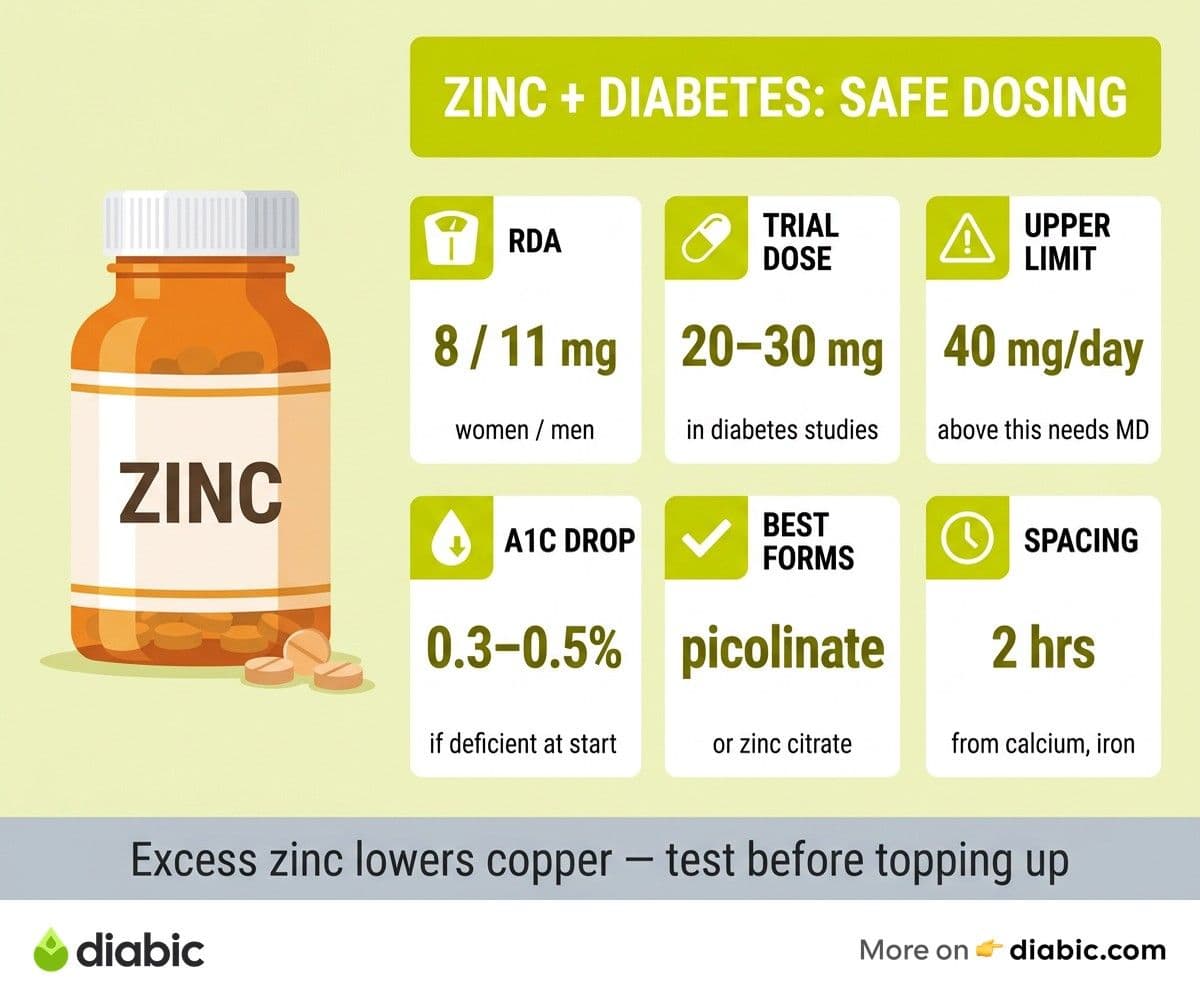
Effects on A1C in those analyses ranged from roughly 0.3 to 0.5 percentage points, which is real but not dramatic. For context, that is in the same range as adding a moderate amount of weekly exercise or making meaningful dietary changes. As an add-on to other management, the benefit can be useful. As a stand-alone intervention, it is not enough.
Compared to other mineral supplements studied for blood sugar, zinc sits in the middle of the pack. Magnesium has a longer track record and somewhat stronger evidence in people with insulin resistance, and our guide on magnesium supplements and diabetes walks through that research in detail. Chromium has mixed evidence. Zinc holds its own and stands out for the additional immune and wound-healing benefits.
Zinc's antioxidant role is part of the story too. The mineral is a cofactor for superoxide dismutase, one of the body's main antioxidant enzymes. Oxidative stress damages beta cells and contributes to long-term complications, so any nutrient that supports the antioxidant system has plausible value in diabetes care. Research suggests this antioxidant effect may explain part of why zinc shows blood sugar benefits beyond what a simple insulin-storage explanation would predict.
Calcium Supplements and Diabetes: A Complementary Mineral
Talk of zinc inevitably leads to questions about calcium supplements for diabetes, because the two minerals interact in the gut and in cellular signaling. Calcium plays its own role in insulin secretion. Beta cells release insulin only after a calcium-mediated signal, and adequate calcium status is part of normal glucose regulation.
The catch is that calcium and zinc compete for absorption in the small intestine when taken in large doses at the same time. A 1,000 mg calcium supplement washed down at the same moment as a 30 mg zinc supplement will reduce zinc uptake noticeably. The fix is timing rather than avoidance. Most clinicians recommend separating high-dose calcium and zinc by at least two hours.
Calcium needs vary by age and sex, and most adults can meet them through dairy, fortified plant milks, leafy greens, and small fish with edible bones. People with diabetes who avoid dairy or have absorption issues may benefit from a supplement, but routine calcium supplementation is not standard for blood sugar reasons alone. Bone health, muscle function, and cardiovascular signaling drive that decision.
When considering a mineral-focused approach, the practical question is which gaps to fill rather than which pills to take. A blood test for zinc, magnesium, and vitamin D is a sensible starting point. Our guide on vitamin D supplements for diabetes covers the third member of that common trio, which has its own evidence base around insulin sensitivity and immune support.
Antioxidant Support and Diabetes
The interest in antioxidant supplements for diabetes comes from a clear biological rationale. High blood glucose generates reactive oxygen species, and over years that oxidative stress contributes to nerve damage, kidney damage, and cardiovascular disease. Zinc fits into this picture as a structural component of antioxidant enzymes, particularly the copper-zinc form of superoxide dismutase that protects pancreatic tissue.
Combining zinc with other antioxidant nutrients is an active area of research. Studies have looked at zinc plus selenium, zinc plus vitamin C, and zinc plus alpha-lipoic acid. The combinations sometimes show better results than zinc alone, especially for markers of oxidative stress and inflammation. Clinical relevance for blood sugar is still being worked out.
A whole-food approach to antioxidants tends to outperform isolated supplements in long-term studies. Berries, leafy greens, nuts, seeds, whole grains, dark chocolate, and brightly colored vegetables deliver a cocktail of antioxidant compounds that work together. Supplements have a role, particularly when a specific deficiency is documented, but the food-first principle holds for most people.
For those looking at zinc specifically as antioxidant support, the dose matters. Very high doses of zinc can suppress copper absorption, and copper is itself an antioxidant cofactor. Pushing one nutrient too hard can create a deficiency in another. This is one of several reasons that mineral supplementation works best with medical guidance rather than as a do-it-yourself project.
How Much Zinc Should You Take
The recommended dietary allowance for zinc is 8 mg daily for adult women and 11 mg for adult men, according to the NIH Office of Dietary Supplements zinc fact sheet. Most diabetes-focused trials use therapeutic doses in the 20 to 30 mg range, sometimes for several months. The tolerable upper intake level for adults is set at 40 mg daily from all sources combined, including food.
Going above 40 mg without medical supervision is where problems start. Excess zinc can cause copper deficiency, lower HDL cholesterol, suppress immune function, and produce gastrointestinal symptoms. The dose-response curve for zinc is shaped like an inverted U, where too little and too much both cause harm. We are not going to suggest a specific number for any individual, because that depends on baseline status, kidney function, medications, and other factors only your doctor can assess.
Forms of zinc differ in absorption and tolerability. Zinc picolinate and zinc citrate tend to be well-absorbed and easier on the stomach. Zinc gluconate is widely available and inexpensive. Zinc sulfate works but more often causes nausea, especially on an empty stomach. Whatever the form, taking zinc with a small amount of food (not a calcium-heavy meal) usually improves comfort.
Signs of zinc deficiency to discuss with your doctor include slow wound healing, frequent colds, changes in taste or smell, hair thinning, and unexplained skin issues. None of these are specific to zinc, which is exactly why a blood test matters before assuming a supplement is the answer.
Drug interactions matter too. Zinc can reduce absorption of certain antibiotics and may interact with diuretics commonly prescribed for blood pressure. Some diabetes medications, including older sulfonylureas, have their own interactions with zinc status. A pharmacist or prescribing doctor can flag these, and our broader guide on iron supplements and diabetes covers the related question of how iron and zinc interact in supplementation programs.
From my experience: living with diabetes for 14 years, I have tried more supplements than I can count. Zinc was one of the few I noticed something from, but only after a blood test showed I was actually low. The lesson I keep coming back to is to test before guessing. A 12-dollar lab order saved me from years of useless pills and pointed me at the one mineral that genuinely needed attention.
Getting Zinc from Your Diet
Food sources of zinc cover a useful range of meals. Oysters are the headline option, with a single serving delivering well above the daily requirement, but they are not part of most weekly menus. Beef, poultry, and pork all contribute meaningfully, with red meat ranking highest among common animal sources. For people who eat seafood, crab and lobster are also strong sources.
Plant sources work, but absorption is more complicated. Pumpkin seeds, chickpeas, lentils, cashews, hemp seeds, and quinoa all carry zinc, but whole grains and legumes also contain phytates, which bind zinc and reduce its absorption. Soaking, sprouting, and fermenting can lower phytate content, which is one reason traditional preparations (sourdough bread, sprouted lentils, fermented soy) are easier on mineral absorption.
Dark chocolate (the genuine 70 percent or higher kind, in modest portions) provides zinc along with magnesium and antioxidants. It is a small contribution to daily intake, but it is also one of the more pleasant ways to add minerals to a diabetes-friendly diet when portions are controlled.
Balancing zinc intake with iron and other minerals is a real consideration for people taking multiple supplements. According to research summarized in the American Journal of Clinical Nutrition, high-dose iron supplements can interfere with zinc absorption, and vice versa. Spacing minerals across the day or relying on food sources for one while supplementing the other is a practical workaround. People with diabetes who have iron-deficiency anemia should work with their doctor to design a sequence that handles both without causing new gaps.
FAQ
Does zinc help with blood sugar control?
Research suggests that zinc supplementation can modestly improve fasting blood sugar and A1C in people with type 2 diabetes, particularly those who are zinc deficient. The effects are supportive and work best as part of a comprehensive management plan that includes nutrition, movement, sleep, and prescribed medications. Zinc is not a substitute for any of those.
How much zinc should a person with diabetes take daily?
The recommended daily allowance is 8 mg for women and 11 mg for men, while clinical studies on diabetes have used 20 to 30 mg daily for limited periods. The tolerable upper intake level is 40 mg per day from all sources, and exceeding that without supervision can cause copper deficiency and other problems. Talk to your doctor about testing your zinc status before starting any supplement, and let them decide on the right dose for you.
What is the best form of zinc supplement?
Zinc picolinate, zinc citrate, and zinc gluconate are all reasonable choices, with picolinate often cited as the most bioavailable. Zinc sulfate tends to cause more stomach upset. Whatever form you use, taking it with a small amount of food (not paired with a high-calcium meal) usually improves both comfort and absorption.
Can I get enough zinc from food alone?
Many people can. Oysters, beef, poultry, pumpkin seeds, chickpeas, lentils, and cashews all contribute meaningfully, and a varied diet usually meets the recommended intake. People with diabetes who run higher zinc losses through urine, follow restrictive diets, or have absorption issues may need a supplement, and a blood test is the cleanest way to find out where you stand.
Are zinc supplements safe with diabetes medications?
Zinc can interact with certain antibiotics, diuretics, and a few diabetes medications, so a pharmacist or prescribing doctor should review your full medication list before you add a supplement. The interactions are usually about timing and absorption rather than serious safety risks, but they are worth checking.
The honest takeaway on zinc supplements for diabetes is that they sit somewhere between optional and useful, depending on where you start. If a blood test shows your level is low, modest supplementation may pay off in steadier numbers, faster wound healing, and a stronger immune response. If your status is already adequate, food sources can hold the line without an added pill. Test before you supplement, talk to your doctor about timing around your other medications, and let zinc supplements for diabetes play the supporting role they are best at rather than asking them to lead.
Shahriar P. Shuvo is the founder of Diabic. He has lived with diabetes for over 14 years, and built Diabic to deliver the practical, evidence-based self-management tools he wished existed when he was first diagnosed. By trade, Shahriar is a senior design and frontend engineer with 6+ years shipping products at Agora, Timescale (now Tiger Data), and ShareTrip. He writes from the intersection of lived diabetes experience and product craft, focused on what works in daily management rather than what sounds good in a textbook.
Medically reviewed by
Dr. Rezwana Parvin Rumpa is an obstetrics and gynaecology specialist with clinical focus on gestational diabetes, PCOS, and fertility. She holds the MRCOG (Final Part) from the Royal College of Obstetricians and Gynaecologists in London, the MRCPI (Final Part) from the Royal College of Physicians of Ireland, and an MBBS from Shaheed Monsur Ali Medical College under Dhaka University. Dr. Rumpa serves as a Senior Medical Officer in the Obs and Gynae department at BRB Hospitals Ltd, where she has spent three years managing prenatal care, emergency obstetric cases, and women's-health surgery. On Diabic, she medically reviews content for women living with diabetes, with particular attention to pregnancy, PCOS, and reproductive-health intersections.
More from Diet & Fitness
View all
Simple Diabetes Exercise Routine for Beginners
A simple diabetes exercise routine for beginners with a 7-day plan, strength basics, and safety tips to help you move more without feeling overwhelmed.

Diabetes Friendly Smoothie Recipes: 5 No-Spike Picks
Five diabetes friendly smoothie recipes that balance protein, fat, and fiber to keep blood sugar steady. Includes a simple framework for building your own.

Can Exercise Prevent Diabetes? Research Says Yes
Can exercise prevent diabetes? Landmark studies show a 58% lower risk with regular activity. Here's how much you need and which workouts help most.
Clinician-reviewed habits, plain-language guides, and honest answers - the small shifts that make living with diabetes feel lighter, every day.