Dawn Phenomenon vs Somogyi Effect: Key Differences
Dawn phenomenon vs Somogyi effect explained: causes, how to tell them apart with CGM or 2 AM testing, and what current research says about each.

In this article(7)
Waking up with high blood sugar is maddening, especially when your evening numbers looked fine. The dawn phenomenon vs Somogyi effect debate is two different explanations for the same morning frustration, and telling them apart is the first step toward fixing those stubborn highs. The catch is that one of these effects is well documented and the other has become controversial as continuous glucose monitor data has piled up.
This post walks through what each effect actually is, how to figure out which one (if either) is happening to you, and why your endocrinologist may push back on a Somogyi diagnosis even if you grew up hearing the term. We will not prescribe insulin adjustments because those decisions belong to you and your provider. What we will do is give you the framework to bring better data to that appointment.
What Is the Dawn Phenomenon?
The dawn phenomenon is a natural rise in blood sugar that happens between roughly 4 and 8 AM, driven by a normal hormonal cascade. Cortisol, growth hormone, glucagon, and catecholamines all surge in the early morning hours to wake your body up and prepare it for the day. In someone without diabetes, the pancreas releases extra insulin to match. In a person with diabetes, the insulin response is missing or blunted, and blood sugar climbs.
Research published in Diabetes Care found the dawn phenomenon affects roughly half of people with type 2 diabetes and a similar share of those with type 1, though the size of the rise varies widely. Some people see a 10 to 20 mg/dL bump. Others wake up 60 to 80 points higher than their 3 AM reading. Our normal blood sugar levels chart covers what fasting numbers should look like across age groups for context.
The signature of the dawn phenomenon is gradual. Blood sugar is normal or close to normal in the middle of the night, then climbs steadily into the morning without a preceding low. There is no rebound, no dramatic dip, just hormones doing what they do. It is more pronounced in type 2 diabetes but absolutely happens in type 1 as well, and it can shift over time as insulin sensitivity changes.
What Is the Somogyi Effect?
The Somogyi effect, named after researcher Michael Somogyi who proposed it in the 1930s, describes a rebound high blood sugar caused by the body overcompensating for an overnight low. The theory is that too much insulin or too little food before bed causes blood sugar to drop in the early morning hours, and the liver responds by dumping glucose, which leaves you waking up high. Counterregulatory hormones like glucagon and epinephrine drive the rebound, the same hormones involved in the dawn phenomenon.
The Mayo Clinic's overview of the Somogyi effect describes it as a possible cause of morning highs, but they are careful to note that modern continuous glucose monitor data has called the prevalence of the effect into question. When researchers actually watch overnight CGM traces from people who wake up high, they more often see steady or rising glucose all night, not a low followed by a rebound. Our post on blood sugar drops at night covers what overnight lows actually look like and how often they truly happen.
This is where the controversy sits. Many endocrinologists today consider the Somogyi effect either rare or essentially non-existent in the form it was originally described. CGM studies suggest most "Somogyi" mornings are actually missed undertreated highs that never came down, or simple dawn phenomenon misinterpreted because patients were not testing in the middle of the night. That does not mean it never happens. It means a confident Somogyi diagnosis without overnight data is increasingly hard to justify.
How to Tell Dawn Phenomenon vs Somogyi Effect Apart
The detective work happens overnight. Without overnight data, you are guessing, and guessing wrong leads to medication changes that can make things worse. There are two practical ways to gather the data you need.
The first is finger-stick testing at 2 or 3 AM for several nights in a row. Set an alarm, do the check, write the number down, go back to bed. It is awful for a week and worth it for the answer. Pair the 2 AM reading with your bedtime number and your fasting morning number. Repeat for at least three to five nights since one night is not a pattern.
The second and easier method is a continuous glucose monitor. Devices like Dexcom and FreeStyle Libre give you the full overnight curve without waking you up. The Joslin Diabetes Center recommends overnight CGM data as the gold standard for diagnosing morning hyperglycemia patterns because it removes the guesswork and shows you exactly where the rise starts.
Read the data this way:
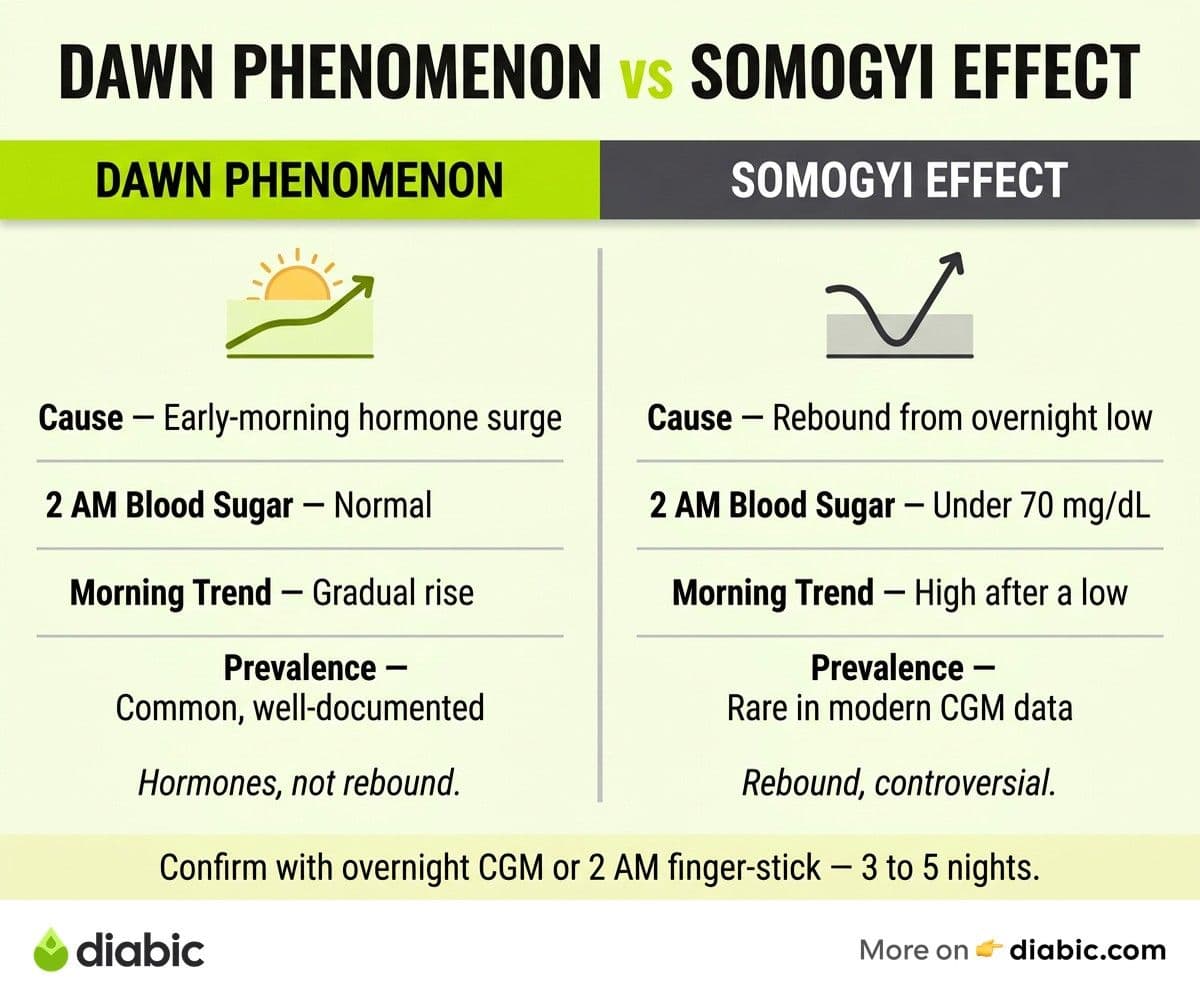
- Dawn phenomenon: Blood sugar is normal or only slightly elevated at 2 AM, then climbs gradually into the morning. No low.
- Somogyi effect (the classic pattern): Blood sugar is low at 2 AM (under 70 mg/dL), then rebounds high by morning.
- Untreated overnight high: Blood sugar is already elevated at bedtime and at 2 AM, and stays elevated through morning. This is by far the most common pattern in modern CGM studies.
- Combined: A normal 2 AM with a small rise on top of a dawn surge. Mixed patterns are real.
Here is how the two effects stack up side by side:
For deeper detail on what the morning number itself means, our explainer on fasting blood sugar breaks down how to interpret that single reading inside the larger context.
Treatment Strategies for Each
We will not give insulin adjustment numbers in this post because the right move depends on your medication, your starting numbers, your insurance, and your provider's clinical judgment. The dawn phenomenon vs Somogyi effect treatment paths share some habits and diverge sharply on the insulin side, which is why the underlying pattern matters so much. Bring your overnight data to the appointment and ask which strategies apply to you.
For the dawn phenomenon, providers often look at the timing and dose of long-acting (basal) insulin, whether a pump's overnight basal rate could be programmed to rise in the early morning hours, the timing of evening medications like metformin, the size and timing of dinner, and the role of physical activity in the late afternoon. The American Diabetes Association's standards of care include guidance on how to address persistent fasting hyperglycemia, and your endocrinologist can map those options to your situation.
For the Somogyi effect (when the data really shows a 2 AM low), the conversation usually moves toward reducing the evening basal dose, adding a small bedtime snack with protein and fat, or shifting the timing of evening insulin so the peak does not coincide with the lowest hormone window of the night. Continuous glucose monitor alarms set for the 70 to 80 mg/dL range during sleep give you a buffer to catch lows before they trigger a rebound.
For both patterns, a few habits help. Avoid high-carb late-night snacking that leaves blood sugar climbing into the early hours. Maintain consistent sleep and wake times, since circadian rhythm and the dawn hormone surge are tightly linked. Our post on the sleep and blood sugar connection goes into the mechanisms in more detail. If morning highs persist after thoughtful adjustments, that is the moment to escalate to your healthcare team rather than keep tinkering at home.
From my experience: I spent two years convinced I had Somogyi rebounds because I would occasionally feel sweaty around 5 AM and then wake up at 230. When I finally got a CGM and watched the overnight traces, I had not been low at any point in any of those nights. My basal was simply not covering the dawn surge, and the "sweats" were anxiety dreams from a high. Looking at the actual graph saved me from cutting my evening dose, which would have made the mornings worse, not better.
FAQ
What is the dawn phenomenon in diabetes?
The dawn phenomenon is a natural rise in blood sugar that occurs between 4 and 8 AM, caused by the early-morning release of hormones like cortisol, growth hormone, and glucagon. In people without diabetes, the pancreas releases extra insulin to compensate. In people with diabetes, the insulin response is insufficient and fasting blood sugar rises. It affects a significant share of people with type 1 and type 2 diabetes and is best confirmed with overnight CGM data or 2 AM finger-stick testing.
Is it dawn phenomenon or Somogyi effect?
The only reliable way to tell whether a morning high is dawn phenomenon or Somogyi effect is to check blood sugar at 2 to 3 AM for several nights, ideally with a continuous glucose monitor. Dawn phenomenon shows normal blood sugar at 2 AM rising into the morning. The classic Somogyi effect shows a low at 2 AM followed by a rebound high. Modern CGM research suggests true Somogyi rebounds are less common than originally believed, and many morning highs are dawn phenomenon or simply undertreated overnight glucose. Talk to your doctor with your overnight data before adjusting any medication.
The dawn phenomenon vs Somogyi effect question is solvable, but only with data. Get the overnight numbers, share them with your healthcare team, and resist the temptation to change doses based on a guess. The morning number is a clue, not a verdict.
Shahriar P. Shuvo is the founder of Diabic. He has lived with diabetes for over 14 years, and built Diabic to deliver the practical, evidence-based self-management tools he wished existed when he was first diagnosed. By trade, Shahriar is a senior design and frontend engineer with 6+ years shipping products at Agora, Timescale (now Tiger Data), and ShareTrip. He writes from the intersection of lived diabetes experience and product craft, focused on what works in daily management rather than what sounds good in a textbook.
Medically reviewed by
Dr. Rezwana Parvin Rumpa is an obstetrics and gynaecology specialist with clinical focus on gestational diabetes, PCOS, and fertility. She holds the MRCOG (Final Part) from the Royal College of Obstetricians and Gynaecologists in London, the MRCPI (Final Part) from the Royal College of Physicians of Ireland, and an MBBS from Shaheed Monsur Ali Medical College under Dhaka University. Dr. Rumpa serves as a Senior Medical Officer in the Obs and Gynae department at BRB Hospitals Ltd, where she has spent three years managing prenatal care, emergency obstetric cases, and women's-health surgery. On Diabic, she medically reviews content for women living with diabetes, with particular attention to pregnancy, PCOS, and reproductive-health intersections.
More from Living with Diabetes
View all
A Gentle Chair Yoga Routine for people with diabetes
A gentle chair yoga for people with diabetes routine with safe poses, modifications for neuropathy, retinopathy, and joint pain, plus tips for older.

Shift Work and Diabetes: Managing Irregular Hours
Shift work and diabetes is a tough combination. Learn how to manage meals, sleep, medication, and blood sugar when your hours rotate or flip overnight.

Dating with Diabetes: When to Tell a New Partner
Dating with diabetes brings unique disclosure questions. Here is when to tell a new partner, what to say, and how to handle the conversation with.
Clinician-reviewed habits, plain-language guides, and honest answers - the small shifts that make living with diabetes feel lighter, every day.