What Your Fasting Blood Sugar Number Actually Means
Your blood sugar fasting result is more than a number. Learn what normal, prediabetic, and high ranges mean, and how to respond with confidence.

In this article(10)
You walk out of the lab holding a printout with one number on it, and that number is supposed to tell you something important about your health. The blood sugar fasting test is one of the first checks a doctor orders when diabetes is on the table, yet most people leave the appointment with the result and almost no understanding of what it actually means. If your number came back normal, borderline, or high, this guide unpacks what your body is signaling.
Knowing how to read your fasting glucose value matters because it shapes the conversations you have with your provider for years to come. A single reading does not define you, but it does tell a story about how your body handles sugar overnight. We will walk through what the test measures, what the ranges mean, and what to do with the information.
What Is a Fasting Blood Sugar Test
A fasting glucose test is a blood draw taken after you have not eaten or drunk anything other than water for 8 to 12 hours. The point is simple. Your provider wants to see how your body manages glucose without the influence of a recent meal. According to the National Institute of Diabetes and Digestive and Kidney Diseases, this test is one of the most common ways to screen for and diagnose diabetes.
The test differs from other glucose checks you might encounter. A random glucose test can be done at any time without fasting, and an oral glucose tolerance test involves drinking a sugary solution and measuring how your body responds over two hours. Each test answers a slightly different question about your glucose handling.
Fasting glucose is also used to track ongoing diabetes management. If you already live with type 1, type 2, or gestational diabetes, your provider may order the test periodically to see how your morning numbers compare with your day-to-day patterns. The number gives them a baseline to work from when adjusting medication or talking through lifestyle changes.
Fasting Blood Sugar Ranges and What They Mean
The American Diabetes Association sets clear thresholds for interpreting fasting glucose results. These ranges are the same numbers your doctor is looking at when they read your lab report. Knowing them yourself takes some of the mystery out of the conversation.
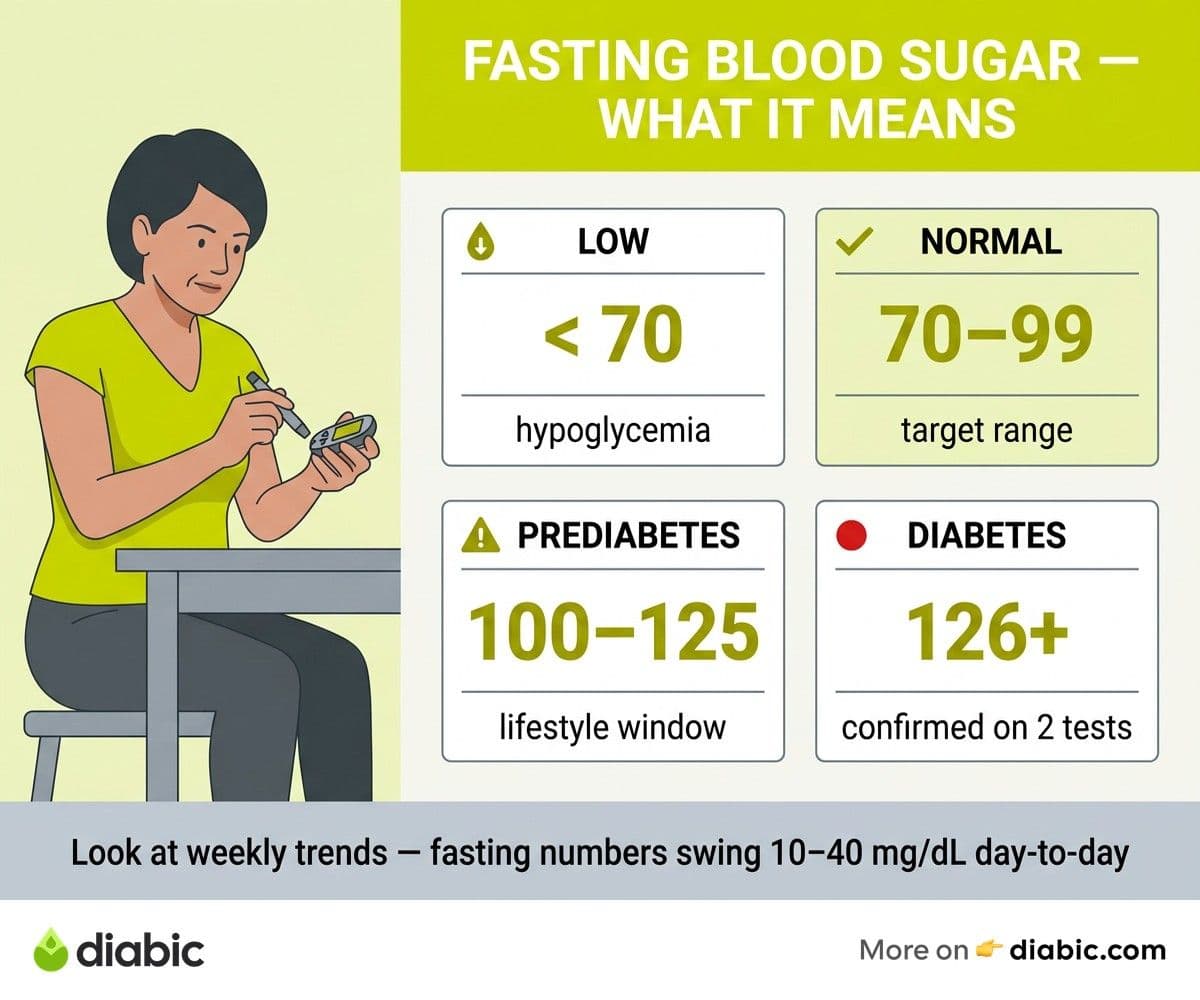
Here is a quick reference of what each range typically means for adults who are not pregnant.
A reading below 70 mg/dL points to hypoglycemia. For someone on insulin or certain oral diabetes medications, this can mean the dose is too high or that meal timing needs a closer look. If you see frequent lows, this is the moment to read up on when blood sugar turns dangerous and bring the pattern to your provider.
The 70 to 99 range is considered normal. Your body is keeping glucose in a healthy zone overnight, which is what we want to see. A normal fasting result alone does not rule out post-meal spikes, though, which is why providers often pair the test with an A1C.
Numbers in the 100 to 125 range fall into prediabetes territory. This is not a diagnosis of diabetes, but it is a clear signal that your body is having trouble managing glucose at rest. Many people see their fasting number drift into this range slowly over years, often without symptoms. For more context on age-related patterns, our normal blood sugar levels chart breaks it down by life stage.
A fasting result of 126 mg/dL or higher on two separate tests meets the ADA criteria for a diabetes diagnosis. One high reading on its own is not enough. Providers want to confirm with a second test, sometimes paired with an A1C, before making it official.
How Fasting Blood Sugar Connects to A1C
A fasting glucose result is a single moment in time. Your A1C, by contrast, reflects your average blood sugar over the past two to three months. The Centers for Disease Control and Prevention recommends using both tests together because each one fills in gaps the other cannot.
Imagine your fasting number comes back at 130 mg/dL, but your A1C is 5.7 percent. That mismatch is worth a closer look. It can suggest something called the dawn phenomenon, where your liver releases extra glucose in the early morning hours and pushes your fasting reading up even though your overall control is solid. Our piece on dawn phenomenon vs Somogyi effect explains this in more detail.
The reverse can happen too. A normal fasting number paired with a high A1C often points to post-meal spikes. Your overnight glucose looks fine, but your readings climb sharply after breakfast, lunch, and dinner, dragging your three-month average up. In that case, your provider may want to check post-meal glucose or order continuous glucose monitoring for a few weeks.
Looking at both numbers together gives a fuller picture. One snapshot plus one moving average usually beats either one alone.
Factors That Affect Your Blood Sugar Fasting Number
Your blood sugar fasting result is not just a reflection of your diabetes management. A handful of everyday factors can nudge the number up or down without changing your underlying health much at all. Research published in the journal Diabetes Care highlights how variable fasting glucose can be from one morning to the next, even in well-managed cases.
Sleep is one of the biggest influences. Poor sleep raises cortisol and reduces insulin sensitivity, which can show up as a higher fasting reading. Even one rough night can shift your number by 10 to 20 mg/dL for some people. The sleep and blood sugar connection post goes deeper into the mechanisms at play.
Evening meals matter more than most people realize. A heavy late dinner, especially one rich in refined carbs, can keep your liver and pancreas busy well into the night. Late-night snacking has a similar effect. If your fasting numbers trend high, paying attention to what and when you eat the night before is often the first place to look.
Medications can also drive the number up. Steroids like prednisone are common culprits, as are some beta-blockers and certain antidepressants. If you started a new prescription and noticed a shift in your fasting glucose, that timing is worth flagging to your provider.
Stress hormones add another layer. Cortisol naturally peaks in the early morning, which is part of why fasting numbers tend to run higher than mid-day readings. Chronic stress amplifies this effect. The dawn phenomenon and the Somogyi effect both involve hormone-driven shifts that can push fasting glucose higher overnight.
From my experience: After 14 years with type 1, I learned that my fasting number is the most volatile reading of my day. A late workout, a glass of wine with dinner, a stressful work week, or a poor night of sleep all change my morning value by 30 to 40 points. I stopped panicking about any single result and started looking at weekly trends instead. That shift alone took a lot of the emotional weight off my morning routine.
What to Do If Your Fasting Blood Sugar Is High
One high reading is not a diagnosis, and it is not a verdict on your habits. Your provider is far more interested in patterns than in a single data point. Before changing anything, take a few more readings over the following week and look for consistency.
If your numbers stay elevated, lifestyle adjustments are usually the first conversation. A 15 to 20 minute walk after dinner has been shown to lower morning glucose for many people. Shifting your dinner earlier in the evening, choosing a lower-carb dinner option, or simply prioritizing sleep can also help. These are small moves with real impact, and they are also free.
Medication adjustment is sometimes needed, but that is a decision for you and your provider together. Never change a dose on your own. If you are already on a long-acting insulin or an oral medication, your team may suggest a tweak to timing or strength based on your fasting data.
Retesting frequency depends on where you are in your management. People with prediabetes often retest every 3 to 6 months, while people with diabetes may check far more often or wear a continuous glucose monitor for ongoing data. When you bring your numbers to your provider, ask what pattern they want to see and when they want to recheck.
FAQ
What does a fasting blood sugar test measure?
A fasting blood sugar test measures the amount of glucose in your blood after 8 to 12 hours without food or caloric drinks. It shows how well your body manages glucose at rest, separate from the influence of a recent meal. The result helps your provider screen for prediabetes and diabetes or track an existing diagnosis.
What is a normal fasting blood sugar level?
A normal fasting blood sugar level for most non-pregnant adults is between 70 and 99 mg/dL, according to the American Diabetes Association. Readings of 100 to 125 mg/dL fall into the prediabetes range, and 126 mg/dL or higher on two separate tests meets the criteria for a diabetes diagnosis. Your individual target may differ if you are pregnant, older, or living with other conditions, so talk to your doctor about what number is right for you.
Can stress raise fasting blood sugar?
Yes. Cortisol and other stress hormones can raise fasting glucose, especially during chronic stress or after a poor night of sleep. If you notice your fasting numbers creeping up during a high-stress period, that pattern is worth tracking and sharing with your provider.
How often should I test my fasting blood sugar?
Testing frequency depends on your situation. People with prediabetes may retest every few months, while people with type 1 or type 2 diabetes often test daily or wear a continuous glucose monitor. Your provider will set a schedule based on your goals, your medications, and your A1C trends.
A single blood sugar fasting number is information, not judgment. Use it as a starting point for the right conversations and a few practical changes. Patterns over time will always tell a clearer story than any one morning reading, and the work of paying attention is itself a form of self-care. Track a week or two of blood sugar fasting values alongside what you ate, how you slept, and how you felt, and the noisy single readings start to look like a story you can act on with your provider.
Shahriar P. Shuvo is the founder of Diabic. He has lived with diabetes for over 14 years, and built Diabic to deliver the practical, evidence-based self-management tools he wished existed when he was first diagnosed. By trade, Shahriar is a senior design and frontend engineer with 6+ years shipping products at Agora, Timescale (now Tiger Data), and ShareTrip. He writes from the intersection of lived diabetes experience and product craft, focused on what works in daily management rather than what sounds good in a textbook.
Medically reviewed by
Dr. Shanto Arian is an internal medicine physician now specializing in clinical and aesthetic dermatology, with a parallel academic focus on epidemiology and public health. He holds an MBBS, MPH, MSc (UK), MRCP (UK), MRCPI (Ireland), Diploma in Dermatology (UK), and Diploma in Aesthetic Medicine (USA). Dr. Arian trained in internal medicine, including hospital work on hematology cases such as graft-versus-host disease, before moving toward dermatology. Skin is one of the earliest places diabetes shows itself, from acanthosis nigricans and diabetic dermopathy to slow foot wound healing, and that intersection is where his clinical and Diabic-review work meet. On Diabic, Dr. Arian medically reviews content on diabetes diagnosis, complications, dermatologic manifestations, and pharmacotherapy, ensuring every claim aligns with current ADA, NICE, and peer-reviewed literature.
More from Living with Diabetes
View all
A Gentle Chair Yoga Routine for people with diabetes
A gentle chair yoga for people with diabetes routine with safe poses, modifications for neuropathy, retinopathy, and joint pain, plus tips for older.

Shift Work and Diabetes: Managing Irregular Hours
Shift work and diabetes is a tough combination. Learn how to manage meals, sleep, medication, and blood sugar when your hours rotate or flip overnight.

Dating with Diabetes: When to Tell a New Partner
Dating with diabetes brings unique disclosure questions. Here is when to tell a new partner, what to say, and how to handle the conversation with.
Clinician-reviewed habits, plain-language guides, and honest answers - the small shifts that make living with diabetes feel lighter, every day.