Recognizing Diabetic Coma Warning Signs Early
Learn to spot diabetic coma warning signs early. We cover DKA, HHS, and severe hypoglycemia symptoms, plus when to call 911 for immediate help.

In this article(10)
A diabetic coma rarely arrives without warning, but the early signals are easy to brush off as tiredness, stress, or a rough day. The faster you spot the diabetic coma warning signs, the more time you have to act, call for help, or prevent a full crisis. We want to walk you through what to watch for, why it matters, and what to do the moment something feels off.
This is one of those topics that feels uncomfortable to read about, and we get that. Living with diabetes already takes mental energy, and emergency planning can feel like one more weight to carry. The truth is that knowing these signs gives you and the people around you more confidence, not less, because preparation replaces panic with a plan.
If you or a loved one ever loses consciousness or becomes unresponsive, call 911 immediately. The information here is meant to help you recognize trouble before it reaches that point, and to help family or coworkers know what to do if it does.
From my experience: The closest I came to real trouble was an Omnipod failure on a travel day, where my blood sugar climbed past 350 before I figured out the cannula had kinked. The first sign was a stomach ache I would have brushed off if I had not been wearing a CGM. The way a cannula failure feels different from a stress high is something you only learn by living through one or two of them, and it taught me to test ketones any time the number stays high after a correction.
What Is a Diabetic Coma?
A diabetic coma is a loss of consciousness caused by extremely high or extremely low blood sugar. It is a medical emergency that can be fatal without rapid treatment, and it can affect anyone with Type 1 or Type 2 diabetes under the right conditions. The term covers a few different physiological pathways, but the end result is the same: the brain stops getting what it needs to function, and the person becomes unresponsive.
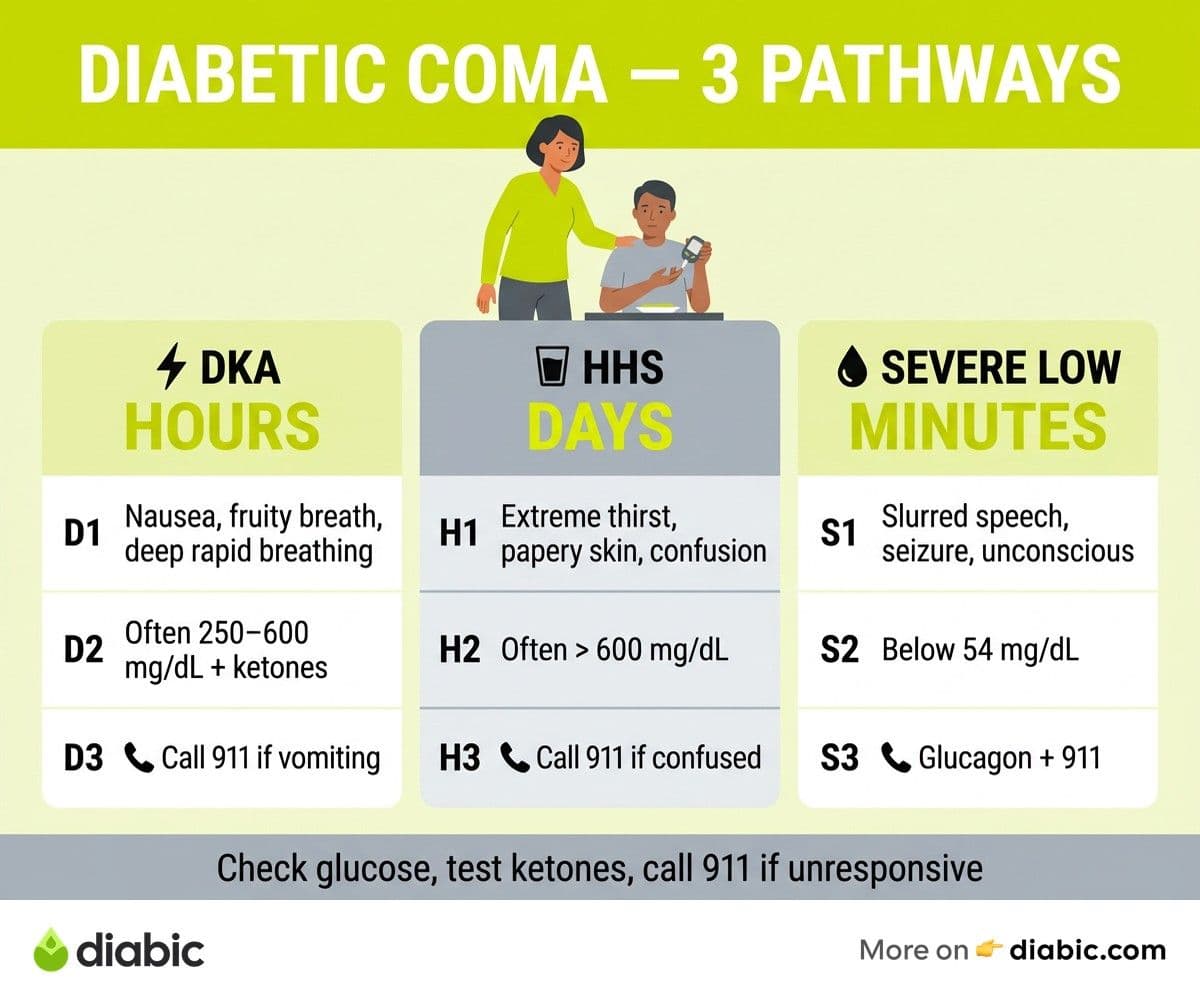
There are three main pathways that lead to a diabetic coma, and each has its own buildup. Diabetic ketoacidosis, or DKA, develops when blood sugar runs very high and the body starts breaking down fat for fuel, producing acidic ketones that poison the blood. Hyperglycemic hyperosmolar syndrome, often called HHS, is a slower crisis driven by extreme dehydration and very high glucose levels, more common in older adults with Type 2. Severe hypoglycemia is the opposite problem, where blood sugar drops so low that the brain cannot function, leading to seizures or loss of consciousness.
According to the American Diabetes Association, DKA and HHS are both medical emergencies that require hospital treatment, and severe hypoglycemia is treated as urgently. The good news is that all three almost always show warning signs first, sometimes for hours or even days. Learning to read those signals is what this article is about.
Warning Signs of Diabetic Ketoacidosis Leading to Coma
Diabetic ketoacidosis tends to creep up over hours, especially during illness, missed insulin doses, or insulin pump failures. The first signs often look like the flu, which is part of why DKA gets missed so often. You may notice nausea that does not let up, vomiting that you cannot keep food or fluids down through, and a stomach ache that feels deeper than usual.
As DKA progresses, the body tries to blow off acid through the lungs, which produces a distinct breathing pattern. Your breath may smell sweet or fruity, almost like nail polish remover or overripe apples, because of acetone buildup. Breathing itself may become deep and rapid, sometimes called Kussmaul breathing, as if you cannot quite catch your breath even at rest. The Mayo Clinic lists these respiratory changes as some of the most reliable late-stage warnings.
Mental changes follow as the blood becomes more acidic. You might feel foggy, drowsy, or unable to concentrate on a simple task. Family members often notice this before the person does, describing a partner or parent who seems "not quite right" or who is repeating themselves. If you want a deeper breakdown of the early body cues, our guide on what ketoacidosis feels like and how to treat it walks through the timeline in more detail.
DKA can move from mild to severe within a few hours once vomiting starts, because you cannot replace lost fluids or take in carbohydrates to balance insulin. This is why we always say to test for ketones any time you feel unwell with diabetes, especially with Type 1, even if your blood sugar reading is not extremely high yet.
Warning Signs of Hyperglycemic Hyperosmolar Syndrome
Hyperglycemic hyperosmolar syndrome moves more slowly than DKA, and that is what makes it dangerous. The buildup happens over days, sometimes weeks, and the symptoms get explained away as "getting older" or "fighting off something." Blood sugar can climb above 600 mg/dL before anyone realizes what is happening, and by then the body is severely dehydrated.
The earliest sign is usually overwhelming thirst paired with frequent urination that goes on for days. You drink water constantly, but it never quite quenches the dryness, and the bathroom trips do not slow down. Skin starts to feel papery, eyes look sunken, and a low-grade fever may show up without any obvious infection. Weakness creeps in until standing up from a chair feels harder than it should.
Mental status changes are the most overlooked HHS signs. According to research published in Diabetes Care, the ADA's flagship journal, mental status changes in HHS often progress from mild confusion to drowsiness to unresponsiveness over a period of days, which is why family members are often the first to notice. An older parent who suddenly seems disoriented, who cannot remember a familiar routine, or who is sleeping far more than usual deserves a blood sugar check, not a wait-and-see approach.
HHS is more common in older adults with Type 2 diabetes, particularly those who live alone or have other health conditions that mask symptoms. If you are a caregiver, our breakdown of hyperglycemic hyperosmolar syndrome warning signs goes deeper into the patterns to watch for and how to differentiate them from a urinary tract infection or dementia flare.
Warning Signs of Severe Hypoglycemia Leading to Unconsciousness
Severe hypoglycemia is the fastest path to a diabetic coma and the one most likely to happen with little buildup. Most people with diabetes recognize the early diabetes symptoms of a low: shakiness, sweating, a racing heart, hunger that hits suddenly, and irritability. The trouble starts when those signs get missed or when the low keeps dropping despite treatment.
When blood sugar continues to fall, the brain runs out of fuel and behavior changes become obvious to anyone watching. You may slur your words, lose coordination, drop things, or have trouble walking in a straight line. Confusion sets in, and you might insist you are fine even while struggling to answer simple questions. At very low levels, seizures or loss of consciousness can happen within minutes.
Some people develop hypoglycemia unawareness over time, meaning they no longer feel the early shakiness or sweating that used to warn them. The Endocrine Society clinical practice guidelines flag this as a major risk factor for severe lows, especially for people with long-standing Type 1 diabetes or those on intensive insulin therapy. If you have had unexplained passing out, nighttime seizures, or repeated severe lows, talk to your provider about whether a continuous glucose monitor or a glucagon prescription should be part of your plan.
Other risk factors include skipping meals after taking insulin, drinking alcohol on an empty stomach, intense exercise without adjusting carbs, and certain medication interactions. Knowing your personal risk pattern is one of the best ways to prevent a hypoglycemic emergency from ever reaching the coma stage.
What to Do When You Spot Diabetic Coma Warning Signs
The first move when you notice any of these signs of diabetes emergency is to check your blood sugar. A fingerstick gives you immediate information, and if your meter reads high, follow up with a ketone test using either a urine strip or a blood ketone meter. If your reading is low and you are still conscious, treat with 15 grams of fast-acting carbs, then retest in 15 minutes.
There are clear lines for when home treatment is not enough. Call 911 right away if the person is unconscious, having a seizure, breathing strangely, vomiting and unable to keep fluids down, showing fruity-smelling breath, or confused to the point that they cannot follow simple instructions. These are not situations to "see if it gets better." Our guide on when to go to the ER for diabetes lays out the decision points more clearly if you want a printable reference.
While waiting for emergency responders, position the person on their side in case they vomit, do not try to give food or drink to someone who is not fully alert, and gather their medication list, glucose meter, and any recent readings. If you suspect a low and the person cannot swallow safely, glucagon (injectable or nasal) is the right tool, and any household with a person on insulin should have one within reach.
When emergency responders arrive, give them a quick, clear handoff. Tell them the person has diabetes, what type, what medications they take, when the last dose was, the most recent blood sugar reading, and any ketone results. This information shapes the first treatment decisions and can save valuable time at the hospital.
Preventing Diabetic Coma: Reducing Your Risk
Most diabetic comas can be prevented with a few consistent habits that build a safety net under everyday life. Acting on diabetic coma warning signs early is far easier than recovering from a full crisis. Regular blood sugar checks, especially during illness or stressful periods, are the foundation. A continuous glucose monitor with alerts can catch overnight lows or rising trends before they spiral, and many people find that the alarms alone reduce their emergency risk.
Sick day rules are something every person with diabetes should rehearse before they need them. The basics are: keep taking your insulin even when you cannot eat, check blood sugar every two to four hours, test for ketones if your reading is over 240 mg/dL, drink fluids steadily, and call your provider if you cannot keep liquids down or if ketones rise. The CDC publishes a sick day guide that is worth saving to your phone.
Communication plans matter just as much as medical plans. Make sure at least one person at home, work, and in your social circle knows you have diabetes, where your supplies are kept, and how to use a glucagon kit. A medical ID bracelet or necklace tells first responders what they need to know if you cannot speak for yourself, and many people now use phone lock screens or medical ID app entries to share emergency contacts.
If you want a single document to manage all of this, our diabetes emergency plan checklist walks through what to write down, what to print, and where to store it. The goal is not to live in fear of an emergency. It is to make the emergency unlikely, and to make sure that if one ever happens, the response is fast and confident.
FAQ
What are the first signs of a diabetic coma?
The first signs depend on the cause. For DKA, look for nausea, vomiting, fruity breath, and rapid breathing. For HHS, watch for extreme thirst, frequent urination over days, and growing confusion. For severe hypoglycemia, the warning signs are shakiness, sweating, slurred speech, and disorientation. In all three cases, drowsiness and confusion are late-stage signals that need urgent attention.
Can a diabetic coma be prevented?
Yes, most diabetic comas can be prevented with consistent blood sugar monitoring, sick day planning, ketone testing when blood sugar runs high, and clear communication with the people around you. Working with your healthcare team to fine-tune your plan is the best way to reduce risk over time, especially if you have had close calls before.
How long does it take for a diabetic coma to develop?
DKA can progress from early symptoms to a coma within 24 hours, sometimes faster if vomiting prevents fluid intake. HHS develops more slowly, often over several days. Severe hypoglycemia can move from a mild low to unconsciousness in minutes if untreated, especially during exercise, sleep, or after alcohol.
Knowing the diabetic coma warning signs is one of the most useful pieces of education a household with diabetes can carry, alongside a glucagon kit and a printed sick-day plan. If you suspect a diabetic coma or any medical emergency, call 911 immediately.
Shahriar P. Shuvo is the founder of Diabic. He has lived with diabetes for over 14 years, and built Diabic to deliver the practical, evidence-based self-management tools he wished existed when he was first diagnosed. By trade, Shahriar is a senior design and frontend engineer with 6+ years shipping products at Agora, Timescale (now Tiger Data), and ShareTrip. He writes from the intersection of lived diabetes experience and product craft, focused on what works in daily management rather than what sounds good in a textbook.
Medically reviewed by
Dr. Rezwana Parvin Rumpa is an obstetrics and gynaecology specialist with clinical focus on gestational diabetes, PCOS, and fertility. She holds the MRCOG (Final Part) from the Royal College of Obstetricians and Gynaecologists in London, the MRCPI (Final Part) from the Royal College of Physicians of Ireland, and an MBBS from Shaheed Monsur Ali Medical College under Dhaka University. Dr. Rumpa serves as a Senior Medical Officer in the Obs and Gynae department at BRB Hospitals Ltd, where she has spent three years managing prenatal care, emergency obstetric cases, and women's-health surgery. On Diabic, she medically reviews content for women living with diabetes, with particular attention to pregnancy, PCOS, and reproductive-health intersections.
More from Treatment & Medication
View all
Switching to Injectable Diabetes Medication: What to Expect
Switching to injectable diabetes medication can feel daunting. Learn what to expect, how to manage side effects, and why this step is progression, not.

Hyperglycemic Hyperosmolar Syndrome: Warning Signs to Know
Hyperglycemic hyperosmolar syndrome is a serious type 2 diabetes emergency. Learn the warning signs, triggers, and when to call 911 for HHS care.

Semaglutide vs Tirzepatide: Key Differences You Should Know
Semaglutide vs tirzepatide explained: how they work, A1C and weight results, side effects, costs, and how to choose the right injectable with your doctor.
Clinician-reviewed habits, plain-language guides, and honest answers - the small shifts that make living with diabetes feel lighter, every day.