Glucose Tablets for Hypoglycemia: When and How to Use Them
Glucose tablets for hypoglycemia give you a measured dose to bring lows up fast. Learn the 15-15 rule, dosing, top brands, and when to skip the juice.

In this article(10)
Glucose tablets for hypoglycemia are one of the fastest, most precise ways to bring your blood sugar back up when it drops too low. If you have ever grabbed a random snack during a low and ended up overcorrecting an hour later, tablets can take the guesswork out of treatment. They give you exactly the dose you need, no more and no less.
A low can hit when you least expect it. You might be on a walk, sitting in a meeting, or halfway through dinner when the shaking starts. Having a treatment that works in roughly 15 minutes and fits in a pocket changes how confidently you move through the day.
This guide walks through what glucose tablets are, when to reach for them, how to dose them correctly, and which brands tend to land best for taste and price. We will also cover faster alternatives if your tablets are out of reach.
What Are Glucose Tablets and How Do They Treat Hypoglycemia
Glucose tablets are chewable, fast-acting carbohydrate doses made from pure dextrose. Dextrose is a simple sugar that does not need to be broken down by your digestive system before entering the bloodstream, which is why it raises blood sugar faster than most foods. Each tablet is portioned to deliver a known number of grams of carbs, usually 4 grams per tablet.
That predictability matters. According to Endocrine Society hypoglycemia management guidance, treating a low with a measured dose of fast-acting carbohydrate reduces the likelihood of overcorrection, which is one of the most common reasons people end up in a glucose roller coaster after a single low.
Most tablets start raising blood sugar within 5 to 10 minutes, with peak effect around 15 to 20 minutes. That timing is what the standard 15-15 rule is built around. Compared to a granola bar or a handful of crackers, which contain fat, fiber, or protein that slow absorption, glucose tablets are essentially a clean delivery system for sugar.
The FDA regulates over-the-counter glucose products under specific labeling rules, so you can trust that a tablet labeled 4 grams of dextrose actually contains that amount. Liquid gels, juice boxes, and candy do not always carry that same precision.
When to Use Glucose Tablets
The standard threshold for treating a low is a blood sugar reading below 70 mg/dL. The American Diabetes Association classifies anything in this range as Level 1 hypoglycemia and recommends immediate treatment with 15 grams of fast-acting carbohydrate. Once you check your meter and see that number, your tablets become the next step.
Symptoms can also signal a low before you test. Shakiness, sweating, a racing heartbeat, sudden hunger, irritability, confusion, or trouble concentrating are all common warning signs. If you are checking with a reliable home meter, you can confirm the number before treating. If you cannot test immediately and symptoms feel real, treat first and verify after.
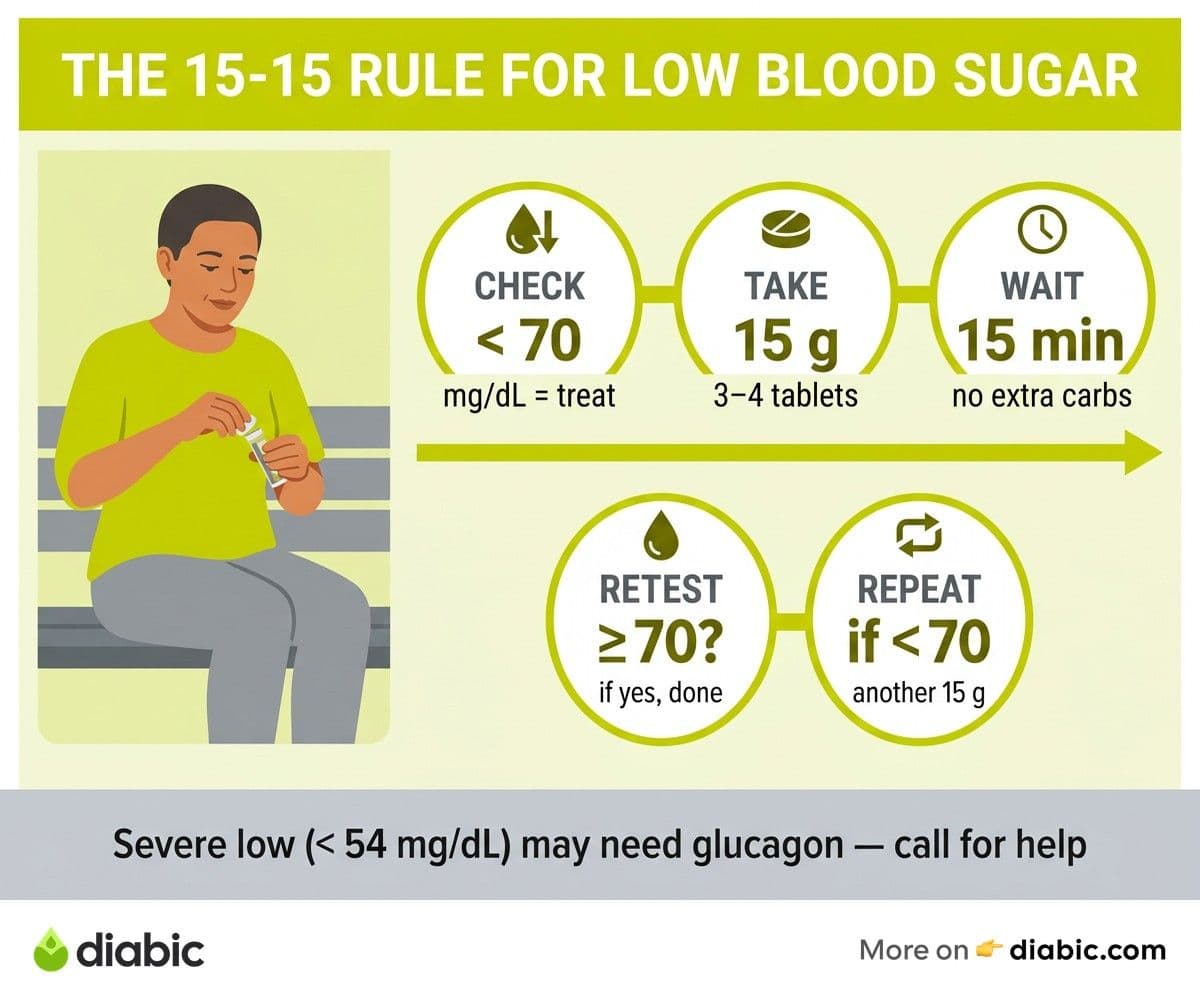
The 15-15 rule is the framework most diabetes care teams teach:
- Take 15 grams of fast-acting carbohydrate (3 to 4 glucose tablets)
- Wait 15 minutes without adding more food
- Recheck your blood sugar with your meter
- Repeat the dose if you are still below 70 mg/dL
Waiting that full 15 minutes is the part most people skip. The instinct during a low is to keep eating until you feel better, but symptoms often lag behind your actual glucose number. By the time you feel "back to normal," you may already be on the way to a high. Stocking the right diabetes test strips for your meter is part of making the recheck step easy to follow through.
How to Use Glucose Tablets Step by Step
Start by checking your blood sugar. A finger stick or a CGM trend is enough to confirm where you are. If you are below 70 mg/dL or trending down quickly with symptoms, treat. The ADA Standards of Care 2026 reinforce that 15 grams of fast-acting glucose is the appropriate first dose for most adults experiencing a Level 1 low.
Chew 3 to 4 tablets, depending on the grams per tablet. Do not swallow them whole. Chewing breaks them down so the dextrose absorbs through the lining of your mouth and digestive tract more quickly. If you are eating them dry and they feel chalky, a small sip of water helps, but avoid drinking large amounts because that can dilute and slow absorption slightly.
Set a timer for 15 minutes. This is the hardest part for most people, especially when symptoms are uncomfortable. Resist the urge to graze or open the snack drawer in the meantime. Recheck your blood sugar at the 15-minute mark. If you are still below 70 mg/dL, repeat with another 15 grams.
Once you are stable and back above 70 mg/dL, follow up with a small balanced snack if your next meal is more than an hour away. A piece of toast with peanut butter, a few crackers with cheese, or a half-sandwich helps prevent the low from coming back. Skip this step and you may end up treating the same low twice.
From my experience: After 14 years of living with type 1 diabetes, the single biggest shift in how I handle lows was switching from juice boxes to tablets in everyday situations. With juice, I was almost always over 200 mg/dL an hour later. With 4 tablets and a 15-minute pause, the recovery is cleaner and the spike afterward is much smaller. I still keep juice in the car for severe lows where I need the speed and volume, but tablets earn their spot in my pocket every time I leave the house.
Best Glucose Tablet Brands Compared
There are five brands you will see on most pharmacy shelves in the US, and each has a slightly different formula, flavor profile, and price point. The right pick depends on taste tolerance, packaging preference, and how you carry them.
Dex4 is the most widely recognized brand and is sold direct on the Dex4 website along with regional pharmacies. The texture is slightly softer than store brands, which some people find easier to chew through during a low. ReliOn and CVS Health tablets are virtually identical in chemistry and tend to be the most affordable, especially if you are working through budget-conscious diabetes supplies.
Beyond traditional tablets, you have two other formats to consider. Glucose gels (like Insta-Glucose or GU-style packets) come in a squeezable pouch and absorb a hair faster than tablets because they bypass the chewing step. They are useful for severe lows when chewing feels difficult. Liquid glucose, often sold as 15g shots, is the fastest of the three and is helpful for people who get nauseated during lows or who care for children. The trade-off is bulk in your bag and a higher price per dose.
Alternatives to Glucose Tablets for Hypoglycemia
Tablets are convenient, but they are not the only option. If you are out of tablets or need something already in your kitchen, several foods deliver close to 15 grams of fast-acting carbs.
A 4-ounce juice box contains roughly 15 grams of sugar and works almost as fast as tablets. Apple juice and orange juice are the most common picks because the sugar content is consistent. A regular (not diet) soda at about 4 ounces is also effective, though carbonation can slow some people down. Honey and cake-frosting gel both supply fast sugar and travel well in small tubes. Glucose-only formats are still preferred when you have them because the dose precision is hard to match.
Skip candy bars, chocolate, and ice cream during an active low. Fat slows absorption, which means your blood sugar will not come up as quickly as your meter or symptoms suggest you need. The ADA notes that fat-containing snacks should follow the initial treatment, not replace it.
A CGM also plays a role in catching lows early, which can mean treating with smaller doses or avoiding lows altogether. Trend arrows give you a heads-up that finger-stick checks alone do not. If you are using a CGM and notice a downward arrow at 90 mg/dL, you can sometimes head off a full low with a single tablet rather than the standard 15-gram dose. Always confirm with a meter before treating if your CGM and your symptoms disagree.
Building a Glucose Tablet Habit That Sticks
Tablets only work if they are with you when a low hits. The most common mistake we see is people buying a single tube, leaving it in one bag, and being caught empty-handed at work or in the car. Stash a tube in every place you spend time: bedside table, purse or backpack, car console, desk drawer, gym bag. Buy in bulk packs and refill these spots monthly so you never run out.
Pay attention to expiration dates. Glucose tablets have a shelf life of about two years, but they degrade in heat and humidity. A tube that lives in a hot car all summer may not perform as expected by fall. Replace tubes that have been through extreme temperatures and rotate stock so the oldest ones get used first.
Glucose tablets work best when paired with consistent monitoring. Knowing your patterns, your low-prone times of day, and your typical recovery curve makes treatment more confident and less reactive. Combining tablets, your meter, and a regular review of your data builds the foundation of safer hypoglycemia management.
Frequently Asked Questions
How many glucose tablets should you take for hypoglycemia?
Most adults should take 3 to 4 tablets to deliver 15 grams of fast-acting glucose, which is the standard first-line treatment recommended by the ADA. Most major brands package tablets at 4 grams each, so 4 tablets equals 16 grams. Wait 15 minutes after dosing, then recheck your blood sugar. Repeat the dose only if you are still below 70 mg/dL. Children typically need a smaller dose adjusted for body weight, so talk to your doctor or diabetes educator about a child-specific plan.
Which glucose tablets are best for low blood sugar?
There is no single best brand for everyone. Dex4 and TRUEplus are the two most widely available name brands and tend to have the softest texture, which makes chewing easier mid-low. ReliOn and CVS store-brand tablets are chemically equivalent and often half the price. Glucose SOS sachets are a good pick if you find chewing difficult or want a powder you can pour into water. Try a few flavors and formats to see which one you can tolerate when symptoms are at their worst.
Can you use glucose tablets if you do not have diabetes?
Glucose tablets are sold over the counter and are safe for occasional use by people without diabetes who experience reactive hypoglycemia or a sudden energy crash. They are not a daily supplement and should not replace balanced meals. If you find yourself reaching for them often without a clear cause, talk to your doctor about getting your fasting glucose, A1C, or insulin levels tested. Repeated lows in someone without diabetes can point to other underlying conditions that deserve a workup.
If you live with diabetes, building a steady routine around glucose tablets for hypoglycemia and a meter you trust is one of the most useful safety nets you can give yourself. Talk to your doctor or diabetes educator about the right tablet dose, recheck timing, and follow-up snack plan for your specific medications.
Shahriar P. Shuvo is the founder of Diabic. He has lived with diabetes for over 14 years, and built Diabic to deliver the practical, evidence-based self-management tools he wished existed when he was first diagnosed. By trade, Shahriar is a senior design and frontend engineer with 6+ years shipping products at Agora, Timescale (now Tiger Data), and ShareTrip. He writes from the intersection of lived diabetes experience and product craft, focused on what works in daily management rather than what sounds good in a textbook.
Medically reviewed by
Dr. Shanto Arian is an internal medicine physician now specializing in clinical and aesthetic dermatology, with a parallel academic focus on epidemiology and public health. He holds an MBBS, MPH, MSc (UK), MRCP (UK), MRCPI (Ireland), Diploma in Dermatology (UK), and Diploma in Aesthetic Medicine (USA). Dr. Arian trained in internal medicine, including hospital work on hematology cases such as graft-versus-host disease, before moving toward dermatology. Skin is one of the earliest places diabetes shows itself, from acanthosis nigricans and diabetic dermopathy to slow foot wound healing, and that intersection is where his clinical and Diabic-review work meet. On Diabic, Dr. Arian medically reviews content on diabetes diagnosis, complications, dermatologic manifestations, and pharmacotherapy, ensuring every claim aligns with current ADA, NICE, and peer-reviewed literature.
More from Devices & Technology
View all
Fasting vs Postprandial Glucose: What's the Difference
Fasting vs postprandial glucose readings tell different stories about your blood sugar. Learn what each number means and how to act on it.

Best Glucometer for Elderly and Low-Vision Users
Best glucometer for elderly and low-vision users: large displays, audio readouts, no-coding strips, and budget picks that make daily testing easier.

Online Diabetes Coaching: How to Choose a Good One
Online diabetes coaching can fill the gaps between doctor visits. Learn what credentials to check, red flags to avoid, and how to pick a quality program.
Clinician-reviewed habits, plain-language guides, and honest answers - the small shifts that make living with diabetes feel lighter, every day.