Kidney Stones and Diabetes: Why the Risk Rises
Kidney stones and diabetes are closely linked. Learn why the risk rises with type 2 diabetes and the daily steps that may help you prevent stones.

In this article(16)
The first time many people hear about the link between kidney stones and diabetes, it comes after a painful trip to the emergency room. The cramping, the back pain that wraps around to the front, the blood in the urine, none of it feels related to blood sugar at first. Then the urologist mentions that stones are more common in people with type 2 diabetes, and suddenly two parts of your health story connect.
Kidney stones and diabetes share a closer relationship than most patients realize. According to the Centers for Disease Control and Prevention, about one in three adults with diabetes also has chronic kidney disease, and stone formation is one of the early signals that the kidneys are working under more stress than usual. Knowing why the risk climbs, and what changes in the body to drive it, is the first step toward keeping your kidneys quieter and healthier.
This guide walks through the mechanisms, the symptoms, and the prevention strategies that may help you reduce your odds of forming a stone. The good news is that small daily habits, especially around fluid and food, make a real difference.
The Link Between Kidney Stones and Diabetes
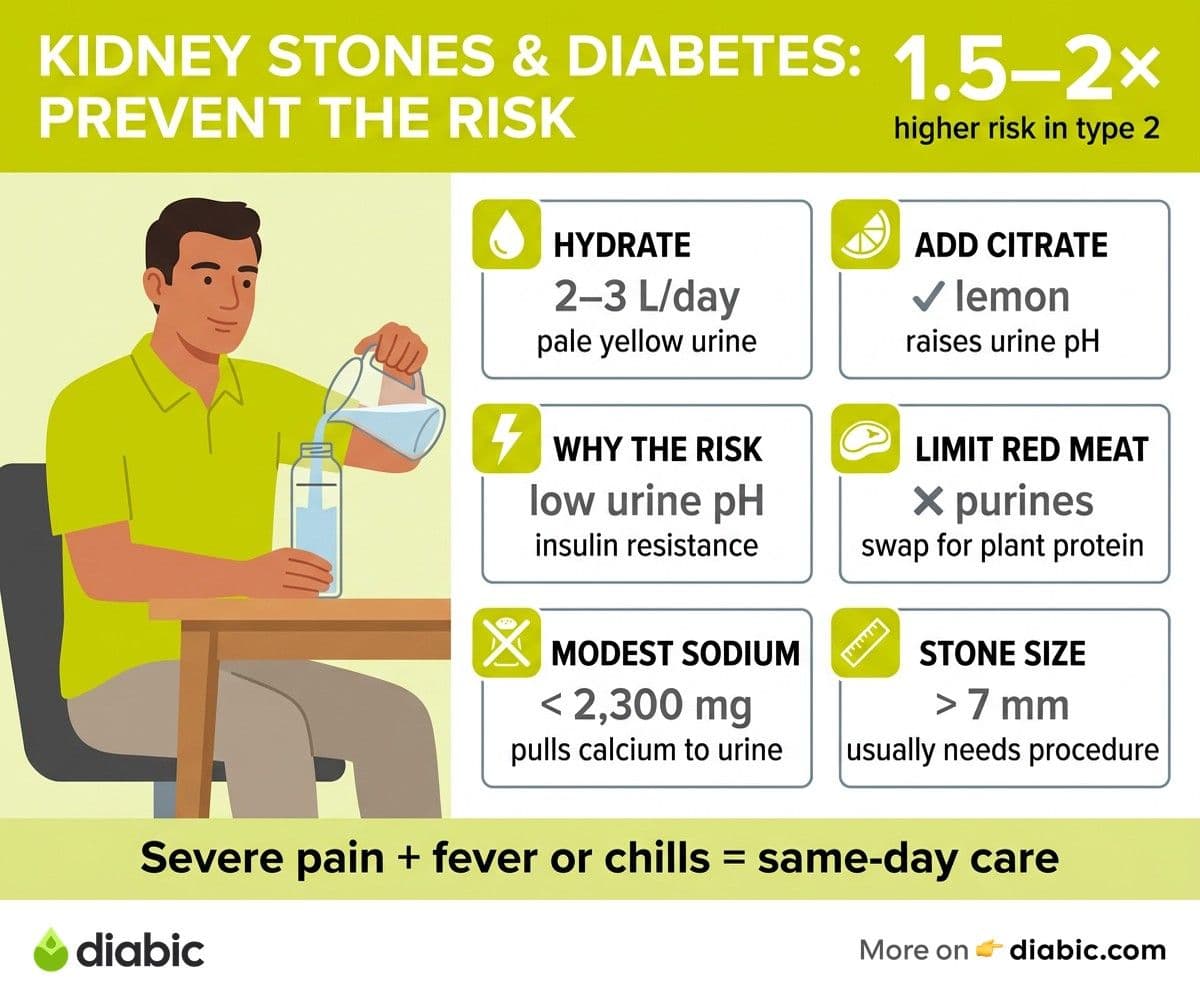
Research from the National Institute of Diabetes and Digestive and Kidney Diseases shows that adults with type 2 diabetes are roughly 1.5 to 2 times more likely to develop kidney stones than adults without diabetes. The risk climbs further when diabetes is paired with obesity, high blood pressure, or metabolic syndrome. Pediatric data is more limited, but the adult signal is consistent across large population studies.
The driver behind this increase is not the blood sugar number itself. It is insulin resistance and the way it shifts the chemistry of the urine your kidneys produce each day. When cells become resistant to insulin, the kidneys make less ammonia, which is the natural buffer that keeps urine from becoming too acidic. With less ammonia in the mix, urine pH drops, and the lower the pH falls, the easier it becomes for certain compounds to crystallize into stones.
Uric acid is the compound most affected by this pH shift. In acidic urine, uric acid stops dissolving and starts forming sharp crystals that grow into stones. This is why uric acid stones, which are otherwise uncommon in the general population, become disproportionately frequent in people with diabetes. Calcium oxalate stones still occur too, but the uric acid pattern is the fingerprint of the diabetes connection.
Insulin resistance also affects how the body handles citrate, a natural stone inhibitor in urine. Lower citrate plus lower pH plus higher uric acid creates what nephrologists sometimes call a "stone-friendly" urinary environment. If you want a deeper picture of how this connects to broader kidney function, our overview of how diabetes affects the kidney walks through the longer arc of damage. Our diabetes with kidney disease guide is also useful for anyone whose labs already show changes.
Types of Kidney Stones Common with Diabetes Kidney Problems
Not all stones are made of the same material, and the type matters for both treatment and prevention. People with diabetes with kidney problems tend to form a narrower set of stone types, which actually makes prevention strategies more targeted.
Uric acid stones are the signature stone of type 2 diabetes. They form when persistently acidic urine prevents uric acid from staying dissolved. These stones often appear yellow or reddish-brown and may not show up on standard X-rays, which is why a CT scan is often the imaging tool of choice when diabetes is in the picture.
Calcium oxalate stones remain the most common stone type overall, including in many people with diabetes. They form when calcium binds with oxalate from foods like spinach, almonds, beets, and chocolate. High urinary oxalate combined with low urinary citrate, both of which are more common in metabolic syndrome, creates the conditions these stones need.
Mixed stones are also frequent. A stone may begin as uric acid and then collect calcium oxalate on its surface, or the opposite. Lab analysis of any stone you pass is genuinely valuable because the composition guides the dietary plan that follows.
Dehydration multiplies every one of these risks. Concentrated urine has fewer water molecules to keep crystals dissolved, so even small dietary missteps can tip the balance. People who take certain diabetes medications, who exercise outdoors in heat, or who simply forget to drink during a busy workday are at higher cumulative risk than they often realize.
From my experience: After 14 years of living with type 1 diabetes, I have watched my hydration habits become almost as important as my carb counts. There were stretches in my late twenties when I would coast through workdays on coffee and finish the evening with a single glass of water before bed. My urine was darker than it should have been, and my urologist eventually showed me imaging of a small stone that had been quietly forming. Switching to a refillable bottle on my desk, with a goal line marked at three liters, was the single most boring intervention I have ever made, and also one of the most effective.
Symptoms of Kidney Stones
Small stones can pass without you ever knowing they were there. Larger stones, or stones that move into the ureter, announce themselves loudly. The classic symptom is renal colic, a wave of sharp pain in the back or side, just below the ribs, that may radiate down toward the lower abdomen and groin.
Pain from a kidney stone tends to come in waves rather than as a constant ache. You may feel a peak that lasts twenty to sixty minutes, then a quieter stretch, then another peak. Many people describe it as worse than any pain they have experienced before, including childbirth in some accounts. The intensity is partly why diabetes kidney problems symptoms are sometimes mistaken for appendicitis or a back injury.
Other signs to watch for include:
- Blood in the urine, which may show up as pink, red, or cola-colored
- Cloudy or foul-smelling urine
- A persistent urge to urinate, often with only small amounts coming out
- Burning during urination
- Nausea and vomiting that accompany the pain
- Fever or chills, which may signal infection alongside the stone
Fever or chills, alongside stone pain, is a reason to seek emergency care the same day. An infected stone can become a medical emergency very quickly, and people with diabetes are already at higher risk for severe urinary tract infections. If you are unsure whether what you are feeling is a stone or another problem, our piece on spotting kidney problems symptoms can help you sort the signals.
Pay attention to changes in urine color and frequency in the days leading up to severe pain. Many people, looking back, can identify subtle warning signs that they brushed off at the time.
How Kidney Stones Are Diagnosed and Treated
Diagnosis usually begins with imaging. A non-contrast CT scan is the gold standard because it picks up nearly all stone types, including the uric acid stones that can hide on traditional X-rays. Ultrasound is sometimes used first, especially in pregnancy or for pediatric patients, because it avoids radiation exposure. The Mayo Clinic outlines a clear stepwise approach that most US emergency departments follow.
Treatment depends on stone size, location, and composition. A stone smaller than 5 millimeters has a good chance of passing on its own with hydration, pain control, and time. Your doctor may prescribe an alpha-blocker such as tamsulosin to relax the ureter and ease passage. Filtering your urine through a strainer, although awkward, lets you catch the stone for lab analysis.
Stones larger than about 7 millimeters usually need a procedure. Common options include:
- Extracorporeal shock wave lithotripsy (ESWL) uses focused energy waves to break the stone into smaller pieces that can pass naturally
- Ureteroscopy sends a thin scope up through the urinary tract to grab or laser the stone directly
- Percutaneous nephrolithotomy is a small surgical procedure for very large or complex stones, typically reserved for cases where less invasive methods will not work
During and after any procedure, your diabetes management plan may need adjustment. Some pain medications affect blood sugar, dehydration during recovery raises ketone risk for people with type 1 diabetes, and any infection can push glucose readings well outside your usual range. Bringing your continuous glucose monitor data, your usual basal and bolus settings, and a list of your medications to every appointment helps your urologist coordinate with your diabetes care team.
Follow-up is where stone prevention really begins. A 24-hour urine collection, done a few weeks after the acute episode has settled, gives your doctor a clear picture of what your kidneys are excreting and where the imbalances sit. Stone analysis from any retrieved fragment guides the dietary and medication plan from there.
Preventing Kidney Stones When You Have Diabetes
The good news about stone prevention is that the strongest interventions are also the simplest. None of them require expensive equipment, and most are habits you can build in a week or two.
Hydration as the foundation
Aim for enough fluid that your urine looks pale yellow most of the day. For most adults, that lands somewhere between 2 and 3 liters of total fluid, with water doing the bulk of the work. The National Kidney Foundation recommends spreading intake across the day rather than catching up in the evening, since concentrated overnight urine is when many stones begin to form.
Citrus is a useful ally. Lemon and lime juice add citrate to your urine, which inhibits stone formation. A few wedges in your water bottle, or a glass of unsweetened lemon water with breakfast, can meaningfully shift your urinary chemistry over time. Sugar-sweetened drinks and high-fructose corn syrup, on the other hand, raise stone risk and should stay rare.
Diet adjustments that lower stone risk
For uric acid stones, the priority is reducing animal protein, especially red meat and organ meats, which are high in purines. Plant proteins like beans, lentils, and tofu deliver protein without the same purine load. Sodium intake matters too. Excess sodium pulls calcium into the urine, which raises calcium oxalate stone risk even when your stones are uric acid.
For calcium oxalate stones, the goal is not to cut calcium. Low-calcium diets actually raise stone risk because dietary calcium binds oxalate in the gut, before either reaches the kidneys. Instead, aim for moderate calcium from dairy or fortified alternatives at each meal, and keep oxalate-heavy foods in reasonable portions. Our kidney friendly diet for diabetes has a fuller breakdown of meal patterns that work for both diabetes and kidney health.
Coffee in moderation is fine for most stone formers, and may even be slightly protective. Tea, particularly black tea, is higher in oxalate and worth limiting if you form calcium oxalate stones.
Blood sugar and blood pressure as stone tools
Better glycemic management lowers uric acid production and supports a healthier urinary pH. There is no specific A1C target tied to stone prevention, but the same goals you discuss with your diabetes team for general kidney protection apply here. Blood pressure matters as well, and our piece on blood pressure and diabetes explains why both numbers move together.
Some people benefit from prescription medications. Potassium citrate raises urinary citrate and pH, which is helpful for both uric acid and some calcium oxalate stones. Allopurinol lowers uric acid production. Thiazide diuretics reduce urinary calcium. Your doctor will choose based on your stone type, your other medications, and your kidney function.
Monitoring that catches problems early
Annual labs that include a basic metabolic panel, urinalysis, and urine albumin-to-creatinine ratio give your team a running picture of kidney health. If you have already passed a stone, a 24-hour urine study repeated every one to two years confirms that your prevention plan is working. Imaging is reserved for new symptoms or for high-risk patterns that your urologist wants to track.
The combined effect of consistent hydration, balanced food choices, and steady glucose management is greater than any single intervention. Most people who follow even a basic version of this plan see their stone formation rate drop substantially over the years that follow.
A small daily plan that adds up
Pick the smallest sustainable version of stone prevention you can imagine, then start there. Fill a water bottle each morning. Add one wedge of lemon. Swap one serving of red meat for beans or fish each week. Walk the dog, then refill the water bottle. None of these moves feels heroic on its own. Stacked across a year, they meaningfully shift the chemistry of your urine and lower the odds that another stone will quietly grow.
Talk to your doctor before changing diabetes medications, starting any new supplement, or making large dietary shifts, especially if your kidney function is already affected. The right plan is the one you and your care team build together.
FAQ
Are kidney stones and diabetes related?
Yes. Adults with type 2 diabetes have roughly 1.5 to 2 times the risk of forming kidney stones compared with adults without diabetes. The link runs through insulin resistance, which makes urine more acidic and reduces stone-inhibiting compounds like citrate, creating conditions that favor stone formation, especially uric acid stones.
How do you prevent kidney stones when you have diabetes?
Hydration is the single most important step. Aim for 2 to 3 liters of fluid per day, mostly water, with a wedge of lemon or lime when possible. Pair that with reduced animal protein, modest sodium, moderate dietary calcium, and steady blood sugar management. A 24-hour urine study can guide more specific tweaks if you have already passed a stone.
What type of kidney stones are most common with diabetes?
Uric acid stones are disproportionately common in people with type 2 diabetes because acidic urine, driven by insulin resistance, prevents uric acid from staying dissolved. Calcium oxalate stones also occur frequently, often in mixed forms with a uric acid core. A lab analysis of any retrieved stone guides the right prevention plan.
Can kidney stones make diabetes harder to manage?
Yes, in the short term. Pain, nausea, dehydration, and any procedures used to remove a stone can all push blood sugar outside its usual range. Coordinate closely with your diabetes care team during a stone episode, and bring your CGM data and medication list to every related appointment.
When should I go to the emergency room for a kidney stone?
Seek emergency care for severe pain that you cannot manage at home, fever or chills alongside stone symptoms, persistent vomiting, inability to urinate, or visible blood in the urine that does not clear quickly. Because the link between kidney stones and diabetes raises the risk of severe urinary infections, erring on the side of caution is reasonable, especially if your glucose readings are also drifting outside your usual range.
Shahriar P. Shuvo is the founder of Diabic. He has lived with diabetes for over 14 years, and built Diabic to deliver the practical, evidence-based self-management tools he wished existed when he was first diagnosed. By trade, Shahriar is a senior design and frontend engineer with 6+ years shipping products at Agora, Timescale (now Tiger Data), and ShareTrip. He writes from the intersection of lived diabetes experience and product craft, focused on what works in daily management rather than what sounds good in a textbook.
Medically reviewed by
Dr. Rezwana Parvin Rumpa is an obstetrics and gynaecology specialist with clinical focus on gestational diabetes, PCOS, and fertility. She holds the MRCOG (Final Part) from the Royal College of Obstetricians and Gynaecologists in London, the MRCPI (Final Part) from the Royal College of Physicians of Ireland, and an MBBS from Shaheed Monsur Ali Medical College under Dhaka University. Dr. Rumpa serves as a Senior Medical Officer in the Obs and Gynae department at BRB Hospitals Ltd, where she has spent three years managing prenatal care, emergency obstetric cases, and women's-health surgery. On Diabic, she medically reviews content for women living with diabetes, with particular attention to pregnancy, PCOS, and reproductive-health intersections.
More from Health & Complications
View all
Diabetes and Dental Implants: What to Know First
Diabetes dental implants guide covering safety, A1C targets, recovery expectations, gum health prep, and what to ask your oral surgeon before surgery.

Burning Mouth Syndrome and Diabetes Explained
Burning mouth syndrome diabetes link explained, including neuropathy, dry mouth, and thrush causes plus treatment options that may bring real relief.

Dental Care for people with diabetes: Tips That Help
Practical dental care diabetics need, with real tips for protecting teeth and gums when diabetes raises your risk for oral health problems.
Clinician-reviewed habits, plain-language guides, and honest answers - the small shifts that make living with diabetes feel lighter, every day.