Kidney Friendly Diet for Diabetes: What to Eat
A practical kidney friendly diet diabetes guide covering foods to enjoy, foods to limit, sample meals, and how to work with a renal dietitian.

In this article(14)
Building a kidney friendly diet diabetes plan means finding the overlap between what supports steady blood sugar and what is gentle on tired kidneys. The first time most people see the food list, it can feel like everything good is suddenly off limits. With the right guidance, though, you will find plenty of satisfying foods that nourish both organs at once. Here is what to eat, what to scale back, and how to put it all together.
The reality is that diabetes and chronic kidney disease (CKD) often travel together. About 1 in 3 adults with diabetes has CKD, according to the CDC's diabetes and kidney disease page. The good news is that food choices have a measurable impact on how fast kidney function changes over time, and small shifts in your plate can pay off in your next lab panel.
Why Diet Matters for Both Conditions
Your kidneys filter waste from everything you eat and drink. When blood sugar is high, the tiny blood vessels inside the kidneys (the glomeruli) work harder than they should, and over years, that extra strain shows up as protein in the urine and rising creatinine. Adding excess sodium, large protein loads, or processed foods on top of that just speeds up the damage.
A well-planned eating pattern can slow CKD progression and smooth out blood sugar at the same time. The American Diabetes Association's nutrition standards recommend an individualized approach for people with diabetes and kidney disease rather than one rigid renal diet. That flexibility matters because what works at CKD stage 2 looks different from what works at stage 4.
If you want a broader overview of how the two conditions interact, our diabetes with kidney disease guide walks through screening, lab markers, and lifestyle steps. We also cover medication choices in our piece on the best diabetes medication for kidney disease, since some drugs (like SGLT2 inhibitors) are now considered protective for both organs.
Why a renal dietitian is worth it
A registered dietitian who specializes in renal nutrition can translate your latest lab values into a meal plan that fits your routine. Insurance often covers medical nutrition therapy for CKD, so the cost may be lower than you expect. Even one or two visits can clarify protein targets, potassium limits, and which packaged foods to avoid.
Key Nutrients to Monitor
Five nutrients deserve close attention when you have diabetes alongside kidney disease. The targets shift based on your CKD stage, your dialysis status, and your bloodwork, so think of these as starting points for a conversation with your care team rather than fixed rules.
Sodium sits at the top of the list. Most adults benefit from staying under 2,300 mg per day, and many people with CKD do better at 1,500 to 2,000 mg. The National Kidney Foundation's sodium guidance explains how reading nutrition labels and limiting restaurant meals are usually the fastest ways to bring intake down.
Potassium is trickier because needs vary widely. In early CKD, you may not need to restrict it at all. In later stages, the kidneys cannot clear it well, and high potassium can affect the heart. Your dietitian will look at your serum potassium and tell you whether to limit foods like potatoes, tomatoes, and bananas.
Phosphorus builds up when filtration drops, pulling calcium out of bones and contributing to itchy skin and bone weakness. Hidden phosphorus from food additives in processed meats and dark colas absorbs more readily than the natural kind in whole foods, which is why label reading matters here too.
Protein is the nutrient that surprises people most. Eating too much can stress weakened kidneys, but eating too little leads to muscle loss and weakness. A moderate intake (typically 0.6 to 0.8 grams per kilogram of body weight in non-dialysis CKD) is the usual target. Our companion article on CKD stages with diabetes breaks down how protein needs change at each stage.
Carbohydrates still need to be paced and portioned for blood sugar. The kidney-friendly approach favors low-glycemic, higher-fiber options that do not spike glucose. Refined carbs and sugary drinks remain off the menu for both conditions.
Foods to Enjoy on a Kidney Friendly Diet Diabetes Plan
Plenty of everyday foods fit comfortably into both eating patterns. Building meals around these gives you a strong foundation without constant calculation.
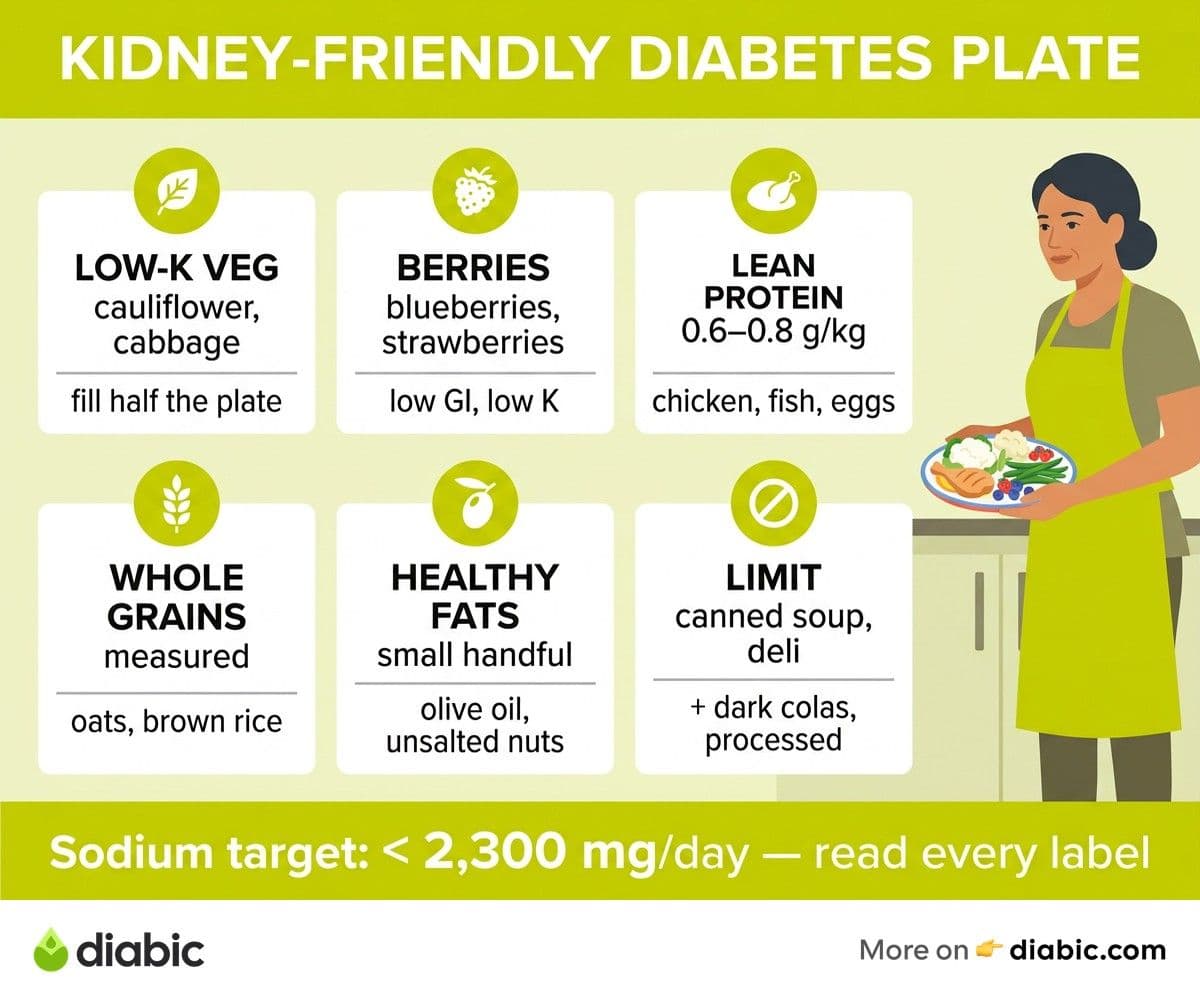
- Lower-potassium vegetables: cauliflower, cabbage, bell peppers, onions, green beans, asparagus, summer squash, and most leafy lettuces
- Berries and certain fruits: blueberries, strawberries, cranberries, apples, pears, and grapes (lower in potassium and naturally low in sugar density)
- Lean proteins in moderate portions: skinless chicken, turkey, eggs, and fatty fish like salmon a few times per week
- Whole grains in measured portions: rolled oats, brown rice, whole grain pasta, and barley
- Healthy fats: olive oil, avocado in small amounts, and a small handful of unsalted nuts when potassium allows
The NIDDK eating right for chronic kidney disease guide is a free, kidney-specific resource that pairs well with diabetes meal planning. If your blood pressure is also elevated, our overview of the DASH diet for blood pressure and diabetes explains how that pattern can be modified for kidney health.
Build the plate visually
A simple visual rule can help when measuring feels exhausting. Fill half your plate with non-starchy, lower-potassium vegetables. Reserve a quarter for a moderate portion of lean protein (about the size of a deck of cards). Use the last quarter for a measured serving of whole grain or a kidney-friendly starch. Add a small piece of fruit or a few berries on the side.
Foods to Limit or Avoid
Some foods do double damage by spiking blood sugar and overworking the kidneys. They do not need to disappear from your life forever, but they belong in the "occasional" category rather than daily rotation.
- High-sodium processed foods: canned soups, deli meats, frozen meals, packaged snacks, and most restaurant takeout
- High-potassium foods (when restricted): potatoes, tomatoes and tomato sauce, bananas, oranges and orange juice, dried fruits, and avocado in larger amounts
- High-phosphorus items: dark colas, processed cheese, organ meats, and foods with phosphate additives (look for "phos" on ingredient lists)
- Large portions of animal protein: big steaks, double cheeseburgers, and protein shakes loaded with extra protein powder
- Sugary beverages and refined carbs: soda, sweet tea, fruit juice, white bread, pastries, and most breakfast cereals
Mayo Clinic's renal diet overview walks through how recipes can be adapted to bring sodium and potassium into a workable range. People with diabetes are also at higher risk for kidney stones, and our piece on kidney stones and diabetes covers why hydration and food swaps matter on that front too.
From my experience: After 14 years with type 1 diabetes, I learned that the swap that mattered most for my kidney labs was not cutting any single food, it was reading sodium on every package I bought. I went from a daily intake near 4,000 mg to under 2,000 mg in about six weeks just by trading canned soup for homemade, and deli turkey for a roasted chicken breast I sliced myself. Nothing dramatic, just consistent label checking.
Sample Meal Ideas
Here is what a kidney-friendly diabetes day can look like. Adjust portion sizes to your protein and carb targets, and swap items based on what your dietitian has flagged.
Breakfast. Half a cup of rolled oats cooked with water, topped with a quarter cup of blueberries and a splash of unsweetened almond milk. A boiled egg on the side if you want more protein. Coffee with a small amount of milk.
Lunch. Grilled chicken (3 to 4 ounces) on a bed of romaine and red leaf lettuce with sliced cucumber, bell pepper strips, and red onion. Olive oil and red wine vinegar dressing. A small whole grain roll or a few rye crackers.
Dinner. Baked salmon (3 to 4 ounces) with cauliflower mash, steamed green beans, and a side salad. A small wedge of pear for dessert.
Snacks. Apple slices with a thin spread of natural peanut butter, plain rice cakes with a slice of low-sodium turkey, or a few unsalted almonds when potassium budget allows.
The Diabetes Food Hub from the ADA has a searchable recipe database where you can filter by sodium, carbs, and other nutrients. It is one of the few free resources that puts diabetes and kidney friendly recipes in one place.
Adapting based on CKD stage
In stages 1 and 2, you may only need to focus on sodium, carb pacing, and portion control. By stage 3, potassium and phosphorus often enter the conversation. In stages 4 and 5, protein restriction tightens and food lists narrow further. Once dialysis begins, protein needs actually go up because the treatment removes amino acids. This is exactly why a renal dietitian is so valuable: the rules change, and a generic list cannot keep up.
Working with a Dietitian
Finding the right dietitian is easier than most people expect. Ask your nephrologist or endocrinologist for a referral, or use the Academy of Nutrition and Dietetics finder to search for a registered dietitian (RD or RDN) with a CSR credential (Certified Specialist in Renal Nutrition) or experience with diabetes care.
Bring three things to your first appointment. Bring your most recent lab results, including A1C, eGFR, creatinine, potassium, phosphorus, and urine albumin. Bring a three-day food log written down honestly (no editing for the doctor's eyes). Bring a short list of the meals and snacks you actually enjoy, because a plan you will not eat is not a plan.
Plan to revisit the dietitian every six to twelve months, or sooner if your lab values shift. Kidney function changes over time, and your eating pattern should evolve with it. Many practices now offer telehealth appointments, which removes a common barrier for people who live far from specialty clinics.
What to Take Away
A kidney friendly diet for diabetes is less about restriction and more about thoughtful trade-offs. Lean into low-potassium vegetables, berries, moderate lean protein, and measured whole grains. Pull back on sodium, processed foods, and large protein loads. Pair the eating pattern with steady blood sugar management and the medications your team has prescribed.
The goal is not a perfect renal diabetic plate every day, it is consistency over months and years. Talk to your doctor and a renal dietitian about how to personalize these guidelines to your stage, your labs, and your life. Small, sustainable changes protect both organs better than any short-term overhaul.
Frequently Asked Questions
What can you eat on a kidney friendly diet with diabetes?
You can eat lower-potassium vegetables (cauliflower, cabbage, bell peppers, green beans), berries and apples, moderate portions of lean protein (chicken, fish, eggs), measured servings of whole grains like oats and brown rice, and healthy fats like olive oil. The exact list depends on your CKD stage and lab values.
How to plan meals for diabetes and kidney disease?
Start with the diabetes plate method (half non-starchy vegetables, a quarter lean protein, a quarter whole grain), then layer in kidney-friendly swaps: lower-potassium produce, lower-sodium seasonings, and moderate protein portions. A renal dietitian can fine-tune the plan based on your latest labs.
Do you need a dietitian for a renal diabetes diet?
You do not strictly need one, but most people benefit significantly from at least one or two visits with a registered dietitian who specializes in renal nutrition. Insurance often covers medical nutrition therapy for CKD, and the personalized targets they provide are more accurate than any generic food list. A well-built kidney friendly diet diabetes plan is highly individual, and a dietitian helps that plan keep up with your labs.
Shahriar P. Shuvo is the founder of Diabic. He has lived with diabetes for over 14 years, and built Diabic to deliver the practical, evidence-based self-management tools he wished existed when he was first diagnosed. By trade, Shahriar is a senior design and frontend engineer with 6+ years shipping products at Agora, Timescale (now Tiger Data), and ShareTrip. He writes from the intersection of lived diabetes experience and product craft, focused on what works in daily management rather than what sounds good in a textbook.
Medically reviewed by
Dr. Rezwana Parvin Rumpa is an obstetrics and gynaecology specialist with clinical focus on gestational diabetes, PCOS, and fertility. She holds the MRCOG (Final Part) from the Royal College of Obstetricians and Gynaecologists in London, the MRCPI (Final Part) from the Royal College of Physicians of Ireland, and an MBBS from Shaheed Monsur Ali Medical College under Dhaka University. Dr. Rumpa serves as a Senior Medical Officer in the Obs and Gynae department at BRB Hospitals Ltd, where she has spent three years managing prenatal care, emergency obstetric cases, and women's-health surgery. On Diabic, she medically reviews content for women living with diabetes, with particular attention to pregnancy, PCOS, and reproductive-health intersections.
More from Health & Complications
View all
Diabetes and Dental Implants: What to Know First
Diabetes dental implants guide covering safety, A1C targets, recovery expectations, gum health prep, and what to ask your oral surgeon before surgery.

Burning Mouth Syndrome and Diabetes Explained
Burning mouth syndrome diabetes link explained, including neuropathy, dry mouth, and thrush causes plus treatment options that may bring real relief.

Dental Care for people with diabetes: Tips That Help
Practical dental care diabetics need, with real tips for protecting teeth and gums when diabetes raises your risk for oral health problems.
Clinician-reviewed habits, plain-language guides, and honest answers - the small shifts that make living with diabetes feel lighter, every day.