Lyrica for Diabetic Peripheral Neuropathy Pain
Lyrica for diabetic peripheral neuropathy explained: how pregabalin reduces nerve pain, common side effects, and how it compares to gabapentin and.

In this article(11)
Lyrica for diabetic peripheral neuropathy is one of the most common prescriptions when burning, stabbing, or shooting nerve pain in the feet starts interfering with sleep and walking. It was among the first medications the FDA cleared specifically for this kind of pain, and despite newer alternatives, it still holds a steady place in treatment plans. Understanding what it does, what it does not do, and how it compares to the other options gives you a stronger footing for the conversation with your provider.
Diabetic peripheral neuropathy (DPN) affects roughly half of people who have lived with diabetes long enough, according to the American Diabetes Association. Pain is only one face of the condition, but it tends to be the symptom that pushes people to seek treatment. Lyrica is one of three medications most often considered first.
This article walks through how pregabalin works, what side effects to expect, who tends to do well on it, and how it stacks up against gabapentin and duloxetine. We will not cover specific dosages, since those belong to a tailored conversation with your prescriber.
What Is Lyrica (Pregabalin)?
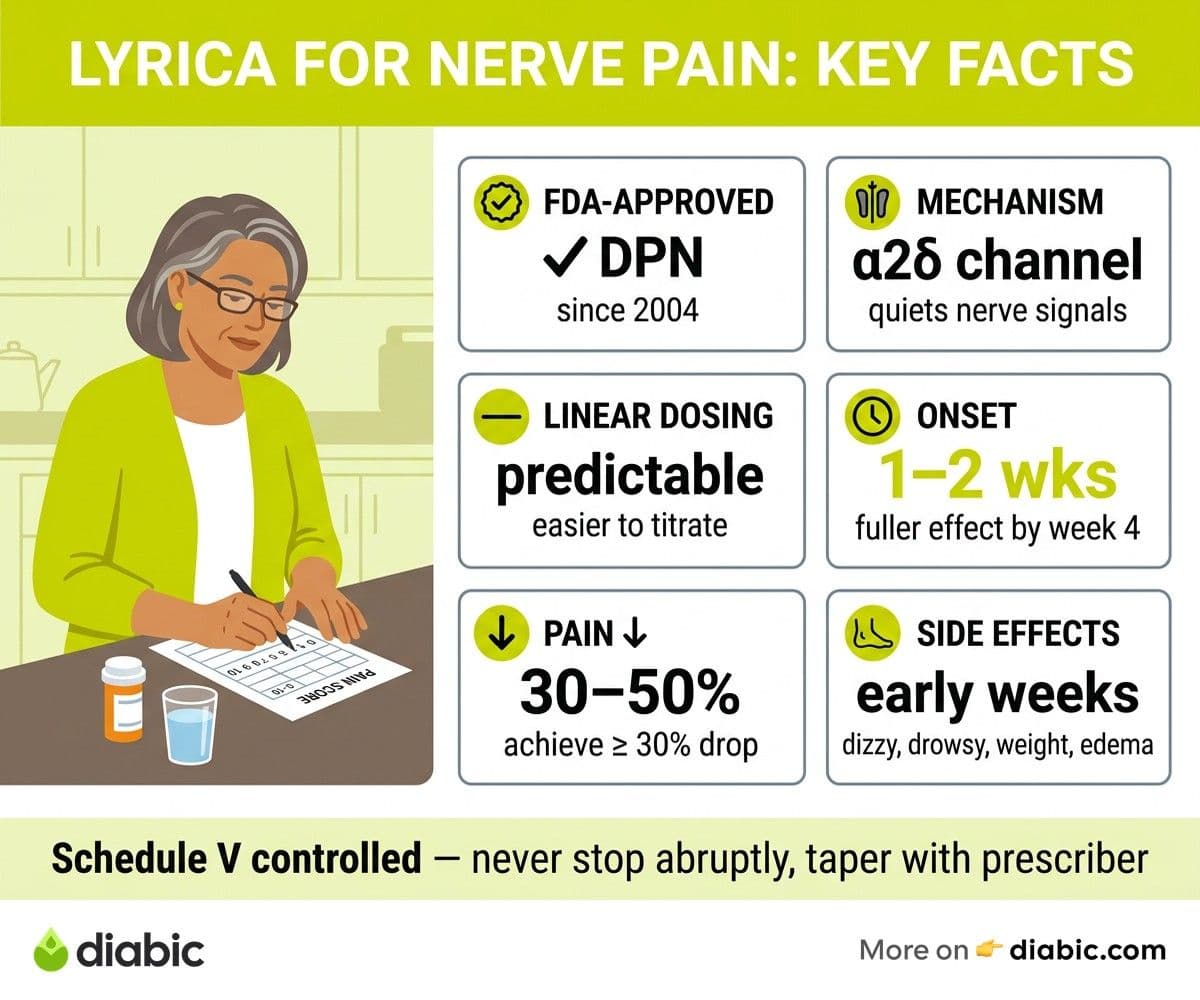
Lyrica is the brand name for pregabalin, a medication in a class called gabapentinoids. It calms overactive nerve signaling rather than blocking pain at the site of injury the way an anti-inflammatory does. The U.S. Food and Drug Administration approved Lyrica for diabetic peripheral neuropathic pain in 2004, making it one of the earliest medications specifically indicated for DPN rather than borrowed from another condition.
Pregabalin is chemically related to gabapentin, but its pharmacology is more predictable. Pregabalin is absorbed in a linear, dose-proportional way, meaning a doubled dose roughly doubles the blood level. Gabapentin, by contrast, has saturable absorption that becomes less efficient at higher doses. That difference is one reason some clinicians find pregabalin easier to titrate to a steady effect.
The medication comes as immediate-release capsules and an extended-release tablet (Lyrica CR). Generic pregabalin became available in the United States in 2019, which lowered the cost barrier considerably. If you are starting from the broader picture of diabetic neuropathy treatment overview, Lyrica usually appears as one of three first-line options alongside duloxetine and gabapentin. For background on the condition itself, our guide to recognizing diabetic peripheral neuropathy covers the early signs.
How Lyrica for Diabetic Peripheral Neuropathy Reduces Pain
Pregabalin binds to a specific subunit (alpha-2-delta) of voltage-gated calcium channels in the nervous system. By dampening calcium influx into overactive neurons, it reduces the release of excitatory neurotransmitters that carry pain signals. The net effect is a quieting of the misfiring nerves that produce the burning and tingling characteristic of DPN.
Clinical evidence supporting this is well-established. A peer-reviewed analysis in Diabetes Care and other journals has consistently shown that pregabalin produces meaningful pain reduction compared with placebo in people with diabetic neuropathy, with response rates around 30 to 50 percent of patients reporting at least a 30 percent drop in pain. The Mayo Clinic notes that effects can usually be felt within the first one to two weeks at an effective dose, with further benefit accumulating over a month.
Pregabalin tends to work especially well for the sharp, burning, or electric-shock quality of nerve pain. It is less helpful for the numbness or balance problems that also accompany DPN, since those reflect nerve damage rather than overactive pain signaling. Sleep often improves as pain falls, which itself can lift fatigue and mood. People who track their symptoms in a simple pain journal during the first month tend to have a clearer picture of whether the medication is doing its job.
Common Side Effects and Considerations
The most common side effects of Lyrica are dizziness and drowsiness, particularly during the first few weeks. The Mayo Clinic lists these as the primary reasons people discontinue. Slow upward titration helps the body adjust, and many providers start at a low dose taken at bedtime to soften the daytime effects.
Weight gain and peripheral edema, swelling of the ankles and feet, are also commonly reported. The weight gain is usually modest but can add up over months, which matters in diabetes management where weight influences glucose patterns. Edema is worth flagging early if you have heart or kidney concerns, since it can layer onto fluid issues you are already managing.
Other effects to discuss with your provider include blurred vision, dry mouth, and difficulty concentrating, sometimes described as a foggy feeling. Most fade as your body adapts, but some persist. Pregabalin is also a Schedule V controlled substance in the United States because it carries a small but real potential for misuse, and stopping it abruptly can produce withdrawal symptoms like anxiety, insomnia, or nausea. Any change in dose, especially stopping, should follow a tapering plan from your prescriber.
Drug interactions are relatively limited compared with other neuropathy medications, but combinations with opioids, alcohol, or other sedating agents amplify drowsiness and respiratory depression risk. People with significant kidney disease need dose adjustments because pregabalin is cleared almost entirely by the kidneys.
From My Experience
From my experience: I have lived with type 1 diabetes for 14 years and have watched several people in my circle try gabapentinoids for nerve pain. The pattern I see most often is impatience in the first week. The dose has not yet ramped up, side effects are at their loudest, and pain is still there, so people stop early and conclude it does not work. The folks who stuck with the slow titration their doctor prescribed almost always had a clearer answer about whether it helped by week four. Whatever your medication ends up being, that one habit, giving it a fair window with honest tracking, is worth more than any single drug choice.
Who Is Lyrica Best Suited For?
The American Diabetes Association's Standards of Care lists pregabalin among the recommended first-line agents for painful diabetic neuropathy. In practice, the choice between pregabalin, gabapentin, and duloxetine depends on side effect profiles, other medications, and existing health conditions.
Lyrica often comes up first for people with moderate to severe neuropathy pain that has disrupted sleep or daily activity. It is also a common next step when gabapentin has not provided enough relief or has been hard to titrate. People who tolerate gabapentinoids well, meaning the dizziness and drowsiness are manageable, tend to do best on it. If you have struggled with diabetic neuropathy foot pain relief using over-the-counter measures, Lyrica is one of the prescription options your provider will likely consider.
Factors that tip a clinician toward Lyrica over alternatives include a history of depression or fibromyalgia (where pregabalin has additional indications), a need for relatively quick onset, and prior tolerance of gabapentin without enough pain relief. Factors that may push them toward duloxetine include co-occurring depression or a desire to avoid the weight gain and edema profile of gabapentinoids. Older adults sometimes do better on duloxetine because of fall risk from gabapentinoid sedation.
The medication is not a fit for everyone, and no medication erases neuropathy pain completely. A 30 to 50 percent reduction is a realistic and meaningful target. If pain falls enough that you sleep through the night and walk without flinching, that is success worth holding onto.
Lyrica vs. Gabapentin and Duloxetine
These three medications dominate first-line treatment for painful DPN, and the conversation about which to try first comes up at almost every appointment. Each has trade-offs.
Pregabalin (Lyrica) and gabapentin work through similar mechanisms but differ in absorption and dosing. Pregabalin has linear, predictable absorption and is usually dosed two or three times a day. Gabapentin has saturable absorption that requires larger total doses, often three times a day, and titration takes longer. Both share the dizziness, drowsiness, weight gain, and edema profile, though some people report better tolerance on one than the other. For a deeper look at the alternative, our piece on gabapentin for diabetic neuropathy covers gabapentin specifically.
Duloxetine is a different class entirely, a serotonin-norepinephrine reuptake inhibitor (SNRI) originally developed as an antidepressant. It treats pain through different pathways and has the advantage of being weight-neutral and not sedating in the same way. Side effects skew toward nausea, dry mouth, and sometimes increased blood pressure or sweating. People who also have depression or generalized anxiety often prefer duloxetine because it addresses both. Our duloxetine for diabetic neuropathy overview lays out the details.
Cost was once a major distinguisher when Lyrica was brand-only, but generic pregabalin has narrowed the gap. Generic gabapentin remains the cheapest of the three. Generic duloxetine is also affordable. Insurance coverage and prior authorization rules vary, and asking your pharmacist for a price comparison before you start can prevent a surprise at the counter.
Many people end up trying more than one before landing on the medication that fits their life. That is normal, not a sign of failure.
A Practical Next Step
If you are weighing Lyrica for diabetic peripheral neuropathy, the most useful preparation is a written record of your pain. Note where it lives, what it feels like, when it is worst, and how much it interferes with sleep and walking. Bring that record, along with your current medication list, to your next appointment. Ask your provider how they choose between pregabalin, gabapentin, and duloxetine for someone with your specific picture, and what the plan looks like if the first option does not provide enough relief in four to six weeks.
Pain medication for diabetic neuropathy is rarely a one-and-done decision. It is a stepwise conversation, and you are an active participant in it.
Frequently Asked Questions
Is Lyrica effective for diabetic neuropathy pain?
Research suggests pregabalin produces meaningful pain reduction for many people with diabetic peripheral neuropathy, with about 30 to 50 percent of patients in clinical trials reporting at least a 30 percent drop in pain compared with placebo. It tends to work best on burning, stabbing, or electric-shock pain. Whether it will work for you specifically depends on individual factors that your provider can help weigh.
What are the side effects of Lyrica for neuropathy?
The most common side effects are dizziness, drowsiness, weight gain, and peripheral edema (swelling of the feet and ankles). Less common effects include blurred vision, dry mouth, and difficulty concentrating. Pregabalin is a controlled substance with a small risk of dependence, and stopping it abruptly can cause withdrawal symptoms, so any dose changes should be guided by your prescriber.
Is Lyrica the same as gabapentin?
No, but they are closely related. Both are gabapentinoids that work on calcium channels to dampen overactive nerve signals, but pregabalin (Lyrica) has more predictable absorption and is generally easier to titrate. Gabapentin is usually less expensive and may be tried first, while Lyrica for diabetic peripheral neuropathy often comes in when gabapentin has not provided enough relief or has been hard to dose effectively.
Shahriar P. Shuvo is the founder of Diabic. He has lived with diabetes for over 14 years, and built Diabic to deliver the practical, evidence-based self-management tools he wished existed when he was first diagnosed. By trade, Shahriar is a senior design and frontend engineer with 6+ years shipping products at Agora, Timescale (now Tiger Data), and ShareTrip. He writes from the intersection of lived diabetes experience and product craft, focused on what works in daily management rather than what sounds good in a textbook.
Medically reviewed by
Dr. Rezwana Parvin Rumpa is an obstetrics and gynaecology specialist with clinical focus on gestational diabetes, PCOS, and fertility. She holds the MRCOG (Final Part) from the Royal College of Obstetricians and Gynaecologists in London, the MRCPI (Final Part) from the Royal College of Physicians of Ireland, and an MBBS from Shaheed Monsur Ali Medical College under Dhaka University. Dr. Rumpa serves as a Senior Medical Officer in the Obs and Gynae department at BRB Hospitals Ltd, where she has spent three years managing prenatal care, emergency obstetric cases, and women's-health surgery. On Diabic, she medically reviews content for women living with diabetes, with particular attention to pregnancy, PCOS, and reproductive-health intersections.
More from Health & Complications
View all
Diabetes and Dental Implants: What to Know First
Diabetes dental implants guide covering safety, A1C targets, recovery expectations, gum health prep, and what to ask your oral surgeon before surgery.

Burning Mouth Syndrome and Diabetes Explained
Burning mouth syndrome diabetes link explained, including neuropathy, dry mouth, and thrush causes plus treatment options that may bring real relief.

Dental Care for people with diabetes: Tips That Help
Practical dental care diabetics need, with real tips for protecting teeth and gums when diabetes raises your risk for oral health problems.
Clinician-reviewed habits, plain-language guides, and honest answers - the small shifts that make living with diabetes feel lighter, every day.