Heart Failure and Diabetes: Signs and Prevention
Learn the link between heart failure and diabetes, early warning signs to watch for, and practical prevention steps backed by current research.

In this article(10)
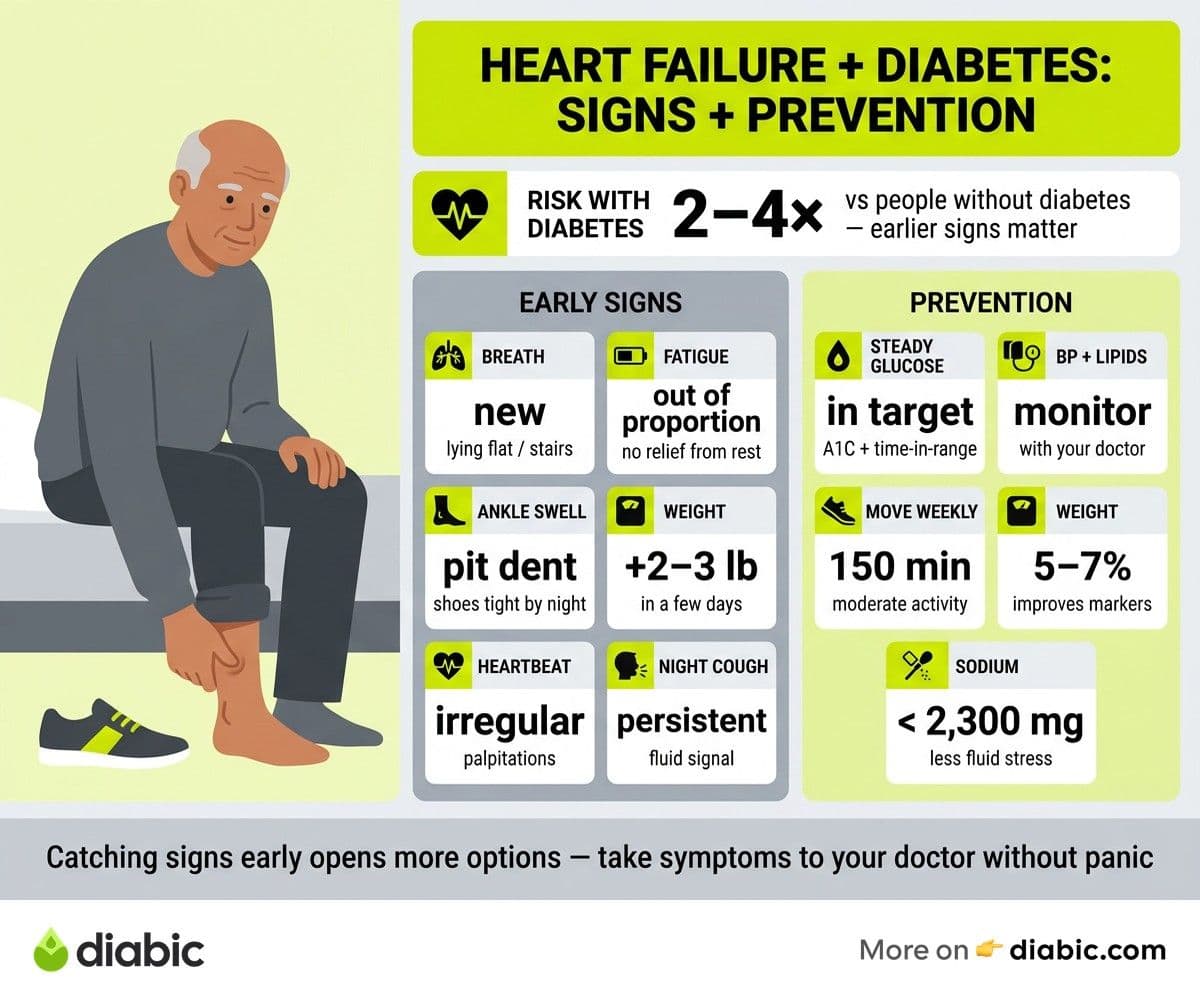
Heart failure and diabetes are closely connected, and the heart failure diabetes risk runs two to four times higher in people who have diabetes compared with those without it, according to the Centers for Disease Control and Prevention. That number can feel alarming on first read, but the more useful framing is that early awareness and consistent prevention habits can change the trajectory in a real way. Knowing the signs and understanding what you can do puts you in a much stronger position than waiting and hoping.
This article walks through what heart failure actually is, why it shows up so often alongside diabetes, the early symptoms to watch for, and the prevention strategies that hold up across the research. We will also look at treatment options if a diagnosis happens, because being prepared with information takes some of the fear out of the conversation.
What Is Heart Failure
Heart failure means the heart cannot pump blood as efficiently as the body needs. The National Institute of Diabetes and Digestive and Kidney Diseases describes it as a chronic condition that develops gradually rather than suddenly in most cases. The name is misleading because the heart has not stopped, it is simply working at reduced capacity, often for years before symptoms become obvious.
There are two broad types worth knowing. Systolic heart failure, also called heart failure with reduced ejection fraction, means the heart muscle has weakened and pumps less blood with each beat. Diastolic heart failure, or heart failure with preserved ejection fraction, means the heart muscle has stiffened and cannot fill with enough blood between beats. Both forms reduce how much oxygen-rich blood reaches the rest of the body, but they respond to slightly different treatments.
People sometimes hear the diagnosis and assume it is the end of the road. That is not how the condition works. Many people live well with heart failure for many years when it is caught early and managed proactively. The earlier the catch, the more options you and your care team have.
Why Heart Failure and Diabetes Often Go Together
The relationship runs deeper than shared risk factors, though those play a role too. Chronically high blood sugar damages heart muscle directly through a process researchers call diabetic cardiomyopathy. Over time, glucose-driven inflammation and metabolic stress cause the heart muscle to stiffen, scar, and lose flexibility, which contributes to the diastolic form of heart failure especially.
High blood pressure and coronary artery disease are the other major drivers, and both are common in people with diabetes. Hypertension forces the heart to work harder against resistance, which thickens the walls and reduces filling capacity. The detailed mechanism behind how diabetes causes high blood pressure involves insulin resistance, kidney effects, and stiffening of arteries, all of which loop back to heart strain.
Insulin resistance also contributes to heart stiffening through pathways that are independent of blood sugar levels. This is part of why people with prediabetes already show measurable changes in heart muscle function. Shared risk factors like obesity, chronic inflammation, and metabolic dysfunction further connect the two conditions, which is why they so often appear together. If you also want to understand the heart attack side of the picture, our guide to reducing diabetes heart attack risk covers that ground.
Recognizing Early Heart Failure Diabetes Warning Signs
The symptoms of heart failure tend to creep in rather than arrive all at once, which is part of why they get dismissed or attributed to aging. The Mayo Clinic's overview of heart failure symptoms emphasizes that paying attention to subtle changes is one of the most important things people can do for early diagnosis.
Shortness of breath is one of the most common early signs, especially during activity that did not used to make you winded, or when lying flat at night. Some people find they need an extra pillow or two to sleep comfortably, which is worth mentioning to a doctor.
Persistent fatigue and weakness are often dismissed as stress or age. The fatigue from heart failure tends to feel disproportionate to what you have actually done, and it does not improve much with rest. If a flight of stairs leaves you sitting down to recover, that is worth a conversation.
Swelling in the ankles, feet, or abdomen happens when the heart cannot pump efficiently and fluid backs up in the body. You might notice your shoes feel tighter by evening, or that pressing on your shin leaves a small dent. Sudden weight gain over a few days, often two to three pounds or more, can also signal fluid retention.
Rapid or irregular heartbeat may show up as palpitations or a racing feeling at rest. A persistent dry cough, especially at night, can sometimes signal fluid buildup in the lungs. None of these symptoms alone confirm heart failure, but in combination they deserve attention. Taking them seriously without panic is the right balance, the goal is to get checked, not to assume the worst.
Prevention Strategies for People with Diabetes
Prevention works, and the evidence keeps strengthening. Lifestyle and medical strategies that protect against heart attack also protect against heart failure, which means the same daily habits pay off in multiple ways.
Keeping blood sugar within your target range remains the foundation. Long-term studies show that people who maintain better glucose management have significantly lower rates of heart failure, partly because they avoid the cumulative damage of high glucose on heart muscle. A1C, time in range, and post-meal glucose patterns all matter, and the right targets are personal.
Managing blood pressure and cholesterol proactively is just as important. Untreated hypertension is one of the strongest drivers of heart failure in diabetes, and untreated high cholesterol contributes to coronary artery disease that often precedes heart failure. Our deeper look at the blood pressure and diabetes connection explains why both numbers belong in your monitoring routine, and the lowering high cholesterol with diabetes guide covers practical lipid management.
Staying physically active with activities you genuinely enjoy makes the habit stick. The current guidance is around 150 minutes of moderate activity per week, but anything is better than nothing, and consistency matters more than intensity. Walking, swimming, cycling, gardening, or dancing all count.
Maintaining a healthy weight through sustainable habits supports both blood sugar and heart function. Even a 5 to 7% weight loss has been shown to improve metabolic markers significantly in studies of people with prediabetes and type 2 diabetes. The pace does not need to be aggressive.
Limiting sodium intake helps the heart work less hard against fluid retention. Most people benefit from staying under 2,300 mg per day, and people with established heart issues may aim lower. Our full set of heart healthy habits for diabetes ties these pieces into a daily rhythm rather than a checklist.
From my experience: After 14 years with type 1, what surprised me most was how much steady walking changed my own resting heart rate and blood pressure over a year. I did not run, I did not lift heavy. I just got 6 to 8 thousand steps in most days. The numbers crept down quietly, and my endocrinologist was the one who pointed it out before I even noticed.
Treatment Options When Heart Failure Is Diagnosed
A diagnosis of heart failure is a beginning, not an ending. Treatment has changed dramatically in the past decade, and people diagnosed today have more options than ever.
Medications commonly used include ACE inhibitors and ARBs, which relax blood vessels and reduce strain on the heart, beta-blockers, which slow the heart rate and improve pumping efficiency, and diuretics, which help the body shed excess fluid. SGLT2 inhibitors, originally developed for type 2 diabetes, have become a cornerstone of heart failure treatment based on multiple large trials published in journals like Diabetes Care showing they reduce hospitalization and death across heart failure types, including in people without diabetes. The American Diabetes Association Standards of Care reflects this in its current guidance.
Lifestyle modifications support medication and often improve quality of life faster than medications alone. Reduced sodium intake, fluid management, regular weight checks at home, daily activity within tolerance, and not smoking are all part of the picture. Cardiac rehabilitation, a supervised exercise and education program, has strong evidence for improving outcomes and is covered by most insurance after a heart failure diagnosis.
Early treatment improves quality of life significantly, which is one reason recognizing symptoms early matters so much. Heart failure that is caught and treated in earlier stages often allows people to maintain most of their normal activities, while advanced heart failure can be much harder to reverse.
Working with Your Healthcare Team
Talking to your doctor about heart failure concerns early is better than waiting. If you have diabetes plus any of the symptoms covered above, mention them by name. Bring a written list, dates of when symptoms started, and any home blood pressure or weight readings you have logged.
Recommended screening and monitoring varies by individual, but most people with diabetes benefit from annual blood pressure and cholesterol checks, periodic kidney function testing, and a discussion of cardiovascular risk at least yearly. People with multiple risk factors or symptoms may benefit from an echocardiogram, which is a non-invasive ultrasound that shows how the heart is pumping.
Building a coordinated care plan between your endocrinologist and cardiologist makes a real difference once heart failure is on the radar. The two specialties share many of the same medications and goals now, and a unified plan reduces the risk of conflicting advice or missed details.
FAQ
Why do heart failure and diabetes often go together?
They share several mechanisms. High blood sugar damages heart muscle directly through diabetic cardiomyopathy, while diabetes also raises the risk of high blood pressure and coronary artery disease, which are major drivers of heart failure. Insulin resistance independently contributes to heart muscle stiffening. Add common shared risk factors like obesity and chronic inflammation, and the connection becomes clearer.
Can you prevent heart failure if you have diabetes?
Many cases can be prevented or significantly delayed through proactive management of blood sugar, blood pressure, and cholesterol, plus regular physical activity, a balanced diet, healthy weight, and not smoking. Some newer diabetes medications also reduce heart failure risk specifically, so it is worth asking your provider whether your current treatment plan reflects current cardiovascular guidance.
What are the first signs of heart failure to watch for?
Common early signs include shortness of breath during activity or when lying flat, persistent fatigue that does not improve with rest, swelling in the ankles or feet, rapid weight gain over a few days, and a racing or irregular heartbeat. Any of these symptoms, especially in combination, should be brought to your healthcare provider rather than dismissed.
The heart failure diabetes connection rewards proactive management more than almost any other complication. Knowing the warning signs, keeping blood sugar and blood pressure in your target ranges, and asking your provider whether SGLT2 inhibitors fit your plan are the three highest-leverage moves you can make. Heart failure diabetes outcomes today are better than they have ever been, and the people who do best are usually the ones who started small habits years before any diagnosis.
Shahriar P. Shuvo is the founder of Diabic. He has lived with diabetes for over 14 years, and built Diabic to deliver the practical, evidence-based self-management tools he wished existed when he was first diagnosed. By trade, Shahriar is a senior design and frontend engineer with 6+ years shipping products at Agora, Timescale (now Tiger Data), and ShareTrip. He writes from the intersection of lived diabetes experience and product craft, focused on what works in daily management rather than what sounds good in a textbook.
Medically reviewed by
Dr. Rezwana Parvin Rumpa is an obstetrics and gynaecology specialist with clinical focus on gestational diabetes, PCOS, and fertility. She holds the MRCOG (Final Part) from the Royal College of Obstetricians and Gynaecologists in London, the MRCPI (Final Part) from the Royal College of Physicians of Ireland, and an MBBS from Shaheed Monsur Ali Medical College under Dhaka University. Dr. Rumpa serves as a Senior Medical Officer in the Obs and Gynae department at BRB Hospitals Ltd, where she has spent three years managing prenatal care, emergency obstetric cases, and women's-health surgery. On Diabic, she medically reviews content for women living with diabetes, with particular attention to pregnancy, PCOS, and reproductive-health intersections.
More from Health & Complications
View all
Diabetes and Dental Implants: What to Know First
Diabetes dental implants guide covering safety, A1C targets, recovery expectations, gum health prep, and what to ask your oral surgeon before surgery.

Burning Mouth Syndrome and Diabetes Explained
Burning mouth syndrome diabetes link explained, including neuropathy, dry mouth, and thrush causes plus treatment options that may bring real relief.

Dental Care for people with diabetes: Tips That Help
Practical dental care diabetics need, with real tips for protecting teeth and gums when diabetes raises your risk for oral health problems.
Clinician-reviewed habits, plain-language guides, and honest answers - the small shifts that make living with diabetes feel lighter, every day.