How Type 2 Diabetes Progresses Over the Years
How type 2 diabetes progresses depends on biology and on what you do about it. Learn the stages, why it changes over time, and what slows it down.

In this article(15)
How type 2 diabetes progresses is one of the most common questions people have after a diagnosis. The honest answer is that progression is not a fixed timeline. It depends on biology, on the choices that fit your daily life, and on the medications you and your doctor land on. Understanding the stages gives you more agency to slow things down and protect your health for the long term.
The phrase "progressive disease" can sound ominous. In practice, it means the underlying tendency toward higher blood sugar and reduced insulin production tends to nudge forward over years. It does not mean that decline is fast, certain, or out of your hands.
How Type 2 Diabetes Progresses Through Each Stage
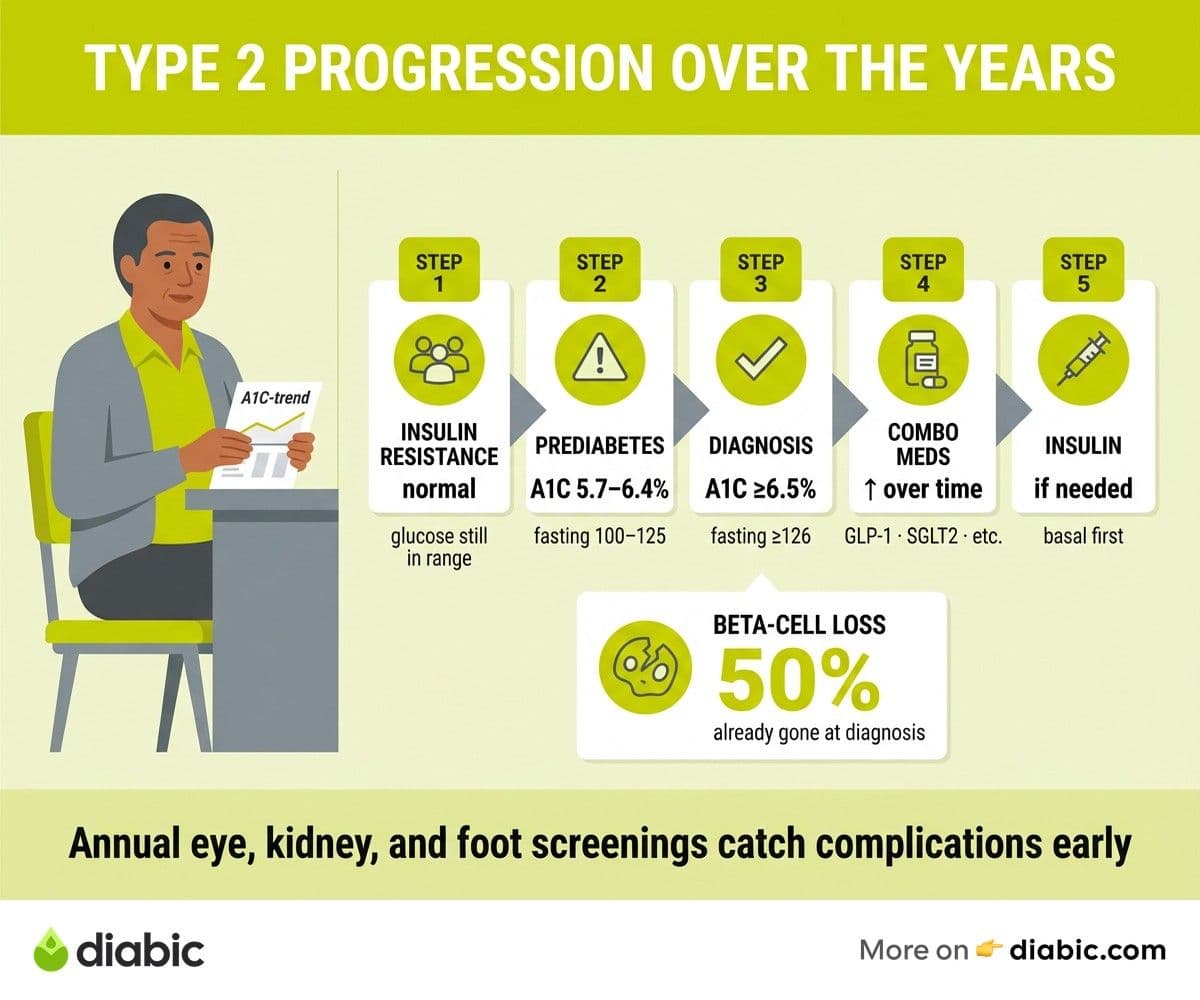
Type 2 diabetes does not appear suddenly. Most people move through identifiable stages, sometimes over a decade or more, before reaching a formal diagnosis. The American Diabetes Association describes the trajectory as a continuum rather than a sharp on-off switch.
Stage 1: Insulin resistance with normal blood sugar
Cells in muscle, liver, and fat tissue stop responding crisply to insulin. The pancreas compensates by producing more insulin, often successfully, so blood sugar stays normal on standard tests. This stage can last for years and is invisible without specialized testing. Many people with abdominal weight gain, fatty liver, or PCOS are in this stage long before any glucose abnormality shows up.
Stage 2: Prediabetes
The pancreas can no longer fully compensate. Fasting glucose drifts to 100 to 125 mg/dL, A1C reaches 5.7% to 6.4%, or post-meal numbers climb above 140 mg/dL. This is the stage where intervention has the largest payoff. The Diabetes Prevention Program showed that structured lifestyle changes reduced progression to type 2 by 58% over three years. Our guide to prediabetes: why catching it now matters covers what works at this stage.
Stage 3: Type 2 diabetes diagnosis
Fasting glucose reaches 126 mg/dL, A1C hits 6.5% or higher, or random glucose climbs above 200 mg/dL with symptoms. Most people are diagnosed during routine bloodwork or after the classic symptoms appear (increased thirst, frequent urination, fatigue, blurred vision). At diagnosis, lifestyle changes plus often a starting medication such as metformin produce strong results, especially when started early.
Stage 4: Medication adjustments as beta cell function declines
Over years, the insulin-producing beta cells of the pancreas tend to lose capacity. This decline is variable, but it is one reason a single medication that worked at diagnosis may need to be combined with another, or replaced, as time goes on. Newer medication classes (GLP-1 receptor agonists, SGLT2 inhibitors) have changed this picture meaningfully, both by lowering glucose and by reducing cardiovascular and kidney risk.
Stage 5: Insulin-requiring type 2 diabetes
Some people with long-standing type 2 reach a point where the pancreas no longer makes enough insulin and exogenous insulin becomes part of the regimen. This is not a moral failure or a sign that earlier care was wrong. It is a biological shift, and modern insulin regimens (long-acting basal insulin, short-acting mealtime insulin if needed) are far more flexible than they were a generation ago.
Not everyone moves through every stage, and the pace varies widely. Some people remain at stage 3 with a single medication for two decades. Others progress faster. Genetics, the age at diagnosis, baseline insulin reserve, and consistency of management all influence the timeline.
Why Type 2 Diabetes Gets Worse Over Time
Three biological forces drive the progression of type 2 diabetes, and understanding them clarifies why early intervention matters so much.
Progressive beta cell decline. At type 2 diagnosis, most people have already lost roughly 50% of their beta cell function. The cells that remain work harder to compensate, and that overwork accelerates further loss. This is the engine of progression, and it is the reason many people eventually need additional medications even if their lifestyle stays consistent. The CDC describes this as a defining feature of the condition.
Compounding insulin resistance. Insulin resistance does not stay still. Excess body weight, sedentary time, poor sleep, chronic stress, and aging all push it upward. Over decades, the cumulative load on the pancreas grows even when blood sugar appears stable. Reducing that load (through movement, weight loss when relevant, sleep, and dietary patterns) eases the strain and slows the underlying decline.
Inflammation and metabolic stress. Chronic low-grade inflammation, often tied to abdominal fat and processed-food intake, damages beta cells and worsens insulin resistance. So does ongoing high blood sugar itself, in a phenomenon called glucotoxicity. Each high A1C year leaves more wear on the system. Each year closer to target leaves less.
The flip side of all this: early intervention has an outsized impact. People who reach near-normal A1C in the first year after diagnosis often do better long term, even if their A1C drifts slightly upward later. Our overview of what is type 2 diabetes covers the biology in plain language and explains why the early years matter so much.
What Happens if Type 2 Diabetes Goes Untreated
Untreated type 2 diabetes lets blood sugar stay elevated for years, and chronically high glucose damages blood vessels, nerves, and organs in well-documented patterns. The NIDDK describes complications as preventable in large part, but their risk rises sharply with sustained high A1C.
Cardiovascular disease. People with type 2 diabetes face roughly two to four times the risk of heart attack and stroke compared with people without diabetes. Elevated glucose damages the inner lining of blood vessels and accelerates atherosclerosis. Blood pressure and cholesterol management are part of why diabetes care extends beyond glucose numbers.
Kidney disease (diabetic nephropathy). Diabetes is the leading cause of kidney failure in the United States. Damage to the small filtering vessels of the kidneys progresses silently for years. Annual urine albumin testing and blood pressure control catch and slow it.
Nerve damage (diabetic neuropathy). Numbness, tingling, or burning in the feet (peripheral neuropathy) is the most common form. Autonomic neuropathy can affect digestion, bladder function, and sexual function. Once present, neuropathy is hard to fully reverse, which is why earlier glucose management matters. Our piece on insulin resistance symptoms most people overlook covers some of the earliest signs that often get missed.
Eye damage (diabetic retinopathy). Damage to the small vessels in the retina is a leading cause of preventable blindness in adults. Annual dilated eye exams catch it early, when laser or injection treatments work well.
Foot complications. Reduced sensation plus reduced blood flow plus slow healing creates serious risk for foot ulcers and, in severe cases, amputation. Daily foot checks and good footwear prevent the great majority of these.
The point of naming these is not to alarm. It is to make clear why consistent management (annual screenings, A1C close to target, blood pressure and cholesterol in range) is the foundation of long-term health with type 2. Diabetes does not punish small lapses. It responds to consistent direction over years.
Slowing Progression: What Works
The single most consistent finding in long-term type 2 diabetes research: tight glucose management in the early years, paired with attention to blood pressure and cholesterol, produces the best long-term outcomes.
Consistent A1C management. Most adults aim for an A1C below 7.0%, with individual targets adjusted up or down based on age, other conditions, hypoglycemia risk, and life circumstances. Reaching and holding the target slows microvascular complications (eyes, kidneys, nerves) and reduces cardiovascular risk over time. The Mayo Clinic emphasizes that A1C goals are individualized rather than universal.
Regular physical activity. The ADA recommends at least 150 minutes of moderate-intensity activity per week, plus two to three resistance-training sessions. Activity lowers blood sugar during exercise, improves insulin sensitivity for hours afterward, supports weight management, and reduces cardiovascular risk. Even short walks after meals (10 to 15 minutes) blunt post-meal glucose spikes.
Weight management when relevant. Losing 5 to 10% of body weight, when extra weight is part of the picture, often produces a meaningful A1C drop and may reduce medication needs. Larger weight loss (15% or more) has been associated with type 2 diabetes remission in some people, particularly within the first six years of diagnosis. Our piece on whether type 2 diabetes can be reversed covers what the evidence supports.
Medication adjustments over time. Modern type 2 medication is layered. Metformin remains the typical first step. GLP-1 receptor agonists (semaglutide, liraglutide) and SGLT2 inhibitors (empagliflozin, dapagliflozin) have shown cardiovascular and kidney benefits beyond glucose lowering, and many guidelines now recommend them earlier in the treatment sequence for people with relevant risks. Our overview of type 2 diabetes treatment options walks through the categories.
Annual complication screenings. Yearly dilated eye exams, urine albumin testing, foot exams, blood pressure checks, and cholesterol panels catch problems early. Most can be coordinated through a single annual visit with your primary care or endocrinology team.
Sleep, stress, and other levers. Seven to nine hours of sleep most nights, stress tools you actually use, and not smoking are unglamorous but real contributors. Each of them affects glucose, blood pressure, and overall vascular health.
From my experience: in 14 years of living with diabetes, the single biggest determinant of how I have done over time has been consistency at a B+ level rather than perfection in short bursts. Long stretches of "good enough" outperform alternating cycles of strict and lapsed. This is the part the textbooks rarely capture.
Staying Motivated for the Long Haul
The long timeline of type 2 diabetes is also a psychological challenge. Decades of attention to food, movement, medication, and bloodwork is real work, and the burden compounds quietly.
A few mindset shifts seem to help most people who manage well over years.
Reframe management as self-care, not punishment. The behaviors that support a stable A1C (sleep, walking, vegetables, time in nature, time with people) overlap with the behaviors that support general well-being. Most are not penalties. They are the things that would benefit a person without diabetes too.
Set realistic, incremental goals. A1C 9.0% to 7.5% over six months is a meaningful win, even if your eventual target is 6.8%. Hitting one realistic goal builds the foundation for the next. Goals that ignore the starting point usually fail.
Find support through communities and peer groups. Online communities, in-person groups, and structured programs such as the CDC-recognized Diabetes Self-Management Education and Support (DSMES) program reduce isolation and improve outcomes. Diabetes is more manageable when you are not the only person you know managing it.
Celebrate progress, not just perfection. A 0.5% A1C drop is a real reduction in long-term risk. A walk after dinner three nights a week is a real shift, even if it is not five. The math of small consistent wins compounds in the same direction as the biology of progression, just on the helpful side.
FAQ
What happens if type 2 diabetes goes untreated?
Untreated type 2 diabetes lets blood sugar stay elevated, which damages blood vessels and nerves throughout the body over years. This raises the risk of heart attack and stroke, kidney failure, vision loss, nerve damage in the feet, and slow-healing wounds that can become serious. The longer A1C stays high, the greater the chance of complications, but most damage is gradual and modifiable. Starting management at any point reduces forward risk meaningfully, even if some background risk has already accumulated.
Does type 2 diabetes get worse over time?
Type 2 diabetes is generally progressive, meaning the pancreas tends to produce less insulin over the years and additional medications are often added over time. The rate of progression varies widely from person to person. Consistent lifestyle management, well-chosen medications, and regular monitoring slow the process substantially, and many people maintain stable blood sugar and stable medication regimens for a decade or longer. Some people with shorter disease duration achieve remission with sustained weight loss and lifestyle changes.
How long can you live with type 2 diabetes?
Life expectancy with type 2 diabetes has improved meaningfully as treatments and screening have advanced. People diagnosed today, with consistent care, often live near-normal lifespans. The biggest determinants are how well A1C, blood pressure, and cholesterol are managed over time and whether complications are caught early.
Can type 2 diabetes be reversed?
Some people with type 2 diabetes (particularly those diagnosed within the past few years) achieve remission, defined as an A1C below 6.5% without glucose-lowering medication, through sustained substantial weight loss and lifestyle changes. Remission is not the same as cure, and it requires ongoing attention to maintain. Understanding how type 2 diabetes progresses also explains why earlier action gives the strongest chance of remission. We cover the evidence in our piece on whether type 2 diabetes can be reversed.
Shahriar P. Shuvo is the founder of Diabic. He has lived with diabetes for over 14 years, and built Diabic to deliver the practical, evidence-based self-management tools he wished existed when he was first diagnosed. By trade, Shahriar is a senior design and frontend engineer with 6+ years shipping products at Agora, Timescale (now Tiger Data), and ShareTrip. He writes from the intersection of lived diabetes experience and product craft, focused on what works in daily management rather than what sounds good in a textbook.
Medically reviewed by
Dr. Rezwana Parvin Rumpa is an obstetrics and gynaecology specialist with clinical focus on gestational diabetes, PCOS, and fertility. She holds the MRCOG (Final Part) from the Royal College of Obstetricians and Gynaecologists in London, the MRCPI (Final Part) from the Royal College of Physicians of Ireland, and an MBBS from Shaheed Monsur Ali Medical College under Dhaka University. Dr. Rumpa serves as a Senior Medical Officer in the Obs and Gynae department at BRB Hospitals Ltd, where she has spent three years managing prenatal care, emergency obstetric cases, and women's-health surgery. On Diabic, she medically reviews content for women living with diabetes, with particular attention to pregnancy, PCOS, and reproductive-health intersections.
More from Diabetes Knowledge
View all
6 Safe Dessert for Gestational Diabetes Recipes You Can
Six dessert for gestational diabetes recipes that satisfy your sweet tooth without spiking blood sugar, with carb counts and pairing tips you can use.

8 High Fiber Foods That Help with Prediabetes
Add these 8 high fiber foods for prediabetes to slow glucose absorption, support steady blood sugar, and meet the daily fiber target most people miss.

Mediterranean Diet for Prediabetes: A Practical Guide
The mediterranean diet for prediabetes is one of the best-studied eating patterns for prevention. Here is what to eat, what to avoid, and how to start.
Clinician-reviewed habits, plain-language guides, and honest answers - the small shifts that make living with diabetes feel lighter, every day.