Symptoms of Prediabetes in Females: Key Warning Signs
The symptoms of prediabetes in females often look different and get missed. Learn the female-specific signs, the PCOS link, and when to get tested.

In this article(9)
The symptoms of prediabetes in females can look different from the general warning signs, and they are often blamed on hormones, stress, perimenopause, or simply getting older. Recurring yeast infections get treated. Fatigue gets explained away. Skin changes get ignored. Recognizing these female-specific signs gives women a better chance of catching prediabetes before it progresses.
Prediabetes is common, often silent, and frequently undiagnosed in women because so many of its signals overlap with other reproductive and hormonal conditions. We want to walk through what the female experience of prediabetes actually looks like, why it gets missed, and the screening conversations worth having with your doctor.
Symptoms of Prediabetes in Females That Stand Out
The most well-known prediabetes symptoms, like increased thirst and frequent urination, often show up only when blood sugar climbs higher. Earlier on, women tend to notice a different cluster of changes that are easier to dismiss but worth taking seriously. According to the CDC, most people with prediabetes do not know they have it, and women are particularly likely to attribute symptoms to other causes.
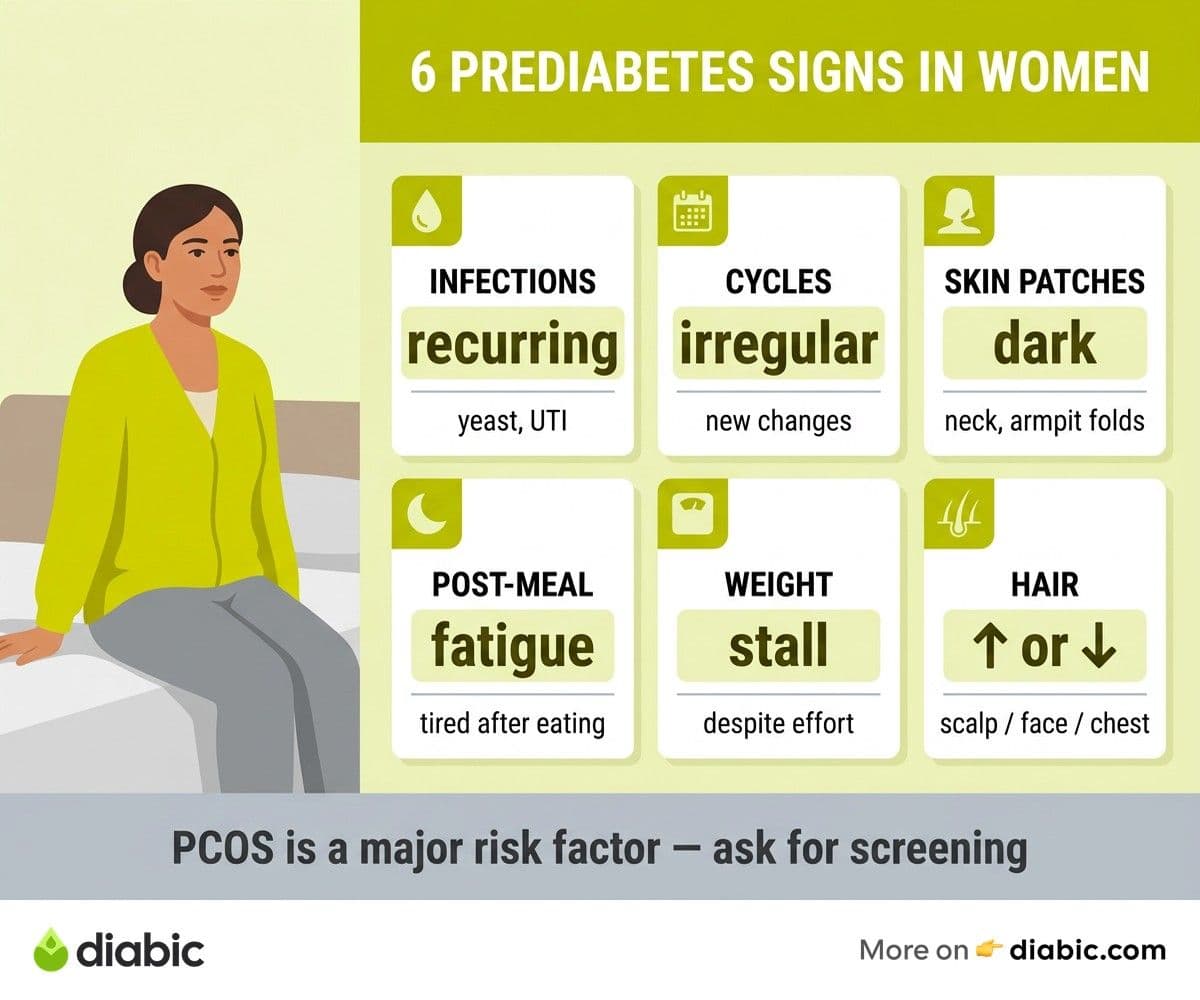
Recurring yeast infections and vaginal infections are one of the most common early signals in women. Higher blood sugar feeds the yeast that naturally lives in the body, and the genital and urinary tract are common sites. If you find yourself on a third or fourth round of antifungal treatment in a year, it is worth asking your doctor about blood sugar testing.
Menstrual cycle changes can also be a clue. Insulin resistance affects sex hormones, and women may notice cycles becoming more irregular, heavier, or lighter than usual. New cycle changes after years of regularity deserve attention, especially when paired with other signs.
Skin changes are easy to overlook. Acanthosis nigricans is the medical name for darkened, velvety patches of skin that often appear in skin folds: the back of the neck, the armpits, the groin. It is one of the most visible signs of insulin resistance, but many people do not realize what it means. Skin tags in the same areas can also point to insulin resistance.
Unusual fatigue, especially the kind that hits hard after meals, is another common report. When cells become less responsive to insulin, glucose has a harder time getting into them for energy, even when blood sugar levels are elevated. The result is feeling tired despite eating, which is a paradox that can be confusing.
Difficulty losing weight despite consistent effort can also signal insulin resistance, the underlying driver of prediabetes. Higher insulin levels promote fat storage, particularly around the abdomen. Many of the same patterns show up in our piece on insulin resistance symptoms, which often precede a prediabetes diagnosis.
Hair changes sometimes appear too. Hair thinning on the scalp or new hair growth on the face, chest, or stomach can reflect the hormonal shifts that accompany insulin resistance, particularly when PCOS is part of the picture. None of these symptoms of prediabetes in females are individually conclusive, but together they paint a picture worth taking to a provider.
Why Signs of Prediabetes in Females Differ
The signs of prediabetes in females differ for biological and social reasons that are worth naming. Biologically, women's bodies handle glucose and insulin differently across the menstrual cycle, in pregnancy, and through perimenopause and menopause. Socially, women's symptoms are more often dismissed or attributed to stress, hormones, or weight, which delays diagnosis.
Hormonal influences on insulin sensitivity are real and predictable. Estrogen generally improves insulin sensitivity, while progesterone reduces it. This is part of why some women notice blood sugar shifts at certain points in their cycle, and why insulin resistance tends to worsen during the luteal phase before menstruation.
PCOS, or polycystic ovary syndrome, is a major risk factor and a frequent driver of female prediabetes. Insulin resistance is a core feature of PCOS for many women, even those who do not have classic symptoms like irregular periods. The Office on Women's Health notes that women with PCOS are at significantly higher risk for prediabetes and type 2 diabetes.
Perimenopause and menopause introduce another shift. As estrogen declines, insulin resistance often increases, and many women notice their numbers creeping up in their forties and fifties even when their habits have not changed. Sleep disturbances, weight redistribution toward the abdomen, and mood changes during this period can all interact with blood sugar.
Symptom dismissal is the part no one likes to talk about, but it matters. Women with vague fatigue, cycle changes, or weight gain often have those symptoms attributed to stress or aging without further workup. If your symptoms are being brushed off, asking specifically for a blood sugar check, including A1C and fasting glucose, is reasonable. Our broader piece on general prediabetes symptoms covers the warning signs that apply to everyone.
The PCOS and Prediabetes Connection
PCOS and prediabetes are tightly linked, and understanding the connection helps a lot of women piece together what has been happening with their bodies. Insulin resistance is at the core of PCOS for many women, which is why the two conditions so often travel together.
The mechanics are worth understanding. When cells become less responsive to insulin, the pancreas produces more insulin to compensate. Higher insulin levels stimulate the ovaries to produce more androgens, the hormones responsible for many PCOS symptoms like irregular periods, acne, and excess hair growth. The same insulin resistance also pushes blood sugar higher over time, leading to prediabetes.
The symptoms overlap significantly. Weight gain that concentrates around the midsection, irregular or absent periods, acne, hair changes, and difficulty losing weight all show up in both conditions. Distinguishing them often requires lab work, not just symptom review.
According to the Mayo Clinic, women with PCOS should be screened for prediabetes and type 2 diabetes regularly, often starting in their teens or twenties. If you have a PCOS diagnosis and have not had blood sugar testing recently, it is worth bringing up at your next appointment. We cover more on what to look for in our piece on diabetes symptoms in women.
The encouraging part of this connection is that the same lifestyle changes that help PCOS also help prediabetes. Improving insulin sensitivity through diet, movement, and sometimes medication like metformin can address both conditions at once.
From my experience: In fourteen years of being part of the diabetes community, the story I have heard most often from women with prediabetes goes like this: they spent years being told their symptoms were stress, hormones, or that they just needed to lose weight. The relief when someone finally connects the dots is huge, but so is the frustration about how long it took. If you suspect something is off with your blood sugar, you do not need to wait for someone else to suggest the test.
When to Get Tested
Screening guidelines exist, but they are minimums, not ceilings. The American Diabetes Association recommends prediabetes and type 2 diabetes screening for all adults starting at age 35, and earlier for those with risk factors. Many women have risk factors that warrant earlier screening but never get offered the test.
Risk factors that warrant earlier or more frequent screening include a BMI in the overweight or obese range, family history of type 2 diabetes, PCOS, a history of gestational diabetes, high blood pressure, abnormal cholesterol levels, sedentary lifestyle, and certain ethnic backgrounds with higher type 2 diabetes risk. If you have one or more of these, asking for testing in your thirties or earlier is reasonable.
The tests to ask for are straightforward. The A1C measures average blood sugar over the past two to three months. Fasting glucose measures blood sugar after an overnight fast. The oral glucose tolerance test (OGTT) measures how your body handles a sugar load. Any of these can identify prediabetes, and your provider can choose what fits your situation.
Women with a history of gestational diabetes deserve special attention. Up to half of women with gestational diabetes will develop type 2 diabetes within 5 to 10 years if no intervention is made. The ADA recommends ongoing screening every 1 to 3 years after a gestational diabetes pregnancy. Our gestational diabetes guide explores this longer-term risk in more depth.
Catching prediabetes early matters because the lifestyle changes that work tend to work better when started sooner. We cover the timing argument in prediabetes: why catching it now, and it is especially relevant for women whose symptoms are easily dismissed.
Frequently Asked Questions
What are the signs of prediabetes in women?
Signs in women can include recurring yeast infections, menstrual irregularities, unusual fatigue (especially after meals), weight gain concentrated around the midsection, darkened skin patches in skin folds, skin tags, and hair changes like thinning on the scalp or excess facial hair. Women with PCOS face an even higher risk. Because these symptoms overlap with hormonal conditions, they are often missed or misattributed.
How does prediabetes affect women differently?
Prediabetes affects women differently due to hormonal fluctuations across the menstrual cycle, pregnancy, and menopause, all of which influence insulin sensitivity. Women with PCOS are at particularly high risk because insulin resistance is a central feature of the condition. A history of gestational diabetes also significantly increases future prediabetes and type 2 risk.
Can prediabetes cause irregular periods?
Yes, indirectly. Insulin resistance, the underlying mechanism behind prediabetes, affects sex hormone balance and can contribute to irregular periods. This is especially common when PCOS is also present.
Should I get tested for prediabetes if I have PCOS?
Yes. Most guidelines recommend regular blood sugar screening for women with PCOS, often starting in adolescence or young adulthood. Talk to your doctor about A1C and fasting glucose testing if you have not had one recently.
Recognizing the symptoms of prediabetes in females is one of the most empowering steps a woman can take for her long-term health. The signs are often quiet and easy to dismiss, but they are also early enough to act on. If something feels off, trust that, ask for the test, and give yourself the chance to make changes while the window is open.
Dr. Rezwana Parvin Rumpa is an obstetrics and gynaecology specialist with clinical focus on gestational diabetes, PCOS, and fertility. She holds the MRCOG (Final Part) from the Royal College of Obstetricians and Gynaecologists in London, the MRCPI (Final Part) from the Royal College of Physicians of Ireland, and an MBBS from Shaheed Monsur Ali Medical College under Dhaka University. Dr. Rumpa serves as a Senior Medical Officer in the Obs and Gynae department at BRB Hospitals Ltd, where she has spent three years managing prenatal care, emergency obstetric cases, and women's-health surgery. On Diabic, she medically reviews content for women living with diabetes, with particular attention to pregnancy, PCOS, and reproductive-health intersections.
Medically reviewed by
Dr. Shanto Arian is an internal medicine physician now specializing in clinical and aesthetic dermatology, with a parallel academic focus on epidemiology and public health. He holds an MBBS, MPH, MSc (UK), MRCP (UK), MRCPI (Ireland), Diploma in Dermatology (UK), and Diploma in Aesthetic Medicine (USA). Dr. Arian trained in internal medicine, including hospital work on hematology cases such as graft-versus-host disease, before moving toward dermatology. Skin is one of the earliest places diabetes shows itself, from acanthosis nigricans and diabetic dermopathy to slow foot wound healing, and that intersection is where his clinical and Diabic-review work meet. On Diabic, Dr. Arian medically reviews content on diabetes diagnosis, complications, dermatologic manifestations, and pharmacotherapy, ensuring every claim aligns with current ADA, NICE, and peer-reviewed literature.
More from Diabetes Knowledge
View all
6 Safe Dessert for Gestational Diabetes Recipes You Can
Six dessert for gestational diabetes recipes that satisfy your sweet tooth without spiking blood sugar, with carb counts and pairing tips you can use.

8 High Fiber Foods That Help with Prediabetes
Add these 8 high fiber foods for prediabetes to slow glucose absorption, support steady blood sugar, and meet the daily fiber target most people miss.

Mediterranean Diet for Prediabetes: A Practical Guide
The mediterranean diet for prediabetes is one of the best-studied eating patterns for prevention. Here is what to eat, what to avoid, and how to start.
Clinician-reviewed habits, plain-language guides, and honest answers - the small shifts that make living with diabetes feel lighter, every day.