Diabetes Symptoms in Women: What Looks Different
Diabetes symptoms in women often differ from textbook lists. Learn the signs that get missed, why hormones matter, and when to ask for testing.

In this article(13)
Diabetes symptoms in women do not always match the textbook descriptions. Recurring yeast infections, hormonal shifts, and stubborn urinary tract infections can all signal elevated blood sugar, but they are frequently chalked up to other causes. Understanding how the condition presents differently in women makes early detection far more likely, and earlier action gives you better long-term outcomes.
The standard symptom list (frequent urination, thirst, fatigue, blurred vision) was built around a general population. Women, especially those navigating perimenopause, polycystic ovary syndrome, or pregnancy, often experience an additional layer of clues that get dismissed as "just hormones." Knowing what to look for helps you advocate for yourself when something feels off.
Diabetes Symptoms in Women That Stand Out
Several symptoms appear more frequently in women with elevated blood sugar, and they often show up before the classic signs do. Recognizing them early can shorten the gap between "something feels wrong" and a clear diagnosis.
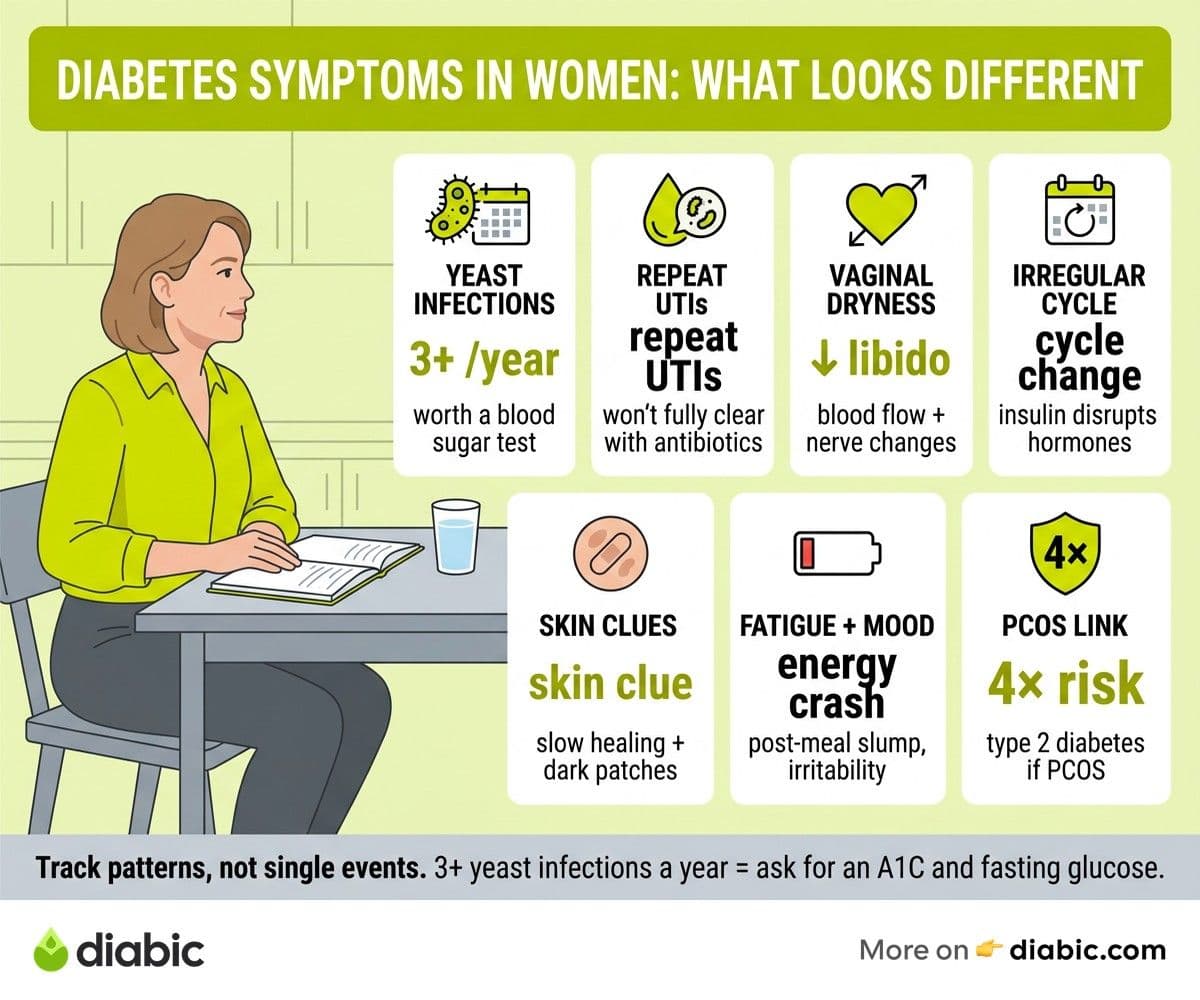
Frequent vaginal yeast infections. Higher glucose in vaginal secretions feeds yeast, leading to repeated overgrowth. The American Diabetes Association lists genital itching and frequent yeast infections as a common early sign in women. If you are dealing with three or more yeast infections a year, that pattern alone is worth a blood sugar test.
Recurring urinary tract infections. Sugar in urine creates an environment where bacteria thrive. Women already face higher UTI risk for anatomical reasons, and elevated blood sugar amplifies it. Repeated UTIs, especially ones that do not fully clear with a single course of antibiotics, are a quiet but meaningful clue.
Decreased sex drive and vaginal dryness. Elevated glucose can affect blood flow and nerve function, including in tissues that influence arousal and lubrication. These changes are easy to attribute to stress or aging, which is part of why they get missed.
Irregular menstrual cycles. Insulin resistance interacts with reproductive hormones, and women with undiagnosed diabetes or prediabetes often notice cycles becoming unpredictable, heavier, or skipped.
Skin infections and slow wound healing. Cuts that take longer to close, dark velvety patches at the back of the neck or under the arms (acanthosis nigricans), and skin tags can all reflect insulin resistance long before a formal diagnosis.
Unexplained fatigue and mood changes. Energy crashes after meals, persistent tiredness, and shifts in mood are easy to write off, particularly if you are juggling caregiving, work, or hormonal transitions. These can be early signs of blood sugar dysregulation.
Why Symptoms Diabetes in Women Often Get Missed
The same biology that creates these distinctive symptoms also makes them easy to misread. Symptoms diabetes in women can mimic, or be masked by, several other common conditions.
Hormonal fluctuations during the menstrual cycle, perimenopause, and menopause influence insulin sensitivity. Estrogen and progesterone affect how cells respond to insulin, so the same blood sugar reading can produce different symptoms in different phases of the cycle. Hot flashes can mask the warmth of high blood sugar. Night sweats can hide the sweating of a low. Brain fog gets blamed on perimenopause when it might also be fueled by glucose swings.
Polycystic ovary syndrome (PCOS) further complicates the picture. Insulin resistance is a core feature of PCOS, and many of its symptoms (irregular cycles, weight gain, fatigue, skin changes) overlap directly with prediabetes and early type 2 diabetes. Women with PCOS face roughly four times the risk of developing type 2 diabetes, yet routine screening is still inconsistent. If you have PCOS, ask whether your annual workup includes an A1C and fasting glucose. We cover the broader picture in our piece on insulin resistance symptoms most people overlook.
Many women also attribute symptoms to stress, motherhood, or aging because that has often been their experience with healthcare. Studies show women's symptoms are more likely to be dismissed as psychosomatic, and that bias extends to diabetes screening. Knowing the patterns yourself is one form of protection. Our guide to diabetes symptoms that sneak up covers more of these subtle signs.
Symptoms for Diabetes in Women by Type
Symptoms for diabetes in women shift depending on which type is involved. The underlying biology is different, and so is the timeline.
Type 1 diabetes
Type 1 typically appears with rapid, hard-to-ignore symptoms: sudden weight loss, intense thirst, frequent urination, fatigue, and sometimes nausea. Onset is most common in childhood and adolescence, but it can develop in adulthood (sometimes called LADA, latent autoimmune diabetes in adults). Women with new type 1 may also notice menstrual changes once blood sugars stabilize on insulin.
Type 2 diabetes
Type 2 develops gradually, often over years. Many of the women-specific symptoms above (yeast infections, UTIs, skin changes, fatigue) tend to show up first, sometimes well before the classic symptoms. The Mayo Clinic notes that type 2 symptoms are easy to miss because they progress slowly. By the time a person seeks care for "the obvious" signs, blood sugar has often been elevated for some time.
Gestational diabetes
Gestational diabetes usually has no clear symptoms, which is why universal screening between 24 and 28 weeks of pregnancy matters. When symptoms do appear, they overlap with normal pregnancy: fatigue, increased thirst, more frequent urination. Women who develop gestational diabetes have a substantially higher long-term risk of type 2, so postpartum follow-up is important. Our gestational diabetes guide walks through what to expect.
The types share a common thread (chronically elevated glucose) but differ in cause, treatment, and the symptom mix women are most likely to experience first.
Hormonal Connections: PCOS, Menopause, and Diabetes
Hormones are the through-line that ties many women-specific symptoms together. Three connections deserve closer attention.
The PCOS link. Roughly half of women with PCOS develop prediabetes or type 2 diabetes by age 40. Insulin resistance drives both the reproductive symptoms (irregular periods, acne, excess hair growth) and the metabolic risk. Treating insulin resistance through lifestyle changes, and sometimes metformin, often improves both sets of symptoms. If you have PCOS, our piece on symptoms of prediabetes in females is worth bookmarking.
Menopause and blood sugar. Falling estrogen levels reduce insulin sensitivity in many women. Sleep disruption from hot flashes worsens glucose tolerance. Weight tends to redistribute toward the abdomen, which is metabolically more active and more strongly linked to insulin resistance. The result: many women see A1C numbers creep upward in the years around menopause, even without major lifestyle changes. The Office on Women's Health outlines how diabetes risk shifts at midlife.
Pregnancy and lasting metabolic change. Pregnancy is a physiological stress test for the pancreas. Women who develop gestational diabetes have already shown that their insulin reserves can be challenged, and that information stays relevant after birth. About half will develop type 2 diabetes within 10 to 20 years without preventive action. Postpartum screening at 6 to 12 weeks, then annually, helps catch shifts early.
From my experience: I have spent 14 years living with diabetes and listening to other women describe their path to diagnosis. The pattern I hear most often is not "I had textbook symptoms." It is "I knew something was off for two years, but every doctor pointed at something else." Trust that internal signal. If a UTI keeps coming back, if cycles are suddenly different, if your energy has changed in a way you cannot explain, ask specifically for a fasting glucose and A1C.
When to Talk to Your Doctor
Some symptoms call for prompt testing rather than a "wait and see" approach. The CDC recommends screening if you have any of the following: a body mass index above 25 (or 23 for women of Asian descent), a history of gestational diabetes or PCOS, a first-degree relative with type 2 diabetes, or signs that fit the patterns above.
Specific symptom clusters that warrant testing include:
- Two or more yeast infections in a year along with fatigue or weight changes
- Recurring UTIs that do not respond to a single antibiotic course
- Persistent acanthosis nigricans (dark velvety skin) at the neck, armpits, or groin
- Increased thirst, urination, or unexplained weight changes lasting more than two weeks
- Numbness or tingling in the hands or feet, especially with any of the above
When you book the appointment, prepare. Bring a short list of symptoms and how long they have been happening. Note any family history of diabetes, gestational diabetes in past pregnancies, and PCOS. Ask directly: "Can we run a fasting glucose and A1C today?" If your doctor declines, ask what symptom or threshold would justify it. Document the conversation. Our guide to early signs of diabetes walks through more of what to track before the visit.
If your numbers come back in the prediabetes or diabetes range, that is actionable information, not a verdict. The earlier you have it, the more options you have.
FAQ
What are the first signs of diabetes in a woman?
The first signs in women often include frequent yeast infections, recurring UTIs, unexplained fatigue, increased thirst, and more frequent urination. Many women also notice vaginal dryness, menstrual irregularities, slow-healing cuts, or new skin changes such as dark patches at the back of the neck. Because these symptoms appear gradually and overlap with hormonal shifts, they are often attributed to other conditions before diabetes is considered. If two or more of these patterns appear together, ask your doctor for a fasting glucose and A1C test.
How does diabetes affect women differently?
Diabetes affects women differently in part because of hormonal factors. Fluctuating estrogen and progesterone influence insulin sensitivity, which can make blood sugar harder to predict around menstrual cycles, during pregnancy, and through menopause. Women with diabetes also face a higher relative risk of heart disease and depression than men with diabetes, and they are more prone to UTIs and yeast infections because elevated glucose creates a friendlier environment for bacteria and yeast. Recognizing these differences helps women advocate for earlier testing and more tailored care.
Can hormonal birth control affect blood sugar?
Some hormonal contraceptives can modestly affect insulin sensitivity, especially combined estrogen-progestin formulations. Most women tolerate them without meaningful blood sugar changes, but if you have prediabetes, PCOS, or a strong family history, talk to your provider about which option fits your overall metabolic picture.
Is fatigue alone enough to ask for a diabetes test?
Fatigue on its own has many causes, but persistent unexplained tiredness paired with any of the diabetes symptoms in women noted above (yeast infections, UTIs, cycle changes, skin changes) is reason enough to request a fasting glucose and A1C. Testing is simple, low cost, and covered by most insurance, and catching diabetes symptoms in women early is what gives you the most options for the years ahead.
Dr. Rezwana Parvin Rumpa is an obstetrics and gynaecology specialist with clinical focus on gestational diabetes, PCOS, and fertility. She holds the MRCOG (Final Part) from the Royal College of Obstetricians and Gynaecologists in London, the MRCPI (Final Part) from the Royal College of Physicians of Ireland, and an MBBS from Shaheed Monsur Ali Medical College under Dhaka University. Dr. Rumpa serves as a Senior Medical Officer in the Obs and Gynae department at BRB Hospitals Ltd, where she has spent three years managing prenatal care, emergency obstetric cases, and women's-health surgery. On Diabic, she medically reviews content for women living with diabetes, with particular attention to pregnancy, PCOS, and reproductive-health intersections.
Medically reviewed by
Dr. Shanto Arian is an internal medicine physician now specializing in clinical and aesthetic dermatology, with a parallel academic focus on epidemiology and public health. He holds an MBBS, MPH, MSc (UK), MRCP (UK), MRCPI (Ireland), Diploma in Dermatology (UK), and Diploma in Aesthetic Medicine (USA). Dr. Arian trained in internal medicine, including hospital work on hematology cases such as graft-versus-host disease, before moving toward dermatology. Skin is one of the earliest places diabetes shows itself, from acanthosis nigricans and diabetic dermopathy to slow foot wound healing, and that intersection is where his clinical and Diabic-review work meet. On Diabic, Dr. Arian medically reviews content on diabetes diagnosis, complications, dermatologic manifestations, and pharmacotherapy, ensuring every claim aligns with current ADA, NICE, and peer-reviewed literature.
More from Diabetes Knowledge
View all
6 Safe Dessert for Gestational Diabetes Recipes You Can
Six dessert for gestational diabetes recipes that satisfy your sweet tooth without spiking blood sugar, with carb counts and pairing tips you can use.

8 High Fiber Foods That Help with Prediabetes
Add these 8 high fiber foods for prediabetes to slow glucose absorption, support steady blood sugar, and meet the daily fiber target most people miss.

Mediterranean Diet for Prediabetes: A Practical Guide
The mediterranean diet for prediabetes is one of the best-studied eating patterns for prevention. Here is what to eat, what to avoid, and how to start.
Clinician-reviewed habits, plain-language guides, and honest answers - the small shifts that make living with diabetes feel lighter, every day.