Low Carb Diet and Prediabetes: Does It Help?
A low carb diet and prediabetes often pair up in research and real life. Here is what the evidence says, who benefits most, and how many carbs to aim for.

In this article(11)
A low carb diet and prediabetes come up together in nutrition conversations for good reason. Reducing carbohydrate intake is one of the most direct ways to lower the blood sugar spikes that drive insulin resistance, and several solid trials show it works in the prediabetes range. The harder question is whether it is the right approach for you, and how strict the cutbacks need to be.
This guide walks through what the evidence supports, where the cautions sit, and how a low carb pattern compares to the other dietary approaches that have decent research behind them.
How a Low Carb Diet and Prediabetes Numbers Interact
The mechanism is straightforward. Carbohydrates break down into glucose, which raises blood sugar. Fewer carbs at a meal means a smaller post-meal glucose rise, which means the pancreas releases less insulin. Over time, lower insulin demand can ease the insulin resistance that defines prediabetes.
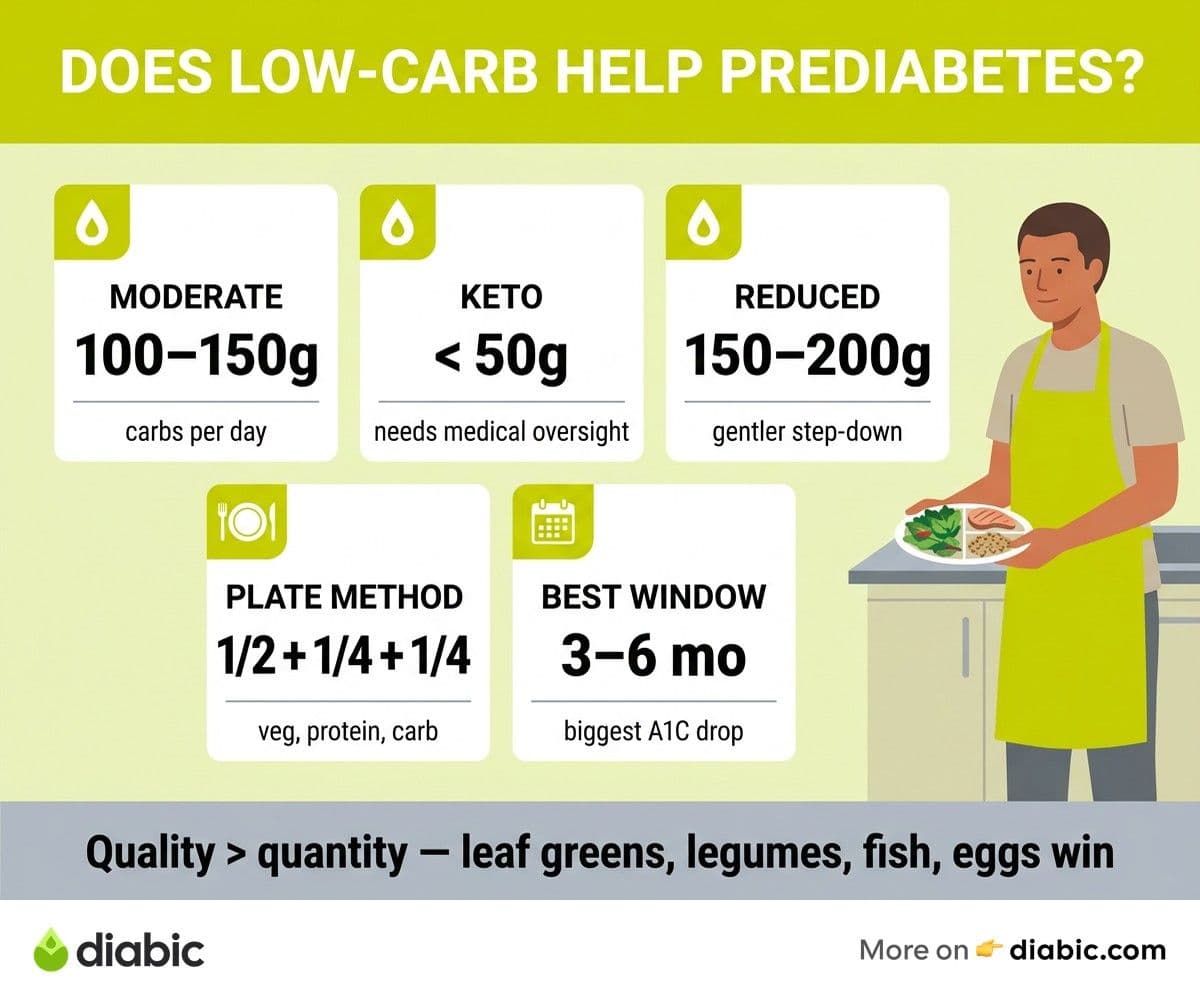
In practice, the picture is more layered. The American Diabetes Association nutrition consensus report reviewed dozens of trials and concluded that reducing carbohydrate intake produces the most consistent improvements in blood sugar markers, including A1C and fasting glucose, across people with prediabetes and diabetes. The benefit is most pronounced in the first three to six months and tends to plateau as the body adjusts.
Short-term effects are usually clear: lower post-meal glucose, lower fasting glucose, and modest weight loss without intentional calorie restriction. Insulin sensitivity often improves alongside these changes. Longer term, the data are more mixed. Some studies show sustained benefit at one to two years; others show that people drift back toward higher carb intake and the gains shrink.
Comparative trials suggest that carbohydrate quality matters as much as quantity. A low carb pattern built on vegetables, legumes, fish, eggs, nuts, and olive oil performs differently from one built on processed meat and cheese, even at the same carb count. For a deeper look at the structured low carb approach, our guide to a deeper look at low carb for prediabetes walks through how to set it up.
Is Low Carb Good for Prediabetes?
For most people in the prediabetes range, the short answer is yes, but with conditions. Research from Harvard T.H. Chan School of Public Health shows that low carb diets reliably improve blood sugar and triglycerides in people with insulin resistance, particularly when the carbs that remain are high quality and the fats lean toward unsaturated sources.
People who tend to benefit most from a low carb approach include those with:
- Strong post-meal glucose spikes despite normal fasting numbers
- A history of gestational diabetes or PCOS
- Visceral (abdominal) weight that has been hard to shift on other diets
- A pattern of strong cravings and rebound hunger after high-carb meals
The downsides are real and worth naming. Cutting carbs sharply can shift attention away from overall dietary quality, leading to gaps in fiber, magnesium, potassium, and B vitamins if produce and legumes are also limited. Some people experience the so-called "low carb flu" (fatigue, headaches, irritability) in the first one to two weeks. Athletes and people who do high-intensity exercise may need more carbs than a strict low carb plan provides.
Sustainability is the other limiting factor. The best diet is one you can stay with. If a low carb approach feels unsustainable after a few weeks, a more moderate carb pattern paired with portion awareness usually beats a strict plan you abandon. Our piece on what to eat and what to limit with prediabetes covers a less restrictive starting point that still moves the needle.
How Many Carbs Per Day for Prediabetes?
There is no single number that fits everyone, but the research falls into a few useful tiers.
Moderate low carb (100 to 150 grams per day). This is the range most clinical trials use as a "low carb" comparison and the one many providers recommend as a sustainable starting point. It cuts most refined carbs and added sugars while leaving room for fruit, legumes, and whole grains. For most people with prediabetes, it produces meaningful improvements without the intensity of stricter plans.
Very low carb or ketogenic (under 50 grams per day). This range produces faster blood sugar drops and often more weight loss in the short term, but it is harder to sustain and requires more careful planning to avoid nutrient gaps. It is reasonable for shorter, structured periods, and some people do well on it long term. If you take medications that lower blood sugar, you need to coordinate closely with your doctor before going this low.
Lower-than-average (150 to 200 grams per day). This is sometimes called a "reduced carb" pattern. It is gentler than the categories above but still meaningfully different from the typical American intake of 250 to 300 grams. Many people in the prediabetes range see clear A1C improvements at this level, especially when the carbs that remain are high quality.
The right number depends on your activity level, medications, food preferences, and how your individual blood sugar responds. The ADA nutrition recommendations state that no single carbohydrate target works for everyone and that personalization, ideally with a registered dietitian, produces the best outcomes.
A practical way to find your range: track carbs for a week at your current intake, then reduce by 50 to 75 grams a day for two to three weeks while watching how you feel and how your fasting glucose responds. Adjust from there.
Low Carb for Prediabetes: What to Eat
A low carb for prediabetes plan works best when it focuses on adding high-quality foods, not just removing carbs. The core building blocks:
Protein sources. Poultry, fish (especially fatty fish such as salmon, sardines, and mackerel), eggs, tofu, tempeh, and small amounts of lean red meat. Legumes such as lentils, chickpeas, and black beans contain carbs but also enough protein and fiber to fit into most low carb plans in moderate portions. Greek yogurt and cottage cheese add protein with limited carbs.
Healthy fats. Olive oil, avocado, nuts (almonds, walnuts, pistachios), seeds (chia, flax, pumpkin), and the fats that come naturally with fish, eggs, and dairy. These fats support satiety and have favorable cardiovascular effects in most studies. Coconut oil and butter can be used in moderation.
Low carb vegetables. Leafy greens, cruciferous vegetables (broccoli, cauliflower, Brussels sprouts, cabbage), zucchini, peppers, mushrooms, asparagus, and tomatoes. These provide fiber, vitamins, and minerals at low carbohydrate cost. Aim to fill at least half your plate with non-starchy vegetables at lunch and dinner.
Lower-carb fruits in modest portions. Berries, kiwi, and small portions of stone fruit fit most low carb plans. Avocado technically counts here too.
What to limit. Sugar-sweetened beverages, fruit juice, white bread, pasta, white rice, sweet breakfast cereals, baked goods, and most packaged snack foods. These produce the largest blood sugar spikes and crowd out more nutrient-dense options.
Plate-method as a quick visual: half non-starchy vegetables, a quarter protein, a quarter slower carbs (such as legumes, lentils, or a small portion of whole grain) plus a thumb of healthy fat. This works at most carb levels and removes the need to count grams every meal.
Comparing Low Carb to Other Prediabetes Diets
Low carb is not the only dietary pattern with evidence behind it for prediabetes. The honest answer is that several approaches work, and the differences between them are smaller than the difference between any of them and the standard American diet.
Low carb vs Mediterranean. The Mediterranean pattern (fish, vegetables, legumes, whole grains, olive oil, nuts) usually contains more carbs than a low carb plan but emphasizes carbohydrate quality. Trials comparing the two often show similar A1C improvements, with Mediterranean edging ahead on cardiovascular markers and adherence. For many people, it is easier to stick with long term. Our guide to the Mediterranean diet approach for prediabetes walks through it in practical terms.
Low carb vs DASH. DASH (Dietary Approaches to Stop Hypertension) was originally designed for blood pressure, but its emphasis on vegetables, fruits, whole grains, and lean protein performs well in prediabetes too. It is moderate in carbohydrates rather than low, and it pairs particularly well with the cardiovascular concerns that often accompany prediabetes.
Low carb vs plant-based. Whole-food plant-based eating tends to be higher in carbs but very high in fiber, which dampens the glucose response. Studies show meaningful A1C improvements in people with prediabetes who shift in this direction. This pattern is harder to combine with strict low carb but can be tailored to a moderate carb level.
The best diet for prediabetes is the one you can sustain and that improves your numbers. If a low carb pattern is enjoyable and your A1C responds, that is your answer. If you find yourself drifting back to old habits within a month, a Mediterranean or DASH-leaning approach with deliberate carb quality changes may serve you better.
Tips for Starting a Low Carb Diet with Prediabetes
A few practical notes can keep the early weeks manageable.
Reduce carbs gradually. Cutting from 300 grams to 50 grams overnight is a recipe for headaches, fatigue, and a quick return to old habits. Drop by 50 to 75 grams a day every one to two weeks until you reach your target.
Track for a short window, then stop. Two weeks of carb counting with an app such as Cronometer or MyFitnessPal teaches you what is in your usual foods. After that, most people can eat by pattern (plate method, food choices) without ongoing tracking. Long-term tracking can become a stressor that does not add benefit.
Hydrate and salt your food. Lower carb intake means the body holds less water and sodium. Most of the early "low carb flu" symptoms come from mild dehydration and sodium loss. Drinking enough water and lightly salting meals helps.
Involve your healthcare provider, especially if you take medication. If you are on metformin, sulfonylureas, or insulin, blood sugar can drop quickly when carbs come down. Coordinate before you start so doses can be adjusted to match.
From my experience: the people I have seen sustain low carb eating long term tend to focus less on what they cannot have and more on the foods they have come to enjoy. A breakfast they look forward to (eggs with greens and avocado, Greek yogurt with berries and walnuts) carries more weight than a perfect macro split. Build the meals you would actually choose first, then trim from there.
FAQ
Is low carb good for prediabetes?
Research suggests that a low carb approach can lower A1C, fasting glucose, and post-meal blood sugar in people with prediabetes, particularly in the first three to six months. The benefit is strongest when the carbs that remain are high quality (vegetables, legumes, whole grains, fruit) rather than processed. It works well for many people but is not the only effective option, and sustainability matters as much as the specific carb count.
How many carbs per day for prediabetes?
A common starting target is 100 to 150 grams of carbohydrates per day, which is meaningfully lower than the typical American intake but still allows fruit, legumes, and modest portions of whole grains. Some people do well at lower levels (under 50 grams for a structured period), and others find a moderate reduction to 150 to 200 grams is enough to move their numbers. Your healthcare provider or a registered dietitian can help personalize the target.
Can a low carb diet reverse prediabetes?
Many people return to a normal A1C through sustained low carb or moderate carb eating, especially when paired with regular activity and modest weight loss if needed. Reversal in this context means moving out of the prediabetes range, not curing the underlying tendency, so continued attention to the eating pattern remains important.
Is keto safe for prediabetes?
A ketogenic diet (under 50 grams of carbs per day) can produce rapid blood sugar improvements, but it requires more planning and medical oversight, particularly for people on glucose-lowering medications. Talk to your doctor before starting one if you have prediabetes plus any other condition or medication that affects blood sugar.
The bottom line on a low carb diet and prediabetes is that it can be a useful tool, but it works best when it fits the rest of your life. Pick a starting carb range you can hold for several months, lean into vegetables and high-quality protein, and watch how your fasting glucose and weekly energy respond before deciding whether to tighten or relax the plan. Loop in your provider before any sharp change, especially if you are on medication, and remember that a sustainable low carb diet and prediabetes plan beats a perfect one you cannot keep.
Shahriar P. Shuvo is the founder of Diabic. He has lived with diabetes for over 14 years, and built Diabic to deliver the practical, evidence-based self-management tools he wished existed when he was first diagnosed. By trade, Shahriar is a senior design and frontend engineer with 6+ years shipping products at Agora, Timescale (now Tiger Data), and ShareTrip. He writes from the intersection of lived diabetes experience and product craft, focused on what works in daily management rather than what sounds good in a textbook.
Medically reviewed by
Dr. Shanto Arian is an internal medicine physician now specializing in clinical and aesthetic dermatology, with a parallel academic focus on epidemiology and public health. He holds an MBBS, MPH, MSc (UK), MRCP (UK), MRCPI (Ireland), Diploma in Dermatology (UK), and Diploma in Aesthetic Medicine (USA). Dr. Arian trained in internal medicine, including hospital work on hematology cases such as graft-versus-host disease, before moving toward dermatology. Skin is one of the earliest places diabetes shows itself, from acanthosis nigricans and diabetic dermopathy to slow foot wound healing, and that intersection is where his clinical and Diabic-review work meet. On Diabic, Dr. Arian medically reviews content on diabetes diagnosis, complications, dermatologic manifestations, and pharmacotherapy, ensuring every claim aligns with current ADA, NICE, and peer-reviewed literature.
More from Diabetes Knowledge
View all
6 Safe Dessert for Gestational Diabetes Recipes You Can
Six dessert for gestational diabetes recipes that satisfy your sweet tooth without spiking blood sugar, with carb counts and pairing tips you can use.

8 High Fiber Foods That Help with Prediabetes
Add these 8 high fiber foods for prediabetes to slow glucose absorption, support steady blood sugar, and meet the daily fiber target most people miss.

Mediterranean Diet for Prediabetes: A Practical Guide
The mediterranean diet for prediabetes is one of the best-studied eating patterns for prevention. Here is what to eat, what to avoid, and how to start.
Clinician-reviewed habits, plain-language guides, and honest answers - the small shifts that make living with diabetes feel lighter, every day.