Erectile Dysfunction and Diabetes: What Actually Works
Erectile dysfunction diabetes link is well documented. Here is why it happens, which treatments work, and how to talk to your provider with confidence.

In this article(10)
If you live with type 2 diabetes and have noticed changes in erections, firmness, or sexual confidence, you are not alone and you are not stuck. The link between erectile dysfunction diabetes brings to the surface is one of the most studied topics in men's health, and there is a clear set of treatments and lifestyle moves that helps the majority of men who try them. The hard part is usually not the medicine, it is the silence around the conversation.
We talk to men in our community who have lived with this for years before raising it with a doctor, often because they assumed it was a normal part of aging or a personal failing. Neither is true. Diabetes-related ED has specific physical causes, it responds to specific treatments, and most men see meaningful improvement once they pair the right medical plan with a few lifestyle changes. This guide walks you through what is happening in the body, what the evidence says about treatment options, and how to start the conversation with your provider.
Why erectile dysfunction diabetes shows up earlier and more often
Erections depend on two systems working together: a clean blood vessel network that can deliver pressure into the penis, and a nerve pathway that signals when arousal is happening. Diabetes can affect both, sometimes at the same time. Long stretches of high blood sugar damage the inner lining of small blood vessels, which limits the dilation needed for firm blood flow. This is the vascular side of the picture, and it is the same process that can affect the heart, kidneys, and eyes over time.
The neuropathic side is just as important. Diabetic neuropathy can dull the nerve signaling that connects arousal in the brain to physical response in the pelvis, which is why some men notice that desire is intact but the body does not follow. Autonomic neuropathy, in particular, affects the involuntary nerves that drive erections, and it can show up alongside other autonomic symptoms like changes in sweating, digestion, or blood pressure regulation. The American Diabetes Association Standards of Care recommend that providers ask about sexual health as part of regular diabetes assessments precisely because both vascular and nerve damage can develop quietly.
Low testosterone adds another layer. Men with type 2 diabetes are roughly twice as likely as men without diabetes to have low testosterone, often tied to insulin resistance and central body fat. Testosterone alone does not control erections, but low levels can blunt desire, energy, and the body's responsiveness to other ED treatments. Stress, depression, anxiety about performance, and relationship strain often pile on top of the physical causes, and they are real contributors rather than "all in your head" explanations. Our piece on sex and diabetes and what helps covers the emotional side in more depth.
How common is ED in men with diabetes?
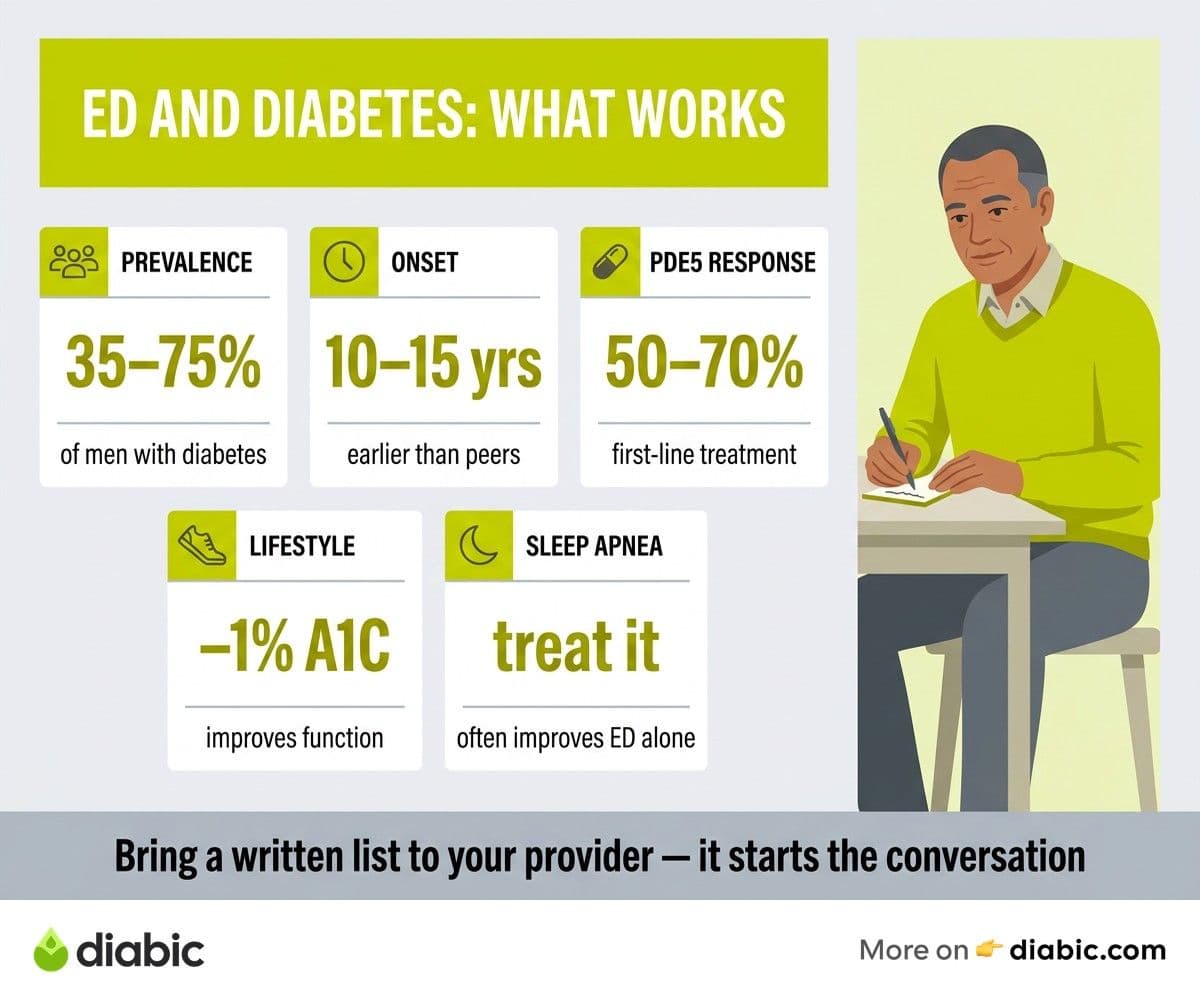
Studies across multiple countries put the prevalence of ED in men with diabetes at roughly 35 to 75 percent, depending on age, how long someone has had diabetes, and how researchers define the condition. That is a wide range, but the bottom line is that this is far more common than the cultural silence around it suggests. The NIDDK overview of diabetes and sexual problems in men notes that ED can develop ten to fifteen years earlier in men with diabetes compared with men without it.
Risk climbs with the duration of diabetes, with higher A1C levels over time, with smoking, with high blood pressure, and with central weight gain. None of these factors are destiny, and improving any one of them tends to push the numbers back in your favor. Cardiovascular health and erectile health are tightly linked, which is why many urologists describe ED as a possible early warning sign of broader vessel disease. If your blood vessels are struggling in one place, they may be struggling elsewhere too.
Hormonal shifts also play a role, and men often underestimate them. Our deeper look at hormonal changes from diabetes in men and women breaks down testosterone, thyroid, and adrenal patterns that can show up alongside ED. Many men do not report symptoms because they are embarrassed, because they assume nothing can be done, or because their primary care visit never made room for the question. That last reason is something you can change at the next appointment.
Treatments that actually work
Oral PDE5 inhibitors are the most common starting point and the most studied. These medicines, including sildenafil, tadalafil, vardenafil, and avanafil, improve blood flow into the penis when arousal is present. Research summarized in the Urology Care Foundation patient resources shows response rates around 50 to 70 percent in men with diabetes, which is somewhat lower than in men without diabetes but still meaningful. We are not going to talk about specific dosing here, because the right starting point depends on your kidney function, heart medications, and other personal factors that your provider needs to weigh. The conversation with your doctor or urologist is where dosing belongs.
If pills do not work or are not appropriate, vacuum erection devices are a non-medication option with a strong track record. They use gentle suction to draw blood into the penis and a constriction ring to maintain the erection, and many men find them effective once they get used to the technique. Penile injections, most commonly with alprostadil, work for a high percentage of men who do not respond to oral medication, and they bypass the vascular and nerve issues by acting directly on penile tissue. Intraurethral suppositories are another delivery option that some men prefer.
Testosterone replacement therapy can help when blood tests confirm genuinely low levels, and it is most useful when low desire is part of the picture rather than only firmness issues. The Endocrine Society guidelines on testosterone therapy emphasize confirming low levels with morning blood draws on more than one occasion before starting treatment, and they discuss the need for monitoring once therapy begins. Penile implants are usually reserved for men who have not responded to other approaches, but satisfaction rates are very high among men who choose them, often above 90 percent.
A note on what works alongside the medical options: stress, anxiety, and unspoken relationship tension often shrink results. Many men benefit from short-term counseling, sex therapy, or partner-inclusive sessions that address the psychological layer. Our guide on how diabetes anxiety and stress affect blood sugar explores why this matters for both your numbers and your sex life. Treating ED is rarely just one intervention, and the combinations work better than any single fix.
The role of blood sugar and lifestyle
Improving blood sugar can partly reverse early ED, especially when nerve and vessel damage have not progressed too far. Studies in the Mayo Clinic resources on diabetes and erectile dysfunction and other clinical reviews suggest that reducing A1C by even one percentage point may produce noticeable improvement in erectile function over months. The earlier you act, the more responsive your blood vessels and nerves tend to be.
Weight management and exercise have independent effects, separate from blood sugar. A study published in the Journal of Sexual Medicine found that men with type 2 diabetes who added regular aerobic and resistance training reported meaningful improvements in erectile function, even before significant weight loss. Movement supports vessel health, raises testosterone modestly, and reduces the inflammation that drives a lot of diabetic complications. Even thirty minutes of brisk walking most days, paired with a few sessions of resistance work, can move the needle.
Quitting smoking is one of the highest-uses changes possible. Smoking damages the same small blood vessels that diabetes already strains, and the effect is additive. Men who stop smoking often notice improvement within weeks to months, and the cardiovascular benefits extend far beyond sexual health. Alcohol is more nuanced: small amounts may not cause problems, but heavier drinking blunts arousal and can worsen blood sugar swings. Our breakdown of libido and blood sugar and the connection between them digs further into how daily habits ripple into sexual health.
Sleep and mental health matter more than most men expect. Untreated sleep apnea, which is common in men with type 2 diabetes, suppresses overnight testosterone and worsens both blood sugar and erections. Treating sleep apnea sometimes improves ED on its own. Depression and chronic stress also reduce desire and blunt response, and addressing them is part of a real treatment plan rather than an optional extra.
How to bring this up with your doctor
Write down your concerns before the appointment so the moment does not slip past. A simple list helps: when changes started, how often they happen, whether morning erections are still present, whether desire is intact, and which medications you take. Morning erections, in particular, give your provider useful information about the difference between physical and psychological causes. Bring the list with you, hand it over if speaking out loud feels heavy, and let the paper start the conversation.
Use clear, direct language. Something like, "I want to talk about how diabetes is affecting my sexual health, and I would like to discuss treatment options" usually opens the door fast. Primary care providers see this regularly, and most are comfortable with it, even if their first visit on the topic feels brief. If your provider seems unsure or rushed, it is reasonable to ask for a referral to a urologist, an endocrinologist, or a men's health clinic. You are not being demanding, you are being thorough.
Ask about lab work that might shape the plan, including testosterone levels, thyroid function, lipid panel, and recent A1C. Mention any medications that can contribute to ED, including some blood pressure drugs, antidepressants, and antihistamines. Your provider may be able to swap one medication for another with a better sexual side effect profile, and that single change sometimes resolves the issue.
Bring your partner if they are supportive and you are comfortable. Many couples find that hearing the explanation together reduces blame, normalizes the situation, and turns treatment into a shared plan instead of a private burden. If you do not have a partner or prefer privacy, that is also fine. The goal is a clear plan, not a public conversation.
Frequently asked questions
Why does diabetes cause erectile dysfunction?
Diabetes affects erections through two main pathways. High blood sugar over time damages the small blood vessels that need to dilate for firm blood flow into the penis, and diabetic neuropathy disrupts the nerve signals that trigger and maintain erections. Low testosterone, common in men with type 2 diabetes, can compound both effects, and stress or depression often add a psychological layer that worsens the physical changes.
What are the best treatments for erectile dysfunction with diabetes?
Most men start with oral PDE5 inhibitors under a provider's guidance, which help around 50 to 70 percent of men with diabetes. If oral medications do not work, options include vacuum erection devices, penile injections, intraurethral suppositories, testosterone therapy when levels are low, and penile implants for cases that do not respond to other approaches. Improving blood sugar, exercising regularly, quitting smoking, and addressing sleep apnea or mental health can boost results from any of these treatments.
Can lifestyle changes alone reverse diabetes-related ED?
Lifestyle changes can produce meaningful improvement, especially when erectile dysfunction diabetes patterns are recent and nerve or vessel damage is mild. Lower A1C, regular exercise, weight loss, smoking cessation, and better sleep often improve erectile function over months. Many men still benefit from adding medical treatment, and the combination usually works better than either approach alone. Talk to your provider about layering the erectile dysfunction diabetes plan rather than choosing between options.
Shahriar P. Shuvo is the founder of Diabic. He has lived with diabetes for over 14 years, and built Diabic to deliver the practical, evidence-based self-management tools he wished existed when he was first diagnosed. By trade, Shahriar is a senior design and frontend engineer with 6+ years shipping products at Agora, Timescale (now Tiger Data), and ShareTrip. He writes from the intersection of lived diabetes experience and product craft, focused on what works in daily management rather than what sounds good in a textbook.
Medically reviewed by
Dr. Shanto Arian is an internal medicine physician now specializing in clinical and aesthetic dermatology, with a parallel academic focus on epidemiology and public health. He holds an MBBS, MPH, MSc (UK), MRCP (UK), MRCPI (Ireland), Diploma in Dermatology (UK), and Diploma in Aesthetic Medicine (USA). Dr. Arian trained in internal medicine, including hospital work on hematology cases such as graft-versus-host disease, before moving toward dermatology. Skin is one of the earliest places diabetes shows itself, from acanthosis nigricans and diabetic dermopathy to slow foot wound healing, and that intersection is where his clinical and Diabic-review work meet. On Diabic, Dr. Arian medically reviews content on diabetes diagnosis, complications, dermatologic manifestations, and pharmacotherapy, ensuring every claim aligns with current ADA, NICE, and peer-reviewed literature.
More from Living with Diabetes
View all
A Gentle Chair Yoga Routine for people with diabetes
A gentle chair yoga for people with diabetes routine with safe poses, modifications for neuropathy, retinopathy, and joint pain, plus tips for older.

Shift Work and Diabetes: Managing Irregular Hours
Shift work and diabetes is a tough combination. Learn how to manage meals, sleep, medication, and blood sugar when your hours rotate or flip overnight.

Dating with Diabetes: When to Tell a New Partner
Dating with diabetes brings unique disclosure questions. Here is when to tell a new partner, what to say, and how to handle the conversation with.
Clinician-reviewed habits, plain-language guides, and honest answers - the small shifts that make living with diabetes feel lighter, every day.